- Home
- Essential Safety Gear
- Offshore Man Overboard Recovery Equipment for Cruising Sailboats
- Man Overboard Recovery Systems for Sailboats
Man Overboard Recovery Systems: Lifesling and Ocean Safety Compared
Verified against westmarine.com and defender.com listings on 29 September 2026. Prices and stock change, so click through for current figures before you buy.
A person in the water is only half the emergency. Getting them back aboard, especially if they're exhausted, injured or hypothermic, is the part that catches crews out. Two approaches dominate the market. The Lifesling is a flotation collar on a long floating line that's thrown or towed to a casualty, then used as a lifting sling on a spare halyard. Ocean Safety's Jon Buoy takes a different route: it inflates automatically and supports the casualty horizontally, which matters if they're already hypothermic. Here's how to choose between them.
| Lifesling2 | Lifesling3 ★ Recommended | Ocean Safety Jon Buoy Recovery Module MK6 | |
|---|---|---|---|
| Price | $227.99 | $535.99 | $1,099.00 – $1,299.00 |
| Best for | Smaller boats, tight stowage | Most cruising sailboats | Offshore crews, hypothermia risk, OSR compliance |
| Retrieval line | 125 ft floating polypropylene | 150 ft floating polypropylene | 5m weighted throwing line |
| Lifting method | Spare halyard led to a winch | Spare halyard led to a winch, stainless D-rings | Automatic inflation, casualty supported horizontally, built-in lifting harness |
| Installation | DIY, rail or bulkhead mount | DIY, rail or bulkhead mount | DIY, pushpit or bulkhead mount |
| Limitation | Shorter line, smaller case, no SOLAS tape | Bulkier fibreglass case, still needs a crew member to winch the halyard | Significantly pricier; currently out of stock at some US retailers |
Our Recommendation
If you sail a smaller boat or space on the rail is tight, the Lifesling2 is plenty. It's the same proven method in a smaller, lighter package, and it fits where a bulkier case won't. Rig it to a spare halyard led to a cockpit winch and you have a complete recovery system without adding any extra hardware.
For most cruising sailboats, the Lifesling3 is the better all-round choice. The extra 25 feet of line matters on a boat with higher freeboard, the stainless D-rings make rigging that halyard purchase easier, and the SOLAS reflective tape helps at night. This is what we'd fit on our own boat.
If you sail offshore, short-handed, or simply want the extra margin of a system that keeps a hypothermic casualty horizontal rather than hauling them straight up on a line, the Ocean Safety Jon Buoy Recovery Module is worth the extra cost. It inflates automatically on contact with the water, comes with its own lifting harness, and is accepted as a direct replacement for a traditional danbuoy, horseshoe, drogue, light and whistle under the World Sailing Offshore Special Regulations. It has been out of stock at some US retailers, so check availability before you commit to it as your primary system.
Ready to Choose?
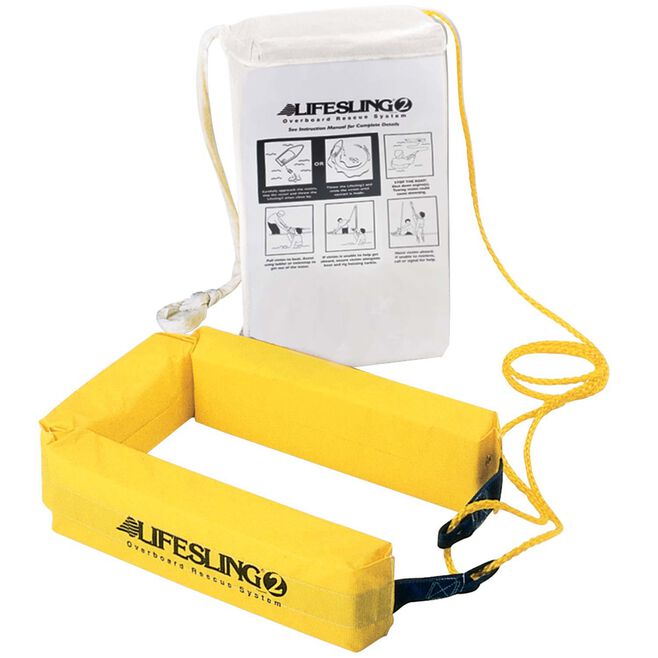 Lifesling2 — $227.99 |
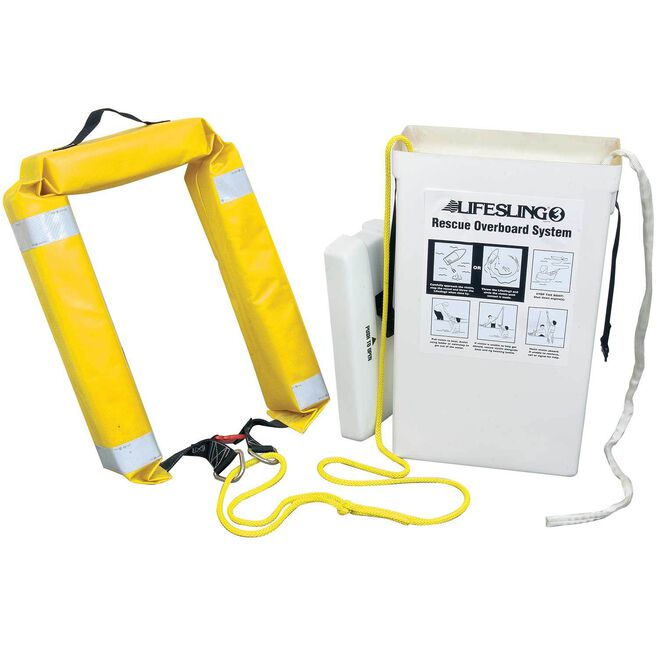 Lifesling3 — $535.99 |
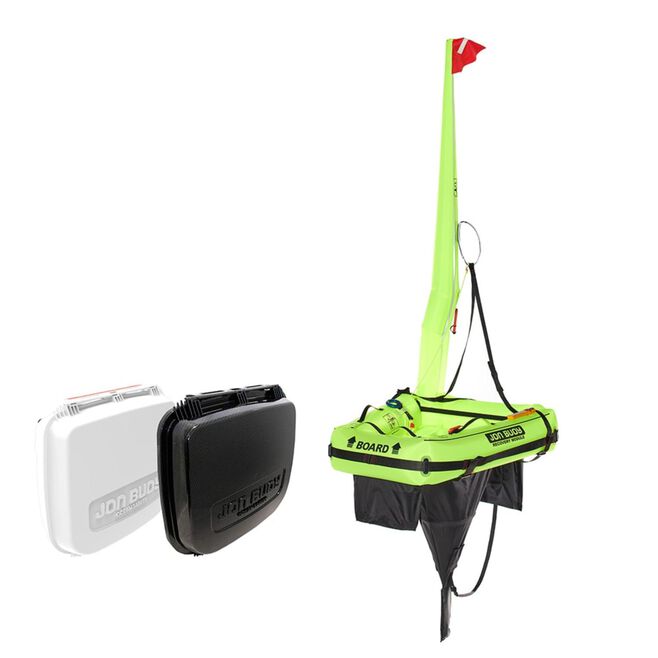 Jon Buoy MK6 — from $1,099.00 |
Common Questions
Do I need a special hard point to rig a Lifesling for lifting?
No. A spare halyard, main or spinnaker, led to a cockpit winch is the standard lifting point most Lifesling instructions recommend, and it's hardware every sailboat already has.
Is the Jon Buoy really worth the extra cost over a Lifesling?
For coastal sailing, a well-rigged Lifesling covers most scenarios. Offshore, or if hypothermia is a real risk on your typical passage, the Jon Buoy's automatic inflation and horizontal support are a genuine safety upgrade, not just a pricier badge.
This page may contain affiliate links. If you buy through them, we may earn a small commission at no extra cost to you.
 UK readers: You can find equivalent man overboard recovery products at
Gael Force Marine.
UK readers: You can find equivalent man overboard recovery products at
Gael Force Marine.

Dick McClary is an RYA Yachtmaster, yachting journalist, and author of several RYA publications including Offshore Sailing. He runs sailboat‑cruising.com and the Liveaboard Sailboats for Sale community, helping thousands of sailors choose reliable gear for offshore cruising.

Recent Articles


-
Offshore Lifejackets: The Complete Buyer's Guide
Sep 29, 26 10:12 AM
A practical guide to offshore lifejackets: buoyancy levels, inflation types, must-have features and servicing advice -
Serious Sailboat Safety Gear: Beacons, Lifejackets, Liferafts
Sep 29, 26 09:27 AM
Serious sailboat safety gear for offshore crews: EPIRBs, PLBs, lifejackets and liferafts, plus the 2026 UK beacon registration change and pre-passage checks. -
MOB Recovery Systems: Lifesling vs Ocean Safety Jon Buoy
Sep 29, 26 09:21 AM
Compare man overboard recovery systems for sailboats: Lifesling2, Lifesling3 and Ocean Safety's Jon Buoy, with pricing and which suits your boat.
