- Home
- Electronics & Instrumentation
- Marine AIS System
- Best AIS for Sailboats
Best AIS Transceivers for Sailboats: A Buyer's Guide
If you sail in busy shipping lanes, foggy anchorages, or crowded coastal waters, an AIS (Automatic Identification System) transceiver is one of the best safety upgrades you can make. Unlike a receive-only AIS unit, a full transceiver both broadcasts your position to nearby vessels and shows you theirs — giving everyone on the water more warning and more time to react. Below we compare three well-regarded Class B transceivers, from a budget-friendly option to a fully-loaded premium unit, so you can pick the one that matches your boat, your electronics, and your budget.
Quick Comparison
|
Simrad NAIS-500 AIS Class B Transceiver |
★ Recommended Garmin AIS 800 Transceiver |
Raymarine AIS700 w/ Antenna Splitter |
|
|---|---|---|---|
| Price | $879.00 | $1,099.99 | $1,209.99 |
| Best for | Budget-minded sailors, especially with Simrad/B&G displays | Most cruising sailboats wanting an all-in-one, easy install | Sailors wanting the newest tech and top-tier range |
| Key spec 1 | NMEA 2000 & NMEA 0183, 180mA @ 12V draw | 5W transmit power, built-in GPS | SO-TDMA networking for longer range, faster reporting |
| Key spec 2 | IP67 waterproof, 1-year warranty | Built-in VHF antenna splitter, IPX7, 2-year warranty | Built-in antenna splitter + switchable Silent Mode |
| Installation | DIY-friendly, but needs a separate antenna splitter | DIY-friendly — splitter is built in | DIY-friendly — splitter is built in |
| Limitation | No antenna splitter included — budget for one separately if sharing your VHF antenna | Mid-pack transmit range compared to newer SO-TDMA units | Highest price of the three |
Simrad NAIS-500 — Key Functionality
- Full send & receive Class B AIS
- NMEA 2000, NMEA 0183, and USB connectivity
- Low power draw (180mA @ 12V) — good for smaller battery banks
- Networks natively with Simrad NSS/NSO/GO displays and RS VHF
Garmin AIS 800 — Key Functionality
- 5W transmit power for faster position reporting
- Built-in GPS with optional external antenna connector
- Internal VHF antenna splitter — no separate part needed
- NMEA 2000/0183 connectivity for Garmin chartplotters
Raymarine AIS700 — Key Functionality
- SO-TDMA networking for longer range, faster updates
- Built-in antenna splitter for your existing VHF antenna
- NMEA 2000, NMEA 0183, and SeaTalkng compatible
- Switchable Silent Mode for security
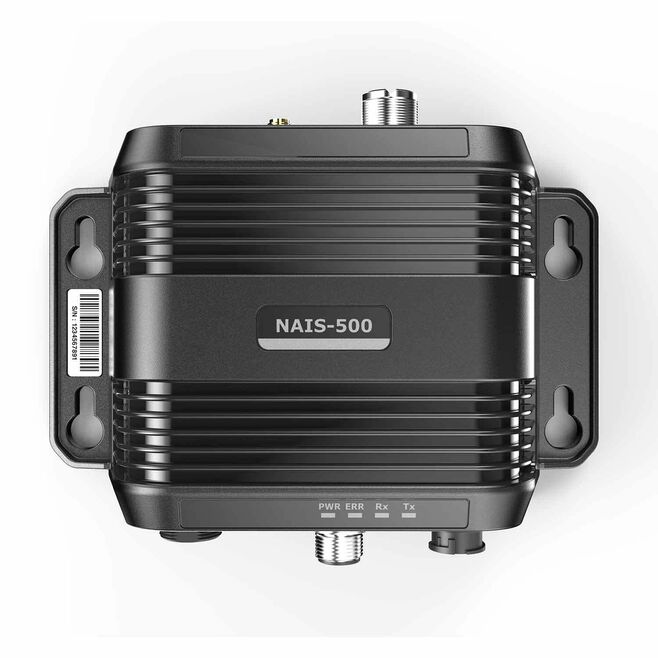
Simrad NAIS-500
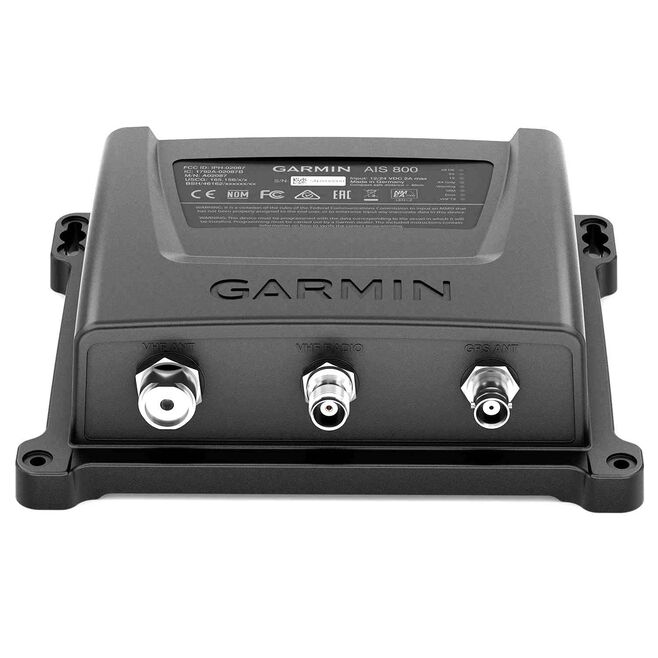
Garmin AIS 800 ★
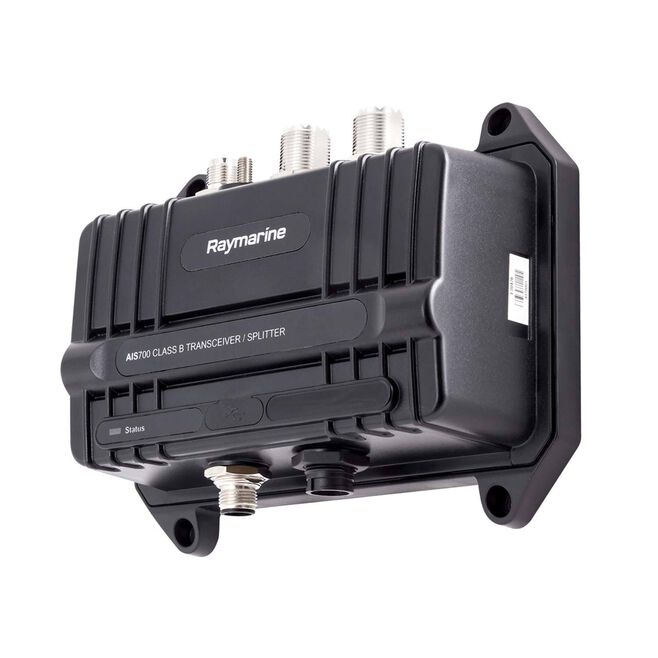
Raymarine AIS700
Our Recommendation
If you're already running a Simrad or B&G chartplotter and want to keep costs down, the Simrad NAIS-500 is a smart choice — it networks natively with NSS, NSO, and GO series displays and Simrad RS VHF radios. Just remember to budget for a separate antenna splitter (like the NSPL-500) if you want to share your existing VHF antenna instead of running a second one.
For most cruising sailors, the Garmin AIS 800 hits the sweet spot: full send-and-receive Class B AIS, a built-in GPS, and — unlike the NAIS-500 — an internal VHF antenna splitter, so there's one less part to buy and mount. It integrates cleanly with any Garmin chartplotter over NMEA 2000, which covers a large share of boats already on the water. This is why it's our top pick for most sailboats.
If you want the newest technology and don't mind paying for it, the Raymarine AIS700 is worth the upgrade. Its SO-TDMA networking gives longer range and faster position updates than older Class B units, the antenna splitter is built in, and its switchable Silent Mode is a nice extra for anyone who wants to control when their position is broadcast. It's the natural fit if you're running a Raymarine multifunction display and want everything talking on SeaTalkng.
Ready to Choose?
Common Questions
Do I need Class B, or should I get Class A AIS?
Class A is required for commercial vessels and broadcasts more frequently at higher power, but it's
expensive and overkill for most recreational sailboats. Class B transceivers (like all three above)
are designed for leisure boats, cost far less, and satisfy the vast majority of cruisers' safety needs.
Can I share my existing VHF antenna with my AIS transceiver?
Yes, but only if your unit has a built-in antenna splitter (Garmin AIS 800 and Raymarine AIS700 do)
or you add a separate splitter (needed with the Simrad NAIS-500). Without one, you'll need to
mount a second, dedicated AIS antenna.
Disclosure: This page contains affiliate links. If you purchase through one of these links, we may earn a small commission at no additional cost to you.
 UK readers: You can find similar AIS products at
Gael Force Marine.

Dick McClary is an RYA Yachtmaster, yachting journalist, and author of several RYA publications including Offshore Sailing. He runs sailboat‑cruising.com and the Liveaboard Sailboats for Sale community, helping thousands of sailors choose reliable gear for offshore cruising.

Recent Articles


-
Should I Buy a Boat? Four Questions to Answer Before You Commit
Oct 02, 26 04:40 AM
Thinking "Should I buy a boat?" This guide helps you decide, with key considerations from cost & maintenance to your personal sailing aspirations. -
Offshore Internet with Starlink: Hardware, Plans, and Setup Guidance
Oct 01, 26 01:15 PM
A clear, practical guide to choosing the right Starlink hardware and plan for offshore cruising. Learn what to buy, how to install it, and how to manage power afloat. -
Offshore Liferaft Guide: Choosing, Stowing and Servicing One
Oct 01, 26 06:28 AM
Choosing an offshore liferaft? Learn what ISO 9650 Group A means, where to stow it, how often to service it and what to pack in the grab bag.
