- Home
- Cruising Yachts 30' to 35'
- Nonsuch 30 Sailboat Review and Buyer's Guide
The Nonsuch 30 Sailboat
Specs, Performance Analysis & Cruising Characteristics
Key Takeaways: The Nonsuch 30 is one of the most distinctive production cruising sailboats ever built. Designed by Mark Ellis and introduced in 1978, it combines a powerful cat rig, free-standing mast, wishbone boom and unusually spacious accommodation within a 30-foot hull. Its simplicity under sail remains its defining attraction. Tacking requires little more than turning the wheel, making it particularly appealing to short-handed crews, couples and older sailors.
The trade-off is that the Nonsuch 30 is not a windward specialist and should not be assessed by conventional sloop standards. Instead, it offers comfort, easy sail handling, excellent interior volume and predictable cruising performance. Buyers should pay close attention to mast condition, deck core moisture, ageing sail systems and window integrity. For coastal cruising, liveaboard use and relaxed passagemaking, it remains a highly practical and loyal-owner favourite.
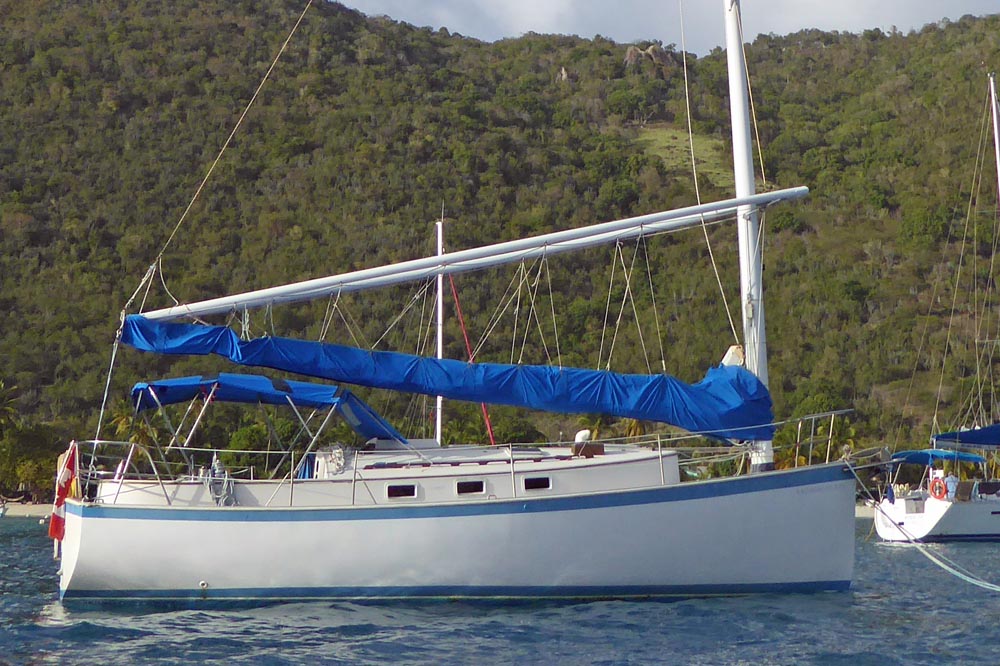
Table of Contents
- The Nonsuch 30 at a Glance
- Design & Construction
- Published Specification: The Nonsuch 30 Blueprint
- Sail Areas & Rig Dimensions
- Performance Analysis: Understanding the Design Ratios
- How the Nonsuch 30 Sails
- Bluewater Capability: Strengths & Trade-Offs
- Configuration, Layout & Cruising Characteristics
- Who This Boat Is Best For
- The Buyer’s Checklist: Common Problem Areas
- Summing Up
- Frequently Asked Questions (FAQs)
The Nonsuch 30 at a Glance
- Type: Cat-rigged cruising sailboat
- Designer: Mark Ellis
- Builder: Hinterhoeller Yachts Ltd (Canada)
- Production Years: 1978-19
- Rig: Unstayed cat rig with wishbone boom
- Best for: Short-handed cruising, coastal passagemaking, liveaboard use
- Strengths: Huge interior volume, simple sail handling, stable platform, spacious cockpit
- Trade-offs: Modest windward performance, specialised rig components, limited sail plan versatility
Design & Construction
The Nonsuch 30 was conceived by Canadian sailor Gordon Fisher and drawn by respected designer Mark Ellis as a modern interpretation of the traditional North American catboat. The goal was straightforward: create a comfortable cruising yacht that eliminated much of the complexity associated with conventional sloops.
Construction was solid fibreglass below the waterline, with cored structures used in deck areas to control weight. The hull carries substantial beam well forward and aft, producing exceptional internal volume for a 30-foot yacht. A fin keel and semi-balanced spade rudder provide significantly better manoeuvrability and handling than traditional Cape Cod catboats while avoiding the heavy weather helm associated with many historic cat-rigged designs.
Perhaps the most distinctive feature is the unstayed aluminium mast mounted far forward. Because there are no shrouds, chainplates or standing rigging loads to distribute through the hull structure, the deck layout is remarkably uncluttered. Consequently, there are no conventional chainplates to inspect and replace. The large mainsail is controlled by a wishbone boom which acts as both boom and vang.
Most examples feature fixed acrylic cabin windows bonded into the coachroof structure rather than conventionally through-bolted frames, making window seal deterioration an area requiring inspection on older boats.
Three principal versions were offered. The original Classic featured a more open interior arrangement with a large main saloon and athwartships sleeping arrangements. The later Ultra, introduced during the mid-1980s, reconfigured the interior to provide a more conventional separate aft cabin, increased privacy and improved cruising accommodation for couples. A third variation known as the Nova also appeared later in production.
Most boats were delivered with a standard 5'0" (1.52m) draft fin keel, although a shoal-draught version reducing draft to approximately 3'11" (1.21m) was available. The shallower option improves access to thin-water cruising grounds but sacrifices some windward efficiency.
The Classic appeals to sailors prioritising open-plan living space and entertaining, while the Ultra's dedicated sleeping cabin generally attracts modern cruising couples. From a resale perspective, Ultra models often command stronger prices because of their more contemporary accommodation layout.
Published Specification: The Nonsuch 30 Blueprint
| Nonsuch 30 Specifications | |
|---|---|
| LOA | 30'4" (9.24m) |
| LWL | 28'9" (8.76m) |
| Beam | 11'11" (3.63m) |
| Draft Standard | 5'0" (1.52m) |
| Draft Shoal | 3'11" (1.21m) |
| Displacement | 10,500lb (4,763kg) |
| Ballast | 4,500lb (2,041kg) |
| Rig Type | Unstayed Cat Rig |
| Hull Material | Fibreglass |
| Production Dates | 1978-1989 |
Sail Areas & Rig Dimensions
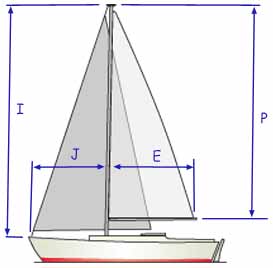 Rig dimensions
- Total Sail Area: 540ft² (50.2m²)
- Mainsail Area: 540ft² (50.2m²)
- I: Not applicable to primary cat rig configuration
- J: Not applicable to primary cat rig configuration
- P: 45'0" (13.72m)
- E: 24'0" (7.32m)
Because the Nonsuch is a cat-rigged yacht carrying a single mainsail, traditional foretriangle dimensions have limited relevance. Some databases publish estimated I and J measurements for calculation purposes, but they are not operationally significant for the standard sail plan.
Performance Analysis: Understanding the Design Ratios
| Ratio | Value | Practical Meaning |
|---|---|---|
| SA/D | 18.1 | Healthy sail power for a cruising boat. Adequate performance in lighter airs. |
| D/L | 197 | Moderately light displacement with a useful balance of comfort and responsiveness. |
| B/D | 42.9% | Strong ballast ratio contributing to stiffness and sail-carrying ability. |
| CSF | 2.18 | Above the traditional offshore benchmark of 2.0. More coastal-cruising oriented than dedicated ocean-crossing designs. |
| Brewer Comfort Ratio | 20.5 | Moderate motion comfort. Comfortable coastal cruiser but not exceptionally soft-riding offshore. |
The ratios reveal a boat that occupies an interesting middle ground. The Nonsuch carries plenty of sail relative to its displacement, helping it move willingly in moderate conditions. Its ballast ratio is stronger than many contemporary cruisers, contributing to the solid feeling owners frequently describe. The comfort and capsize figures, however, indicate a boat intended primarily for coastal and near-offshore work rather than extended bluewater voyaging.
For more on this topic, you might want to take a look at Understanding Boat Performance & Design Ratios...
How the Nonsuch 30 Sails
The Nonsuch experience differs markedly from that of conventional sloops. Underway, the boat rewards relaxed sailing rather than aggressive trimming.
Tacking is exceptionally easy because there are no headsails to manage. The helmsman simply turns through the eye of the wind and the sail follows. Short-handed crews quickly appreciate this simplicity.
Beam reaches and broad reaches are generally where the design shines. The large mainsail generates useful drive, while the wide hull form provides considerable form stability. Off the wind, the absence of shrouds allows the sail to be eased effectively.
Upwind performance is respectable rather than outstanding. The modern fin keel helps considerably, but there remains an unavoidable limitation compared with efficient sloop rigs carrying overlapping genoas. Owners typically report sailing angles wider than those achieved by comparable cruiser-racers.
The flexible free-standing mast automatically spills wind during gusts. This characteristic reduces abrupt heel angles and often creates a more forgiving feel than traditional rigs. Reefing is straightforward and one of the design's strongest attributes. Many owners comfortably sail alone well into retirement because of the limited physical effort required.
Bluewater Capability: Strengths & Trade-Offs
The Nonsuch 30 is best viewed as a highly capable coastal and regional cruising yacht rather than a purpose-built ocean passage-maker.
Strengths include substantial tankage, excellent stability at anchor, secure cockpit seating, simple sail handling and plenty of storage volume. The broad beam also allows the boat to carry cruising gear without becoming excessively cramped.
Nevertheless, there are limitations. The capsize screening figure sits slightly above traditional offshore guidelines. The wide beam that creates interior space can also produce a quicker motion offshore than heavier bluewater cruisers. Windward efficiency is adequate rather than exceptional and the single-sail rig provides fewer options for balancing sail plans in varying conditions.
Several owners have completed significant offshore passages, but prudent buyers should recognise that the design philosophy prioritised cruising comfort and ease of use over ocean-crossing optimisation.
Configuration, Layout & Cruising Characteristics
A major reason for the Nonsuch 30's enduring popularity is simply the amount of usable living space it delivers.
The cockpit is unusually large for a 30-footer and benefits from the absence of standing rigging. Boarding, moving forward and entertaining guests are all easier than on most comparable yachts.
Below decks, beam carried well outboard creates a remarkably open interior. Headroom is generous and the saloon feels closer to that of many 34-36 foot yachts. Storage is abundant, making extended cruising practical.
Classic layouts emphasise openness and social living. Ultra models feel more conventional, with the addition of a genuine private aft cabin that appeals strongly to cruising couples.
The galley is typically functional rather than expansive, though entirely adequate for coastal cruising. Ventilation is generally good, helped by the wide cabin trunk and plentiful opening ports.
For liveaboard use in marinas and sheltered anchorages, the Nonsuch 30 remains exceptionally competitive against many conventional thirty-footers.
Who This Boat Is Best For
Good fit for:
- Couples cruising short-handed
- Solo sailors
- Retirees seeking low-effort sail handling
- Coastal cruisers
- Great Lakes cruising
- ICW and Chesapeake cruising
- Liveaboard owners wanting maximum interior volume
Less ideal for:
- Performance-oriented sailors
- Dedicated offshore passagemakers
- Sailors regularly beating long distances to windward
- Buyers wanting standard off-the-shelf rig components
The Buyer’s Checklist: Common Problem Areas
- Moisture intrusion in deck coring
- Leaking bonded cabin windows
- Mast corrosion, particularly at partners and fittings
- Wishbone boom wear and hardware fatigue
- Aged sailcloth on original mainsails
- Rudder bearing wear
- Keel stub moisture issues
- Original fuel tanks nearing replacement age
- Westerbeke engine condition and maintenance history
- Steering system wear
- Chain and rope clutch upgrades on heavily cruised examples
- Evidence of mast partner compression or repair work
Typical refit budgets vary enormously, but replacement mainsails, mast refurbishment and window renewal can each represent meaningful ownership costs.
Could this be your ideal cruising boat?
It may well be, but before going any further, it might be worth taking a look at my eBook 'How to Avoid Buying the Wrong Sailboat'...
Summing Up
The Nonsuch 30 remains one of the most successful alternative-rig cruising sailboats ever produced. Its popularity was not built around racing success or headline performance figures. Instead, it addressed a practical question many cruising sailors still ask today: how can sailing be made simpler without sacrificing comfort?
The answer was a remarkably spacious hull, a free-standing mast, a huge but manageable single sail and a layout tailored to relaxed cruising. The resulting yacht remains highly attractive to sailors seeking uncomplicated ownership and easy handling.
Prospective buyers should approach the design with realistic expectations. It will not out-point modern performance cruisers, nor does it offer the heavy-displacement motion sought by some offshore voyagers. What it does provide is comfort, simplicity and a cruising experience that many owners find surprisingly difficult to replace.
If you're looking for other cruising boats of a similar size to the Nonsuch 30, check here...

Written by Dick McClary, cruising sailor and yachting journalist, publisher of Sailboat‑Cruising.com and admin of the Liveaboard Sailboats for Sale community.

Frequently Asked Questions (FAQs)
Is the Nonsuch 30 suitable for single-handed sailing?
Is the Nonsuch 30 suitable for single-handed sailing?
Yes. The design was effectively created with short-handed operation in mind. Tacking requires minimal effort and sail handling is straightforward.
What is the difference between the Nonsuch 30 Classic and Nonsuch 30 Ultra?
What is the difference between the Nonsuch 30 Classic and Nonsuch 30 Ultra?
The Classic features a more open interior arrangement, while the Ultra introduces a private aft cabin and a more conventional cruising layout. Many buyers favour the Ultra for extended cruising.
Does the Nonsuch 30 point well upwind?
Does the Nonsuch 30 point well upwind?
Reasonably well, but not as effectively as a modern sloop of similar size. The design performs best from a close reach through to a broad reach.
Is the free-standing mast reliable?
Is the free-standing mast reliable?
Generally yes. Many examples remain in service after several decades. Buyers should nevertheless inspect for corrosion, repairs and evidence of stress around the mast partners.
Can a Nonsuch 30 be used offshore?
Can a Nonsuch 30 be used offshore?
Yes, within sensible limits and proper preparation. However, the design is better characterised as a robust coastal cruiser than a dedicated bluewater passagemaker.
Are replacement sails expensive?
Are replacement sails expensive?
They can be. The large custom mainsail and specialised rig arrangement typically cost more than sails for many conventional 30-foot sloops.
Recent Articles


-
Nordica 20 Sailboat Review, Specs & Buying Guide
Nov 08, 26 10:46 AM
Nordica 20 sailboat review covering specs, performance, seaworthiness, ownership issues, design ratios and buying advice. -
Deck Saloon vs Low Profile: Visibility, Light & Windage Compared
Nov 08, 26 05:31 AM
An expert guide comparing deck saloon and low profile yachts for offshore sailing, focusing on visibility, interior light, windage, and aesthetics. -
Coastal Passage Planning Made Easy: A 5-Phase Prep Guide
Nov 03, 26 03:02 PM
Master short coastal passage planning with our 5-phase preparation system. Avoid dockside stress, set safe limits, and cast off with complete confidence.