- Home
- Electronics & Instrumentation
- Marine EPIRB
- Personal Locator Beacons for Sailors
Best Personal Locator Beacons for Sailors: Budget, Mid-Range & Premium Picks
If you're serious about offshore or coastal cruising, a Personal Locator Beacon (PLB) is one piece of safety gear you hope you never need — but will be endlessly grateful for if you do. Unlike an EPIRB, which stays with the boat, a PLB is registered to you personally, so it goes wherever you go: on deck, in the dinghy, or clipped to your life jacket. Below we compare three ACR Electronics PLBs, each aimed at a different budget and level of built-in reassurance, so you can pick the one that matches how — and how far — you cruise.
Prices and stock verified September 26, 2026. West Marine prices and availability can change — click through on any option below for current pricing.
Quick Comparison
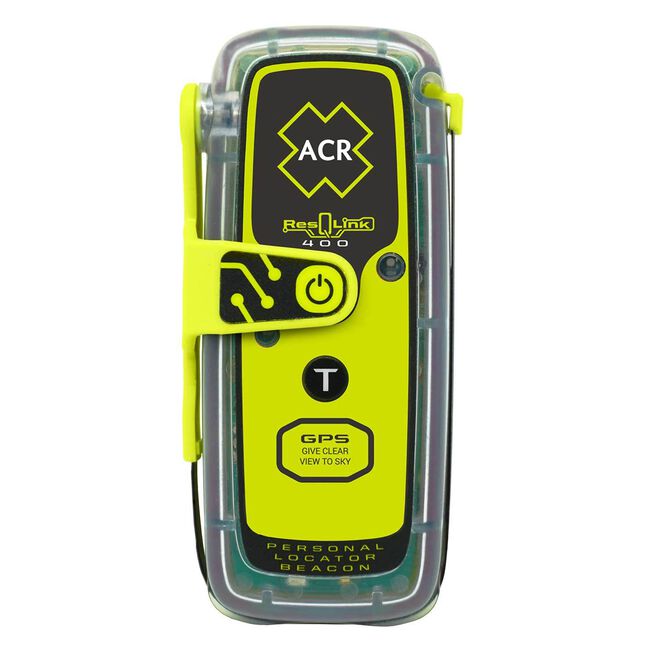
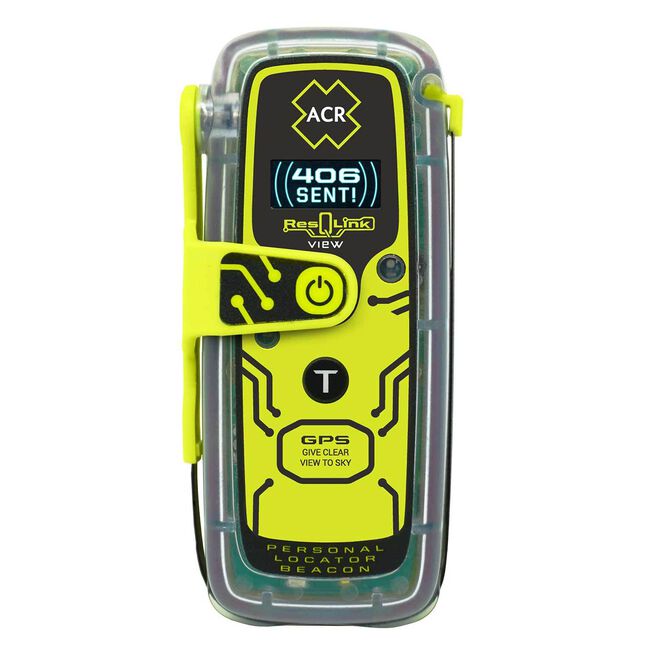
| ACR ResQLink 400 | ★ Recommended ACR ResQLink View |
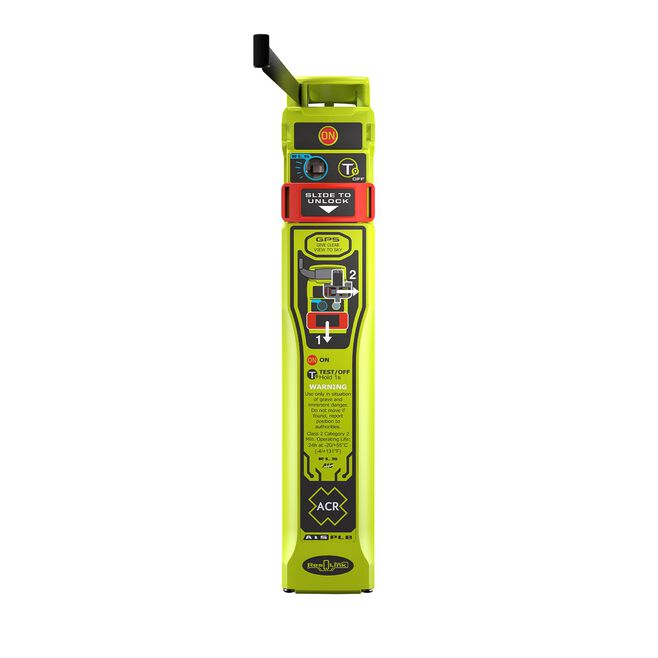
ACR ResQLink AIS | |
|---|---|---|---|
| Price | $409.95 | $469.99 | $619.95 |
| Best for | Budget-conscious coastal sailors who want core, no-frills protection | Cruisers who want status confidence — see your GPS fix and self-test results before you ever need to activate | Offshore sailors who want the fastest possible local rescue via AIS, on top of global satellite coverage |
| Key spec 1 | 406 MHz distress + 121.5 MHz homing, built-in GPS | Integrated LCD display showing battery life, self-test results & GPS position | AIS alert to nearby vessels + multi-GNSS (GPS, Galileo, GLONASS) positioning |
| Key spec 2 | Visible + infrared strobe, 6-year battery life | Visible + infrared strobe, no-subscription satellite alerting | NFC smartphone check-in, visible + infrared strobe, 5-year battery life |
| Installation | DIY — clips to PFD or belt, no wiring | DIY — clips to PFD or belt, no wiring | DIY — clips to PFD or belt, no wiring |
| Limitation | No display — you can't confirm GPS lock or battery status at a glance | No AIS — nearby boats won't get an automatic local alert | Highest price point of the three, and heaviest at 0.42 lbs |
Our Recommendation
If you're mostly daysailing or coastal cruising and want a proven, no-subscription safety net without spending too much, the ACR ResQLink 400 covers the essentials — GPS-aided positioning, a strobe, and a six-year battery life — at the lowest price of the three.
For most cruisers, though, the ACR ResQLink View is the sweet spot. The onboard display means you can actually see that your beacon has a GPS fix and passed its self-test, rather than trusting a blinking light — real reassurance on a boat where confidence in your gear matters as much as the gear itself.
If you're planning offshore passages or extended time far from other traffic, the ACR ResQLink AIS earns its higher price. Its AIS beacon alerts nearby AIS-equipped vessels directly, which can mean rescue in minutes rather than hours, while its multi-constellation GNSS gives a faster, more accurate fix than GPS alone.
Ready to Choose?
Common Questions
What's the difference between a PLB and an EPIRB?
A PLB is registered to a person, not a boat, so you can carry it with you on any vessel — or on land. An EPIRB is registered to a specific boat, is larger, floats free, and typically has a longer battery life once activated. Most cruisers carrying a PLB pair it with, rather than replace, an EPIRB kept aboard.
Do these PLBs require a subscription?
No. All three beacons here use the free, government-funded Cospas-Sarsat satellite system, so there are no monthly or annual fees to keep them active — only registration, which is also free.
This page contains affiliate links. If you purchase through one of these links, we may earn a commission at no extra cost to you.
 UK readers: You can find equivalent Personal Locator Beacons (PLBs) at
Gael Force Marine.

Dick McClary is an RYA Yachtmaster, yachting journalist, and author of several RYA publications including Offshore Sailing. He runs sailboat‑cruising.com and the Liveaboard Sailboats for Sale community, helping thousands of sailors choose reliable gear for offshore cruising.

Recent Articles


-
Discovery 55 Sailboat Review: Specs, Ratios & Bluewater Capability
Oct 14, 26 06:04 AM
Detailed Discovery 55 buyer’s guide covering specs, ratios, sailing behaviour, problem areas and bluewater suitability. -
Should I Buy a Boat? Four Questions to Answer Before You Commit
Oct 02, 26 04:40 AM
Thinking "Should I buy a boat?" This guide helps you decide, with key considerations from cost & maintenance to your personal sailing aspirations. -
Offshore Internet with Starlink: Hardware, Plans, and Setup Guidance
Oct 01, 26 01:15 PM
A clear, practical guide to choosing the right Starlink hardware and plan for offshore cruising. Learn what to buy, how to install it, and how to manage power afloat.
