- Home
- Bluewater Sailing
- Sailboat Galley Layout
- Marine Watermakers
Marine Watermakers: Sizing, Installation & Reliable Operation for Offshore Yachts
Key Takeaways: Marine Watermakers (or reverse osmosis desalinators) are a game-changer for long-term cruising and offshore passages, transforming unlimited seawater into potable freshwater by forcing it through a semi-permeable membrane under high pressure. They significantly increase a yacht’s range and comfort.
For reliable performance, the key is proper sizing (a small, daily-run unit often beats a large, thirsty one), meticulous pre-filtration, and consistent maintenance (running the unit every few days, or using an automatic freshwater flush system, or pickling for longer lay-up) to prevent membrane fouling, which is the single biggest cause of operational failure.
Crucially, never introduce chlorine or petroleum products to the system, as they cause irreversible membrane damage.
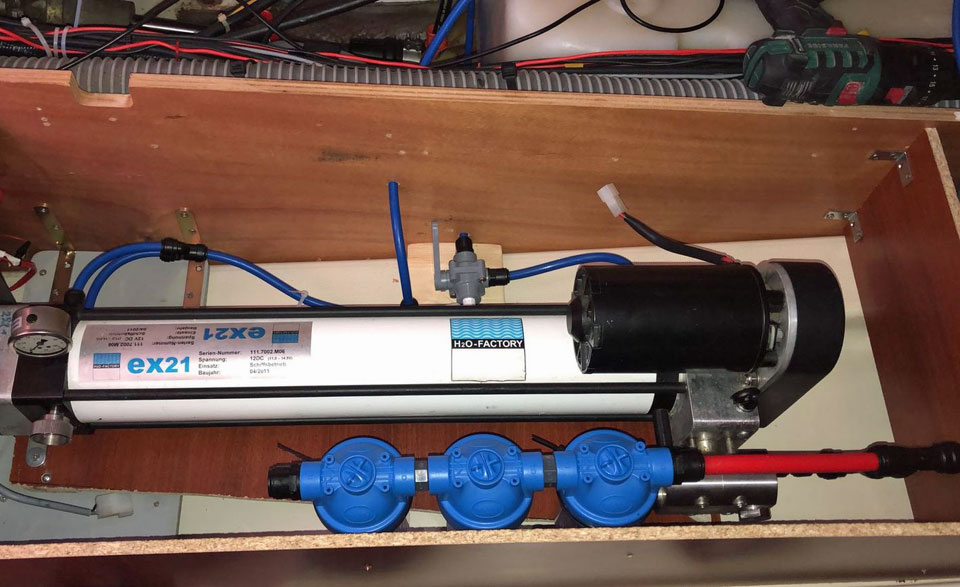 This model draws around 15 amps, producing 4 to 5 gallons (15 to 20 litres) of drinking water per hour
Table of Contents
- Living With Marine Watermakers
- The Components & Basic Operation
- Installation Practicalities & Plumbing
- Big & Thirsty, or Small & Frugal? Sizing Your Watermaker
- Looking After Marine Watermakers & Preventing Fouling
- Testing & Quality Assurance
- Troubleshooting Common Watermaker Issues
- Summing Up
- Frequently Asked Questions (FAQs)
Living With Marine Watermakers
For anyone seriously contemplating extended offshore cruising or ocean passages, the ability to generate your own freshwater is utterly transformative. It turns water, often your most restrictive consumable, into an unlimited resource. We often refer to these systems technically as a reverse osmosis (RO) desalinator, but among us sailors, it's just a marine watermaker.
The science behind it is pretty smart, really. It’s a filtration process achieved by forcing saltwater from a region of high solute concentration through a semi-permeable membrane to a low-concentration region (your tank) by applying high pressure. Simply put, that pressure pushes the water molecules through the incredibly fine pores of the membrane, leaving dissolved salts, minerals, and other impurities on the outside.
Whilst reverse osmosis is sadly not a corrective repair option for blistered fibreglass hulls, it certainly is a convenient way of obtaining drinking water from seawater, offering true independence from those restrictive marina dock systems.
The Components & Basic Operation
At its core, a marine watermaker system is surprisingly straightforward. You’re essentially looking at three main stages: getting the water in, building the pressure, and then separating the good stuff from the brine.
- Intake: A dedicated seacock or an existing tee'd-off raw water supply draws seawater.
- Pre-Filtration: This is absolutely critical. Raw water passes through a series of filters—typically a coarse 20-micron filter followed by a finer 5-micron filter—to protect the high-pressure pump and, crucially, the membrane.
- High-Pressure Pump: An electric pump (DC or AC) or a belt-driven unit off the main engine forces the pre-filtered water through the membrane. This is where the magic happens, requiring pressures up to 800 PSI.
- Reverse Osmosis (RO) Membrane: The heart of the system. It’s a spirally wound polymer sheet that rejects salt molecules.
- Product Line: This carries the desalinated, fresh water ('product water') to your storage tanks.
- Brine Discharge Line: The waste line carrying the concentrated saltwater (brine) and impurities back overboard.
It’s important to remember that marine watermakers are designed to process clean, open-ocean seawater. Any departure from that standard of cleanliness, say running in murky water in a busy harbour, is highly likely to cause rapid fouling and damage to the membrane or, worse, contaminate your precious freshwater.
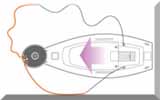
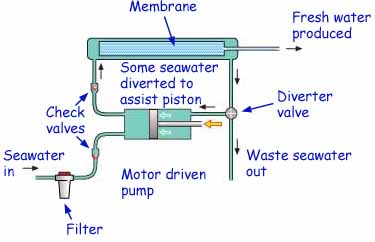 Components and layout of a typical watermaker unit
Installation Practicalities & Plumbing
Contrary to what you may expect, the plumbing involved in installing a marine watermaker doesn't necessarily have to involve additional thru-hull fittings; existing pipes can often be utilised to supply the raw water intake, dispose the waste water, and deliver the desalinated water to the tanks.
For example, on our own boat, Alacazam, we got creative:
- Intake: The raw water supply is tee'd off the main seawater intake to the heads. This saves drilling a new hole, but you must ensure the existing pipe diameter is sufficient for the flow rate.
- Brine Discharge: The waste water is tee'd into the wash-hand basin waste pipe. This keeps the discharge above the waterline and away from the intake to prevent short-cycling.
- Product Line: The fresh product line is tee'd into the supply line leading to the wash basin, from where it finds its way back to the tanks.
I can’t stress enough that installation placement is vital. The high-pressure pump generates significant vibration and noise, so choose a location (like an engine room or deep locker) where it won't impact living spaces. Also, ensure the pre-filters and the membrane housing are easily accessible. When you're offshore and need to change a filter, the last thing you want is to be contorted into an awkward space.
Big & Thirsty, or Small & Frugal? Sizing Your Watermaker
This is perhaps the biggest decision when fitting a watermaker. Sailors often mistakenly think they need a huge output unit, but that’s rarely the case. The output ranges from around four litres an hour up to over two hundred litres an hour.
The main types of unit available are:
| Type of Unit | Power Source & Consumption | Best Application |
|---|---|---|
| Low Output DC (12V/24V) | Driven from domestic battery supply (e.g., 4-8 amps). | Long-term cruising & liveaboards; relying on solar/wind charging. |
| High Output AC (110V/220V) | Driven by a generator or large inverter (high wattage). | Large yachts, charter boats; using high-draw appliances (washing machines, frequent pressurised showers). |
| Belt-Driven | Off the main engine. Only runs when engine is running. | Passagemaking, boats with high engine run-time or limited electrical charging capacity. |
If you're considering a high-output watermaker to support appliances like a plumbed-in washing machine or to run power-hungry refrigeration units constantly, the overall distribution and layout of these high-demand utilities are vital factors. This consideration naturally extends to the efficiency of your onboard living spaces, particularly when it comes to Choosing the Best Sailboat Galley Layout, which dictates how effectively you can manage both water and power consumption.
We use a low-output version, a 12v Katadyn Powersurvivor 40e. It draws just 4 amps and produces about 5.7 litres of good quality drinking water per hour. We did consider the larger 80e model, which consumes double the electrical power (8 amps) but produces slightly more than double the quantity of water (12.9 litres per hour).
However, our solar panels and wind-generator can easily keep up with the 40e's meagre electrical appetite. Run every day, the freshwater output is sufficient for two people, and we only need to biocide the membrane when we lay up. We turn solar and wind energy into water, which feels like a great trade-off.
The Edge: Energy Recovery Systems (ERS)
For maximum efficiency, especially with high-output units, look for systems that incorporate an Energy Recovery System (ERS). These clever hydraulic intensifiers capture the energy from the high-pressure brine water leaving the membrane and transfer it back to the low-pressure incoming raw water. This process can reduce the required electrical energy input by up to 80% compared to conventional high-pressure pumps. This technology is a game-changer for serious cruising yachts aiming to run a significant water output exclusively on DC power and renewables.
The Key Insight: It’s lack of use that gives rise to the marine watermaker's reputation for unreliability, rather than overuse. Consequently, it's a mistake to get a bigger one than you need. A smaller unit that you can comfortably run for a couple of hours every day is far more reliable than a massive one you only use once a week.
Looking After Marine Watermakers & Preventing Fouling
Marine Watermakers like to be run often. They truly come into their own on long offshore passages or protracted cruising in clean waters.
The biggest threat to your RO membrane is biological growth—bacteria, algae, and mould. Once this fouling takes hold, performance drops off dramatically, and the membrane may be irreversibly damaged.
Critical Chemical & Material Warnings
Here's what will instantly destroy your system, guaranteeing a costly replacement:
- Chlorine & Chloramine: Never expose the membrane to chlorine (e.g., standard household bleach or pool shock). It oxidises the membrane polymer irreversibly. Be cautious when filling product tanks from a dock if the shore water has a high chlorine content—always use a charcoal post-filter.
- Petroleum Products: Oil or fuel residue, often found in marinas or bilge water, will coat and blind the membrane, causing an irrecoverable drop in performance.
- Copper & Brass: Avoid using copper or brass fittings in the product water line. Dissolved ions can damage the membrane. Use stainless steel, plastic, or approved composites throughout.
Maintenance Schedule: Flush, Run, or Pickle?
The decision on maintenance depends entirely on the duration of your lay-up:
| Lay-Up Duration | Recommended Action | Notes |
|---|---|---|
| 1 - 7 Days | Run for 30–60 minutes daily or use a Freshwater Flush. | Flush uses product water to displace saline water from the membrane. Automated flushing systems are highly recommended for peace of mind. |
| 1 - 4 Weeks | Freshwater Flush (repeat every few days) or Pickle (Biocide Treatment). | In the tropics, pickling is advisable after just a few days due to rapid biological growth. |
| Over 4 Weeks | Pickle (Biocide Treatment) is mandatory. | Use sodium metabisulphite solution. Always label the system clearly that it is pickled. |
- Routine Use: If your watermaker is operating in the tropics, you should run it every couple of days to flush the system and prevent growth. In temperate zones, once a week is usually sufficient.
- Biocide Treatment (Pickling): If they're not going to be used for more than a week, they need to be 'pickled' with a biocide (sodium metabisulphite). This involves running the biocide solution through the system and leaving it dormant until you need it again. Always flush the biocide out thoroughly before making potable water!
- Pre-Filtration is Paramount: Change your sediment pre-filters regularly. If the watermaker is struggling for output, the first thing you should check is the filter condition. A fouled pre-filter starves the high-pressure pump, which can damage it and reduces membrane output.
Testing & Quality Assurance
Just because water is flowing doesn’t mean it’s safe to drink. Water produced through reverse osmosis doesn't have the natural mineral content our bodies require, and more importantly, a damaged or compromised membrane can allow salts through.
You must routinely test the quality of your product water using a simple, handheld TDS (Total Dissolved Solids) meter.
- TDS Reading: This device measures the conductivity of the water, which correlates directly to the amount of dissolved salt and minerals.
- Acceptable Limits: Potable water should have a reading of less than 500 parts per million (PPM). Most watermakers, when working well, produce water closer to 50 to 100 PPM. If your reading is spiking above 500 PPM, it's a clear signal that the membrane is failing or has been contaminated, and you should switch the product line to discharge overboard until the issue is fixed.
Troubleshooting Common Watermaker Issues
Offshore, when you rely on your watermaker, faults inevitably appear. Most common faults can be diagnosed with a pressure gauge and a TDS meter.
| Symptom | Probable Cause | Sailor's Fix |
|---|---|---|
| Low Product Output | Fouled pre-filters (most common); air leak on the intake side; low seawater temperature. | Change pre-filters immediately. Check all intake hose clamps & connections. |
| High TDS Reading | Membrane failure; broken seals in membrane housing; running in brackish water (high TDS intake). | Test the intake water TDS. If intake is clean, the membrane is likely compromised and needs replacement. |
| Low System Pressure | Low raw water pressure (clogged intake seacock or filters); air leak in the boost pump or low-pressure section. | Service seacock and clean the strainer. Check/tighten all low-pressure fittings. |
| Pump Cycles On/Off | Air in the system; check valve failure; pressure switch malfunction. | Purge air by running with the pressure fully vented. Check power supply consistency. |
In a Nutshell
A well-chosen and diligently maintained marine watermaker offers true autonomy on the water. Prioritise a unit you can run daily using renewable energy (like our 40e) or invest in an ERS system for high-volume efficiency. Stick rigidly to the pre-filter change schedule, avoid chemical contamination at all costs, and routinely test your output with a TDS meter. It's an investment that repays itself in comfort and peace of mind.
Summing Up
Integrating a marine watermaker into your offshore yacht is more than just a convenience; it’s a genuine enhancement to safety and freedom. The best unit for you is almost always the one you can run consistently without unduly taxing your charging systems, ensuring the membrane remains active and healthy. Take care of your watermaker by treating it like the critical piece of equipment it is, and it will reliably take care of you, allowing you to focus on the joy of the passage, not the contents of your tanks. It truly does turn a long passage from a rationing exercise into a luxury cruise.

This article was written by Dick McClary, RYA Yachtmaster and author of the RYA publications 'Offshore Sailing' and 'Fishing Afloat', member of The Yachting Journalists Association (YJA), erstwhile member of the Ocean Cruising Club (OCC) and owner/administrator of 'Liveaboard Sailboats for Sale'.

Frequently Asked Questions (FAQs)
1. How long does a reverse osmosis membrane typically last?
1. How long does a reverse osmosis membrane typically last?
With meticulous care, including regular use or proper pickling with biocide, an RO membrane can last between five and ten years. However, contamination from petroleum products, chlorine, or severe biological fouling can destroy it much faster, often requiring replacement in under a year if maintenance is neglected.
2. Can I use my watermaker in a harbour or estuary?
2. Can I use my watermaker in a harbour or estuary?
It is strongly advised not to. Marine watermakers require clean, open-ocean water. Harbours and estuaries contain higher levels of silt, pollutants (e.g., fuel), and biological contaminants that will rapidly clog your pre-filters and irreparably damage the sensitive RO membrane. Always aim for clear, blue water intake.
3. What is 'pickling' and why is it necessary?
3. What is 'pickling' and why is it necessary?
Pickling is the process of storing the watermaker by flushing a preserving solution (biocide, typically sodium metabisulphite) through the system. This prevents the growth of bacteria and algae on the membrane when the unit is not used for more than a week, which is crucial for preserving the membrane's service life.
4. Does the water produced by a watermaker need to be treated further?
4. Does the water produced by a watermaker need to be treated further?
The water produced is microbiologically pure, but it is low in minerals. For long-term consumption, some sailors choose to remineralise it, often by simply adding a tiny amount of concentrated mineral solution or by running it through a specialised post-filtration cartridge. Beer, I’m reliably informed, also helps replace required minerals!
5. How much electricity does a watermaker consume?
5. How much electricity does a watermaker consume?
Consumption varies hugely by type. Low-output 12V DC units (popular with small-to-mid-sized cruising yachts) draw as little as 4 amps (e.g., 40e model), making them sustainable via solar and wind. High-output AC units can draw kilowatts, meaning you'll have to fire up the generator. The key variable is whether the system employs Energy Recovery technology, which drastically reduces the required amperage.
6. Is a high-output watermaker more efficient than a small one?
6. Is a high-output watermaker more efficient than a small one?
Not necessarily. While high-output units produce more water per hour, a small, low-draw unit that can be run daily using solar/wind power is often more efficient overall for a cruising couple, as it avoids the need to start a noisy, fuel-consuming generator for water production.
Recent Articles


-
Mystery 35 Review: Specs, Performance & Buying Guide
Aug 29, 26 09:42 AM
An in-depth review of the Mystery 35 sailboat. Read technical specs, design ratios, sail performance, and common buyer inspection areas. -
Beneteau First 405 Review: Specs, Performance & Buyer’s Guide
Aug 26, 26 03:58 AM
Detailed Beneteau First 405 review covering specs, performance, bluewater capability, layouts and buyer’s checklist. -
Moody S38 Review: Specs, Ratios & Buyer’s Guide
Aug 12, 26 04:22 AM
In‑depth Moody S38 review covering specs, performance, design ratios, layout, strengths, trade‑offs & buyer inspection points.