- Home
- Sailing Books
Sailing Books & Articles
And The Gifted People That Write Them
Now and again, authors of sailing-related books send me an sample of their work to review. I'm always happy to do this, but I have a simple philosophy about giving poor reviews—I don't. It would seem bad form to do so—I know all too well the time involved in writing a book and getting it published—which is why I simply return such books to their authors with a note explaining why I feel unable to publish a review of their work on this site.
With that out of the way, I'm sure you'll find the following publications informative and useful.
Books
- 'Marine Diesel Basics' by Dennison Berwick
- 'Healthy Boating & Sailing' by Dr Michael Cohen
- 'The Hunter & the Gatherer', by Catherine Lawson & David Bristow
- 'We Ran Away to Sea', by George Kent Kedl & Pamela Thompson Kedl
- 'Too Cold for Mermaids', by David J Forsyth
Articles
- Navigation: It's Not Just for the Birds (Part 1)
- Navigation: It's Not Just for the Birds (Part 2)
- Going with the Flow
- Solo Sailing and the Need for Sleep
- One Number Every Sailor Should Know
- Are You Sitting Comfortably?
- Do Helmets Prevent Concussions on the Water?
- Time on the Water
- Time and the Sailor's Brain
- Sailors Guts
- Balance on the Water
- The Senior Sailor Situation
- In Pursuit of a Dream
- Once Upon the Gulf of Maine
- Oceans Tamed My Ego

'Marine Diesel Basics' by Dennison Berwick
Adventure has been part of Dennison Berwick’s life since childhood, growing up on the edge of the Yorkshire Dales and spending long summers by the sea at Filey. That early mix of wild countryside and saltwater set the course for a lifetime of travel, curiosity and self‑reliance.
Before he ever set sail, Dennison built an extraordinary overland résumé: hitch‑hiking alone from Cape Town to Cairo, visiting Afghanistan in 1976, and later emigrating to Canada. In 1983–84 he walked the entire length of the Ganges—seven months on foot—raising money for Save the Children and producing his first book, A Walk Along the Ganges. More journeys followed: years travelling the Amazon by canoe, living with Yanomami communities, and documenting their struggle in Savages. He even stepped away from travel long enough to build and run Still Life Retreat in Ontario.
Sailing eventually became his home and his craft. After owning boats in Malaysia and Canada, he now lives aboard his third sailboat, 'Oceandrifter', a 36‑foot Chevrier. His voyages have taken him from the tropics to the Labrador coast, often solo and always with a preference for challenge over convenience.
Alongside his voyaging, Dennison has developed deep practical expertise—especially in marine diesel engines, systems maintenance, and hands‑on problem‑solving. His technical books and guides combine clear explanations with his own precise illustrations, reflecting the same discipline and curiosity that have shaped his life of adventure.
While I haven't yet read Dennison's travel/adventure books (not yet, that is) I have delved, on more than a few occasions, into each of his 'Marine Diesel Basics' books:


'Healthy Boating & Sailing' by Dr Michael Cohen
Dr Cohen has been boating since 1974 when he moved to Boston to study neurology. You might say he has had boating on the brain ever since!
He has been a practising neurologist for the past 45 years and for almost 20 years he was the chief of neurology at the Philadelphia Veterans Affairs Medical Centre. During that time he was the assistant professor of neurology at The Medical College of Pennsylvania.

Dr Cohen’s 'Healthy Boating & Sailing' takes an approach to sailors' health that is both unusual and genuinely useful, and here's why I believe it's a book that deserves a place on every sailor's bookshelf...
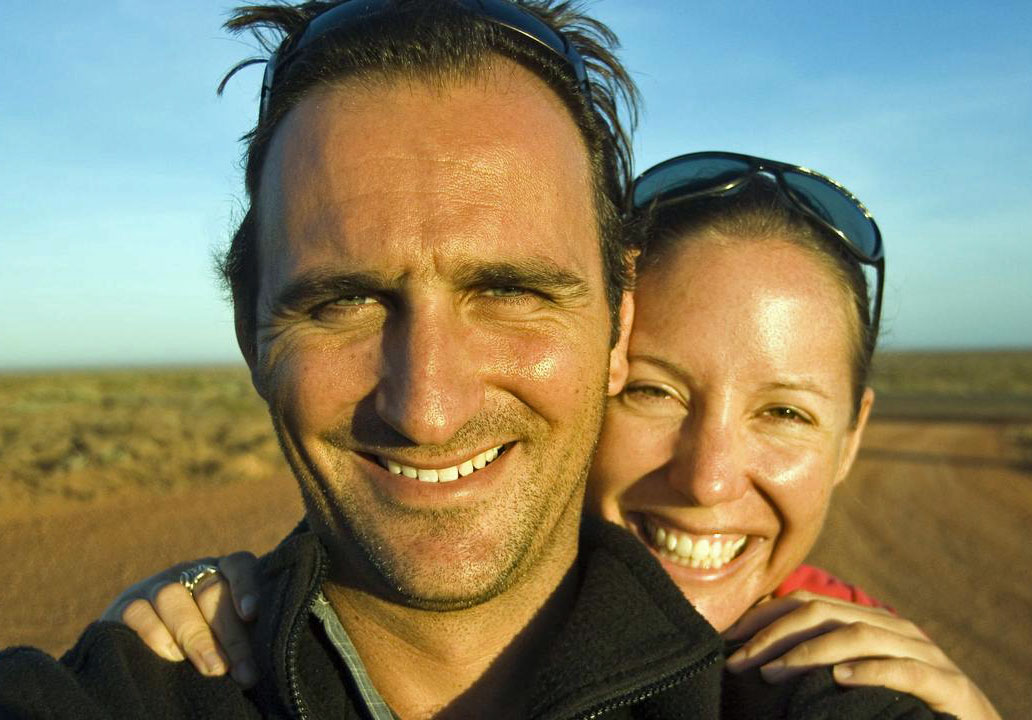
'The Hunter & the Gatherer', by Catherine Lawson & David Bristow
It was my wife Mary who first got her hands on The Hunter & the Gatherer, when it dropped through our letterbox.
The first thing that struck me about the book (when I could finally prise it away from my wife) was its visual and tactile appeal. It's properly bound like a hardback, with an embossed cover and quality glossy pages most of which are enhanced by superb colour photographs.
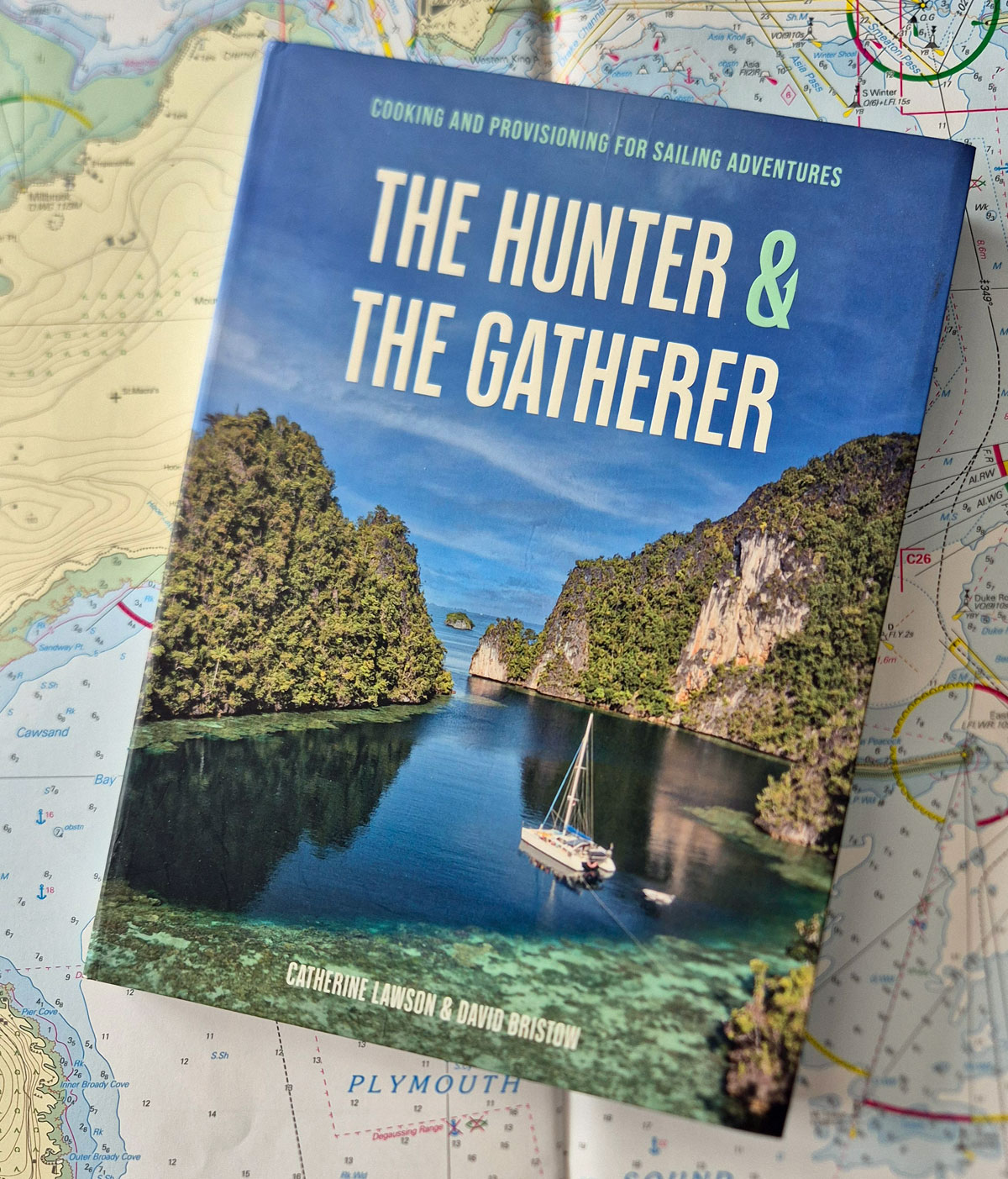
The authors are long-term liveaboard cruisers who live an off-the-grid lifestyle aboard their catamaran ‘Wild One’ with their young daughter Maya.
Catherine tells us "I strive to own as little as possible and live for the family, undiscovered destinations, and keeping our wild places wild."
David says "I prefer to repair rather than to replace, to own less and live more" - two statements that tell us a great deal about their passions and their approach to living afloat.
Catherine - an erstwhile creator of recipes for travel magazines - is not always a fan of cookbooks, explaining that "invariably they call for ingredients that we don't have onboard and are rarely stocked in the remote harbour towns that we sail into".
As you will have guessed, this is a criticism that cannot be levelled at 'The Hunter & The Gatherer' in which all 160-odd innovative recipes are based on ingredients that can be:
- Harvested from the sea - fish, crustaceans (crabs, lobsters, crayfish and prawns), cephalopods (squid, octopus and cuttlefish) and molluscs prised from rocks or dug from the sand;
- Foraged ashore - fruit and vegetables;
- Grown aboard - herbs and greens;
- Purchased from local fishermen;
- Purchased from local markets.
Furthermore, the recipes are flexible with plenty of substitute ingredients suggested, and cater for personal tastes and dietary requirements. For example, there are recipes for:
- Those who prefer to avoid gluten, fructose, dairy or nuts; Vegan meals for those who are so inclined;
- Quick-to-Cook meals for when you are short on time or under sail, when the galley is not the place you want to be;
- One Pot meals for stovetop cooks and sailors who hate washing up;
- No-cook meals for flame-free things to eat;
- Campfire cooking meals over hot coals with mates and beers.

The writers have ensured that the book is easy to navigate with the contents set out at the front and a detailed recipe-by-recipe index at the back. In all, this is a unique and very useful source of culinary inspiration for cruising sailors, and deserves a place aboard.

'Too Cold for Mermaids', by David J Forsyth
David J Forsyth’s Too Cold for Mermaids is a quietly compelling account of a dream pursued with determination, reshaped by circumstance, and ultimately fulfilled in a way the author never expected. It’s not a tale of palm trees, trade winds or tropical anchorages — though those were the images that first inspired him — but rather a story of how a lifetime ambition can evolve into something equally meaningful when reality intervenes.
Forsyth’s dream began early, fuelled by the romantic adventure of The Coral Island. Like many of us, he spent years “treading water”, imagining the voyage rather than taking the first steps toward it. What makes his story engaging is the honesty with which he describes the slow, deliberate process of turning a distant fantasy into a practical plan: learning to sail, crewing for others, studying navigation, saving for a boat, and gradually acquiring the skills and confidence needed for offshore cruising.
His eventual purchase of the Alberg 29 Alice Rose marks the turning point. The refit, the Great Lakes sailing, and the crewing passages to Newfoundland, Labrador and down the US East Coast all form part of the long apprenticeship that many sailors will recognise. Forsyth writes with the measured tone of someone who has done the hard miles and understands that competence is built over years, not weekends.
The planned transatlantic voyage — Canada to the Azores and on to the UK — is where the narrative shifts. Mechanical problems, delays and an unexpected family emergency dismantle the carefully prepared plan, leaving Forsyth to confront the loss of a dream he had carried for decades. His description of that moment is understated but poignant; it’s the kind of disappointment every sailor fears, yet he handles it with admirable clarity.
What follows is not defeat but adaptation. With the help of friends, Forsyth sails Alice Rose home via Halifax, Boston, New York, the Hudson River and the Erie Canal — a 2,500‑mile loop that becomes its own adventure. The book’s title, Too Cold for Mermaids, captures the reality of the North Atlantic he encountered: not the warm, tropical waters he once imagined, but a harsher, more demanding environment that nonetheless delivered its own rewards.
What stands out is Forsyth’s perspective. He doesn’t dwell on what might have been. Instead, he recognises the value of the journey he did make — the friendships, the learning, the challenges, and the satisfaction of having pursued the dream as far as circumstances allowed. It’s a reminder that cruising rarely unfolds exactly as planned, yet still offers experiences worth cherishing.
'Too Cold for Mermaids'
David J Forsyth is the author of 'Too Cold for Mermaids', an account of his sailing adventures in the Great Lakes and on the North Atlantic.

As an Amazon Associate I earn from qualifying purchases.
Too Cold for Mermaids is a thoughtful, honest account of one sailor’s long pursuit of a goal. It will resonate with anyone who has ever sketched a dream passage on a chart, saved patiently for a boat, or discovered that the adventure you get is sometimes different from the one you imagined — and no less worthwhile for it.
'We Ran Away to Sea', by George Kent Kedl & Pamela Thompson Kedl
At some time in our lives, usually after a particularly bad day at the office, many of us dream of a new lifestyle that would release us from the tedium of the status quo and the stress of worrying about things that don't really matter, replacing it with a life of freedom, challenge and adventure - clearly things that really do matter.
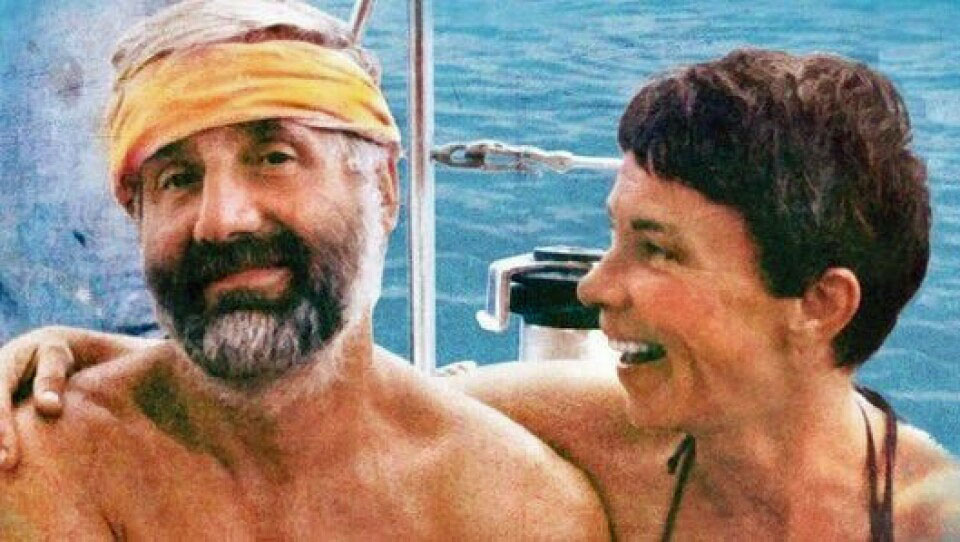
For most it remains a recurring pipedream, but a few - people like the American couple George Kent Kedl and Pamela Thompson Kedl - have the drive and courage to make it happen.
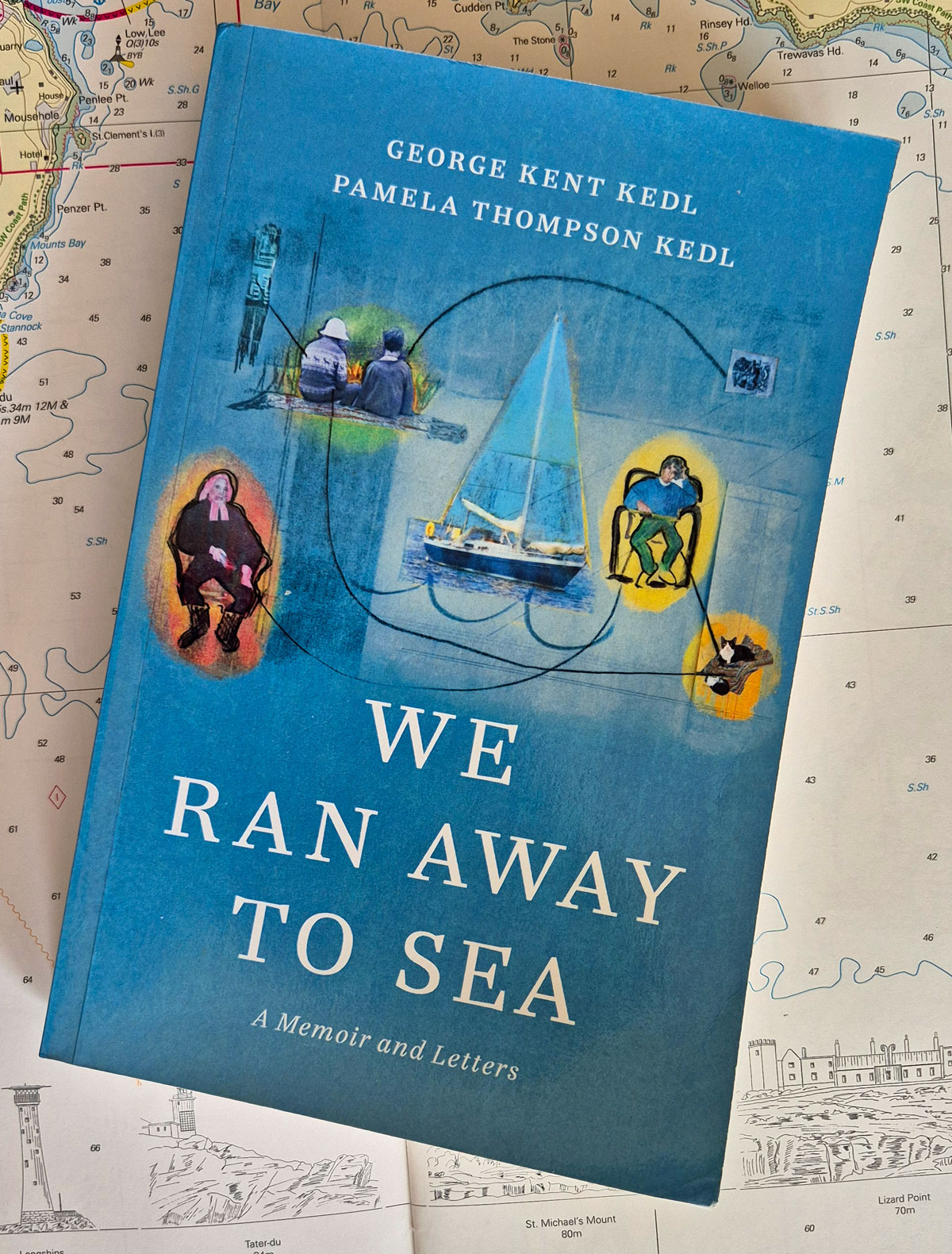
Kent (a philosophy professor) and Pam (a potter) had a comfortable but unfulfilling life in the United States. With a midlife crisis looming, they craved a new alternative lifestyle and despite having no experience of the sea or sailing, decided that a live-aboard bluewater sailboat was the ideal accoutrement to help them find it.
With the capital released from the sale of their house and shoreside possessions, they found their ideal sailboat in the UK - 'Jacana' a Nicholson 38 ketch - and set off on an Atlantic crossing and their new life afloat.
Kent soon becomes an experienced and proficient yachtsman and finds total contentment in their new lifestyle experience but for Pam, things are less than idyllic. Torn between her husband, her home, her family, her art, and life on the boat it all becomes too much. As a result, they reluctantly agree to sell 'Jacana' and move back to a house in the US. After several years, and with life ashore now following a similar pattern to the one they had chosen to abandon, the discontent and frustration that had led them to run away to sea returned to haunt them. Predictably, they bought another boat, 'Coot', a steel Dutch-built Breewijd 31 sloop - and set out to sea again...
What follows is a captivating account of their cruising adventures in the Caribbean and their often risky excursions into the Central American interior.
Sadly, Pam died before this book was published. Kent has incorporated Pam's letters to friends and family in which she eloquently expresses her views and experiences, which don't always align with Kent's. This book would be much less moving and meaningful without them.
Kent certainly knows how to write. He has that envious ability to say what he means in no more words than is necessary to get his point across whilst holding the reader's attention throughout.

Thank you Kent, I enjoyed 'We Ran Away to Sea' immensely but was saddened to read of the passing of Pam. I can recommend your book to all sailors, particularly those with that recurring pipedream who might one day 'just do it'...
Recent Articles


-
Mystery 35 Review: Specs, Performance & Buying Guide
Aug 29, 26 09:42 AM
An in-depth review of the Mystery 35 sailboat. Read technical specs, design ratios, sail performance, and common buyer inspection areas. -
Beneteau First 405 Review: Specs, Performance & Buyer’s Guide
Aug 26, 26 03:58 AM
Detailed Beneteau First 405 review covering specs, performance, bluewater capability, layouts and buyer’s checklist. -
Moody S38 Review: Specs, Ratios & Buyer’s Guide
Aug 12, 26 04:22 AM
In‑depth Moody S38 review covering specs, performance, design ratios, layout, strengths, trade‑offs & buyer inspection points.