- Home
- Cruising Yachts 40' to 45'
- Jeanneau Voyage 12.50 Review
The Jeanneau Voyage 12.50 Sailboat: Specs, Performance Analysis & Cruising Characteristics
Key Takeaways
The Jeanneau Voyage 12.50 is a robust, moderate-displacement cruiser designed for long-term liveaboard comfort rather than outright racing speed. Built during a period when Jeanneau prioritised substantial scantlings and structural stiffness, it offers high stability and a predictable motion at sea. While it may not be the swiftest in light airs, its generous beam and significant ballast make it a secure offshore companion for experienced crews.
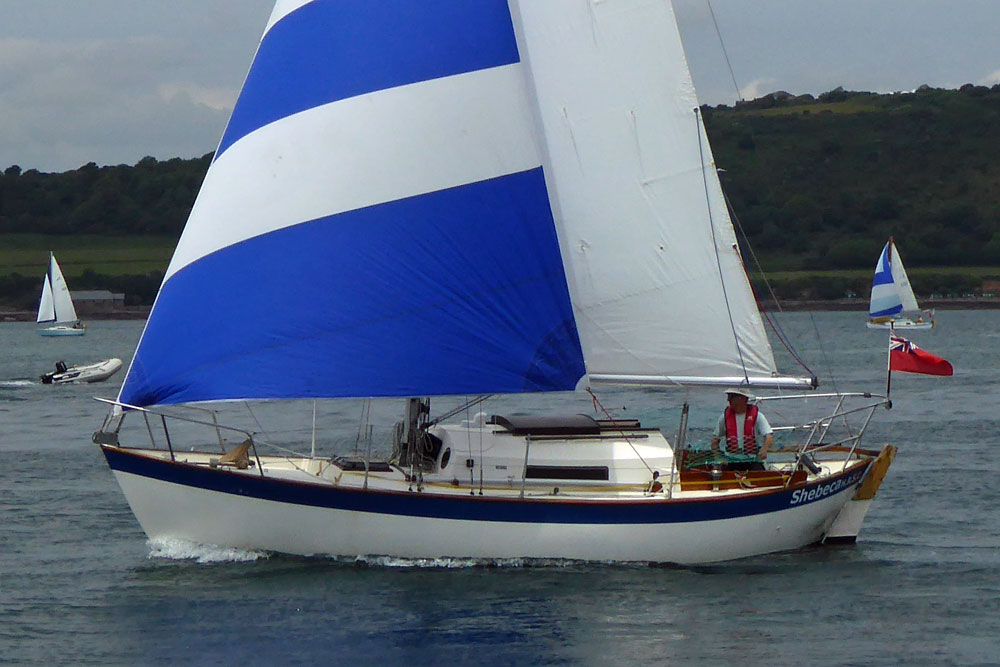
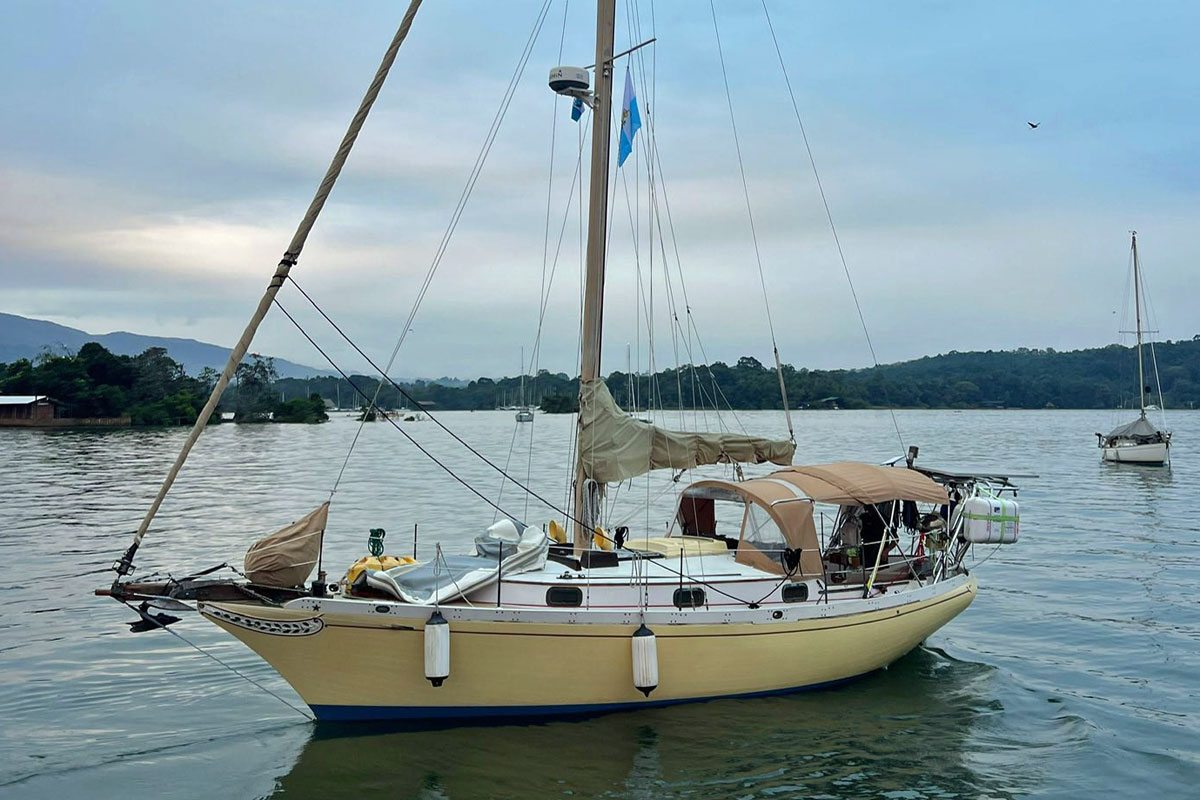
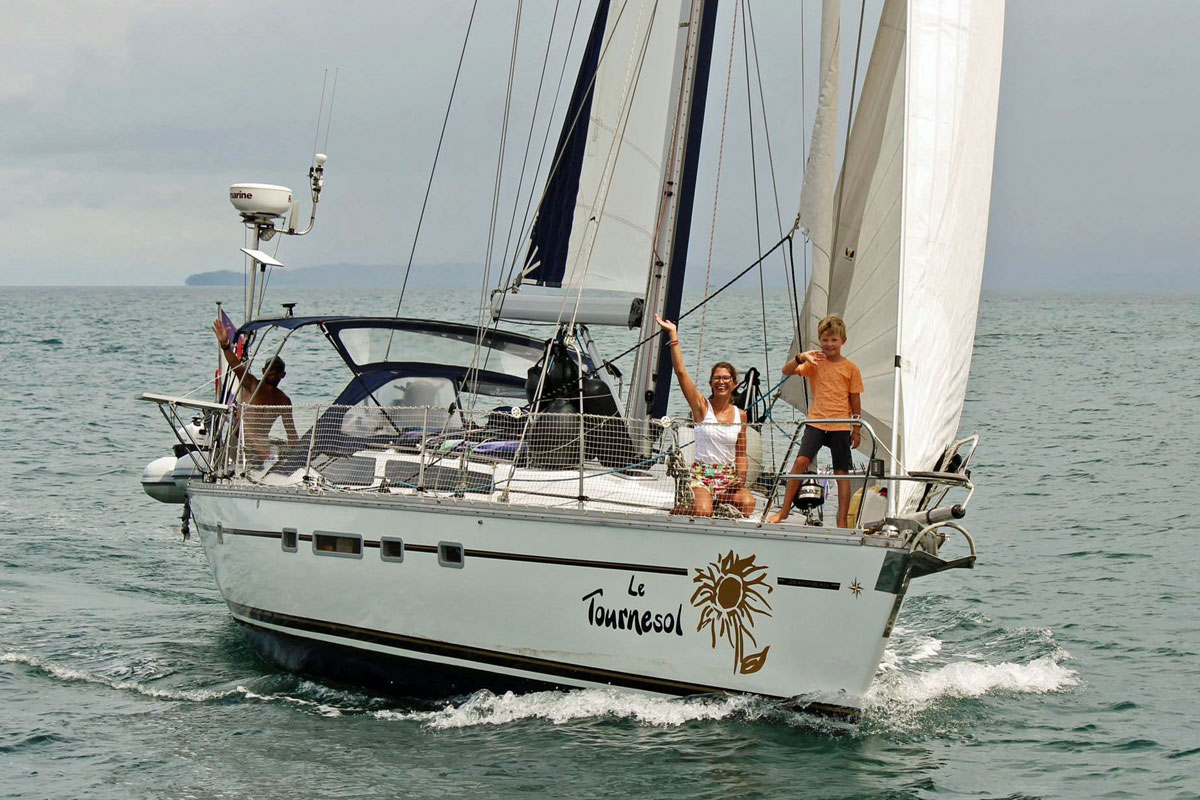 'Le Tournesol', a Jeanneau Voyage 12.5
This great image by kind permission of the owners
Table of Contents
- Design & Construction
- Sail Areas & Rig Dimensions
- Published Specification: The Jeanneau Voyage 12.50 Blueprint
- Performance Analysis: Understanding the Design Ratios
- Structural Integrity & Stability Dynamics
- The Buyer’s Checklist: Common Problem Areas
- Comparison: Jeanneau Voyage 12.50 vs The Competition
- Configuration, Layout & Cruising Characteristics
- Summing Up
- Frequently Asked Questions (FAQs)
Design & Construction
The Jeanneau Voyage 12.50 was born from the drawing board of Guy Ribadeau Dumas, a designer well-versed in creating vessels that balance volume with seaworthiness. Produced by the prolific French builder Jeanneau starting in 1987, the hull is constructed from solid GRP (Glass Reinforced Plastic), while the deck utilises a balsa-cored sandwich for weight saving and insulation. Unlike the aluminium Alubat designs that focus on extreme ruggedness, the Voyage 12.50 leans towards refined production fiberglass techniques that offer a smooth finish and excellent durability in a marine environment.
A defining feature of this model is its wide, powerful stern and integrated bathing platform, which was somewhat ahead of its time in the late 1980s. This design choice provides an expansive cockpit for the crew and significantly increases the interior volume in the aft sections. Most examples were produced as masthead sloops with a fixed fin keel and a skeg-mounted rudder, a configuration chosen for its reliability and directional stability when crossing oceans. While the fin keel (drawing 5'5" or 1.65m) is the standard, variations in interior layout—ranging from three to four cabins—were the primary customisation options offered to original buyers.
Sail Areas & Rig Dimensions
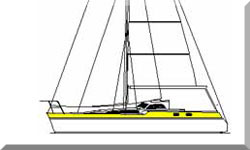
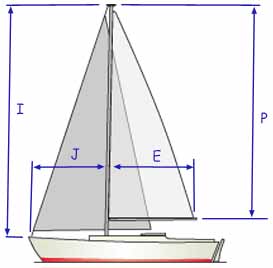 Rig dimensions
The Voyage 12.50 carries a conservative but capable masthead rig. The sail plan is designed for ease of handling, often found with in-mast or behind-mast furling systems for the mainsail and a large overlapping genoa.
- Mainsail Area: 360 ft² (33.47 m²)
- Genoa Area: 575 ft² (53.40 m²)
- Total Upwind Sail Area: 935 ft² (86.87 m²)
- I (Forestay Height): 50'4" (15.35 m)
- J (Foretriangle Base): 15'9" (4.80 m)
- P (Mainsail Luff): 44'11" (13.70 m)
- E (Mainsail Foot): 14'1" (4.30 m)
Published Specification: The Jeanneau Voyage 12.50 Blueprint
| Specification Detail | Measurement & Data |
|---|---|
| Length Overall (LOA) | 41'0" (12.50 m) |
| Length at Waterline (LWL) | 33'4" (10.15 m) |
| Beam | 13'3" (4.05 m) |
| Draft (Standard Fin) | 5'5" (1.65 m) |
| Displacement | 17,967 lbs (8,150 kg) |
| Ballast | 7,385 lbs (3,350 kg) |
| Rig Type | Masthead Sloop |
| Hull Material | GRP (Glass Reinforced Plastic) |
| Production Dates | 1987 – 1992 |
Performance Analysis: Understanding the Design Ratios
To truly evaluate how this vessel behaves at sea, we must look beyond the raw numbers and examine the ratios that define its character.
| Design Ratio | Calculated Value | Expert Interpretation |
|---|---|---|
| Sail Area/Displacement (SA/D) | 21.8 | A healthy ratio for a cruiser, indicating enough power to move the hull in moderate breezes. |
| Displacement/Length (D/L) | 215 | Sits firmly in the "Moderate Cruiser" category; well-balanced for offshore work. |
| Ballast/Displacement (B/D) | 41% | High ballast ratio suggests excellent stiffness and the ability to carry sail in a blow. |
| Capsize Screening Formula (CSF) | 1.82 | A value under 2.0 is the offshore standard; this boat is safely ocean-capable. |
| Brewer Motion Comfort Ratio | 25.8 | Predicts a comfortable, "kindly" motion that won't exhaust the crew in a seaway. |
The Sail Area to Displacement ratio tells us that while she isn't a light-wind ghoster, she has the canvas to maintain respectable speeds. The Displacement to Length ratio confirms she has enough mass to punch through chop without losing momentum. Crucially, the Capsize Screening Formula and Comfort Ratio align with the design intent: a safe, stable platform for blue-water passages. For a broader context on these figures, see our guide on Understanding Boat Performance & Design Ratios.
Structural Integrity & Stability Dynamics
The Jeanneau Voyage 12.50 hails from what many consider the "Golden Era" of production boat building. During this period, hulls were often "over-built" compared to modern, ultra-light counterparts. The hull-to-deck joint is a robust mechanical fastening reinforced with high-strength adhesive, creating a monocoque-like stiffness that resists the twisting forces of a heavy rig in a seaway.
A critical safety feature is the skeg-mounted rudder. Unlike a spade rudder, which is vulnerable to impact, the skeg provides a protective leading edge and a secondary bearing point. This arrangement is highly valued by blue-water sailors who fear the loss of steering due to a collision with floating debris or containers.
The Buyer’s Checklist: Common Problem Areas
When inspecting a Voyage 12.50, certain age-related issues demand attention. While the core structure is sound, three decades of service life bring specific maintenance requirements:
- Porthole & Window Seals: The signature large cabin windows are prone to crazing and leaks. Replacing these is a specialized task and can be a significant refit cost.
- Engine Exhaust Elbow: Many units featured the Perkins M50 or Yanmar 4JH. The mixing elbows are known to corrode internally; if they fail, they can allow salt water to back-siphon into the engine cylinders.
- Grid Liner Inspection: Check for any signs of "star crazing" or separation in the internal structural grid, particularly around the keel bolts, which might indicate a previous hard grounding.
- Original Gelcoat: While thick, the gelcoat on some early models can exhibit chalking. A professional cut and polish usually restores the shine, but check for deep osmotic blistering in the hull.
Comparison: Jeanneau Voyage 12.50 vs The Competition
In the 40-foot to 42-foot range of the late 80s and early 90s, the Voyage 12.50 occupied a unique niche.
- Beneteau Oceanis 43: The Beneteau is typically faster in light air due to a lighter build, but it lacks the heavy-weather "thump" of the Jeanneau. The Voyage feels more planted when the sea state turns nasty.
- Westerly Oceanlord 41: The Westerly offers a centre-cockpit layout and a very traditional British interior. The Voyage 12.50 feels much more modern and spacious below decks, though the Westerly might edge it out for ultimate heavy-weather protection in the cockpit.
Configuration, Layout & Cruising Characteristics
The interior of the Voyage 12.50 is where the "Voyage" name shines. Whether configured with a linear or U-shaped galley, the design provides secure bracing points for the cook. Tankage is impressive, with over 450 litres (119 gallons) of water and 190 litres (50 gallons) of fuel, making her well-suited for the islands or long ocean legs.
Under power, she is predictable and strong, though the combination of a longish fin and skeg means she can be a handful in astern due to prop walk. However, once underway, she tracks like a train, making the job of an autopilot much easier and reducing power consumption on long passages.
Could this be your ideal cruising boat?
It may well be, but before going any further, it might be worth taking a look at my eBook 'How to Avoid Buying the Wrong Sailboat'...
Summing Up
The Jeanneau Voyage 12.50 is a testament to an era when cruising boats were built with a primary focus on stability and sea-kindliness. Its moderate design ratios and high ballast-to-displacement figures ensure it remains a top contender for those seeking a practical blue-water cruiser. While maintenance on a vessel of this age—specifically regarding original gelcoat and portlights—is a necessary consideration, the underlying structural integrity is rarely in question. It is a pragmatic choice for the sailor who values a comfortable motion and a safe cockpit over the fleeting thrill of light-air racing.
If you'd like to compare this boat with others in this size range, take a look at Cruising Boats from 40' to 45' overall....
This article was written by Dick McClary, RYA Yachtmaster and author of the RYA publications 'Offshore Sailing' and 'Fishing Afloat', member of The Yachting Journalists Association (YJA), and erstwhile member of the Ocean Cruising Club (OCC).
Frequently Asked Questions (FAQs)
Is the Jeanneau Voyage 12.50 suitable for single-handed sailing?
Is the Jeanneau Voyage 12.50 suitable for single-handed sailing?
Yes, as most lines are led aft. With a reliable autopilot and a furling headsail, she is manageable, though her mass requires careful handling during close-quarters berthing.
How does it perform in light winds?
How does it perform in light winds?
With a moderate SA/D ratio, she is not a light-wind ghoster. Expect to motor-sail in anything under 8-10 knots of true wind unless you are carrying a dedicated cruising chute.
Are there common issues with the hull or deck?
Are there common issues with the hull or deck?
The solid GRP hull is exceptionally durable. The primary concerns are usually moisture in the balsa-cored deck around improperly bedded hardware and the aforementioned window seals.
What is the typical engine life expectancy?
What is the typical engine life expectancy?
The Perkins and Yanmar engines fitted are high-quality units. With proper maintenance of the heat exchangers and exhaust elbows, these engines can easily exceed 5,000 to 8,000 hours.
How many people can comfortably live aboard?
How many people can comfortably live aboard?
The three-cabin version is the preferred liveaboard layout, providing a spacious master cabin and two guest cabins, with enough storage for long-range supplies for 4-6 people.
Recent Articles


-
Offshore Internet with Starlink: Hardware, Plans, and Setup Guidance
Oct 01, 26 01:15 PM
A clear, practical guide to choosing the right Starlink hardware and plan for offshore cruising. Learn what to buy, how to install it, and how to manage power afloat. -
Offshore Liferaft Guide: Choosing, Stowing and Servicing One
Oct 01, 26 06:28 AM
Choosing an offshore liferaft? Learn what ISO 9650 Group A means, where to stow it, how often to service it and what to pack in the grab bag. -
Can an Inflatable Tender Replace a Liferaft? Offshore Verdict
Sep 30, 26 03:50 PM
Can an inflatable tender replace a liferaft? Offshore sailors get the honest answer: when a tender helps, where it fails and how to plan abandon ship.