- Home
- Cruiser Yachts under 30'
- Albin Ballad
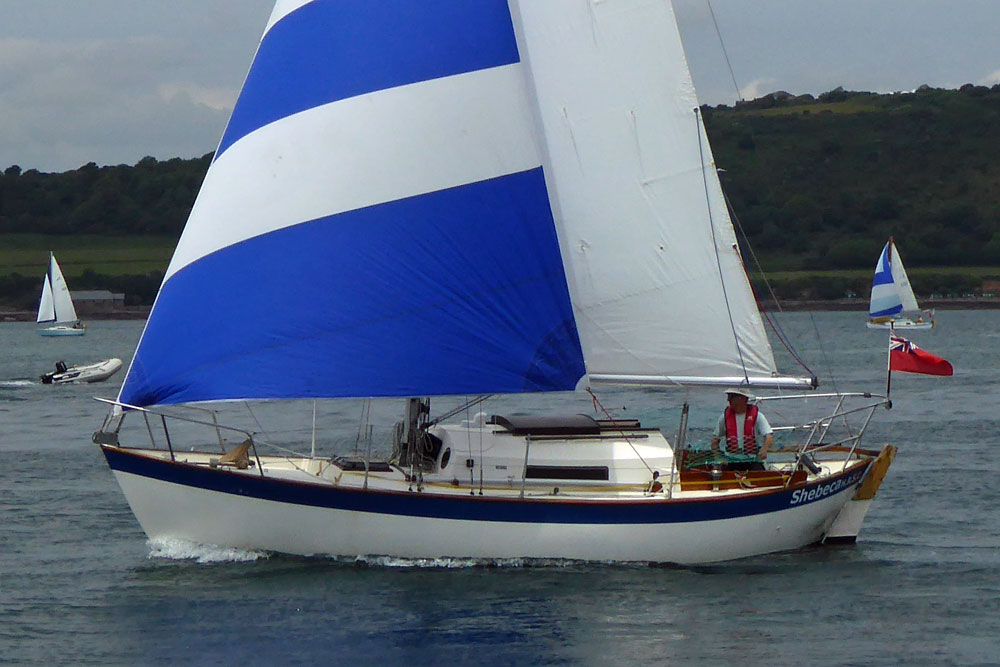
The Albin Ballad 30 Sailboat
Specs, Performance Analysis & Cruising Characteristics
Key Takeaways: The Albin Ballad 30 is a legendary Swedish cruiser-racer that balances offshore toughness with surprisingly agile performance. Designed by Rolf Magnusson, it gained fame for its seaworthiness during the 1979 Fastnet Race, proving that a 30-foot boat can handle extreme conditions. While the interior is compact by modern standards and the cockpit can be narrow, its heavy ballast and narrow beam make it a superb choice for solo sailors or couples seeking an affordable, ocean-capable vessel. It excels upwind and offers a secure, predictable motion in a seaway, though buyers should inspect the deck core and original engine status.
Table of Contents
- The Albin Ballad 30 at a Glance
- Design & Construction
- Published Specification: The Albin Ballad 30 Blueprint
- Sail Areas & Rig Dimensions
- Performance Analysis: Understanding the Design Ratios
- How the Albin Ballad 30 Sails
- Bluewater Capability: Strengths & Trade-Offs
- Configuration, Layout & Cruising Characteristics
- Who This Boat Is Best For
- The Buyer’s Checklist: Common Problem Areas
- Summing Up
- Frequently Asked Questions (FAQs)
The Albin Ballad 30 at a Glance
- Type: Masthead Sloop
- Designer: Rolf Magnusson
- Builder: Albin Marin (Sweden)
- Production Years: 1971–1982
- Rig: Deck-stepped Masthead Sloop
- Best for: Coastal cruising, offshore passage making, and short-handed sailing.
- Strengths: Exceptional upwind ability, high ballast ratio, and robust build quality.
- Trade-offs: Narrow beam limits interior volume; small heads and galley by modern standards.
Design & Construction
The Albin Ballad 30 was born from the "Joker" prototype, a successful half-ton racer designed by Rolf Magnusson. When Albin Marin took over production, they refined the design into a dedicated cruiser-racer that would eventually see over 1,500 hulls produced. The hull is a solid GRP (Glass Reinforced Plastic) layup, while the deck typically features a balsa core for stiffness and weight savings.
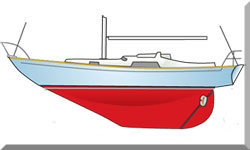
One of the defining features of the Ballad is its encapsulated lead keel. Unlike boats with bolt-on keels, the Ballad’s ballast is tucked inside the hull moulding and glassed over, eliminating the risk of "smile" cracks or keel bolt failure. The rudder is a semi-skeg mounted configuration, providing a good balance between protection from debris and steering finesse.
In terms of specific build details, the chainplates on the Ballad are typically robust and through-bolted to the main bulkhead. The cabin windows on most models are through-bolted with aluminium frames rather than just bonded, which is a plus for long-term leak prevention. While most Ballads followed a standard sloop layout, a few variations existed over the decade of production, primarily concerning interior cabinetry and engine choices (moving from the Volvo MD6A to the MD7A).
The Albin Ballad 30 is officially a Category A (Ocean) rated vessel under retrospective classification, reflecting its history of successful Atlantic crossings and its performance in heavy weather.
Published Specification: The Albin Ballad 30 Blueprint
| Specification | Data |
|---|---|
| LOA | 29'11" (9.12m) |
| LWL | 22'7" (6.88m) |
| Beam | 9'8" (2.95m) |
| Draft | 5'1" (1.55m) |
| Displacement | 7,275 lbs (3,300kg) |
| Ballast | 3,417 lbs (1,550kg) |
| Rig Type | Masthead Sloop |
| Hull Material | GRP |
| Production Dates | 1971–1982 |
Sail Areas & Rig Dimensions
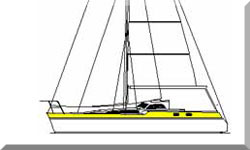
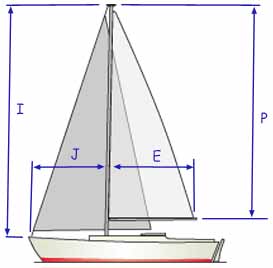 Rig dimensions
The Ballad carries a generous masthead rig that provides plenty of drive in light airs, though she is stiff enough to hold her canvas when the breeze freshens.
- Total Sail Area: 434 ft² (40.3 m²)
- I (Forestay Height): 35'11" (10.95m)
- J (Foretriangle Base): 11'4" (3.45m)
- P (Mainsail Luff): 30'6" (9.30m)
- E (Mainsail Foot): 10'2" (3.10m)
Performance Analysis: Understanding the Design Ratios
The following ratios help define how the Ballad 30 behaves relative to other cruisers of her era.
| Ratio | Value | Interpretation |
|---|---|---|
| SA/D | 18.5 | Moderate to high power; capable in light winds. |
| D/L | 282 | Moderate displacement; provides a stable, seafaring motion. |
| B/D | 47% | High ballast ratio; exceptionally stiff and safe. |
| CSF | 1.85 | Below 2.0; considered suitable for ocean passages. |
| Comfort Ratio | 24.2 | Good for a 30-footer; avoids the jerky motion of lighter boats. |
How the Albin Ballad 30 Sails
Under sail, the Ballad is a delight for those who value balance. Because of its racing heritage, it points higher than many contemporary "fat" cruisers. The deep, narrow hull slices through chop with very little slamming. Upwind, she finds her groove at about 15 to 20 degrees of heel and stays there, thanks to that massive 47% ballast ratio.
Off the wind, the masthead rig provides good power, though like many boats of this vintage with a pinched stern, she can become a bit rhythmic in a following sea. However, the rudder remains effective even when the boat is pressed.
For short-handed sailors, the Ballad is a logical choice. All controls can be led aft, and the boat's inherent stability means you aren't rushing to the mast to reef at the first sign of a whitecap. Most owners find that reefing the main early keeps the boat upright and fast without losing much speed.
Bluewater Capability: Strengths & Trade-Offs
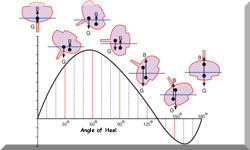
The Ballad’s offshore reputation is well-earned. Its strength lies in its structural simplicity and high "vanishing angle" of stability. If knocked over, the boat is designed to right itself quickly.
However, there are trade-offs for long-distance cruising. Tankage is modest, with the original fuel and water tanks often requiring supplementation for long passages. The load-carrying capacity is also finite; overloading a Ballad with heavy ground tackle and months of provisions will quickly degrade its sparkling performance.
Safety on deck is high, with deep cockpits and substantial toerails. The narrow beam, while limiting space, ensures that you are never more than a short reach away from a handhold when moving about the cabin in a gale.
Configuration, Layout & Cruising Characteristics
The interior layout is traditional. You will find a "V" berth forward, followed by a heads compartment that spans the width of the boat. The saloon features two setties that double as sea berths, with a folding table in the centre. The galley is compact, usually situated to port of the companionway, with a navigation station to starboard.
- Cockpit: Deep and secure, though the bridge deck is high, which adds to safety by preventing water from entering the cabin.
- Galley: Functional but small. Most owners upgrade the original two-burner stoves.
- Storage: Ample for coastal hops, but you will need to get creative for year-round living.
- Liveaboard Notes: It is a "cosy" 30-footer. The lack of a dedicated aft cabin means the saloon is your primary living space.
Who This Boat Is Best For
Good fit for:
- Solo sailors or couples who value safety and sailing "feel" over interior volume.
- First-time buyers looking for a sturdy, affordable entry into offshore sailing.
- Traditionalists who appreciate Swedish design and a boat that can handle a blow.
Less ideal for:
- Large families needing multiple private cabins.
- Cruisers who spend 90% of their time at anchor and want a massive "social" cockpit.
- Those looking for a modern, wide-stern boat that planes downwind.
The Buyer’s Checklist: Common Problem Areas
When inspecting an Albin Ballad 30, keep an eye on these specific areas:
- Deck Delamination: Check the balsa core, especially around the mast step and stanchion bases. Soft spots are a common maintenance item for boats of this age.
- Engine Health: Many Ballads still have the original Volvo MD7A. While these are workhorses, parts are becoming scarce and expensive. Look for evidence of a recent repower.
- Osmosis: While Albin hulls are generally thick, early 70s hulls can show signs of blistering.
- Compression Post: Inspect the area under the mast step inside the cabin for signs of sagging or moisture damage.
- Windows: Leaky aluminium frames are common; check for water staining on the interior woodwork.
Could this be your ideal cruising boat?
It may well be, but before going any further, it might be worth taking a look at my eBook 'How to Avoid Buying the Wrong Sailboat'...
Summing Up
The Albin Ballad 30 remains a benchmark for what a small offshore cruiser should be. While it doesn't offer the condo-style living of modern 30-footers, it provides a level of security and sailing pleasure that is hard to find at its price point. Its design ratios reveal a boat that is stiff, safe, and efficient, capable of crossing oceans or simply providing a confident platform for weekend coastal exploration. If you can accept the narrower interior and keep an eye on deck maintenance, the Ballad is a vessel that will look after you when the weather turns foul.
This article was written by Dick McClary, RYA Yachtmaster and author of the RYA publications 'Offshore Sailing' and 'Fishing Afloat', member of The Yachting Journalists Association (YJA), and erstwhile member of the Ocean Cruising Club (OCC).
Frequently Asked Questions (FAQs)
Is the Albin Ballad 30 suitable for a solo Atlantic crossing?
Is the Albin Ballad 30 suitable for a solo Atlantic crossing?
Yes. Many Ballads have completed circumnavigations and transatlantic passages. Its high ballast ratio and Category A rating make it one of the most capable 30-footers for ocean work.
What is the typical cruising speed of a Ballad 30?
What is the typical cruising speed of a Ballad 30?
Under sail, you can expect to average 5.5 to 6 knots. In good conditions with the right sail trim, she will happily sit at her hull speed of approximately 6.4 knots.
How does the Albin Ballad compare to the Contessa 32?
How does the Albin Ballad compare to the Contessa 32?
The Ballad is often seen as a more affordable alternative to the Contessa 32. While the Contessa is slightly longer and arguably prettier, the Ballad offers comparable seaworthiness and a slightly beamier (though still narrow) interior.
Can the original Volvo engine be easily replaced?
Can the original Volvo engine be easily replaced?
Yes, common replacements include the Beta 14 or 20, or a Yanmar 2GM20. A repowered Ballad is significantly more desirable on the used market.
Does the Ballad have a problem with "keel smile"?
Does the Ballad have a problem with "keel smile"?
No. Because the lead ballast is encapsulated within the GRP hull, there are no keel bolts to rust or joints to flex, making it structurally superior to many bolt-on designs.
Recent Articles


-
Mystery 35 Review: Specs, Performance & Buying Guide
Aug 29, 26 09:42 AM
An in-depth review of the Mystery 35 sailboat. Read technical specs, design ratios, sail performance, and common buyer inspection areas. -
Beneteau First 405 Review: Specs, Performance & Buyer’s Guide
Aug 26, 26 03:58 AM
Detailed Beneteau First 405 review covering specs, performance, bluewater capability, layouts and buyer’s checklist. -
Moody S38 Review: Specs, Ratios & Buyer’s Guide
Aug 12, 26 04:22 AM
In‑depth Moody S38 review covering specs, performance, design ratios, layout, strengths, trade‑offs & buyer inspection points.