- Home
- Cruising Yachts 40' to 45'
- Wauquiez Amphitrite 43 Review
Wauquiez Amphitrite 43 Sailboat
Specs, Performance Analysis & Cruising Characteristics
Key takeaways: The Wauquiez Amphitrite 43 is a French‑built, Laurent Giles–designed bluewater cruiser from the late 1970s and early 1980s, most commonly seen as a ketch with a deep fin keel and skeg‑hung rudder. It is a solid, moderately heavy displacement cruiser with a comfortable motion, good load‑carrying ability and a reputation for strong construction. In return, it is not a light‑air flyer and rewards a steady, seamanlike approach rather than aggressive sail‑tweaking. Age‑related issues now matter more than the original design: buyers should focus on structure, deck moisture, machinery and systems refits. For an experienced crew wanting a capable, liveable ocean cruiser rather than a marina showpiece, the Amphitrite 43 remains a serious contender.
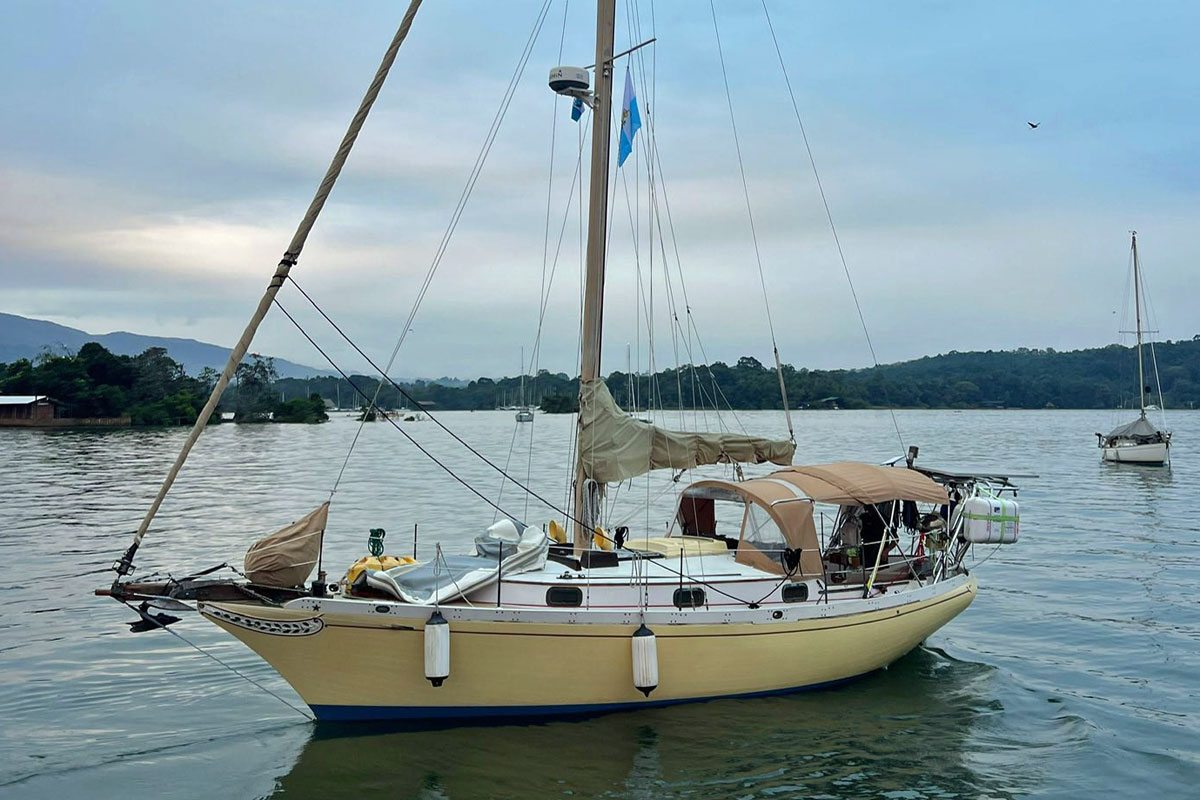
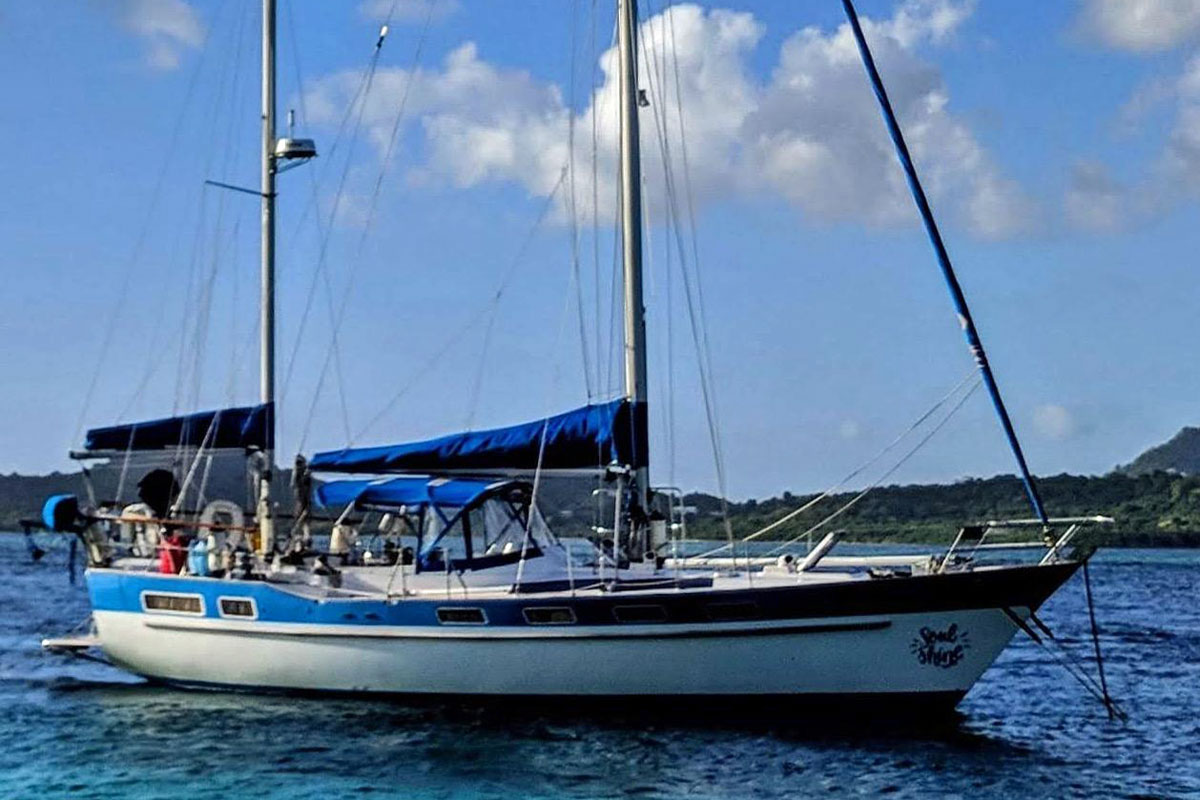 A Wauquiez Amphitrite 43 at anchor
Table of Contents
- Wauquiez Amphitrite 43 at a Glance
- Design & Construction
- Published Specs: The Wauquiez Amphitrite 43 Blueprint
- Sail Areas & Rig Dimensions
- Performance Analysis: Understanding the Design Ratios
- How the Wauquiez Amphitrite 43 Sails
- Bluewater Capability: Strengths & Trade‑Offs
- Configuration, Layout & Cruising Characteristics
- Who This Boat Is Best For
- The Buyer’s Checklist: Common Problem Areas
- Summing Up
- Frequently Asked Questions (FAQs)
Wauquiez Amphitrite 43 at a Glance
Design & Construction
The Amphitrite 43 sits firmly in the classic European bluewater camp. Laurent Giles drew a moderately heavy displacement hull with a fairly full bow, a long fin keel and a substantial skeg‑hung rudder. The aim was a comfortable, predictable passagemaker rather than a racer‑cruiser.
Hull, deck & structure
The hull is a solid glassfibre laminate with substantial thickness in the keel and bilge areas. Contemporary reports and yard literature describe hand‑laid GRP with woven rovings and mat, typical of Wauquiez’s conservative approach at the time. The deck is generally a glassfibre moulding with a balsa or similar core in the flat areas, locally reinforced in way of winches, tracks and fittings.
Internal structural members include longitudinal stringers and transverse floors, with bulkheads bonded to the hull and deck. The main structural bulkheads are typically well tabbed, but after four decades it is important to inspect tabbing for any signs of detachment, moisture damage or compression around the mast support area.
The keel is a bolted‑on fin with external ballast. Keel bolts and backing structure deserve careful inspection, especially on boats that have grounded or lived in high‑fouling, high‑moisture environments. The rudder is skeg‑hung, giving good directional stability and some protection, but the skeg and rudder bearings should be checked for play and signs of previous repairs.
Windows & chainplates
Most Amphitrite 43s were built with framed side windows and portlights that are mechanically fastened rather than purely bonded. Over time, sealant hardens and leaks can develop around frames and fasteners; expect to re‑bed or replace at some point if it has not already been done.
Chainplates are stainless steel, typically bolted to substantial internal structure rather than being fully encapsulated. On a boat of this age, chainplate removal and inspection is strongly recommended, as crevice corrosion at deck level is a known risk on many 1970s and 1980s cruisers, including Wauquiez models.
Variants & layouts
Most Amphitrite 43s are masthead ketches with a deep fin keel. A smaller number were built as masthead sloops. Some sources mention a slightly shallower keel option, but the mainstream configuration is the deep fin around 6'4" (1.93 m).
The typical layout features:
- A deep aft cockpit with good protection
- A walkthrough passage to a proper aft cabin
- Forward cabin with V‑berths
- Two heads (one forward, one aft)
- A seagoing galley near the companionway
- A saloon with settees and table amidships
Minor variations exist in joinery style, berth arrangements and tankage, but the overall concept is consistent: a serious cruising interior with good separation of spaces.
Stability index
The Amphitrite 43 predates the CE regime and there is no widely published STIX stability index for the design. In practice, its displacement, ballast ratio, hull form and skeg‑hung rudder place it firmly in the traditional offshore‑cruiser category rather than the lightweight coastal segment.
Published Specs: The Wauquiez Amphitrite 43 Blueprint
The figures below reflect the most commonly cited values across specification databases and period literature. Individual boats may differ slightly by year, rig and keel option.
| Specification | Value |
|---|---|
| LOA | 43'0" (13.1 m) |
| LWL | 34'5" (10.5 m) |
| Beam | 13'5" (4.1 m) |
| Draft (deep fin) | ≈6'4" (1.9 m) |
| Displacement | ≈26,500 lb (12,000 kg) |
| Ballast | ≈9,700 lb (4,400 kg) |
| Rig type | Masthead ketch (majority), some masthead sloops |
| Hull material | GRP (solid laminate hull, cored deck) |
| Production dates | ≈1977–1984 |
Sail Areas & Rig Dimensions
Figures below are representative for a typical masthead ketch‑rigged Amphitrite 43; individual boats may vary with sailmaker and rig updates.
- I: ≈50.5' (15.4 m)
- J: ≈16.4' (5.0 m)
- P (main): ≈44.3' (13.5 m)
- E (main): ≈13.8' (4.2 m)
From these, typical sail areas are:
- Mainsail: ≈305 ft² (28 m²)
- Mizzen: ≈150 ft² (14 m²)
- 100% foretriangle (working headsail): ≈415 ft² (39 m²)
- Total working sail area (ketch): ≈870 ft² (81 m²)
These numbers align with period brochures and common sail‑calculator outputs for the design.
Performance Analysis: Understanding the Design Ratios
Using the representative figures above:
- Displacement: 26,500 lb
- LWL: 34.5'
- Beam: 13.5'
- Ballast: 9,700 lb
- Working sail area: ≈760–870 ft² (for ratio purposes, ≈760 ft² gives a conservative view)
The following table uses standard yacht‑design formulae (SA/D, D/L, B/D, CSF and Brewer’s Motion Comfort Ratio).
| Ratio | Value | What it suggests |
|---|---|---|
| Sail Area / Displacement (SA/D) | ≈13.5 | Moderate power; not a light‑air rocket, but adequate once the breeze is up. |
| Displacement / Length (D/L) | ≈280–290 | Firmly in the moderate‑to‑heavy cruising band, favouring comfort over speed. |
| Ballast / Displacement (B/D) | ≈36–37% | Respectable ballast ratio for offshore work, supporting good stiffness. |
| Capsize Screening Formula (CSF) | ≈1.8 | Below 2.0, indicating favourable offshore capsize resistance by this rule of thumb. |
| Brewer Motion Comfort Ratio | ≈34–35 | A relatively comfortable motion for a 43‑footer, especially when loaded for cruising. |
In plain terms, these ratios describe a boat that is solid rather than sprightly. It will not leap forward in 8 knots of wind, but once the breeze is in the low to mid‑teens it settles into a steady, confidence‑inspiring groove. The relatively high comfort ratio and low CSF are consistent with owner reports of a gentle, predictable motion at sea.
How the Wauquiez Amphitrite 43 Sails
Upwind, the Amphitrite 43 behaves like many moderate‑to‑heavy cruisers of her era. With a clean bottom and a decent headsail she will tack through a reasonable angle, but she is not a high‑pointing, high‑speed machine. Think steady progress rather than tight‑lipped VMG optimisation. In a seaway, the weight and hull form help her shoulder through chop rather than slam.
The ketch rig gives useful flexibility. In moderate conditions, a full main and a working genoa will do most of the work, with the mizzen adding balance and a touch of extra drive. As the wind builds, many owners report that dropping the main and sailing under mizzen and a reefed headsail gives a well‑balanced, easily handled configuration, especially for short‑handed crews.
Downwind, the split rig comes into its own. Wing‑and‑wing with mizzen and poled‑out headsail, or a mizzen staysail in lighter airs, can keep average speeds respectable without drama. The skeg‑hung rudder and moderate beam help avoid the twitchiness sometimes seen in lighter, flatter‑bottomed designs.
The helm is generally described as light to moderate, with good directional stability. The boat tracks well, which is welcome on long passages but means you will not spin her around like a dinghy in tight marinas. Reefing is straightforward if the running rigging has been sensibly updated; as always on a 40‑plus‑footer, the ergonomics of winch placement and line leads matter more than the underlying design.
Bluewater Capability: Strengths & Trade‑Offs
The Amphitrite 43 was conceived as an offshore cruiser and has been used accordingly, with numerous Atlantic and long‑distance passages recorded over the decades.
Strengths:
- Structure: Solid hull, substantial skeg, proper keel bolts and conservative scantlings.
- Stability & motion: Ratios and owner reports point to a comfortable, predictable motion and good knockdown resistance.
- Deck safety: Deep cockpit, decent coamings, solid guardrails and sensible handholds make movement on deck more secure than on many modern wide‑beam cruisers.
- Load‑carrying: The design tolerates cruising loads well; performance drops, but the hull form does not become unhappy when tanks and lockers are full.
Trade‑offs:
- Tankage: Original tankage is adequate rather than huge by modern standards, and many boats now have replacement fuel or water tanks due to age.
- Speed: In light airs, especially when heavily loaded, progress can be pedestrian. A good light‑air headsail and clean bottom help.
- Systems age: Offshore capability today depends heavily on the quality of refits: rigging, steering, electrics, plumbing and deck hardware all need to be up to date.
For serious bluewater use, the design is fundamentally suitable, but the individual boat’s maintenance history is decisive.
Configuration, Layout & Cruising Characteristics
On deck, the Amphitrite 43 has a deep, secure cockpit with good back support and coamings that feel protective offshore. The mainsheet and primary winches are within reach of the helm on many boats, though exact layouts vary with owner modifications. Side decks are reasonably wide, with solid stanchions and lifelines; the ketch rig adds extra standing rigging to weave around, but also more handholds.
The interior is very much that of a seagoing cruiser rather than an open‑plan apartment. The walkthrough to the aft cabin provides good engine and systems access, as well as a secure passageway at sea. The aft cabin itself is a genuine cabin, not a token double berth squeezed under the cockpit. Forward, the V‑berth cabin and forward heads work well for guests or off‑watch crew.
The saloon has decent seating and a table that can be used underway. The galley, usually to port near the companionway, is enclosed enough to be safe at sea, with good bracing points and plenty of storage. Ventilation depends on the condition and number of opening ports and hatches; many boats have had additional vents or fans fitted over the years.
For liveaboard use, the Amphitrite 43 scores well: real cabins, good storage, and a hull that carries the weight of extra gear without complaint. The trade‑off is that you are living in a purposeful ship, not a floating loft.
Who This Boat Is Best For
Good fit for:
- Experienced offshore sailors wanting a solid, traditional cruiser with a proven track record.
- Liveaboard couples or small families who value separate cabins and seagoing ergonomics over huge saloon volume.
- Owners comfortable with refit projects who prefer a strong platform they can upgrade over time.
- Sailors planning ocean passages where comfort, tracking and load‑carrying matter more than light‑air performance.
Less ideal for:
- Performance‑oriented sailors who prioritise speed and pointing ability in club racing or light‑air coastal sailing.
- Owners seeking low‑maintenance simplicity, as a 40‑plus‑year‑old 43‑footer inevitably carries a higher systems and upkeep burden.
- Those who mainly day‑sail in light winds, where a lighter, more easily driven hull would feel more rewarding.
The Buyer’s Checklist: Common Problem Areas
On a boat of this age, condition trumps almost everything. For the Amphitrite 43, pay particular attention to:
- Deck core & moisture: Check around chainplates, stanchion bases, winches and mast partners for signs of core degradation or delamination. Moisture readings and percussion sounding are worthwhile.
- Windows & portlights: Look for staining, soft headlining, crazed acrylic and evidence of repeated sealant bodges. Budget for a full re‑bed or replacement if not already done.
- Chainplates & rigging: Confirm chainplates have been removed and inspected in recent years. Standing rigging older than around 10–12 years should be considered due for replacement for offshore work.
- Keel bolts & grounding history: Inspect for rust streaks, weeping, or disturbed fairing around the keel‑to‑hull joint. Ask directly about any known groundings.
- Rudder & skeg: Check for play in the bearings, cracks at the skeg root and signs of previous repairs.
- Engine & drivetrain: Many boats were originally fitted with Perkins diesels; a well‑executed repower can be a plus, but a tired original engine can be a major cost. Check mounts, shaft alignment, exhaust and fuel system.
- Tanks: Original mild‑steel or aluminium fuel tanks may be at end of life. Look for access, inspection hatches and evidence of replacement. Water tanks should also be checked for contamination and leaks.
- Teak decks (if fitted): Some Amphitrites have teak overlays. Worn, screw‑fastened teak can lead to deck‑core damage; full replacement is expensive.
- Electrics & plumbing: Expect to find layers of owner‑added wiring and plumbing. A clean, well‑documented system is a strong positive; a rat’s nest is a negotiation lever.
Typical refit items for a serious cruising brief might include standing rigging, sails, electronics, safety gear, some tank work and partial rewiring. It is not unusual for a thorough refit on a 43‑footer of this vintage to run into the mid‑five‑figure range in pounds, depending on how much work you can do yourself.
Summing Up
The Wauquiez Amphitrite 43 is not a fashion piece. It is a product of a particular era in offshore yacht design, when comfort, structure and seakeeping were given more weight than interior volume and marina aesthetics. The design ratios, hull form and skeg‑hung rudder all point in the same direction: a steady, reassuring cruiser that looks after her crew when the barometer drops.
For a modern buyer, the real question is not whether the design works—it clearly does—but whether a particular example has been maintained and upgraded with the same seriousness that went into the original concept. A tired, under‑maintained Amphitrite can be an expensive project; a well‑refitted one can be a capable, comfortable world cruiser at a fraction of the cost of a newer boat.
If you value a solid feel underfoot, a proper seagoing interior and the quiet satisfaction of a boat that will look after you offshore, the Amphitrite 43 deserves a careful, informed look—backed by a thorough survey and a realistic refit budget.
Frequently Asked Questions (FAQs)
1. Is the Wauquiez Amphitrite 43 a true bluewater boat?
1. Is the Wauquiez Amphitrite 43 a true bluewater boat?
Yes, in design terms it is a genuine offshore cruiser, with numerous ocean passages to its name. Its suitability today depends on the condition of the individual boat: structure, rig, steering, tanks and systems must all be up to modern offshore standards.
2. What cruising speeds can I realistically expect?
2. What cruising speeds can I realistically expect?
In typical trade‑wind conditions, a well‑sailed Amphitrite 43 will often average 6–7 knots on passage, with higher bursts in favourable seas. In light airs, especially when heavily loaded, speeds will drop unless you carry generous light‑air sails and keep the bottom very clean.
3. How does the ketch rig compare with the sloop version?
3. How does the ketch rig compare with the sloop version?
The ketch rig offers more sail‑plan flexibility and easier shortening of sail for a small crew, at the cost of a little extra windage and complexity. The sloop is slightly simpler and may be marginally quicker to windward in flat water, but most long‑range cruisers value the ketch’s options for heavy weather and downwind work.
4. Are there any design‑specific structural weak points?
4. Are there any design‑specific structural weak points?
There is no single notorious structural flaw, but age‑related issues are common: deck‑core moisture, chainplate corrosion, rudder‑bearing wear and tank problems all appear in owner reports. These are manageable with proper survey and refit planning, but they should not be ignored.
5. What are the must‑do upgrades for serious ocean cruising?
5. What are the must‑do upgrades for serious ocean cruising?
For bluewater use, most owners prioritise: new or recent standing rigging, reliable self‑steering (windvane or robust autopilot), upgraded electrics with modern charging, renewed safety gear, good ground tackle, and, where needed, replacement of suspect tanks and through‑hulls. Many also fit modern navigation and communication systems while keeping the underlying boat simple and robust.
Recent Articles


-
Should I Buy a Boat? Four Questions to Answer Before You Commit
Oct 02, 26 04:40 AM
Thinking "Should I buy a boat?" This guide helps you decide, with key considerations from cost & maintenance to your personal sailing aspirations. -
Offshore Internet with Starlink: Hardware, Plans, and Setup Guidance
Oct 01, 26 01:15 PM
A clear, practical guide to choosing the right Starlink hardware and plan for offshore cruising. Learn what to buy, how to install it, and how to manage power afloat. -
Offshore Liferaft Guide: Choosing, Stowing and Servicing One
Oct 01, 26 06:28 AM
Choosing an offshore liferaft? Learn what ISO 9650 Group A means, where to stow it, how often to service it and what to pack in the grab bag.