- Home
- Cruising Yachts 40' to 45'
- Bavaria 42 Sailboat Review
The Bavaria 42 Sailboat
Specs, Performance Analysis & Cruising Characteristics
Key Takeaways: The Bavaria 42 is a high-volume, production-built cruiser that offers an exceptional balance of interior living space and predictable handling. Primarily designed by J&J Design, it is a moderate-displacement vessel that excels as a comfortable liveaboard or Mediterranean coastal cruiser. While it may not possess the nimble agility of a racing yacht, its high stability and robust waterline length provide a safe, sea-kindly motion for long-distance family voyaging.
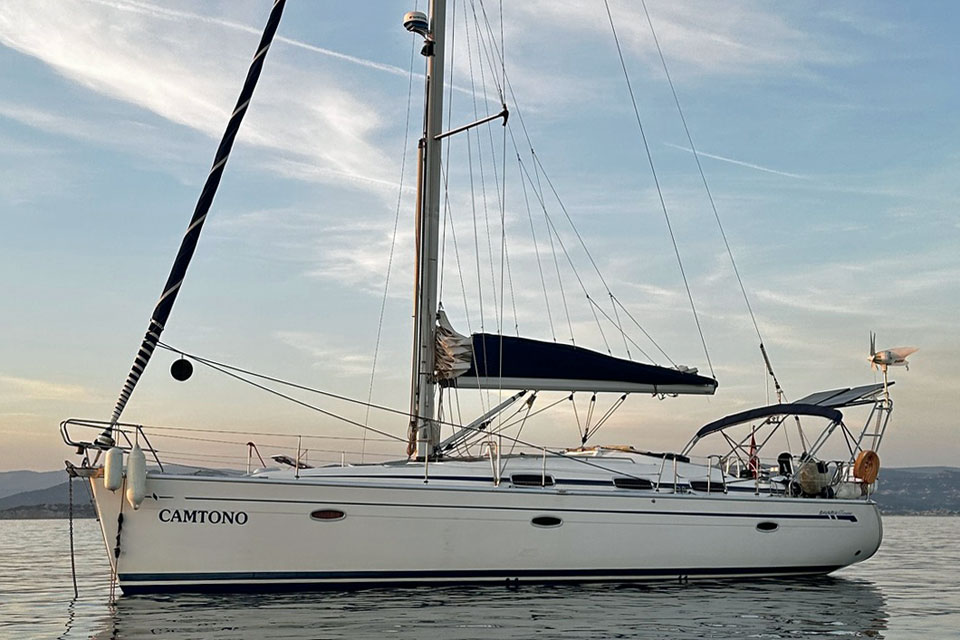 The Bavaria 42 Cruiser
Design & Construction
The Bavaria 42 series encompasses several distinct iterations that reflect the evolution of the Giebelstadt-based shipyard. The most celebrated "Classic" version was launched in the late 1990s, designed by the Slovenian firm J&J Design. These yachts were built using hand-laid solid GRP (Glass Reinforced Plastic) below the waterline, with a sandwich core construction above the waterline for thermal insulation and weight reduction.
Key Defining Feature
The defining characteristic of the Bavaria 42 is its maximised internal volume achieved through a relatively high freeboard and wide beam carried well aft. This design philosophy creates a cavernous saloon and allows for multiple cabin configurations without making the interior feel cramped. For the cruising sailor, this translates to a "big boat" feel below decks, providing superior comfort during extended periods at anchor or in port.
Variants & Layouts
Over its production lifespan, the Bavaria 42 saw several significant versions:
- Bavaria 42 (1998–2001): The classic J&J design, often found in three or four-cabin layouts.
- Bavaria 42 Cruiser (2004–2008): A modernised version with improved deck ergonomics and a linear galley.
- Bavaria 42 Ocean: A dedicated centre-cockpit variant designed specifically for long-distance passage making and owner privacy.
- Bavaria 42 Match: A performance-oriented, lighter version designed by Doug Peterson for racing and fast cruising.
Stability & Safety
The Bavaria 42 series is certified as CE Category A (Ocean). This rigorous classification confirms that the vessel is designed for extended voyages where conditions may exceed wind force 8 (Beaufort scale) and significant wave heights of 4 metres and above. This certification covers the classic 42, the 42 Ocean, and the later 42 Cruiser, ensuring they meet European standards for stability, buoyancy, and structural integrity in open-ocean conditions.
Sail Areas & Rig Dimensions
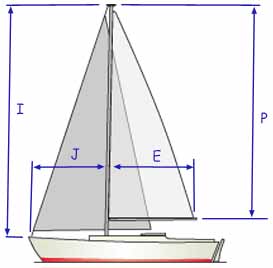 Rig dimensions
The Bavaria 42 utilises a masthead sloop rig that is designed for ease of handling, often equipped with in-mast furling for the mainsail and a large furling genoa.
- Mainsail Area: 393.00 ft² (36.51 m²)
- Foresail Area: 527.00 ft² (48.96 m²)
- Total Upwind Sail Area: 920.00 ft² (85.47 m²)
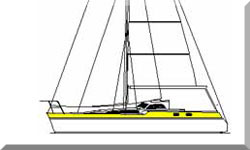
Rig Dimensions:
- I (Forestay Height): 54'2" (16.51 m)
- J (Foretriangle Base): 16'1" (4.90 m)
- P (Mainsail Hoist): 48'2" (14.68 m)
- E (Mainsail Foot): 16'3" (4.95 m)
Published Specification: The Bavaria 42 Blueprint
| Feature | Measurement / Detail |
|---|---|
| LOA (Length Overall) | 42'7" (12.99 m) |
| LWL (Waterline Length) | 37'5" (11.40 m) |
| Beam | 13'1" (3.99 m) |
| Draft (Standard) | 5'11" (1.80 m) |
| Displacement | 20,282 lbs (9,200 kg) |
| Ballast | 6,614 lbs (3,000 kg) |
| Rig Type | Masthead Sloop |
| Hull Material | GRP (Fibreglass) |
| Production Dates | 1998 – 2008 (All 42 Variants) |
Performance Analysis: Understanding the Design Ratios
| Ratio | Value | Expert Interpretation |
|---|---|---|
| SA/D | 19.87 | Moderate power; efficient in light to medium airs. |
| D/L | 173.08 | Moderate-light displacement; offers a good turn of speed. |
| B/D | 32.61% | Adequate stiffness, though early reefing is recommended. |
| CSF | 1.92 | Under the 2.0 threshold; suitable for ocean passages. |
| Comfort Ratio | 26.18 | Moderate motion; comfortable for coastal and offshore cruising. |
For a deeper understanding of how these figures impact your time on the water, refer to our guide on Understanding Boat Performance & Design Ratios.
Structural Integrity & Stability Dynamics
The use of GRP provides a durable, low-maintenance hull that is well-suited to the mass-production methods Bavaria pioneered. However, the moderate ballast ratio means the boat relies significantly on its hull form for initial stability. Under sail, the Bavaria 42 is predictable but can be sensitive to over-canvassing. Keeping the boat upright by reefing the mainsail early ensures the rudder maintains maximum grip and the motion remains comfortable for the crew.
The Buyer’s Checklist: Common Problem Areas
When inspecting a used Bavaria 42, focus on these specific areas:
- Keel Attachment: Check for "the Bavaria smile"—a crack at the leading edge of the keel-to-hull joint. While often just a cosmetic sealant failure, it can sometimes indicate structural flexing.
- Saildrive Diaphragm: Volvo Penta recommends replacing the rubber seal every seven years. Many older boats are still on their original seals.
- Rudder Bearings: Check for excessive play in the spade rudder. J&J designs use large rudders that place significant stress on the bearings.
- Iron Keel Oxidation: Most units feature cast iron keels. Look for signs of "bleeding" or rust, which may require sandblasting and epoxy treatment.
- Interior Joinery: While functional, the mahogany veneers in earlier models can darken or peel if exposed to persistent leaks from deck hatches.
Comparison: The Bavaria 42 vs The Competition
The Bavaria 42 often finds itself on the same shortlist as the Beneteau Oceanis 411 and the Jeanneau Sun Odyssey 42.2.
- Bavaria 42: Offers the best "value for volume." It typically feels beamier and more spacious below decks than the Beneteau, though the finish can be more utilitarian.
- Beneteau Oceanis 411: A legendary cruiser known for its structural reliability and slightly more "traditional" interior feel. It is often considered the benchmark for this era.
- Jeanneau Sun Odyssey 42.2: Generally regarded as the more "spirited" sailor of the three, with a sleeker hull profile and more responsive helm feedback.
If you'd like to compare this boat with others in this size range, take a look at Cruising Boats from 40' to 45' overall....
Configuration, Layout & Cruising Characteristics
The Bavaria 42 is a masterpiece of ergonomic efficiency. The saloon typically features a large U-shaped settee to starboard and a linear galley to port. This layout provides an incredible amount of counter space for meal preparation, which is a major boon for liveaboards.
Tankage & Storage:
With roughly 360 litres (95 gallons) of water and 210 litres (55 gallons) of fuel, the Bavaria 42 is well-equipped for island hopping or coastal hops. The cockpit is exceptionally wide, allowing for a large central table that becomes the heart of the boat when at anchor. The twin-wheel setup (found on later Cruiser models) provides excellent visibility and creates a clear walk-through path to the sugar-scoop stern.
Could this be your ideal cruising boat?
It may well be, but before going any further, it might be worth taking a look at my eBook 'How to Avoid Buying the Wrong Sailboat'...
Summing Up
The Bavaria 42 remains one of the most practical choices on the second-hand market for families seeking a safe, voluminous, and affordable offshore cruiser. Its design ratios highlight a vessel that is balanced—neither a heavy traditionalist nor a flighty racer. While its production-line origins mean that certain structural areas like the keel joint require diligent monitoring, its overall seaworthiness and comfort make it a highly capable partner for crossing oceans or exploring coastal hidden gems.
This article was written by Dick McClary, RYA Yachtmaster and author of the RYA publications 'Offshore Sailing' and 'Fishing Afloat', member of The Yachting Journalists Association (YJA), and erstwhile member of the Ocean Cruising Club (OCC).
Frequently Asked Questions (FAQs)
Is the Bavaria 42 definitely CE Category A?
Is the Bavaria 42 definitely CE Category A?
Yes, the Bavaria 42 series (including the 42, 42 Ocean, and 42 Cruiser) was certified as CE Category A (Ocean). This means it is built to withstand winds above Beaufort force 8 and wave heights exceeding 4 metres.
Is the Bavaria 42 suitable for solo sailing?
Is the Bavaria 42 suitable for solo sailing?
Yes, particularly if equipped with in-mast furling and all lines led aft to the cockpit. However, its high freeboard can make it prone to windage when docking alone in crosswinds.
How does the Bavaria 42 handle heavy weather?
How does the Bavaria 42 handle heavy weather?
With its Category A certification, it is offshore capable. It maintains a steady motion in a seaway, though it is important to reef early to prevent excessive heeling and weather helm.
What is the difference between the 42 and the 42 Cruiser?
What is the difference between the 42 and the 42 Cruiser?
The 42 (Classic) was the original J&J design (1998–2001). The 42 Cruiser (2004–2008) featured a redesigned deck, often with twin wheels, and an updated interior layout with a linear galley.
What engine is typical for this model?
What engine is typical for this model?
Most Bavaria 42s are fitted with the Volvo Penta D2-55 (55 hp) engine, which is more than adequate for a vessel of this displacement.
Recent Articles


-
Discovery 55 Sailboat Review: Specs, Ratios & Bluewater Capability
Oct 14, 26 06:04 AM
Detailed Discovery 55 buyer’s guide covering specs, ratios, sailing behaviour, problem areas and bluewater suitability. -
Should I Buy a Boat? Four Questions to Answer Before You Commit
Oct 02, 26 04:40 AM
Thinking "Should I buy a boat?" This guide helps you decide, with key considerations from cost & maintenance to your personal sailing aspirations. -
Offshore Internet with Starlink: Hardware, Plans, and Setup Guidance
Oct 01, 26 01:15 PM
A clear, practical guide to choosing the right Starlink hardware and plan for offshore cruising. Learn what to buy, how to install it, and how to manage power afloat.