- Home
- Electronics & Instrumentation
- VHF/DSC Radios and GMDSS
Marine VHF/DSC Radios: A Complete Guide for Cruising Yachts (2026 Edition)
Key Takeaways: Modern VHF radios sit at the heart of the GMDSS safety framework. DSC is built into almost every fixed‑mount set, giving you one‑button distress alerting, digital calling and automatic channel switching. Height still dictates range, GPS integration is essential for accurate distress alerts, and the 2028 channel changes mean older sets may soon struggle with updated coast station frequencies. Handheld DSC sets with GPS are now a practical safety backup, and AIS‑enabled VHFs offer collision‑avoidance features that used to require separate hardware.
Table of Contents
- What Modern VHF Radios Actually Do
- How VHF/DSC Fits into the GMDSS Framework
- MMSI Numbers and Licensing
- Setting Up a VHF/DSC Radio
- Distress, Urgency and Safety Calling
- VHF Range, Antenna Height and Power
- 2024–2028 VHF Channel Changes
- Fixed-Mount VHF Radios
- Advanced Features in Current VHF Sets
- AIS Integration in Modern VHF Radios
- Handheld VHF and DSC Radios
- AIS Usage and 2026 Rule Changes
- International Channel Usage
- Licensing Requirements
- Correct Use of Channels
- Training
- Expert-Level FAQs
What Modern VHF Radios Actually Do
A modern marine VHF radio is a multi‑function communication unit. DSC isn’t a separate device — it’s a digital mode built into the radio, working alongside analogue voice.
Core Functions
- Analogue voice communication
- DSC digital alerting and calling
- Automatic channel switching
- GPS‑linked distress alerts
- Optional AIS integration
- Optional Wi‑Fi remote control
- NMEA 0183 or NMEA 2000 networking
DSC operates exclusively on Channel 70, which is reserved for digital signalling.
DSC is excellent for emergency signalling when you’re aboard, but it doesn’t provide any information about your boat when you’re ashore. If you want real‑time alerts about movement, battery status or onboard activity while your boat is unattended, see Sentinel Marine Monitoring.
How VHF/DSC Fits into the GMDSS Framework
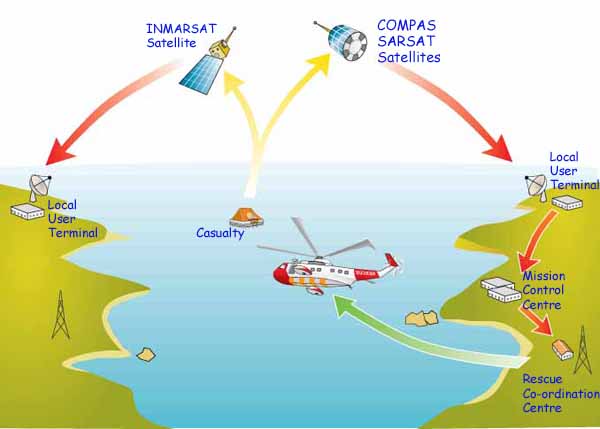 DSC Radio is a part of the Global Maritime Distress and Safety System (GMDSS)
The Global Maritime Distress and Safety System (GMDSS) is the international safety structure that governs how ships communicate in emergencies. Modern VHF radios with DSC are one of its core components.
Why GMDSS Matters to Cruisers
- It standardises distress alerting worldwide
- It ensures coastguards receive your MMSI, position and time instantly
- It defines which channels are used for distress, urgency and safety
- It mandates DSC capability for commercial vessels
- It shapes the training syllabus for the SRC certificate
Even though pleasure craft aren’t legally bound by all GMDSS requirements, the equipment and procedures are designed to work together — and your VHF/DSC radio is the primary tool in that system.
MMSI Numbers and Licensing
Every VHF/DSC radio requires a Maritime Mobile Service Identity (MMSI). This nine‑digit identifier is transmitted with every DSC alert and must be programmed correctly.
United Kingdom
- MMSI issued automatically with the free Ship Radio Licence
- Operators must hold the RYA Short Range Certificate (SRC)
United States
- Domestic-only boaters may obtain an MMSI from BoatUS or US Power Squadrons
- International cruising requires an FCC Ship Station Licence and FCC-issued MMSI
Group MMSIs can be used for rallies or flotillas.
Need help deciding which VHF suits your boat and your budget? Click here to see my recommended models and comparison table.
Setting Up a VHF/DSC Radio
A VHF radio with DSC only works properly when configured correctly.
Five-Step Setup Checklist
- Program the MMSI
Most sets allow only one or two attempts before a factory reset is required.
- Connect GPS via NMEA 0183 or NMEA 2000
Without GPS, the distress alert won’t include your position.
- Verify live position data
The radio should show latitude/longitude and update automatically.
- Run a DSC test call
Confirms the digital path is working.
- Manual position entry if no GPS Required every four hours; otherwise the distress alert sends MMSI only.
Distress, Urgency and Safety Calling
The DSC distress button is part of the VHF radio itself. Pressing and holding it sends an automated digital alert containing MMSI, position and time.
Call Types
- Distress (Mayday) – Immediate danger
- Urgency (Pan‑Pan) – Serious problem but not yet life‑threatening
- Safety (Securité) – Navigational or weather warnings
- Routine Calls – Individual or group MMSI calling
After a DSC alert, the radio automatically switches to the correct voice channel.
VHF Range, Antenna Height and Power
Marine VHF operates strictly by line‑of‑sight. The higher the antenna, the further the horizon — and the greater the communication range.
| Antenna Height (m) | Range to Horizon (nm) |
|---|---|
| 2m | 4nm |
| 5m | 6nm |
| 10m | 8nm |
| 15m | 10nm |
| 20m | 11nm |
| 25m | 13nm |
| 35m | 15nm |
| 50m | 18nm |
| 75m | 22nm |
| 100m | 26nm |
Two-Way Range Examples
- 15m masthead (10nm) + 10m masthead (8nm) = 18nm
- Handheld (2m) + masthead (10m) = 12nm
Power Output
- Fixed sets: 1W / 25W
- Handhelds: 2.5W / 5W
2024–2028 VHF Channel Changes
The ITU Appendix 18 update is the biggest change in decades.
What’s Changing
- New four‑digit channels (e.g., 1020, 2078)
- Some coast station channels have changed
- Some duplex channels now simplex
What Stays the Same
- Channel 16 remains the distress/calling channel
- Channel 70 remains DSC only
- AIS channels unchanged
Mandatory compliance for commercial/SOLAS vessels: 1 January 2028.
Pleasure craft aren’t required to upgrade but are strongly encouraged to ensure compatibility with updated coast stations.
Fixed-Mount VHF Radios
Most cruising yachts carry a fixed VHF/DSC radio at the nav station, often with a cockpit speaker or remote handset.
Common Features
- DSC distress button
- Integrated GPS
- NMEA 2000 networking
- AIS receiver or full AIS transceiver
- Wi‑Fi remote control (e.g., Icom M510)
Combined VHF/DSC/AIS units such as the Standard Horizon GX2400 or Icom M510/M605 offer strong value compared with buying separate systems.
Advanced Features in Current VHF Sets
DSC
- One‑touch distress
- Individual and group calling
- Automatic channel switching
GPS Integration
Ensures distress alerts always include accurate position.
AIS Integration
- CPA/TCPA alarms
- Collision‑avoidance data
- MOB tracking
AIS Integration in Modern VHF Radios
AIS has become a standard expectation aboard cruising yachts, and many modern VHF radios now include AIS capability as part of their feature set. Depending on the model, this may be AIS receive only or a full Class B AIS transceiver built into the radio itself.
AIS Receive in VHF Radios
Many mid‑range and premium VHF sets include an AIS receiver. This allows the radio to:
- Display nearby AIS targets on its own screen
- Send AIS data to the chartplotter via NMEA 2000
- Trigger CPA/TCPA alarms
- Provide early warning of fast‑moving commercial traffic
For many cruisers, AIS receive is the single most useful upgrade after DSC.
Full AIS Transceivers in VHF Radios
A smaller number of radios include a full Class B AIS transceiver. These units:
- Transmit your vessel’s AIS position
- Receive all AIS targets
- Reduce wiring complexity compared with standalone AIS
- Simplify installation for refits or smaller yachts
How AIS Data Reaches the Chartplotter
Most AIS‑enabled VHF radios output AIS data via:
- NMEA 2000
- NMEA 0183
- Wi‑Fi (on radios like the Icom M510)
Once connected, AIS targets appear on the chartplotter exactly as they would from a standalone AIS unit.
AIS‑MOB and DSC Interaction
AIS‑MOB devices now use:
- AIS transmissions for position
- DSC alerts on Channel 70 for immediate attention
This dual signalling ensures both nearby vessels and the coastguard receive the alert.
Limitations to Be Aware Of
- AIS‑receive radios do not make your vessel visible to others
- Some radios have smaller screens, limiting AIS target detail
- AIS processing power varies between models
- A combined VHF/AIS unit still needs a dedicated AIS antenna or splitter
For a deeper look at AIS technology, installation, and buying decisions:
→ AIS Systems for Cruising Yachts: Transceivers, Receivers, Antennas & Best Practice
Handheld VHF/DSC Radios
Handheld VHF radios now commonly include DSC and GPS. They’re a vital backup if the main set fails or the crew ends up in the liferaft.
Why Carry One
- Dinghy/tender trips
- MOB emergencies
- Backup if the main set fails
- On‑deck use in heavy weather
AIS‑receive handhelds, such as the Icom M94DE, provide additional situational awareness.
AIS Usage and 2026 Rule Changes
AIS is invaluable for situational awareness but doesn’t replace radar or a proper lookout.
New Requirements
- AIS MOB devices must comply with Class M
- DSC alerting on Channel 70
- Use of Channel 2006 for autonomous maritime devices
- Older AIS‑only MOB devices are being phased out
International Channel Usage
United Kingdom
- Channels 1–28, 60–88
- Channel 37 (M) for marinas/yacht clubs
- Channel 80 for marina operations
- Channel 16 for distress/calling
- Channel 70 for DSC
- Working channels: 06, 08, 09, 10, 13, 15, 17, 67, 69, 72, 73, 77
United States & Canada
- “A” channels (e.g., 22A)
- NOAA WX1–WX7
- Channel 13 for bridge‑to‑bridge
- Channel 16 for distress/calling
- Switch to US mode when entering US waters
Licensing Requirements
United Kingdom
- Ship Radio Licence (free)
- RYA SRC certificate
United States
FCC Ship Station Licence required if:
- Travelling internationally
- Using MF/HF/SSB
- Using AIS Class A
- Using satellite communications
Correct Use of Channels
Channel 16 must be kept clear for distress, urgency, safety and initial calling. After contact, switch to a working channel.
Never transmit voice on:
- Channel 70
- AIS channels
Training
The RYA SRC course covers:
- Radio operation
- Channel usage
- Distress/urgency/safety procedures
- DSC operation
- GMDSS
- EPIRBs, PLBs, SARTs and AIS MOB devices
It’s a one‑day course with a practical and written exam.

This article was written by Dick McClary, RYA Yachtmaster and author of the RYA publications 'Offshore Sailing' and 'Fishing Afloat', member of The Yachting Journalists Association (YJA), erstwhile member of the Ocean Cruising Club (OCC) and owner/administrator of 'Liveaboard Sailboats for Sale'.

Expert-Level FAQs
How does antenna height affect VHF/DSC performance when the yacht is rolling?
How does antenna height affect VHF/DSC performance when the yacht is rolling?
Antenna height dictates theoretical range, but motion reduces the effective horizon. A 15m masthead may deliver 10nm in calm conditions, yet rolling can momentarily drop the antenna below the radio horizon.
Read the full guide: → Understanding VHF Range: Antenna Height, Motion & Real‑World Performance
What happens if a VHF/DSC radio runs without GPS for several days?
What happens if a VHF/DSC radio runs without GPS for several days?
The radio can only send your MMSI unless you manually enter your position every four hours. Without a valid position, the distress alert becomes far less useful.
Read the full guide: → GPS Integration in VHF/DSC Radios: Failure Modes, Risks & Best Practice
How do AIS‑enabled VHF radios compare with standalone AIS units?
How do AIS‑enabled VHF radios compare with standalone AIS units?
AIS‑enabled VHFs typically match the update rate of standalone Class B units, but their processing power and filtering vary. Some handle dense traffic better than others, and the chartplotter interface affects refresh smoothness.
Read the full guide: → AIS‑Enabled VHF Radios vs Standalone AIS: Performance, Filtering & Integration
What are the common failure modes of DSC distress alerts?
What are the common failure modes of DSC distress alerts?
Incorrect MMSI programming, missing GPS data, corroded NMEA wiring and antenna issues are the usual culprits. DSC test calls confirm the digital path but don’t verify antenna performance.
Read the full guide: → DSC Distress Alerts: Failure Modes, Testing Procedures & Troubleshooting
How will the 2028 channel changes affect older VHF/DSC radios?
How will the 2028 channel changes affect older VHF/DSC radios?
Older sets may not support the new four‑digit channels or updated coast station frequencies. Firmware updates may help, but many pre‑2018 radios will need replacing.
Read the full guide: → 2028 VHF Channel Changes: Compatibility, Firmware & Replacement Decisions
How do handheld DSC distress alerts compare with fixed‑mount alerts during an MOB?
How do handheld DSC distress alerts compare with fixed‑mount alerts during an MOB?
A fixed‑mount set transmits at 25W from a high antenna, giving far greater range. A handheld DSC set transmits from deck level at 5W but stays with the casualty — often the only device capable of sending the casualty’s position.
Read the full guide: → Handheld vs Fixed‑Mount DSC in MOB Events: Range, Reliability & Survival Value
Recent Articles


-
Mystery 35 Review: Specs, Performance & Buying Guide
Aug 29, 26 09:42 AM
An in-depth review of the Mystery 35 sailboat. Read technical specs, design ratios, sail performance, and common buyer inspection areas. -
Beneteau First 405 Review: Specs, Performance & Buyer’s Guide
Aug 26, 26 03:58 AM
Detailed Beneteau First 405 review covering specs, performance, bluewater capability, layouts and buyer’s checklist. -
Moody S38 Review: Specs, Ratios & Buyer’s Guide
Aug 12, 26 04:22 AM
In‑depth Moody S38 review covering specs, performance, design ratios, layout, strengths, trade‑offs & buyer inspection points.