- Home
- Cruising Yachts 35' to 40'
- Bayfield 40
The Bayfield 40 Sailboat
Specs, Performance Analysis & Cruising Characteristics
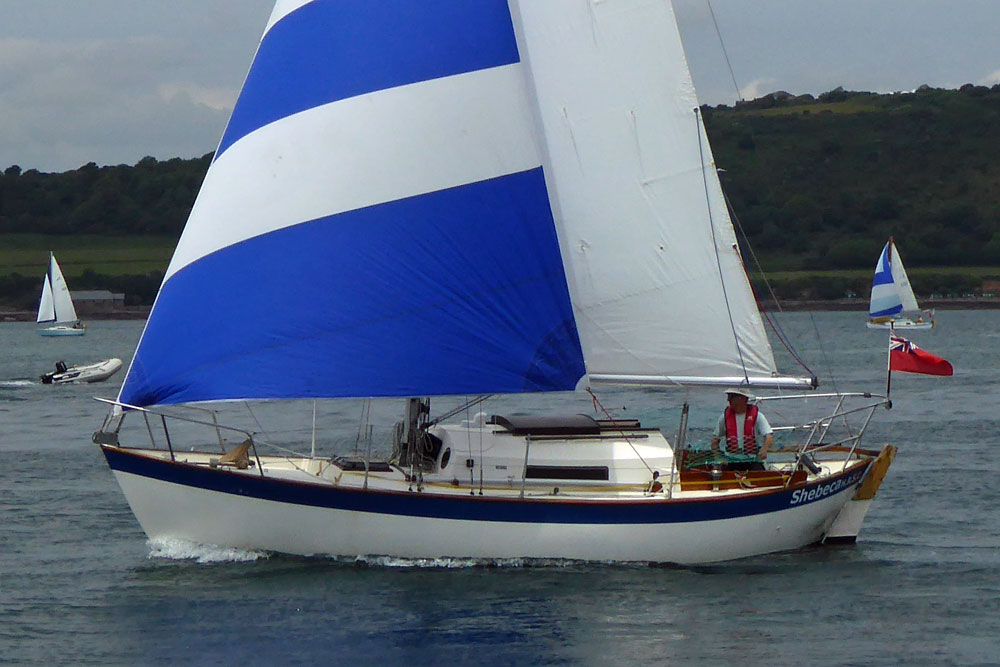
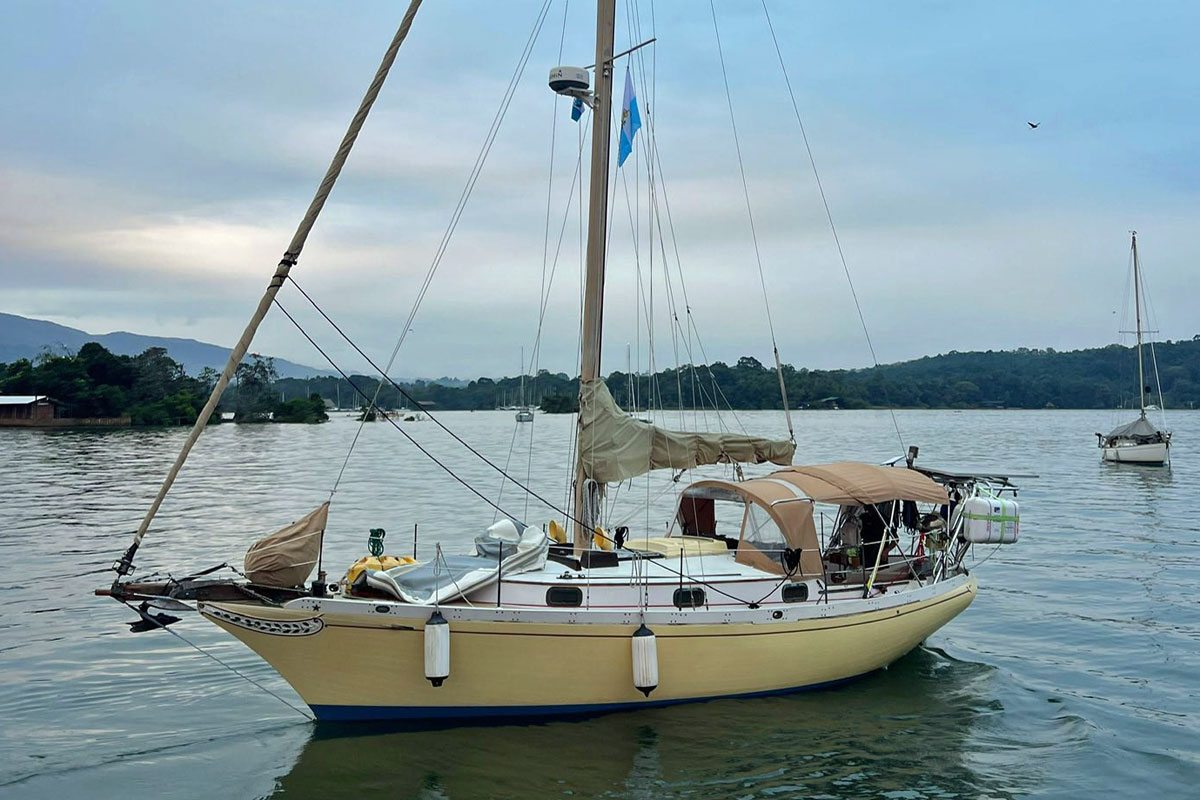
Key Takeaways: The Bayfield 40 is a rugged, full-keeled staysail ketch designed for long-distance voyaging and liveaboard comfort. Built in Ontario, Canada, by Bayfield Boat Yard, it is distinguished by its clipper bow, trailboards, and traditional "shippy" aesthetic. While most often rigged as a ketch to break up the sail area for easier handling, it is not a light-air performer and struggles somewhat in soft breezes. Its heavy displacement and high comfort ratio, however, make it a predictable and safe platform for offshore work. It remains a premier choice for couples seeking a traditional bluewater vessel with a shallow draft for coastal exploring, provided they are prepared for the maintenance demands of an ageing classic.
Table of Contents
- Bayfield 40 at a Glance
- Design & Construction
- Published Specification: The Bayfield 40 Blueprint
- Sail Areas & Rig Dimensions
- Performance Analysis: Understanding the Design Ratios
- How the Bayfield 40 Sails
- Bluewater Capability: Strengths & Trade-Offs
- Configuration, Layout & Cruising Characteristics
- Who This Boat Is Best For
- The Buyer’s Checklist: Common Problem Areas
- Summing Up
- Frequently Asked Questions (FAQs)
Bayfield 40 at a Glance
- Type: Full-keel staysail ketch
- Designer: Ted Gozzard
- Builder: Bayfield Boat Yard (Canada)
- Production Years: 1982–1988
- Rig: Ketch (specifically a staysail ketch configuration)
- Best for: Long-range cruising, Caribbean exploring, and traditional offshore voyaging
- Strengths: Shallow draft, exceptional storage, heavy-weather stability, and versatile sail plan
- Trade-offs: Sluggish in light winds, significant maintenance on exterior teak, and complex standing rigging
Design & Construction
The Bayfield 40 was the flagship of the Bayfield line, designed by Ted Gozzard. Gozzard’s philosophy focused on creating a "character" boat that combined traditional styling with modern fiberglass construction. The hull is a solid laminate of polyester resin and glass, while the deck is typically balsa-cored for stiffness and weight savings. A critical point for surveyors is the cabin windows; unlike some earlier models, the 40 usually features windows that are through-bolted into the cabin trunk rather than just bonded, though seals can still perish over time.
The backbone of the boat is a long full keel with an encapsulated lead ballast, meaning there are no keel bolts to worry about. The rudder is hung on the trailing edge of the keel, providing excellent protection against debris and grounding. The chainplates on the Bayfield 40 are often bonded and laminated into the hull structure. This provides immense strength, but it also makes them difficult to inspect or replace without significant labour.
While a few rare cutter-rigged versions exist, the overwhelming majority of Bayfield 40s were produced as staysail ketches. This rig, combined with a draft of only 4'11" (1.50 m), makes them legendary for Bahamas cruising. The clipper bow and long bowsprit are not merely for show; they balance the sail plan against the heavy hull. No official STIX stability index was published for this model, but its offshore pedigree is well-supported by numerous successful circumnavigations.
Published Specification: The Bayfield 40 Blueprint
| Measurement | Specification |
|---|---|
| L₀ₐ (Length Overall) | 45'0" (13.72 m) — including bowsprit |
| Length on Deck | 39'6" (12.04 m) |
| Lᵥᵥₗ (Waterline Length) | 30'6" (9.30 m) |
| Beam | 12'0" (3.66 m) |
| Draft | 4'11" (1.50 m) |
| Displacement | 21,000 lbs (9,525 kg) |
| Ballast | 8,000 lbs (3,629 kg) |
| Rig Type | Staysail Ketch |
| Hull Material | GRP (Glass Reinforced Plastic) |
| Production Dates | 1982 – 1988 |
Important: Published specifications for the Bayfield 40 vary by source and configuration. Dimensions, displacement, draft, and rig details may differ between early design literature, later owner-modified boats, and secondary databases. Where figures vary, this table uses the most commonly cited figures.
Sail Areas & Rig Dimensions
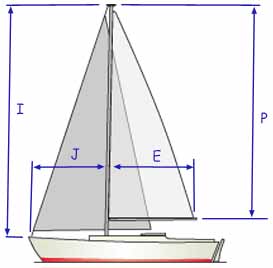 Rig dimensions
The ketch rig on the Bayfield 40 is exceptionally versatile, offering multiple "gears" for different wind conditions. The dimensions provided below reflect the primary main mast measurements.
- Total Sail Area: 755 ft² (70.14 m²)
- I (Forestay Height): 44'9" (13.64 m)
- J (Fore-triangle Base): 19'0" (5.79 m)
- P (Mainsail Hoist): 38'6" (11.73 m)
- E (Mainsail Foot): 14'6" (4.42 m)
Performance Analysis: Understanding the Design Ratios
The following ratios help quantify how the Bayfield 40 behaves in various conditions compared to other blue-water cruisers.
| Ratio | Value | Interpretation |
|---|---|---|
| Sail Area / Displacement | 15.8 | Indicates a tendency to require the engine in light winds; the boat needs a breeze to get moving. |
| Displacement / Length | 331 | A "heavy" rating. This confirms the boat's ability to carry significant cruising loads without losing trim. |
| Ballast / Displacement | 38% | A healthy margin for a full-keel cruiser, suggesting good stiffness and resistance to heeling. |
| Capsize Screening Formula | 1.74 | Well below the 2.0 limit for offshore sailing, indicating a very safe profile for ocean crossings. |
| Brewer Motion Comfort Ratio | 37.8 | High score. This translates to a slow, easy motion in a seaway, reducing crew fatigue. |
For more on this topic, you might want to take a look at Understanding Boat Performance & Design Ratios...
How the Bayfield 40 Sails
Under sail, the Bayfield 40 is a stately performer. The ketch rig is its greatest asset for short-handed crews because it breaks the total sail area into four smaller, manageable components: the yankee, staysail, mainsail, and mizzen. This allows precise sail trimming to balance the helm. While upwind performance is modest—rarely pointing higher than 45 to 50 degrees—the boat excels on a reach.
The "staysail ketch" configuration is particularly effective in heavy weather. By dropping the mainsail and jib, the boat can be sailed comfortably under just the staysail and mizzen. This "jig and jigger" setup keeps the centre of effort low and balanced, providing a dry, stable ride even when conditions deteriorate. In light airs, however, the significant wetted surface of the full keel and the relatively modest sail plan mean the boat will be slower than its modern fin-keeled counterparts.
Bluewater Capability: Strengths & Trade-Offs
The Bayfield 40 is a true ocean voyager. Its strengths lie in its massive tankage—often carrying 100 gallons (378 litres) of fuel and 120 gallons (454 litres) of water—and its seakindliness. The interior is designed for use at sea, with plenty of handholds and a secure U-shaped galley.
However, the trade-off is manoeuvrability. In a tight marina, the full keel and lack of a bow thruster (unless retrofitted) make backing up a challenge, especially with the added windage of the mizzen mast. The bowsprit also adds significant length, which can increase berthing costs. Additionally, the cockpit is relatively small for a boat of this length. That is a safety advantage offshore, but it limits social space at anchor.
Configuration, Layout & Cruising Characteristics
The interior of the Bayfield 40 features plenty of warm teak and a layout that prioritizes liveaboard utility. Most models feature a forward V-berth, a large head with a separate shower stall, and a main saloon with a pull-out double berth. The galley is a highlight for cruisers, offering deep sinks and excellent storage for provisions.
The ketch rig provides an added benefit at anchor: the mizzen sail can be used as a riding sail to keep the bow pointed into the wind, significantly reducing the boat's tendency to "sail" around its anchor. Ventilation is generally good throughout the cabin, with multiple opening ports and hatches.
Who This Boat Is Best For
Good fit for:
- Couples planning a comfortable circumnavigation who prefer the versatility of a ketch rig.
- Cruisers who frequently navigate shallow waters like the Bahamas.
- Traditionalists who value the security of an encapsulated keel and protected rudder.
Less ideal for:
- Sailors who enjoy light-air performance or club racing.
- Those who prefer modern, minimalist "Ikea-style" interiors.
- Owners who wish to avoid the maintenance of two masts and extensive exterior woodwork.
The Buyer’s Checklist: Common Problem Areas
When inspecting a Bayfield 40, pay close attention to:
- The Bowsprit: Check for rot in the wood and fatigue in the bobstay fittings.
- Mizzen Mast Step: Inspect the base of the mizzen mast for corrosion or compression issues.
- Chainplates: Because they are often glassed-in, look for staining on the hull that might indicate water ingress.
- Balsa Core: Use a moisture meter on the deck, especially around the chainplates and stanchion bases.
- Portlights: Original plastic portlights are prone to leaking and often require replacement with bronze or stainless units.
Could this be your ideal cruising boat?
It may well be, but before going any further, it might be worth taking a look at my eBook 'How to Avoid Buying the Wrong Sailboat'...
Summing Up
The Bayfield 40 is an unapologetic traditionalist. By choosing a staysail ketch rig over a simpler sloop, Ted Gozzard created a vessel that prioritizes balance and ease of handling over raw speed. It won't win many races, and it requires a dedicated maintenance schedule for its teak and rigging. However, what you gain is a vessel with a high comfort ratio, a safe motion, and the ability to carry you across an ocean in security. For the sailor who values the journey and the classic aesthetic, the Bayfield 40 remains a steadfast companion.
This article was written by Dick McClary, RYA Yachtmaster and author of the RYA publications 'Offshore Sailing' and 'Fishing Afloat', member of The Yachting Journalists Association (YJA), and erstwhile member of the Ocean Cruising Club (OCC).
Frequently Asked Questions (FAQs)
Why is the Bayfield 40 usually rigged as a ketch?
Why is the Bayfield 40 usually rigged as a ketch?
The ketch rig allows the total sail area to be divided into smaller sails, making them easier to handle for a couple or solo sailor. It also provides a more balanced helm and versatile sail combinations for varying wind strengths.
How does the Bayfield 40 handle in reverse?
How does the Bayfield 40 handle in reverse?
Like most full-keel boats, it can be unpredictable in reverse. It typically "walks" to one side depending on the prop wash. Most owners learn to use this prop walk to their advantage or consider installing a bow thruster.
Is the bowsprit a structural concern?
Is the bowsprit a structural concern?
The bowsprit is a critical part of the rig. Regular inspections of the wood-to-metal interfaces and the bobstay are mandatory, as a failure here could lead to a loss of the main mast.
What is the typical cruising speed under power?
What is the typical cruising speed under power?
With a clean hull and a standard 40–50 hp diesel engine, you can expect to cruise comfortably at 6 to 6.5 knots.
Are parts still available for the Bayfield 40?
Are parts still available for the Bayfield 40?
The builder is no longer in business, so model-specific hardware can be difficult to source. However, the primary systems (engines, winches, and blocks) are standard industry parts that are easily serviced or replaced.
Recent Articles


-
Best AIS Systems for Cruising Sailboats 2026 — Class B & B+ Guide
Sep 24, 26 05:03 AM
Find the best AIS systems for cruising sailboats in 2026. Clear guidance on Class B vs Class B+, transceivers vs receivers, NMEA 2000 compatibility, and top AIS units available on Amazon. -
Rigging a Carbon Mast: Carbon, PBO or Dyneema Compared
Sep 20, 26 08:01 AM
Rigging a carbon mast: how carbon rod, PBO and Dyneema compare on cost, weight and inspection, and why stainless wire or rod rarely make sense. -
Top-Down Furling Guide: Code Zeros and Asymmetric Spinnakers
Sep 19, 26 04:57 PM
Top-down furling explained for cruisers: how it works, which boats need one, common faults, sock versus furler costs, and the rule everyone forgets.