- Home
- Cruising Yachts 40' to 45'
- Beneteau Idylle 44
Beneteau Idylle 44 Review:
Comprehensive Specs & Performance Analysis
Key Takeaways
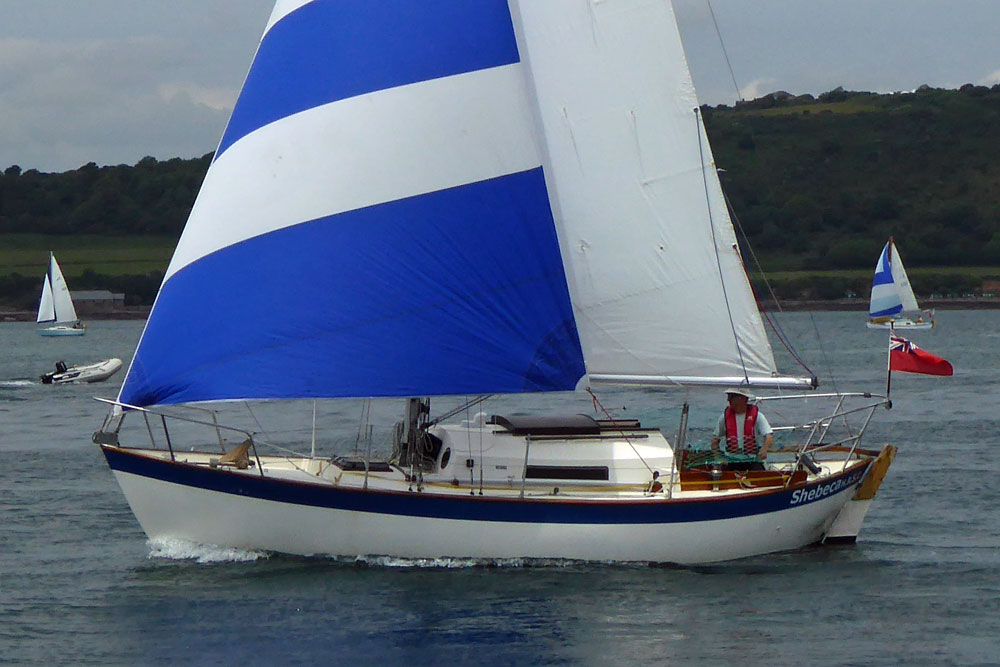
The Bénéteau Idylle 44 is a heavy-displacement cruiser designed for comfort and long-term living on board rather than competitive racing. Its key attributes include a high-volume hull designed by Jean Berret, a robust solid GRP laminate construction, and a forgiving masthead sloop rig. While it is not the fastest boat in light airs, its stability and high comfort ratio make it an excellent platform for offshore cruising. Potential owners should look for well-maintained examples, particularly regarding the original Perkins engine and the condition of the teak-laid decks which were common on this model.
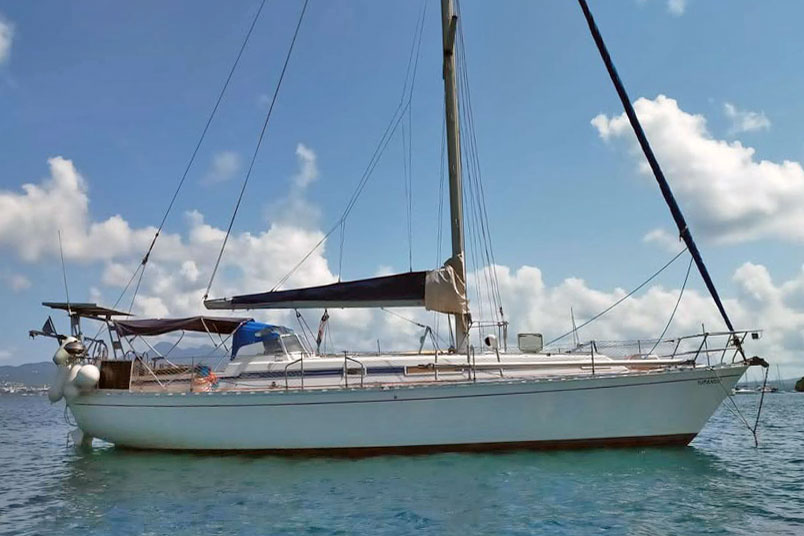 The Beneteau Idylle 44
Design & Construction
The Bénéteau Idylle 44 was conceived during a period when the yachting industry was shifting towards a clearer distinction between "cruising" and "racing" hulls. Bénéteau commissioned naval architect Jean Berret, a designer typically associated with fast racing hulls, to create a range that offered a "French alternative" to the heavy-set Scandinavian cruisers of the time. The result was the Idylle series, of which the 13.50 (the 44) was the flagship until the German Frers-designed 15.50 arrived.
Constructed by Bénéteau in France between 1983 and 1988, the hull is a solid GRP (Glass Reinforced Polyester) layup below the waterline, providing significant impact resistance for ocean passages. The deck is a sandwich construction with a balsa core to save weight aloft while maintaining rigidity. One of the defining features of the Idylle 44 is its generous beam, which is carried well aft, providing a spacious cockpit and immense interior volume that was revolutionary for the early 1980s.
While most Idylle 44 yachts were delivered as masthead sloops, the range was designed to be versatile. Most versions featured a fin keel with a moderate draft of 5'7" (1.70 m), though a deeper 6'11" (2.10 m) version was produced for those seeking better upwind performance. The rudder is a semi-balanced spade design mounted on a partial skeg, providing a good balance between helm feel and structural protection.
Sail Areas & Rig Dimensions
The Idylle 44 is equipped with a sturdy masthead rig that prioritises reliability and ease of reefing over the complexities of a fractional setup. The sail plan is generous enough to move the ten-tonne displacement in a moderate breeze, but the boat truly finds its stride when the wind reaches fifteen knots and above.
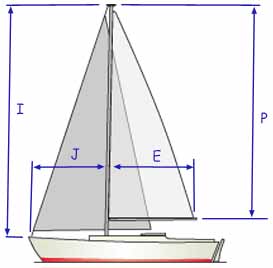
- I (Forestay Height): 50'10" (15.50 m)
- J (Foretriangle Base): 17'7" (5.35 m)
- P (Mainsail Hoist): 45'5" (13.85 m)
- E (Mainsail Foot): 15'1" (4.60 m)
- Mainsail Area: 343 ft2 (31.85 m2)
- Foretriangle Area (100%): 446 ft2 (41.46 m2)
- Total Upwind Sail Area (100%): 789 ft2 (73.31 m2)
Published Specification: The Bénéteau Idylle 44 Blueprint
The following data represents the standard factory specifications for the Idylle 44 (13.50) during its production run.
| Specification Item | Measurement & Detail |
|---|---|
| Length Overall (LOA) | 44'3" (13.50 m) |
| Length at Waterline (LWL) | 36'9" (11.20 m) |
| Beam | 13'11" (4.25 m) |
| Draft (Standard) | 5'7" (1.70 m) |
| Displacement | 22,046 lbs (10,000 kg) |
| Ballast (Cast Iron) | 7,055 lbs (3,200 kg) |
| Rig Type | Masthead Sloop |
| Hull Material | Solid GRP Laminate |
| Production Dates | 1983 – 1988 |
| Fuel Capacity | 53 gal (200 L) |
| Water Capacity | 132 gal (500 L) |
Performance Analysis: Understanding the Design Ratios
To truly evaluate the Idylle 44, one must look past the aesthetic and examine the engineering numbers. These ratios provide a scientific look at how the boat will behave in a seaway. For those interested in how these numbers compare to other designs, see our article on Understanding Boat Performance & Design Ratios.
| Ratio Type | Calculated Value | Expert Interpretation |
|---|---|---|
| Sail Area/Displacement (SA/D) | 16.2 | Conservative cruiser; lacks light-air agility but handles heavy weather well. |
| Displacement/Length (D/L) | 198.5 | Moderate-heavy displacement; provides a stable, momentum-driven motion. |
| Ballast/Displacement (B/D) | 32% | Adequate stiffness for offshore work, though reliant on the wide beam for stability. |
| Capsize Screening Formula (CSF) | 1.98 | Safe for ocean passages; stays below the critical 2.0 threshold. |
| Brewer Motion Comfort Ratio | 27.3 | Predictable and comfortable motion, suitable for long-term offshore cruising. |
Structural Integrity & Stability Dynamics
The Idylle 44 was built at a time when Bénéteau was transitioning into a global powerhouse. The choice of Jean Berret as the designer was inspired; he managed to hide a great deal of volume in a hull that still looks relatively sleek. The solid GRP construction is a major safety advantage for cruising sailors. Unlike modern foam-cored hulls, a solid laminate is far easier to inspect and repair in remote locations, and it provides a "overbuilt" peace of mind when navigating poorly charted waters.
The key defining feature of this boat is its immense beam and the way it is carried into the ends. This gives the boat high initial stability (form stability), meaning it remains quite flat in a breeze compared to the narrower designs of the 1970s. However, the relatively shallow draft version can struggle with leeway when beating into a stiff breeze. Performance-wise, the Idylle 44 is a "passage maker" rather than a "day sailer." It requires a bit of wind to get the hull moving, but once its 22,000 lbs of momentum is established, it will punch through a head sea that would stop lighter boats in their tracks.
Configuration, Layout & Cruising Characteristics
Step below deck, and the Idylle 44 reveals why it was so popular with the charter fleets of the 1980s, specifically Moorings. The interior is finished in rich teak and features a layout that maximises the 13'11" beam. Most models feature two large aft cabins and a spacious V-berth forward, each with dedicated heads. This three-cabin, two-head configuration makes it ideal for two couples or a family cruising with children.
The galley is a standout feature for any liveaboard sailor. It is typically a linear or wrap-around design with massive fridge capacity and plenty of counter space for meal preparation at sea. Storage is another strength; Bénéteau utilised the depth of the hull to provide lockers in every available corner. On deck, the cockpit is deep and secure, with high coamings that provide excellent back support and protection from spray. The wide side decks make moving forward to handle lines or the anchor windlass safe and straightforward, even in a swell.
The engine is usually a Perkins 4-108, a legendary four-cylinder diesel known for its longevity and ease of maintenance. While it can be a little noisy and prone to the occasional oil drip, parts are available in almost every corner of the world, a vital consideration for the global cruiser.
Impressed?

Has this article may suggested that this could be your ideal cruising boat and, as a result, deserves to be on your "Worth a look at" list?
But if, like me, you find sailboats to be seductive creations, then that list could rapidly get to be a pretty long one. If that is the case, wouldn't it be good if you could narrow it down bit through an objective, pragmatic process?
Well, that's where my eBook 'How to Avoid Buying the Wrong Sailboat' comes in...
Summing Up
The Bénéteau Idylle 44 is a quintessential mid-eighties cruiser that has aged with grace. It successfully bridges the gap between the narrow, wet boats of the previous generation and the high-volume, lightweight production yachts of today. While its design ratios suggest a boat that is more "sturdy" than "spirited," its real-world performance is perfectly suited to the requirements of the recreational offshore sailor.
Its solid GRP hull and reliable Perkins machinery offer a level of durability that is often lacking in more contemporary designs. However, buyers must be mindful of the maintenance requirements of an older vessel, particularly the potential for balsa core issues in the deck if hardware has not been properly bedded. Ultimately, for the sailor who values interior space, a comfortable motion in a sea, and the security of a well-built hull, the Idylle 44 remains one of the best value bluewater cruisers on the market today.
If you'd like to compare this boat with others in this size range, take a look at Cruising Sailboats from 40' to 45' Overall.
This article was written by Dick McClary, RYA Yachtmaster and author of the RYA publications 'Offshore Sailing' and 'Fishing Afloat', member of The Yachting Journalists Association (YJA), and erstwhile member of the Ocean Cruising Club (OCC).
Frequently Asked Questions (FAQs)
How does the Bénéteau Idylle 44 handle in heavy weather?
How does the Bénéteau Idylle 44 handle in heavy weather?
Due to its moderate-heavy displacement and high comfort ratio, the Idylle 44 is very composed in heavy weather. It tends to ride over seas rather than slamming into them, and its high form stability keeps it relatively upright even as the wind increases.
What are the common maintenance issues with this model?
What are the common maintenance issues with this model?
The most frequent concerns are the teak decks, which were often screwed down and can lead to leaks and balsa core rot if the sealant has failed. Prospective buyers should also inspect the keel bolts and the condition of the Perkins 4-108's cooling system.
Is the Bénéteau Idylle 44 suitable for single-handed sailing?
Is the Bénéteau Idylle 44 suitable for single-handed sailing?
While large, the Idylle 44 is manageable for a single-hander if set up correctly. Many owners lead lines aft to the cockpit and install a reliable autopilot. However, the heavy displacement means that winching the large genoa requires significant physical effort unless electric winches are fitted.
Is there a significant difference between the 13.50 and the 44?
Is there a significant difference between the 13.50 and the 44?
No, they are the same boat. Bénéteau initially marketed the yacht as the Idylle 13.50 in Europe to reflect its length in metres, but it was branded as the Idylle 44 for the North American and UK markets to fit the imperial naming conventions of the time.
How does the shallow draft version perform upwind?
How does the shallow draft version perform upwind?
The 1.70 m (5'7") shoal draft version is excellent for exploring the Bahamas or the French canals, but it does suffer from increased leeway when sailing close-hauled compared to the deep-keel version. Owners often compensate by falling off a few degrees to maintain speed.
Recent Articles


-
Discovery 55 Sailboat Review: Specs, Ratios & Bluewater Capability
Oct 14, 26 06:04 AM
Detailed Discovery 55 buyer’s guide covering specs, ratios, sailing behaviour, problem areas and bluewater suitability. -
Should I Buy a Boat? Four Questions to Answer Before You Commit
Oct 02, 26 04:40 AM
Thinking "Should I buy a boat?" This guide helps you decide, with key considerations from cost & maintenance to your personal sailing aspirations. -
Offshore Internet with Starlink: Hardware, Plans, and Setup Guidance
Oct 01, 26 01:15 PM
A clear, practical guide to choosing the right Starlink hardware and plan for offshore cruising. Learn what to buy, how to install it, and how to manage power afloat.