- Home
- Cruising Yachts 40' to 45'
- Peterson 44 Sailboat
The Peterson 44 Sailboat:
Specs, Performance Analysis & Cruising Characteristics
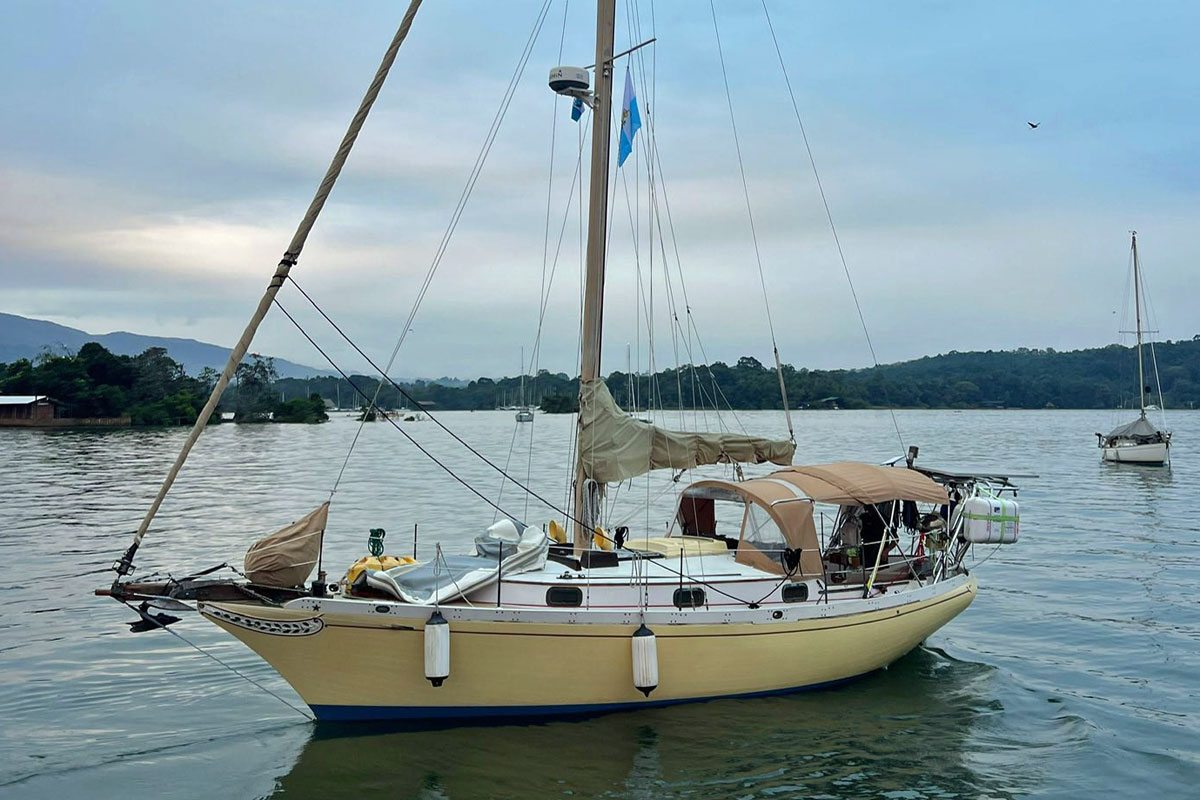
In the golden era of the 1970s, as the IOR (International Offshore Rule) began to dictate hull shapes, a few designs emerged that transcended the racing circuits to become legendary cruisers. The Peterson 44 is perhaps the most celebrated of these. Designed by the late Doug Peterson and built primarily by the Jack Kelly Yacht Company in Taiwan, this center-cockpit cutter was a departure from the heavy-displacement "double-enders" of the time. It offered a flatter underbody, a fin keel, and a skeg-hung rudder—a combination that proved fast, weatherly, and surprisingly comfortable for long-range voyaging.
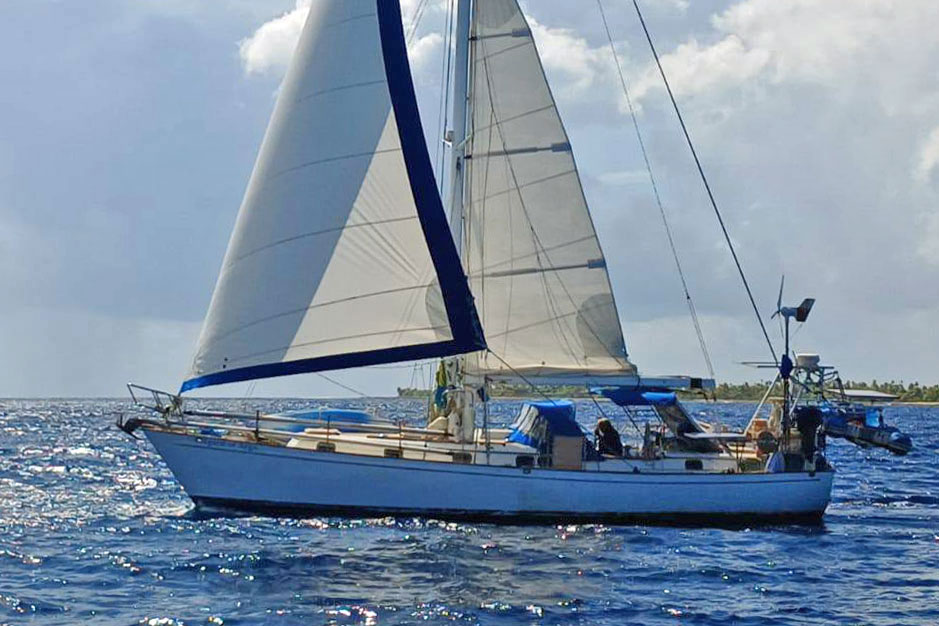 'Spirit of Argo', a Peterson 44
Pic by kind permission of her owner
Key Takeaways
The Peterson 44 is a performance-oriented offshore cruiser known for its exceptional balance and ability to maintain high average speeds. While many 1970s cruisers sacrificed pointing ability for interior volume, the Peterson 44 remains a "sailor’s boat." It features a relatively low profile for a center-cockpit design, a robust fiberglass hull, and a versatile cutter rig. Prospective owners should focus on the condition of the original black iron fuel tanks and the chainplate attachments, but for those seeking a swift, sea-kindly passage maker, it remains a benchmark in the 44' (13.41 m) class.
Design & Construction
Doug Peterson was a designer who understood how to make a boat move through water with minimal fuss. When Jack Kelly approached him to design a dedicated cruiser, Peterson did not follow the trend of bloated "floating condominiums." Instead, he scaled up the principles that made his racing designs successful. The hull is hand-laid solid GRP (Glass Reinforced Plastic), while the deck is typically balsa-cored.
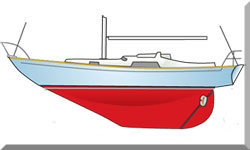
The defining feature of the Peterson 44 is its long-fin keel and skeg-hung rudder. This configuration provides a perfect middle ground between the tracking of a full keel and the manoeuvrability of a spade rudder. It allows the boat to track straight downwind in a blow while remaining responsive enough to dock in tight marinas.
The Kelly-Peterson Branding Confusion
A frequent point of confusion in the brokerage market is the distinction between a "Kelly-Peterson" and a plain "Peterson". While Doug Peterson designed the hull lines, the "Kelly" prefix refers to Jack Kelly, the San Diego broker who commissioned the project and managed the high-quality production at the Queen Long Marine yard. Buyers should be aware that because this design was so successful, various yards produced versions of the hull with varying degrees of build quality.
For a detailed breakdown of these differences and how to identify a genuine Queen Long build, see our guide on The Differences Between Kelly-Peterson & Plain Peterson Sailboats.
While the 44' (13.36 m) was the flagship, the design later evolved into the Kelly Peterson 46, which featured a slightly longer transom. Most 44s were rigged as cutters, providing a flexible sail plan for varying wind strengths, though a few ketch-rigged versions exist.
Sail Areas & Rig Dimensions
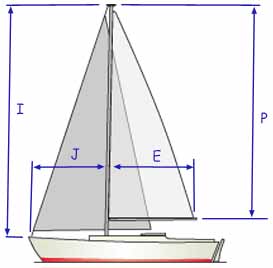 Rig dimensions
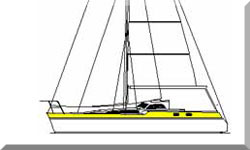
The Peterson 44 was designed to be driven. Its cutter rig allows for a large variety of sail combinations, keeping the centre of effort low and manageable.
- I (Forestay Height): 52'6" (16.00 m)
- J (Foretriangle Base): 18'6" (5.64 m)
- P (Mainsail Hoist): 46'3" (14.10 m)
- E (Mainsail Foot): 15'0" (4.57 m)
- Total Sail Area (100% Foretriangle): 833 ft² (77.39 m²)
- Mainsail Area: 347 ft² (32.24 m²)
- Foretriangle Area: 486 ft² (45.15 m²)
Published Specification: The Peterson 44 Blueprint
| Parameter | Data |
|---|---|
| LOA (Length Overall) | 43'10" (13.36 m) |
| LWL (Length Waterline) | 35'3" (10.74 m) |
| Beam | 12'11" (3.94 m) |
| Draft | 6'4" (1.93 m) |
| Displacement | 30,000 lbs (13,608 kg) |
| Ballast (Lead) | 10,000 lbs (4,536 kg) |
| Rig Type | Cutter / Ketch |
| Hull Material | Solid GRP |
| Production Dates | 1976 – 1982 |
Performance Analysis: Understanding the Design Ratios
| Ratio | Value | Interpretation |
|---|---|---|
| SA/D | 13.8 | Conservative, leaning toward heavy cruiser; requires a decent breeze to move well. |
| D/L | 306 | Heavy displacement; indicates high load-carrying capacity and a steady motion. |
| B/D | 33% | Solid stability; the lead ballast is encapsulated, providing a low centre of gravity. |
| CSF | 1.66 | Excellent; a value below 2.0 indicates a boat suitable for ocean voyaging. |
| Comfort Ratio | 37.5 | High; suggests a gentle, predictable motion in a seaway, reducing crew fatigue. |
For a deeper understanding of how these numbers affect your time at sea, refer to our guide on Understanding Boat Performance & Design Ratios.
Structural Integrity & Stability Dynamics
The Peterson 44's GRP hull was overbuilt by modern standards. The thick laminate schedule provides immense puncture resistance and rigidity, which is vital when navigating poorly charted areas or encountering debris. Because the ballast is internal and encapsulated within the keel glasswork, there are no keel bolts to corrode or fail.
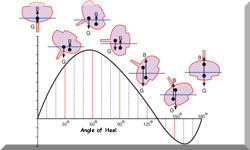
The fin keel and skeg-hung rudder design significantly improves stability dynamics compared to full-keel boats. It reduces the "wetted surface" area, allowing the boat to accelerate faster after hitting a wave, while the skeg protects the rudder from impact. This results in a boat that is stiff, stands up well to its sails, and maintains a high degree of directional stability.
The Buyer’s Checklist: Common Problem Areas
Purchasing a Peterson 44 today means buying a boat that is likely four decades old. While the bones are excellent, specific areas require scrutiny:
- Fuel Tanks: The original tanks were black iron, often foamed into place. They are notorious for rusting from the outside in. Replacement is a major job.
- Chainplates: Check for leaks where the chainplates pass through the deck. Moisture here can lead to crevice corrosion in the knees that support the rigging.
- Deck Core: Like many boats of this era, the balsa core can suffer from delamination if deck hardware was not properly re-bedded.
- Osmotic Blistering: While the hulls are thick, many 44s have shown signs of blistering. A moisture meter survey is essential.
- Rigging Age: Many of these boats still have older swaged fittings. Given the Peterson's offshore pedigree, a standing rigging replacement is a standard refit item.
Comparison: Peterson 44 vs The Competition
In the 40' to 44' (12.19 to 13.41 m) range, the Peterson 44 is often compared to the Tayana 42 and the Whitby 42.
- Tayana 42: A Robert Perry design. The Tayana is a "double-ender" with more traditional lines. The Peterson 44 is generally faster and more weatherly.
- Whitby 42: A popular centre-cockpit cruiser, but it lacks the performance of the Peterson. The Whitby has a fuller keel and is significantly slower upwind.
- Peterson 44 Advantage: It remains the choice for the sailor who refuses to stop sailing just because they are cruising. It bridges the gap between a pure racer and a slow-motion liveaboard.
Configuration, Layout & Cruising Characteristics
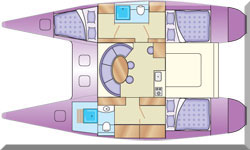
The interior layout is a classic "walk-through" centre cockpit. The galley is located in the passageway to the aft cabin, providing a secure place to cook while at sea.
- Tankage: With 120 gallons (454 l) of fuel and 150 gallons (568 l) of water, the Peterson 44 is well-equipped for long-range autonomy.
- The Cockpit: The centre cockpit is deep and safe, though it can be a "wet" ride in heavy head seas due to the low freeboard. A good dodger and bimini are essential.
- Ventilation: With numerous opening ports and overhead hatches, the Peterson 44 handles tropical climates better than many of its contemporaries.
Could this be your ideal cruising boat?
It may well be, but before going any further, it might be worth taking a look at my eBook 'How to Avoid Buying the Wrong Sailboat'...
Summing Up
The Peterson 44 is a rare breed—a design that remains relevant decades after its first launch. While it lacks the stern-platform convenience and "open-plan" interior of a modern production boat, it offers a level of seaworthiness and pride of ownership that few modern yachts can match. If you can find an example where the fuel tanks have been replaced and the deck is dry, you are looking at one of the finest blue-water cruisers ever built.
If you'd like to compare this boat with others in this size range, take a look at Cruising Boats from 40' to 45' overall....
This article was written by Dick McClary, RYA Yachtmaster and author of the RYA publications 'Offshore Sailing' and 'Fishing Afloat', member of The Yachting Journalists Association (YJA), and erstwhile member of the Ocean Cruising Club (OCC).
Frequently Asked Questions (FAQs)
How does the Peterson 44 handle in heavy weather?
How does the Peterson 44 handle in heavy weather?
Excellently. The high comfort ratio and skeg-hung rudder provide a predictable motion. Under staysail and reefed main, the boat is known for its ability to heave-to comfortably.
Is the Peterson 44 a good choice for a solo sailor?
Is the Peterson 44 a good choice for a solo sailor?
Yes, though its 30,000 lbs (13,608 kg) displacement requires respect. With a well-set-up lines-to-cockpit system and a reliable autopilot, it is manageable for an experienced hand.
What is the typical cruising speed under power?
What is the typical cruising speed under power?
Most are equipped with 50-80 hp engines. You can expect a comfortable cruising speed of 6.5 to 7 knots at 2200 RPM.
Does the centre-cockpit layout make the engine difficult to access?
Does the centre-cockpit layout make the engine difficult to access?
Actually, the access is quite good. Panels in the walkthrough and under the companionway steps provide 360-degree access to the powerplant.
What should I budget for a refit?
What should I budget for a refit?
For a "standard" condition boat, expect to spend £20,000 to £40,000 ($25,000 to $50,000) on major systems like tanks, rigging, and sails if they haven't been recently updated.
Recent Articles


-
Mystery 35 Review: Specs, Performance & Buying Guide
Aug 29, 26 09:42 AM
An in-depth review of the Mystery 35 sailboat. Read technical specs, design ratios, sail performance, and common buyer inspection areas. -
Beneteau First 405 Review: Specs, Performance & Buyer’s Guide
Aug 26, 26 03:58 AM
Detailed Beneteau First 405 review covering specs, performance, bluewater capability, layouts and buyer’s checklist. -
Moody S38 Review: Specs, Ratios & Buyer’s Guide
Aug 12, 26 04:22 AM
In‑depth Moody S38 review covering specs, performance, design ratios, layout, strengths, trade‑offs & buyer inspection points.