The C&C 36 Sailboat
Specs, Performance Analysis & Cruising Characteristics
Key Takeaways
The C&C 36 is a high-performance racer-cruiser that leans toward the "racer" side of the equation compared to heavy-displacement blue-water tanks. It offers exceptional pointing ability, a robust balsa-cored hull for stiffness, and a manageable sail plan for short-handed crews. While not a dedicated liveaboard for long-term high-latitude voyaging, it remains a premier choice for coastal hopping and offshore club racing.
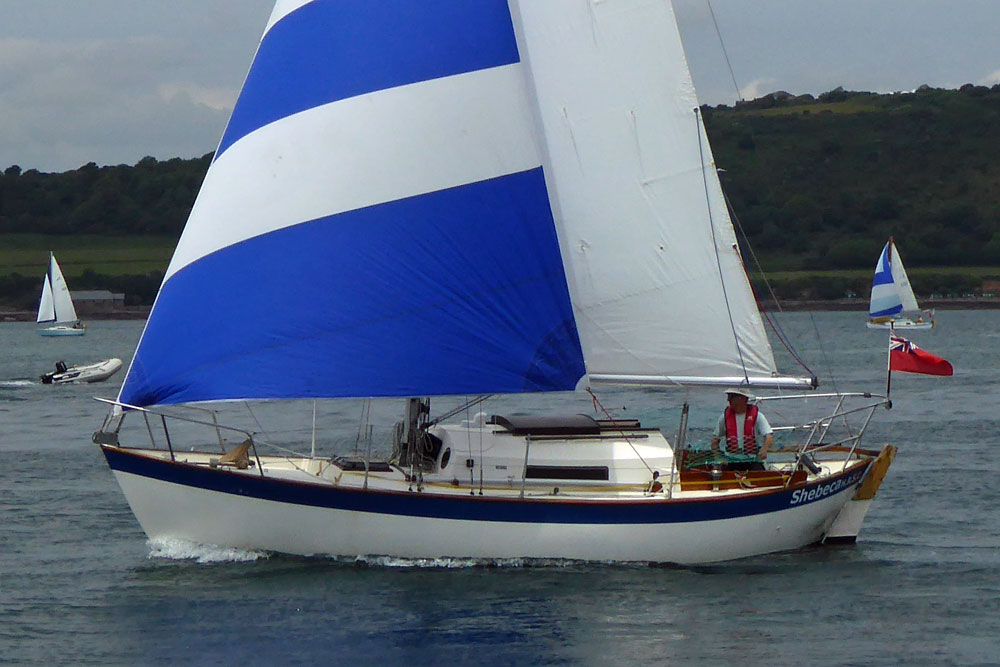
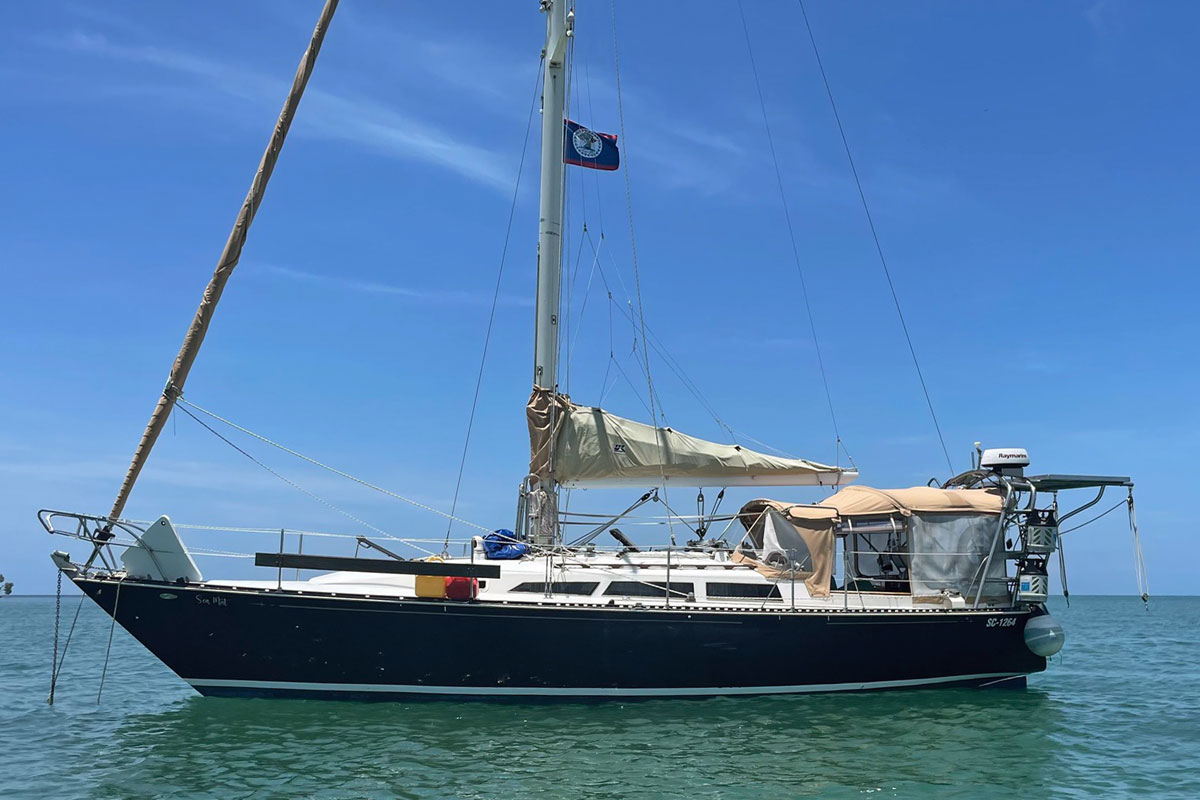 C&C 36 sailboat
Design & Construction
The C&C 36 was born from the drawing boards of Cuthbertson & Cassian and produced by C&C Yachts in Canada. Unlike the heavy aluminium or solid GRP cruisers of the same era, C&C pioneered the use of balsa-core construction in both the hull and deck. This method was chosen to achieve a high strength-to-weight ratio, ensuring the boat remained stiff and responsive in light airs while maintaining structural integrity in a seaway.
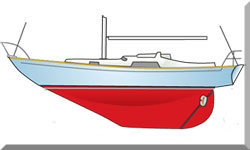
The defining feature of the C&C 36 is its fin keel and spade rudder configuration. This setup prioritises agility and lift, allowing the boat to tack quickly and maintain high speeds upwind. While a spade rudder requires careful inspection, it provides the "feel" and responsiveness that helm-sensitive sailors crave.
Several variants exist, most notably:
- The Landfall 38: Often confused with the 36, this was the dedicated cruising version with more interior volume.
- The C&C 36-1 (Classic): Produced from 1977 to 1982, featuring the iconic "wraparound" portlight.
- The C&C 36-2: A refreshed design introduced in the mid-80s with a more modern interior and refined lines.
- Draft Options: Most were deep fin keels (approx. 6'6"), but some shoal draft versions were produced for thinner waters.
Sail Areas & Rig Dimensions
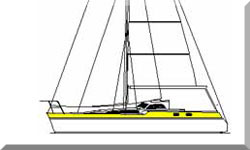
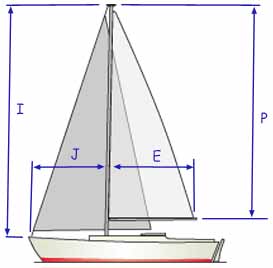 Rig dimensions
The rig is a masthead sloop, designed to carry significant headsail area to power the boat through various wind ranges.
- I (Forestay Height): 47'3" (14.40 m)
- J (Foretriangle Base): 15'0" (4.57 m)
- P (Mainsail Luff): 41'0" (12.50 m)
- E (Mainsail Foot): 12'0" (3.66 m)
- Main Sail Area: 246.00 ft² (22.85 m²)
- 100% Foretriangle: 354.38 ft² (32.92 m²)
- Total Upwind SA: 600.38 ft² (55.77 m²)
Published Specification: The C&C 36 Blueprint
Performance Analysis: Understanding the Design Ratios
To truly understand how this boat behaves, we must look at the mathematical profile. These ratios provide a clearer picture than any marketing brochure ever could.
Interpretation:
- SA/D of 18.3: This indicates a boat that is very lively. It will move well in light winds and requires reefing earlier than a heavy cruiser.
- D/L of 207: Sitting in the "Moderate" category, it strikes a balance between light-air speed and enough mass to carry momentum through a chop.
- B/D of 45.5%: This is an impressively high percentage of ballast. It means the boat is "stiff" and can carry its sail area effectively without excessive heeling.
- CSF of 2.01: Technically, a value under 2.0 is preferred for offshore work. The C&C 36 is right on the line, suggesting it is a capable offshore boat but requires an experienced hand in extreme conditions.
- Comfort Ratio of 23.4: For context, a heavy Colin Archer might be 50. The C&C 36 will have a quicker, more "active" motion in a sea. It is a boat that "dances" rather than "ploughs."
Structural Integrity & Stability Dynamics
The use of balsa coring in the hull is a double-edged sword. On the positive side, it provides incredible stiffness and thermal insulation. From a stability standpoint, it keeps the weight low in the keel where it belongs, rather than in the topsides. However, if the hull skin is breached or deck hardware is not properly bedded, moisture can enter the core, leading to delamination—a significant and costly repair.
The high ballast ratio is the C&C's secret weapon. It allows the boat to point exceptionally high into the wind, often out-sailing more modern production boats. However, the spade rudder, while providing excellent control, lacks the protection of a skeg, making it more vulnerable to debris or groundings.
The Buyer’s Checklist: Common Problem Areas
When inspecting a C&C 36, focus on these model-specific areas:
- Mast Step Corrosion: The mast is keel-stepped onto a steel or aluminium beam. These beams often corrode over time due to bilge water, potentially compromising rig tension.
- Deck & Hull Core Moisture: Use a moisture meter around all deck fittings and the chainplates. Soft spots in the deck are common if the previous owner neglected re-bedding.
- The "C&C Smile": Look at the leading edge of the keel-to-hull joint. A horizontal crack (the "smile") often indicates the keel bolts need tightening or the joint needs re-fairing, though it can sometimes signal structural fatigue in the grid.
- Chainplates: C&C used a rod rigging system on many of these boats. Inspect where the chainplates meet the deck; leaks here can rot the bulkheads.
- Spade Rudder Bearing: Check for excessive play in the rudder post.
Comparison: C&C 36 vs The Competition
The C&C 36 often competes with the Pearson 36-2 and the Tartar 37.
| Feature | C&C 36 | Pearson 36-2 | Tartan 37 |
|---|---|---|---|
| Primary Focus | Performance & Racing | Coastal Cruising | Performance Cruising |
| Hull Construction | Balsa Core (Full) | Solid GRP | Balsa (Deck Only) |
| Standard Draft | 6'7" (2.01 m) | 6'2" (1.88 m) | 4'2" (1.27 m) - CB version |
| Ballast Ratio | 45.5% | 38.0% | 41.0% |
| Rudder Type | Spade | Spade | Skeg-hung |
| Interior Vibe | Technical & Functional | High Volume & Comfort | Traditional & Sturdy |
While the Pearson offers a more "apartment-like" interior, the C&C will consistently win the race to the next harbour. The Tartan 37 offers a centerboard option for shoal drafting, which the C&C lacks.
Configuration, Layout & Cruising Characteristics
Inside, the C&C 36 is a product of its time—functional and snug.
- Galley: Usually a U-shaped arrangement to starboard of the companionway. It is secure for cooking at sea but lacks the massive fridge space of a 40-foot modern cruiser.
- Navigation Station: A proper, forward-facing desk. This is a highlight for those who still value paper charts or need a dedicated ship’s office.
- Tankage: Water and fuel capacities are modest (approx. 30 gallons of fuel). This confirms its status as a coastal/offshore cruiser rather than a trans-oceanic liveaboard.
Could this be your ideal cruising boat?
It may well be, but before going any further, it might be worth taking a look at my eBook 'How to Avoid Buying the Wrong Sailboat'...
Summing Up
The C&C 36 remains a "sailor's sailboat." It rewards an active hand at the helm and offers a level of performance that many modern, high-volume cruisers cannot match. While the balsa-cored hull requires a diligent maintenance schedule and a keen eye during the survey, the structural stiffness it provides is palpable underway. It is not the boat for someone seeking a floating cottage; it is, however, the ideal vessel for the cruiser who believes that the journey—specifically the sailing part of it—is the most important part of the trip.

This article was written by Dick McClary, RYA Yachtmaster and author of the RYA publications 'Offshore Sailing', member of The Yachting Journalists Association (YJA), erstwhile member of the Ocean Cruising Club (OCC) and owner/administrator of 'Liveaboard Sailboats for Sale'.

Frequently Asked Questions (FAQs)
Is the C&C 36 a true blue-water boat?
Is the C&C 36 a true blue-water boat?
It is capable of offshore passages in the hands of an experienced crew, but its moderate displacement and spade rudder make it better suited for coastal and offshore racing rather than heavy-weather ocean voyaging.
How does the balsa-cored hull hold up over 40 years?
How does the balsa-cored hull hold up over 40 years?
If kept dry, it is exceptionally strong. However, moisture ingress is the "silent killer" of C&Cs. Any purchase must be contingent on a professional moisture inspection.
Can the C&C 36 be sailed single-handed?
Can the C&C 36 be sailed single-handed?
Yes. The lines are generally led aft, and the boat is well-balanced. However, the large headsails typical of this era can be a handful in a blow without a modern furling system.
What is the "C&C Smile" and is it a deal-breaker?
What is the "C&C Smile" and is it a deal-breaker?
It is a crack at the front of the keel-hull joint. Often it is just cosmetic fairing failure, but it can indicate the keel is "working" against the hull. It requires investigation but is rarely a reason to scrap the boat.
What engine was standard in the C&C 36?
What engine was standard in the C&C 36?
Most were fitted with the Universal Atomic 4 (petrol) or the Westerbeke/Yanmar diesels. A diesel repower is a significant value-add in today's market.
Recent Articles


-
Discovery 55 Sailboat Review: Specs, Ratios & Bluewater Capability
Oct 14, 26 06:04 AM
Detailed Discovery 55 buyer’s guide covering specs, ratios, sailing behaviour, problem areas and bluewater suitability. -
Should I Buy a Boat? Four Questions to Answer Before You Commit
Oct 02, 26 04:40 AM
Thinking "Should I buy a boat?" This guide helps you decide, with key considerations from cost & maintenance to your personal sailing aspirations. -
Offshore Internet with Starlink: Hardware, Plans, and Setup Guidance
Oct 01, 26 01:15 PM
A clear, practical guide to choosing the right Starlink hardware and plan for offshore cruising. Learn what to buy, how to install it, and how to manage power afloat.