- Home
- Cruising Yachts 45' to 50'
- Beneteau Oceanis 352
The Beneteau Oceanis 352 Sailboat:
Specs, Performance Analysis & Cruising Characteristics
Key Takeaways
- A mid‑1990s production cruiser designed by Berret‑Racoupeau and built by Beneteau in GRP.
- Moderate displacement with a wing‑keel configuration that prioritises shoal‑draft access over ultimate windward ability.
- Ratios place the Beneteau Oceanis 352 firmly in the light‑to‑moderate cruising category: easy to handle, predictable, and comfortable enough for coastal passages.
- Sail plan is straightforward, with a masthead sloop rig and generous genoa options.
- Best suited to coastal cruising, family sailing, and relaxed passagemaking rather than heavy‑weather ocean work.
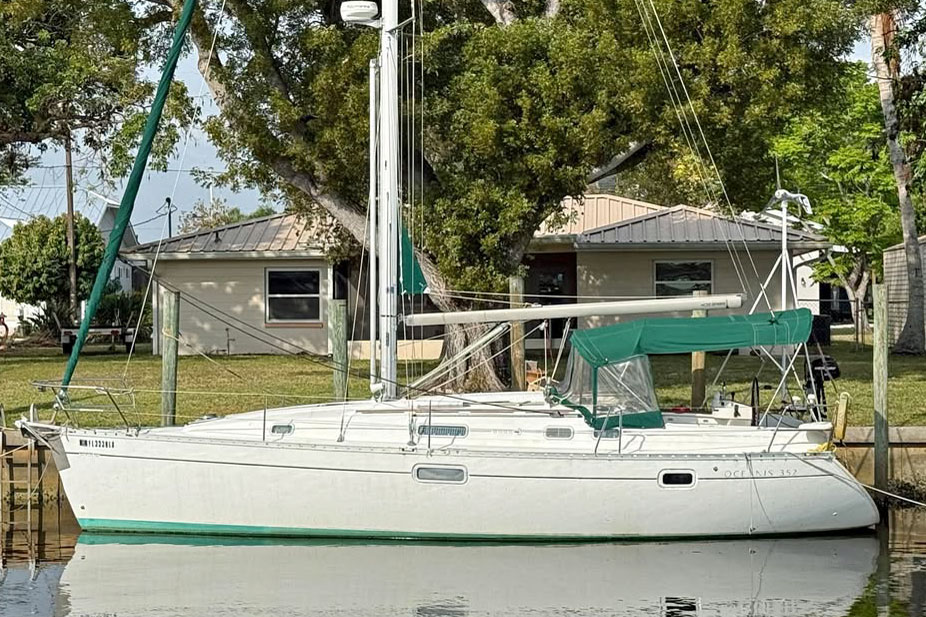 The Beneteau Oceanis 352
Design & Construction
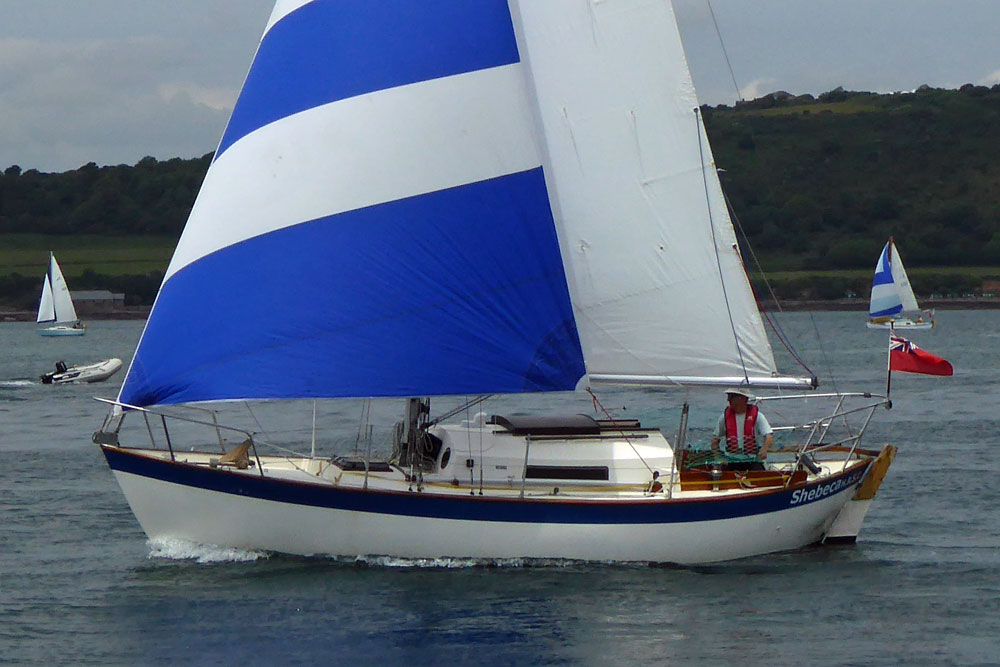
The Beneteau Oceanis 352 was born from the drawing boards of the renowned design firm Berret-Racoupeau and built by the French production giant Beneteau between 1993 and 1999. In an era where Beneteau was solidifying its dominance in the global market, the 352 was designed to appeal to both private owners and the burgeoning Mediterranean charter fleets. The hull is constructed of solid GRP (glass reinforced plastic) using Beneteau’s "Watershield System," which incorporates a vinylester layer to guard against osmotic blistering.
The defining feature of the Oceanis 352 is its focus on "liveability" through a beam that is carried well aft. This design choice provides a massive amount of internal volume for a 35-foot boat and creates a cockpit large enough to rival 40-footers of the previous decade. Practically, this wide beam offers high initial stability, making the boat feel "stiff" and comfortable for guests in moderate breezes.
Beneteau offered the 352 in several configurations to suit different cruising grounds. The most common is the bulb/wing keel version, which draws just 4'11" (1.50 m), making it an ideal candidate for the shallow waters of the Bahamas or the East Coast of the UK. For those seeking slightly better upwind performance, a deep-draft fin version was also produced. Internally, the boat was available with either two large cabins or a three-cabin layout, the latter being more popular in European charter markets.
Sail Areas & Rig Dimensions
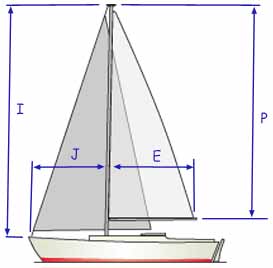 Rig dimensions
The Oceanis 352 features a masthead sloop rig that is relatively simple to manage, often equipped with in-mast furling for the mainsail as standard.
- Mainsail Area: 256.6 ft² (23.84 m²)
- Genoa Area (140%): 359.9 ft² (33.43 m²)
- Total Sail Area (100% Foretriangle): 563.0 ft² (52.30 m²)
- I (Forestay Height): 43'4" (13.20 m)
- J (Foredeck Length): 12'5" (3.78 m)
- P (Mainsail Luff): 37'3" (11.35 m)
- E (Mainsail Foot): 13'9" (4.20 m)
Published Specification: The Beneteau Oceanis 352 Blueprint
| Specification | Measurement (Imperial & Metric) |
|---|---|
| LOA (Length Overall) | 35'0" (10.67 m) |
| LWL (Length Waterline) | 31'1" (9.47 m) |
| Beam | 12'6" (3.81 m) |
| Draft (Shallow/Wing Keel) | 4'11" (1.50 m) |
| Draft (Deep Fin) | 5'11" (1.80 m) |
| Displacement | 12,000 lbs (5,443 kg) |
| Ballast | 3,750 lbs (1,701 kg) |
| Hull Material | Solid GRP & Vinylester |
| Rig Type | Masthead Sloop |
| Production Years | 1993 – 1999 |
Performance Analysis: Understanding the Design Ratios
To truly understand how the Oceanis 352 behaves on the water, we must look at the mathematical relationships between its weight, length, and sail power.
| Ratio | Value | Interpretation |
|---|---|---|
| Sail Area / Displacement (SA/D) | 17.0 | Moderately powered; balanced for cruising. |
| Displacement / Length (D/L) | 178.4 | Light-medium displacement; lively in light winds. |
| Ballast / Displacement (B/D) | 31.2% | Typical for modern cruisers; relies on beam for stability. |
| Capsize Screening Formula (CSF) | 2.19 | Better suited for coastal & offshore, rather than ocean. |
| Brewer Motion Comfort Ratio | 19.9 | Responsive & light; can be "active" in a seaway. |
Interpretation of the Ratios
- SA/D (17.0): This places the 352 firmly in the cruising category. It has enough sail area to move well in light breezes without being overly daunting for a short-handed crew when the wind picks up.
- D/L (178.4): A relatively low number indicating a "slippery" hull that will reach hull speed quickly. However, this lightness means the boat lacks the momentum to power through a heavy chop as effectively as a heavier displacement vessel.
- B/D (31.2%): While this may seem low to traditionalists, the Oceanis 352 gains significant "form stability" from its generous beam. It stands up well to its canvas initially but will require reefing sooner than a narrower, heavier boat.
- CSF (2.19): A value above 2.0 suggests the boat is theoretically more vulnerable to capsize in extreme breaking seas compared to dedicated ocean voyagers. It is designed for coastal and cross-channel work rather than high-latitude expeditions.
- Comfort Ratio (19.9): This confirms the 352 is a "lively" boat. In a rough sea, the motion will be quicker and less dampened than a heavy-keeled cruiser.
For a deeper look at how these numbers influence your time on the water, see our guide on Understanding Boat Performance & Design Ratios.
Structural Integrity & Stability Dynamics
The use of GRP for the hull and deck allows for a complex, hydrodynamic shape that is both durable and easy to maintain. Beneteau utilised an internal structural grid (liner) bonded to the hull to provide rigidity. While this is an efficient manufacturing process, it is essential for owners to inspect the bonding of this grid, especially after any hard grounding.
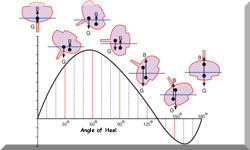
The key defining feature—the wide, shallow-draft hull—significantly impacts stability dynamics. Because the boat relies on its width (form stability), it feels very secure when upright or at low heel angles. However, as the boat heels beyond 20 degrees, the wide beam can lift the rudder out of the water, leading to a tendency to round up if over-canvased. This makes the Oceanis 352 a boat that rewards early reefing and careful sail trim.
Configuration, Layout & Cruising Characteristics
Step below, and it is easy to see why the Oceanis 352 remains popular. The saloon is flooded with natural light thanks to the "lozenge-shaped" skylights and the large companionway. The L-shaped galley to port is surprisingly functional, featuring a double sink and ample refrigeration, although it lacks a dedicated bracing point for cooking while underway in heavy seas.
The cockpit is the real "living room" of the boat. The walk-through transom and "sugar-scoop" swim platform make boarding from a dinghy or after a swim incredibly easy. Tankage is generous for a boat of this size, with roughly 100 gallons (378 litres) of water and 24 gallons (91 litres) of fuel, supporting extended coastal hops without constant stops. Under power, the 27hp Yanmar or Volvo Penta engines typically found in these boats provide plenty of thrust to maintain 6 knots against a headwind.
Has this article suggested that this could be your ideal cruising boat and, as a result, deserves to be on your "Worth a Look" list?
But if, like me, you find sailboats to be seductive creations, then that list could rapidly get to be a pretty long one. If that is the case, wouldn't it be good if you could narrow it down bit through an objective, pragmatic process?
Well, that's where my eBook 'How to Avoid Buying the Wrong Sailboat' comes in...
Summing Up
The Beneteau Oceanis 352 is a masterclass in production boat design for a specific purpose: comfortable, stress-free coastal cruising. Its design ratios reveal a boat that is light, responsive, and efficient in the conditions most recreational sailors actually seek out. While its light displacement and high capsize screening score suggest it is not the first choice for a solo circumnavigation, it excels at providing a stable platform for family holidays and weekend adventures. Prospective buyers should be mindful of the "active" motion in a seaway and the need for early reefing, but for those transitioning from smaller vessels or looking for a modern, airy interior, the 352 remains a formidable contender on the second-hand market.
If you'd like to compare this boat with others in this size range, take a look at Cruising Boats from 35' to 40' overall....
This article was written by Dick McClary, RYA Yachtmaster and author of the RYA publications 'Offshore Sailing' and 'Fishing Afloat', member of The Yachting Journalists Association (YJA), and erstwhile member of the Ocean Cruising Club (OCC).
Frequently Asked Questions (FAQs)
Is the Beneteau Oceanis 352 suitable for solo sailing?
Is the Beneteau Oceanis 352 suitable for solo sailing?
Yes, the 352 is highly manageable for a solo sailor. Most are equipped with all lines led aft to the cockpit and many feature in-mast furling, which simplifies sail handling from the safety of the companionway.
How does the wing keel affect performance compared to the fin keel?
How does the wing keel affect performance compared to the fin keel?
The wing keel allows for a much shallower draft, opening up more cruising grounds. However, the trade-off is slightly more leeway (drifting sideways) when sailing upwind and a bit more drag compared to the deeper, more efficient fin keel.
Are there known issues with the GRP or "Watershield" system?
Are there known issues with the GRP or "Watershield" system?
While the vinylester layer significantly reduces the risk of osmosis, it is not a 100% guarantee. Some owners have reported minor gelcoat voids in complex corners of the deck moulding, which are usually cosmetic rather than structural.
What is the "Sugar Scoop" transom and why is it beneficial?
What is the "Sugar Scoop" transom and why is it beneficial?
The sugar-scoop is a tiered, integrated swim platform at the stern. It makes the boat much safer for boarding from the water or a tender and provides an excellent spot for rinsing off after a swim.
Can the Oceanis 352 handle offshore passages?
Can the Oceanis 352 handle offshore passages?
The 352 is perfectly capable of offshore passages, such as crossing the English Channel or the North Sea, provided the weather windows are chosen carefully. It is not designed for the extreme conditions found in high-latitude or Southern Ocean voyaging.
Recent Articles


-
Should I Buy a Boat? Four Questions to Answer Before You Commit
Oct 02, 26 04:40 AM
Thinking "Should I buy a boat?" This guide helps you decide, with key considerations from cost & maintenance to your personal sailing aspirations. -
Offshore Internet with Starlink: Hardware, Plans, and Setup Guidance
Oct 01, 26 01:15 PM
A clear, practical guide to choosing the right Starlink hardware and plan for offshore cruising. Learn what to buy, how to install it, and how to manage power afloat. -
Offshore Liferaft Guide: Choosing, Stowing and Servicing One
Oct 01, 26 06:28 AM
Choosing an offshore liferaft? Learn what ISO 9650 Group A means, where to stow it, how often to service it and what to pack in the grab bag.