- Home
- Cruising Yachts 40' to 45'
- CSY 44
The CSY 44 (Walk Through) Sailboat
Specs, Performance Analysis & Cruising Characteristics
Key Takeaways: The CSY 44 Walkthrough is a formidable heavy-displacement cutter built for the rigours of offshore liveaboard life. Designed with a "bulletproof" philosophy in the late 1970s, it excels as a stable, sea-kindly platform that takes heavy weather in stride. While its high displacement and modest sail area mean it is no light-airs racer, its massive tankage and internal volume make it a premier choice for couples seeking a secure home on the water. It is best suited for long-distance cruisers who value durability and storage over pointing ability and light-air agility.
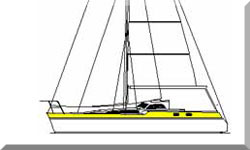
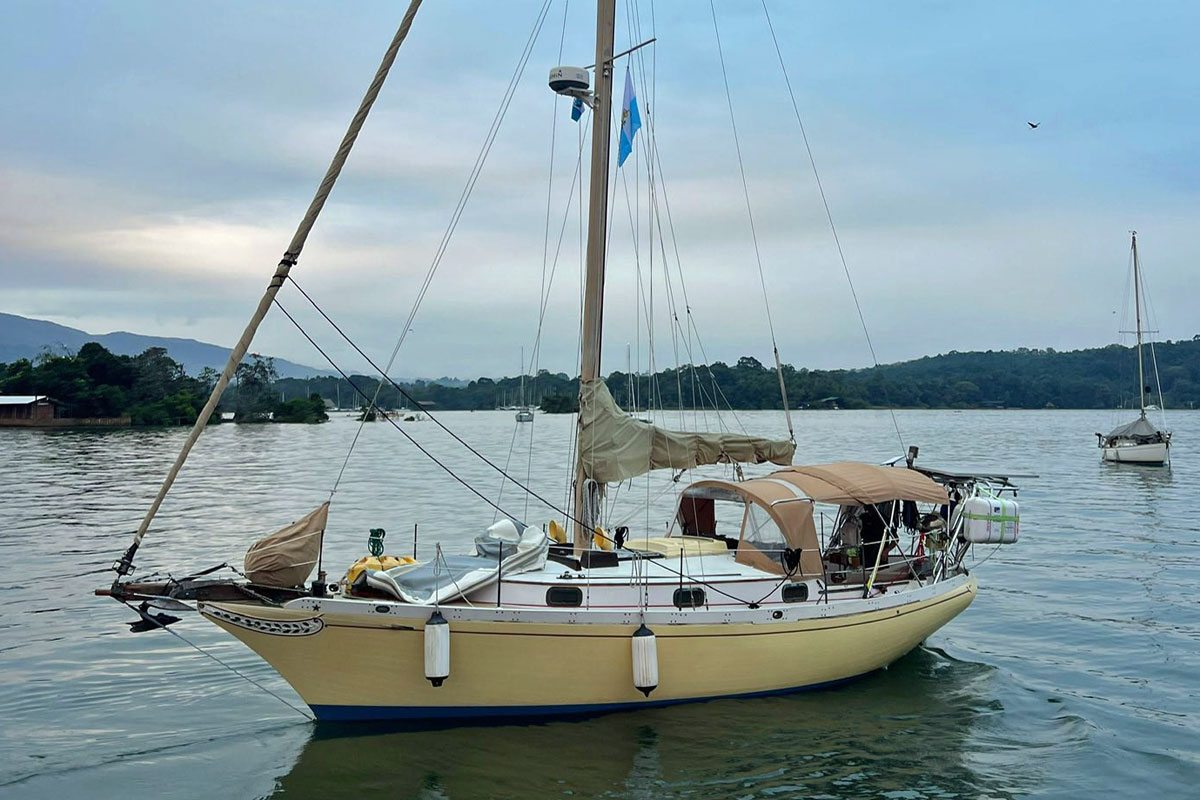
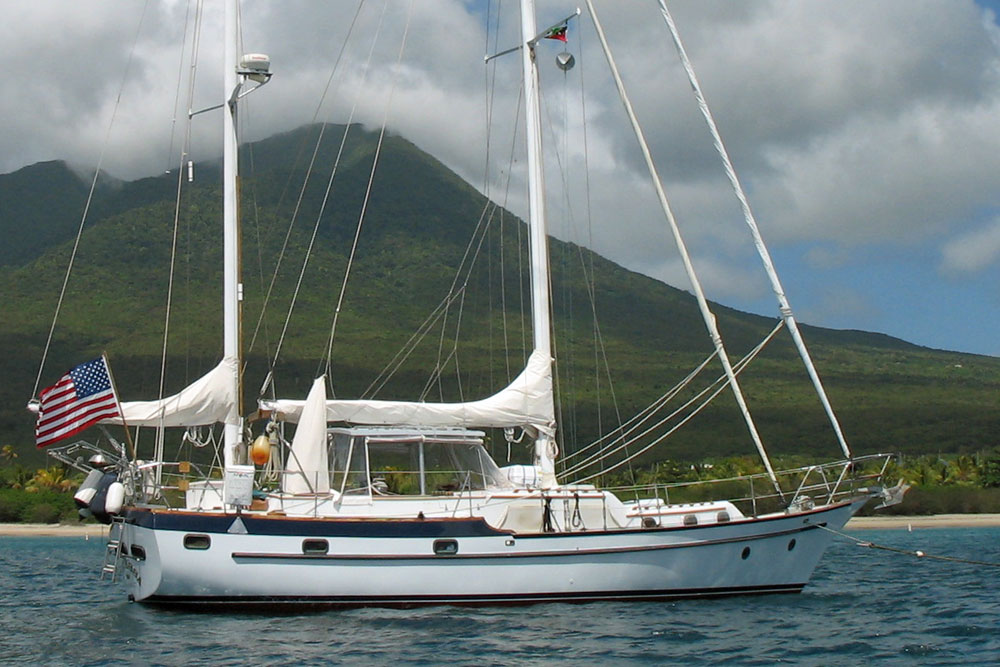 Most were cutters, but a few - like the one above - were produced with a staysail-ketch rig
Table of Contents
- The CSY 44 (Walk Through) at a Glance
- Design & Construction
- Published Specification: The CSY 44 (Walk Through) Blueprint
- Sail Areas & Rig Dimensions
- Performance Analysis: Understanding the Design Ratios
- How the CSY 44 (Walk Through) Sails
- Bluewater Capability: Strengths & Trade-Offs
- Configuration, Layout & Cruising Characteristics
- Who This Boat Is Best For
- The Buyer’s Checklist: Common Problem Areas
- Summing Up
- Frequently Asked Questions (FAQs)
The CSY 44 (Walk Through) at a Glance
- Type: Heavy displacement centre-cockpit cruiser
- Designer: Peter Schmitt
- Builder: Caribbean Sailing Yachts (USA)
- Production Years: 1977 – 1981
- Rig: Cutter (typically) or Ketch
- Best for: Full-time liveaboards and bluewater voyagers
- Strengths: Massive interior volume, heavy-duty construction, excellent storage, and sea-kindly motion.
- Trade-offs: Sluggish in light air, high wetted surface area, and requires a powerful engine for motoring against head seas.
Design & Construction
The CSY 44 was born from a specific need: a yacht that could survive the demanding Caribbean charter trade while offering the comforts of a floating home. Designed by Peter Schmitt and built in Tampa, Florida, the "Walkthrough" evolved from the earlier "Pilothouse" and "Walkover" models. The primary goal was to provide a secure internal passage between the main saloon and the master aft cabin, a feature that significantly improved the liveability of the vessel for long-term cruising couples.
The hull is a solid GRP (glass reinforced plastic) layup, often exceeding an inch in thickness near the keel. Unlike many modern yachts, the deck is also solid GRP, avoiding the common pitfalls of rotting balsa or plywood cores. This "overbuilt" approach makes the CSY 44 incredibly stiff and durable.
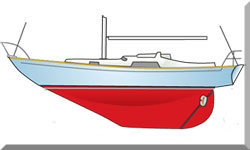
The underwater profile features a long fin keel with a protected skeg-hung rudder. This configuration provides a sensible balance between directional stability and a tighter turning circle than a traditional full keel. Two main versions were produced regarding draft: a deep-draft performance version drawing 6'6" (1.98m) and a more common shallow-draft version drawing 4'11" (1.50m). Most Walkthrough models were rigged as cutters, providing a versatile sail plan for offshore work, though a ketch rig was also available.
Notable construction details include the chainplates, which are heavy stainless steel bars thru-bolted to the hull, and the large cabin windows. While the windows provide excellent light, they are a known area for leaks if the original seals have perished over the decades.
Published Specification: The CSY 44 (Walk Through) Blueprint
| Feature | Specification |
|---|---|
| Length Overall (LOA) | 44'0" (13.41m) |
| Length Waterline (LWL) | 36'4" (11.07m) |
| Beam | 13'4" (4.06m) |
| Draft (Deep / Shallow) | 6'6" (1.98m) / 4'11" (1.50m) |
| Displacement | 33,000 lbs (14,969 kg) |
| Ballast | 12,000 lbs (5,443 kg) |
| Hull Material | Solid GRP |
| Rig Type | Cutter (Standard) / Ketch |
Important: Published specifications for the CSY 44 (Walkthrough) vary by source and configuration. Dimensions, displacement, draft and rig details may differ between early design literature, later owner-modified boats, and secondary databases. Where figures vary, this table lists the most commonly cited figures.
Sail Areas & Rig Dimensions
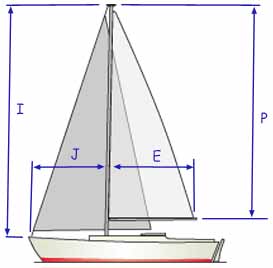 Rig dimensions
The cutter rig is the most common configuration for the Walkthrough model and offers multiple gears for varying wind strengths.
- Total Sail Area (100% Foretriangle): 906 ft² (84.17 m²)
- I (Forestay Height): 55'0" (16.76 m)
- J (Foredeck Length): 21'0" (6.40 m)
- P (Mainsail Hoist): 48'6" (14.78 m)
- E (Mainsail Foot): 13'6" (4.11 m)
Performance Analysis: Understanding the Design Ratios
| Ratio | Value | Interpretation |
|---|---|---|
| Sail Area/Displacement (SA/D) | 14.1 | Low. Indicates a "motorsailer" profile in light winds; needs a breeze to get moving. |
| Displacement/Length (D/L) | 308 | Heavy displacement. Built for load carrying and stability rather than surfing. |
| Ballast/Displacement (B/D) | 36.4% | Solid. Provides good initial and ultimate stability for offshore work. |
| Capsize Screening Formula (CSF) | 1.66 | Excellent. Well below the 2.0 threshold, indicating high ocean-going safety. |
| Brewer Motion Comfort Ratio | 43.5 | Very High. Predicts a gentle, predictable motion in a seaway. |
For more on this topic, you might want to take a look at Understanding Boat Performance & Design Ratios...
How the CSY 44 (Walk Through) Sails
Under sail, the CSY 44 behaves exactly as its numbers suggest: it is a momentum boat. It takes a fair amount of wind—typically 12 knots or more—to wake the hull and bring it into its stride. Once moving, however, the 33,000 lbs (14,969 kg) of displacement provides a sense of unstoppable purpose.
Upwind, the CSY 44 is not a "pointer." You will likely find yourself tacking through 100 degrees or more, especially with the shallow draft version. However, the motion is remarkably comfortable; it punches through chop where lighter boats would be tossed about. Off the wind, the boat finds its rhythm, and in a trade-wind blow, it tracks exceptionally well, making it easy for an autopilot or wind-vane to manage.
The helm is generally heavy but communicative. Because of its high displacement and conservative sail plan, you won't be rushing to reef at the first sign of a whitecap. When the time comes to shorten sail, the cutter rig allows for a manageable transition to a staysail and reefed main, keeping the centre of effort low and the boat upright.
Bluewater Capability: Strengths & Trade-Offs
The CSY 44 is frequently cited as one of the best "bang for your buck" offshore cruisers. Its strength lies in its volume and tankage. With 400 gallons (1,514 litres) of water and 100 gallons (378 litres) of fuel carried low in the hull, it has a range and self-sufficiency that few modern 44-footers can match.
The deck layout is designed for safety. High bulwarks and a secure centre cockpit provide a sense of being "in" the boat rather than "on" it. The massive aft deck is an ideal space for lounging at anchor or storing a serious tender. The trade-off is the height of the topsides; the boat has significant windage, which can make docking in a crosswind a spirited exercise. Additionally, while the displacement makes for a comfortable ride, it requires a large engine to move at hull speed when the wind dies.
Configuration, Layout & Cruising Characteristics
The "Walkthrough" layout is the star of the show. Entering from the centre cockpit, you find a spacious saloon with a large galley to starboard. The galley is a sea-chef’s dream, featuring deep sinks and massive refrigeration capacity (originally designed for the charter trade).
Moving aft through the starboard passageway—the "Walkthrough"—you pass a dedicated navigation station and access to the engine room with impressive 360-degree maintenance access. The master aft cabin is truly private, featuring a large double berth and its own head with a separate shower stall. Forward of the saloon is a second head and a V-berth for guests.
The interior joinery is typically heavy teak, which, combined with the large windows, gives the boat a traditional but airy feel. Storage is found in every conceivable nook and cranny, making it a true liveaboard.
Who This Boat Is Best For
Good fit for:
- Couples planning to live aboard full-time.
- Cruisers on a budget who want a "tank" that can handle ocean crossings.
- Those who prefer a stable, predictable motion over high-speed performance.
Less ideal for:
- Sailors in light-wind regions (e.g., the Mediterranean in summer).
- Those who enjoy club racing or nimble handling.
- Owners who find high-maintenance teak and large window seals daunting.
The Buyer’s Checklist: Common Problem Areas
When inspecting a CSY 44, watch for several common age-related issues:
- Fuel and Water Tanks: The original aluminium fuel tanks can suffer from bottom corrosion. Replacing them is a major job.
- Chainplates: Check for signs of weeping or rust at the deck level; despite their size, they are not immune to crevice corrosion.
- Window Seals: The large cabin house windows are prone to leaking if they haven't been professionally re-bedded.
- Osmotic Blistering: While the hulls are thick, many CSY boats from this era were prone to blisters.
- Engine Age: Many original Perkins 4-154 or 4-236 engines are reaching the end of their service life and may require a costly repower.
Could this be your ideal cruising boat?
It may well be, but before going any further, it might be worth taking a look at my eBook 'How to Avoid Buying the Wrong Sailboat'...
Summing Up
The CSY 44 Walkthrough remains a stalwart of the cruising community for good reason. It represents a period of boat building where "enough" was never quite sufficient, resulting in a vessel that feels significantly more substantial than its 44'0" (13.41m) length would suggest. While its design ratios reveal a boat that is heavy and somewhat under-canvassed for light airs, its stability and comfort in a seaway are beyond reproach. For the pragmatic sailor who prioritises safety, storage, and a private master suite over the ability to win races, this Florida-built classic remains a top-tier contender in the used bluewater market.
This article was written by Dick McClary, RYA Yachtmaster and author of the RYA publications 'Offshore Sailing' and 'Fishing Afloat', member of The Yachting Journalists Association (YJA), and erstwhile member of the Ocean Cruising Club (OCC).
Frequently Asked Questions (FAQs)
What is the difference between the Walkthrough and the Walkover?
What is the difference between the Walkthrough and the Walkover?
The Walkover version requires you to exit the cockpit to enter the aft cabin, whereas the Walkthrough has an internal corridor connecting the saloon to the master cabin, which is much preferred for privacy and weather protection.
Is the CSY 44 Walkthrough suitable for solo sailing?
Is the CSY 44 Walkthrough suitable for solo sailing?
While large and heavy, the CSY 44 can be handled solo if it is set up with a reliable autopilot and all lines are led to the cockpit. However, its sheer mass and windage make docking easier with two people.
Does the CSY 44 have any known structural issues with the deck?
Does the CSY 44 have any known structural issues with the deck?
The CSY 44 is known for its solid GRP decks. While many boats of this era used balsa or plywood cores that eventually rot, the CSY deck is solid glass, making it one of the most durable structures in its class.
How does the shallow draft version perform compared to the deep draft?
How does the shallow draft version perform compared to the deep draft?
The shallow draft (4'11" / 1.50m) version is excellent for the Bahamas and coastal cruising but sacrifices some pointing ability and increases leeway when sailing upwind compared to the 6'6" (1.98m) performance keel.
What should I expect for typical refit costs on a CSY 44?
What should I expect for typical refit costs on a CSY 44?
Because of its size and complexity, a full refit (engine, sails, rigging, and electronics) can easily exceed £50,000. Potential buyers should look for boats that have already had the fuel tanks and engine addressed.
Recent Articles


-
Mystery 35 Review: Specs, Performance & Buying Guide
Aug 29, 26 09:42 AM
An in-depth review of the Mystery 35 sailboat. Read technical specs, design ratios, sail performance, and common buyer inspection areas. -
Beneteau First 405 Review: Specs, Performance & Buyer’s Guide
Aug 26, 26 03:58 AM
Detailed Beneteau First 405 review covering specs, performance, bluewater capability, layouts and buyer’s checklist. -
Moody S38 Review: Specs, Ratios & Buyer’s Guide
Aug 12, 26 04:22 AM
In‑depth Moody S38 review covering specs, performance, design ratios, layout, strengths, trade‑offs & buyer inspection points.