- Home
- Cruising Yachts 35' to 40'
- Dehler 36
The Dehler 36 Sailboat
Specs, Performance Analysis & Cruising Characteristics
Key Takeaways: The Dehler 36 is a German-built performance cruiser that blends quick passage times with a surprisingly civilised interior. It's not a heavy-displacement tank, but a relatively light, stiff hull with a powerful rig and a proper cruising fit-out. Upwind, it’s lively and rewarding, with a positive helm and good pointing ability; off the wind, it feels quick rather than skittish. The trade-offs are moderate tankage and finite stowage for full-time liveaboard use, along with the usual age-related issues of a 30-plus-year-old composite yacht. For sailors who love actual sailing, wish to cover miles efficiently, and are willing to maintain a quality European build, the Dehler 36 is a very attractive size and concept.
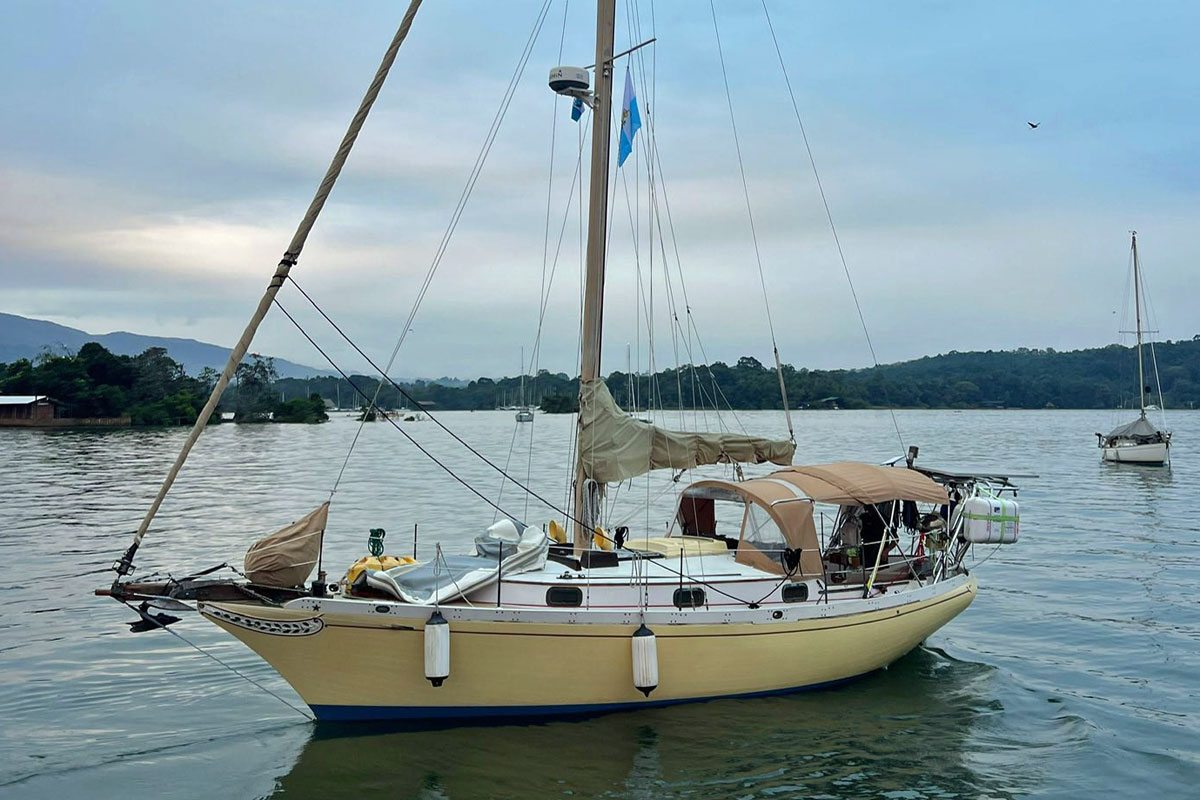
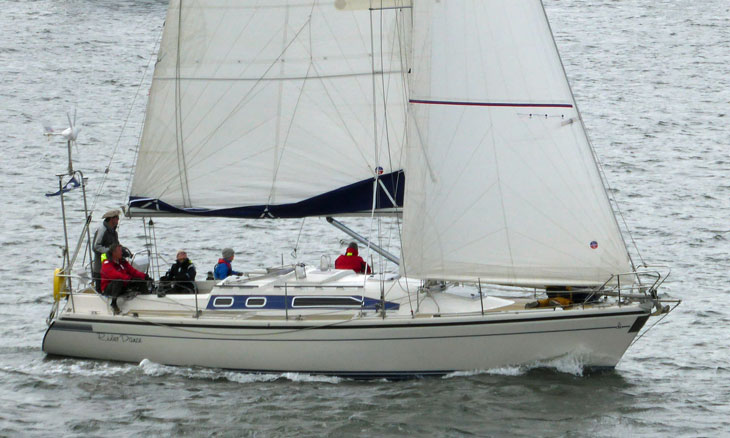 'River Dance', a Dehler 36 CWS
Table of Contents
- The Dehler 36 at a Glance
- Design & Construction
- Published Specification: The Dehler 36 Blueprint
- Sail Areas & Rig Dimensions
- Performance Analysis: Understanding the Design Ratios
- How the Dehler 36 Sails
- Bluewater Capability: Strengths & Trade-Offs
- Configuration, Layout & Cruising Characteristics
- Who This Boat Is Best For
- The Buyer’s Checklist: Common Problem Areas
- Summing Up
- Frequently Asked Questions (FAQs)
The Dehler 36 at a Glance
- Type: Performance cruiser / cruiser-racer
- Designer: Judel/Vrolijk (Dehler 36 JV & SQ); Van de Stadt (36CWS); Dehler DB team (36DB)
- Builder: Dehler Yachtbau, Germany
- Production Years: Mid‑1980s to late‑1990s depending on variant
- Rig: Fractional sloop
- Best for: Fast cruising, club racing, offshore passages in capable hands
- Strengths: Lively performance, quality engineering, efficient deck layout, good structural integrity
- Trade-offs: Modest tankage, age-related maintenance, less interior volume than modern wide-stern cruisers
Design & Construction
The Dehler 36 family marks a period when Dehler was refining its blend of performance and cruising comfort. The Judel/Vrolijk hull (the most common version) replaced the earlier Van de Stadt 36CWS and brought a more modern underwater profile, improved stiffness and a cleaner deck layout.
Hull, Deck & Structure
All Dehler 36 variants share the same fundamental construction philosophy:
- Solid GRP hull below the waterline
- Local coring above the waterline for stiffness and weight reduction
- Balsa or foam‑cored GRP deck
- Moulded structural grid bonded into the hull to distribute keel, mast and rig loads
This grid is one of the reasons these boats feel solid underfoot, but it must be inspected for cracking around keel bolts or the mast step if the yacht has had a grounding or a hard racing life.
The coachroof windows are bonded rather than through‑bolted, giving a clean, modern look. Over time the adhesive bond can degrade, leading to leaks or, in neglected cases, the risk of a window working loose. Re-bedding or replacement is a common refit item.
Chainplates are internal stainless flat bars tied into GRP knees or the structural grid. This is structurally efficient but makes inspection more awkward. You want to see dry laminate, no rust staining, and no cracking around the attachment points.
Keel, Rudder & Appendages
Most Dehler 36s carry a fin keel with a lead or iron ballast bulb. Draft on the deep keel is around 6'3" (1.9 m), with shoal options around 5'3" (1.6 m). The keel is bolted through the structural grid, so any signs of movement, cracking or weeping around the keel-hull joint need careful investigation.
The rudder is a semi-balanced spade on a stainless stock. Age-related issues include moisture ingress, bearing wear and corrosion at the stock exit point.
Variants: 36CWS, 36DB & 36SQ
- 36CWS (Van de Stadt): Earlier hull with the “Central Winch System”. More cruiser-racer in feel.
- 36DB: Race-oriented version with deeper keel and taller rig. Interiors often lighter and simpler.
- 36 JV / 36 SQ: The mainstream Judel/Vrolijk cruising versions. The SQ brought incremental improvements in rig, interior and hardware.
STIX Stability Index
Later CE-marked examples are typically Category A – Ocean, but many earlier boats pre-date CE certification and do not carry a published STIX figure.
Published Specification: The Dehler 36 Blueprint
Representative figures for a typical Judel/Vrolijk Dehler 36 (deep keel):
| Specification | Value |
|---|---|
| LOA | 35'9" (10.9 m) |
| LWL | 29'6" (9.0 m) |
| Beam | 11'6" (3.5 m) |
| Draft (deep keel) | 6'3" (1.9 m) |
| Draft (shoal option) | 5'3" (1.6 m) |
| Displacement | 12,100 lb (5,500 kg) |
| Ballast | 4,850 lb (2,200 kg) |
| Rig type | Fractional sloop |
| Hull material | GRP with structural grid |
| Production dates | Early 1980s to late 1990s |
Sail Areas & Rig Dimensions
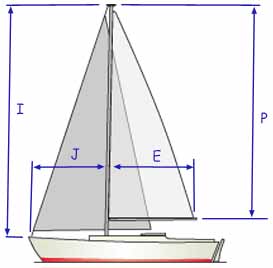 Rig dimensions
Typical figures for the Judel/Vrolijk fractional rig:
| Rig & Sail Data | Value |
|---|---|
| I | 46'0" (14.0 m) |
| J | 13'9" (4.2 m) |
| P | 41'0" (12.5 m) |
| E | 14'0" (4.3 m) |
| Mainsail area | 290 ft² (27 m²) |
| Jib area | 315 ft² (29 m²) |
| Total working sail area | 605 ft² (56 m²) |
| Spinnaker / asymmetric | 900–1,000 ft² (84–93 m²) |
Performance Analysis: Understanding the Design Ratios
Using the representative figures above:
| Ratio | Approx. Value | Meaning |
|---|---|---|
| SA/D | 18 | Good light-air performance and lively acceleration. |
| D/L | 210 | Moderate displacement: enough mass for comfort, still responsive. |
| B/D | 40% | Good stiffness for a performance cruiser. |
| CSF | 2.0 | Acceptable for offshore use in capable hands. |
| Brewer Comfort Ratio | 23 | More comfortable than light racers, not as soft as heavy cruisers. |
These ratios place the Dehler 36 firmly in the performance-cruiser category: quick, responsive and efficient, yet with enough displacement to avoid feeling flighty offshore.
For more on this topic, you might want to take a look at Understanding Boat Performance & Design Ratios...
How the Dehler 36 Sails
Upwind, the Dehler 36 is rewarding. The fractional rig, high-aspect keel and balanced rudder give good pointing ability and a positive helm. In 12–15 knots of breeze, expect 6.5–7 knots with a comfortable heel angle. Reefing early keeps the boat on its feet and the helm light.
Off the wind, the moderate beam and fine entry help the boat track well. With a symmetric or asymmetric spinnaker, it will surf in the right conditions without feeling out of control. The narrower stern compared with modern wide-beam cruisers keeps the helm predictable.
Short-handed, the boat is manageable thanks to sensible control-line layout and a secure cockpit. Autopilots cope well when the sails are balanced. For a couple or an experienced solo sailor, the Dehler 36 is a realistic size to handle.
The motion is lively but not harsh. In a short chop you feel the boat’s lightness, but it keeps moving rather than slamming.
Bluewater Capability: Strengths & Trade-Offs
Many Dehler 36s have crossed oceans. The hull form, ballast ratio and structural grid give a reassuring platform for offshore work.
Strengths
- Good stiffness and stability
- Strong structural grid
- Efficient sail plan for maintaining passage speeds
- Secure cockpit and sensible deck ergonomics
Trade-Offs
- Modest tankage for long-term liveaboard cruising
- Limited load-carrying compared with heavier cruisers
- Age-related maintenance (rigging, windows, rudder, systems) is essential
The Dehler 36 suits sailors who value speed and responsiveness offshore, rather than maximum volume and load-carrying.
Configuration, Layout & Cruising Characteristics
The cockpit is a strong point: deep, secure and well laid out. Primary winches are well placed, and the traveller is usually on the coachroof, keeping the cockpit clear.
Below deck, the layout typically includes:
- Forward V‑berth
- Saloon with two settees and central table
- L‑shaped galley near the companionway
- Proper navigation station
- Aft cabin to port
- Heads aft to starboard
Joinery is good German quality for the era. Ventilation depends on the condition of hatches and portlights, many of which have been upgraded over time.
Stowage is adequate for cruising but not cavernous. The narrower stern means less “garage” space than modern designs, but the trade-off is better behaviour at sea.
Who This Boat Is Best For
Good fit for:
- Sailors who enjoy trimming sails and sailing efficiently
- Couples or small crews planning coastal and offshore passages
- Owners who value engineering quality over maximum interior volume
- Those wanting a fast, rewarding 36‑footer with real cruising ability
Less ideal for:
- Those wanting maximum interior volume
- Owners planning to carry heavy liveaboard inventories
- Sailors who prefer a very soft, heavy-boat motion
- Buyers unwilling to invest in rigging, windows, steering and systems on an older yacht
The Buyer’s Checklist: Common Problem Areas
- Rig & chainplates: Age of standing rigging, condition of internal chainplate attachments, mast-step integrity
- Keel & grid: Evidence of groundings, cracking around keel bolts, movement at keel-hull joint
- Rudder & steering: Moisture ingress, bearing play, corrosion at stock exit
- Windows & deck fittings: Bonded window leaks, deck core issues around fittings
- Engine & systems: Engine hours, tank condition, electrical upgrades
- Interior: Headlining sag, leak staining, galley and plumbing condition
A well-kept Dehler 36 with documented upgrades is a superb fast cruiser. A tired example will absorb time and money.
Could this be your ideal cruising boat?
It may well be, but before going any further, it might be worth taking a look at my eBook 'How to Avoid Buying the Wrong Sailboat'...
Summing Up
The Dehler 36 sits in a sweet spot: big enough for ocean passages, small enough for a couple to handle, and quick enough to make sailing genuinely enjoyable. The design ratios confirm its performance-cruiser DNA, and real-world reports back that up. The compromises are clear: modest tankage, finite stowage and the need for diligent maintenance. But for sailors who value sailing feel, engineering quality and rewarding performance, the Dehler 36 remains one of the most appealing 36‑footers of its era.
This article was written by Dick McClary, RYA Yachtmaster and author of the RYA publications 'Offshore Sailing' and 'Fishing Afloat', member of The Yachting Journalists Association (YJA), and erstwhile member of the Ocean Cruising Club (OCC).
Frequently Asked Questions (FAQs)
1. Is the Dehler 36 suitable for ocean crossings?
1. Is the Dehler 36 suitable for ocean crossings?
Yes, many have completed major passages. The key is maintenance: rigging, chainplates, keel matrix and rudder must be in top condition.
2. How does it compare to Scandinavian cruisers like Hallberg-Rassy?
2. How does it compare to Scandinavian cruisers like Hallberg-Rassy?
The Dehler is quicker and more responsive, with less tankage and slightly livelier motion.
3. What are the main differences between the 36CWS, 36DB and 36SQ?
3. What are the main differences between the 36CWS, 36DB and 36SQ?
CWS: earlier Van de Stadt hull with central winch.
DB: race-focused.
JV/SQ: mainstream cruising versions with refined interiors and hardware.
4. What structural issues should I look for?
4. What structural issues should I look for?
Keel-hull joint, grid cracking, chainplate areas, rudder moisture and deck core issues.
5. What does a typical refit involve?
5. What does a typical refit involve?
Standing rigging, sails, windows, electronics, rudder bearings and sometimes engine work.
Recent Articles


-
Mystery 35 Review: Specs, Performance & Buying Guide
Aug 29, 26 09:42 AM
An in-depth review of the Mystery 35 sailboat. Read technical specs, design ratios, sail performance, and common buyer inspection areas. -
Beneteau First 405 Review: Specs, Performance & Buyer’s Guide
Aug 26, 26 03:58 AM
Detailed Beneteau First 405 review covering specs, performance, bluewater capability, layouts and buyer’s checklist. -
Moody S38 Review: Specs, Ratios & Buyer’s Guide
Aug 12, 26 04:22 AM
In‑depth Moody S38 review covering specs, performance, design ratios, layout, strengths, trade‑offs & buyer inspection points.