- Home
- Cruising Yachts 30' to 35'
- Hunter 34 Sailboat Specs
The Hunter 34 Sailboat:
Specs, Performance Analysis & Cruising Characteristics
Key Takeaways
The Hunter 34 is a quintessential mid-1980s production cruiser that prioritises internal volume and liveability over raw racing pedigree. While it offers an impressive amount of accommodation for its length, it is best suited for coastal cruising and occasional offshore passages rather than extreme blue-water voyaging.
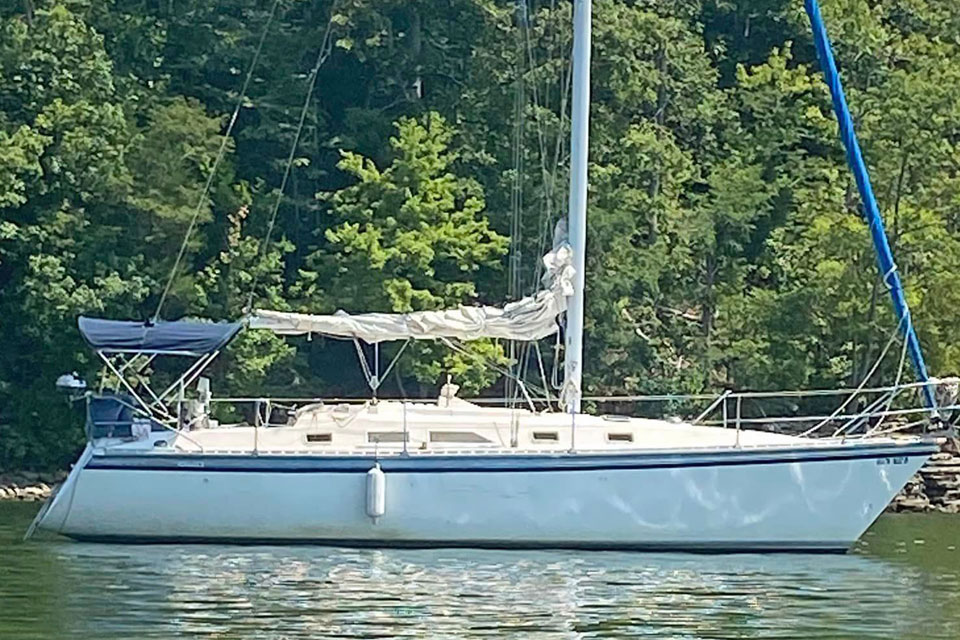 The Hunter 34
Design & Construction
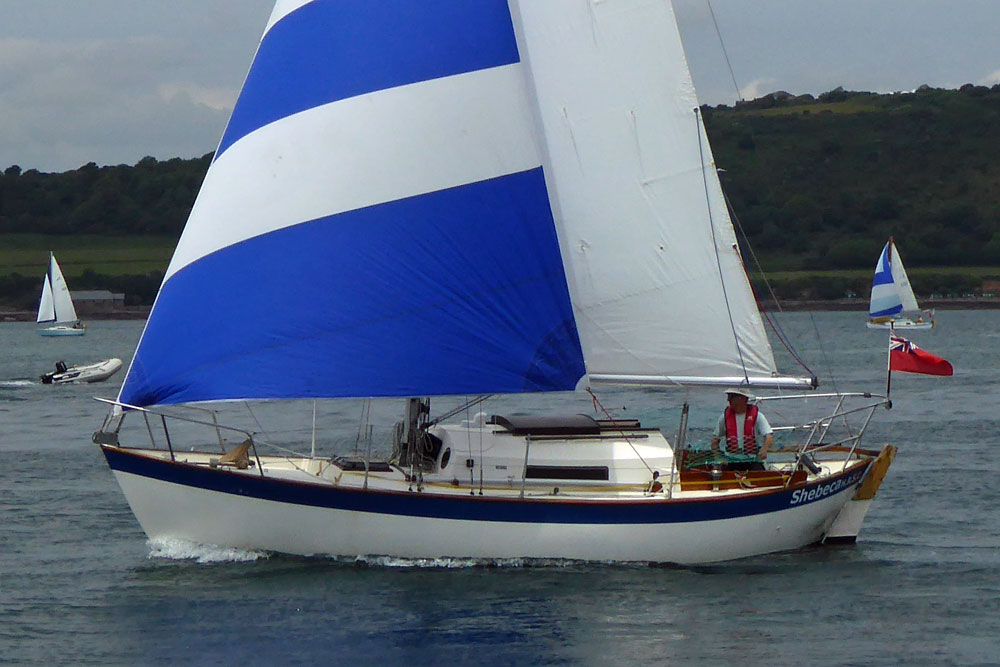
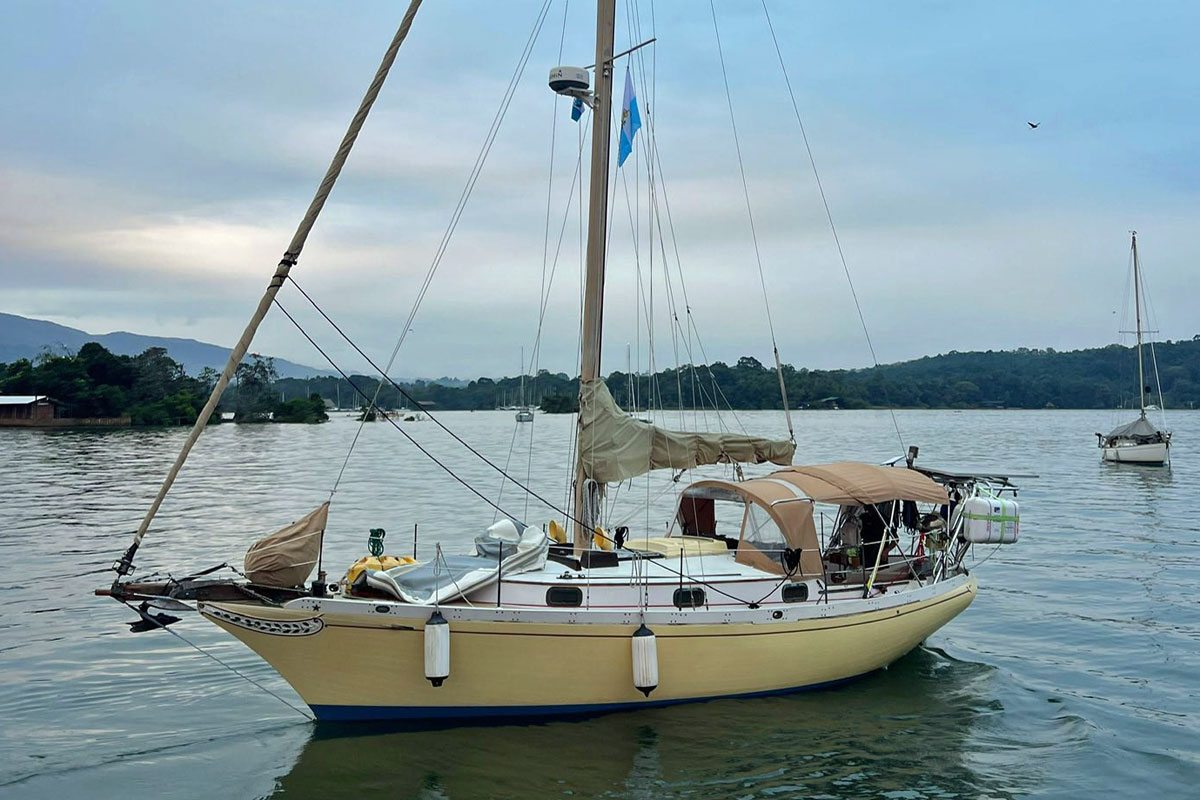
The Hunter 34 was designed by Cortland Steck and built by Hunter Marine in the United States between 1983 and 1987. During this era, Hunter Marine was carving out a significant niche in the market by providing sailboats that offered more "boat for the buck" than many of their European or domestic competitors. The hull is constructed from solid glass reinforced plastic (GRP), while the deck is balsa-cored for stiffness and weight reduction.
A defining feature of the Hunter 34 is its significant beam, which measures 11'7" (3.53m). This width is carried well aft, a design choice that serves two purposes: it creates a massive interior for a 34'0" (10.36m) boat and provides a large, comfortable cockpit. However, this wide beam and relatively flat sections aft can lead to some pounding in a head sea and a tendency to round up if over-canvassed in heavy gusts.
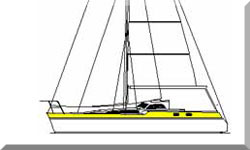
Hunter produced the 34 in two primary keel configurations to suit different cruising grounds. The deep draught version features a fin keel drawing 5'6" (1.68m), providing better upwind performance and lift. The shoal draught version uses a wing keel drawing only 4'3" (1.30m), making it an ideal candidate for thin-water cruising in areas like the Bahamas or the East Anglian coast. The rig is a silver-anodised aluminium fractional sloop, which was somewhat innovative for a mass-market cruiser at the time, allowing for more precise mainsail control.
Sail Areas & Rig Dimensions
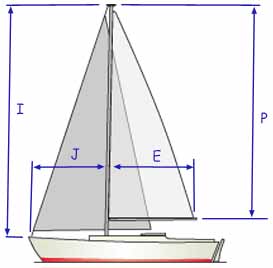
The fractional rig on the Hunter 34 is tall and relatively powerful for a cruiser of this vintage. The setup relies on a large mainsail and a smaller, more manageable headsail, which makes tacking easier for short-handed crews.
- Mainsail Area: 228.00 ft² (21.18 m²)
- Headsail Area (100% Foretriangle): 282.75 ft² (26.27 m²)
- Total Upwind Sail Area: 510.75 ft² (47.45 m²)
- I (Forestay Height): 43'6" (13.26m)
- J (Foretriangle Base): 13'0" (3.96m)
- P (Mainsail Luff): 38'0" (11.58m)
- E (Mainsail Foot): 12'0" (3.66m)
Published Specification: The Hunter 34 Blueprint
| Specification Parameter | Measurement & Data |
|---|---|
| Length Overall (LOA) | 34'5" (10.49m) |
| Length at Waterline (LWL) | 28'3" (8.61m) |
| Beam | 11'7" (3.53m) |
| Draught (Deep Keel) | 5'6" (1.68m) |
| Draught (Shoal Keel) | 4'3" (1.30m) |
| Displacement | 11,820 lbs (5,361 kg) |
| Ballast (Lead) | 5,000 lbs (2,268 kg) |
| Rig Type | Fractional Sloop |
| Hull Material | Solid GRP |
| Production Years | 1983 – 1987 |
Performance Analysis: Understanding the Design Ratios
To truly understand how the Hunter 34 behaves on the water, we must look beyond the raw numbers and examine the ratios that define its character. These figures provide an objective look at stability, comfort, and speed potential.
| Design Ratio | Calculated Value | Expert Interpretation |
|---|---|---|
| Sail Area / Displacement (SA/D) | 15.7 | Moderate/Cruising. Suggests the boat is well-powered but not a light-air flyer. |
| Displacement / Length (D/L) | 234 | Moderate Displacement. A balanced profile that offers a good mix of storage and speed. |
| Ballast / Displacement (B/D) | 42.3% | High. Indicates a stiff boat that can carry its sail well before needing to reef. |
| Capsize Screening Formula (CSF) | 2.03 | Borderline. Just over the 2.0 threshold, suggesting it is better suited for coastal work. |
| Brewer Motion Comfort Ratio | 23.5 | Light/Moderate. Expect a somewhat "active" motion in a seaway compared to heavy cutters. |
The Sail Area to Displacement Ratio of 15.7 confirms that the Hunter 34 is a dedicated cruiser. It won't win many races in light winds, but once the breeze hits 10 to 12 knots, the hull starts to move efficiently. The Displacement to Length Ratio of 234 places it firmly in the "moderate" category, meaning it has enough mass to handle coastal chops without being so heavy that it feels sluggish.
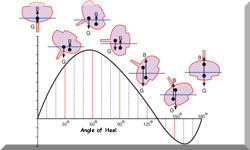
Perhaps the most impressive figure is the Ballast Ratio of 42.3%. For a production boat, this is quite high, meaning a significant portion of the boat's weight is down low in the lead keel. This makes the boat stiff and safe. However, the Capsize Screening Formula of 2.03 is worth noting for those with offshore ambitions. Traditionally, a value under 2.0 is preferred for blue-water ocean crossings. The Hunter 34 sits right on that line, reflecting its beamier, modern hull shape which provides great initial stability but less ultimate stability compared to a narrow, deep-keeled vessel. For a deeper dive into these metrics, see our guide on Understanding Boat Performance & Design Ratios.
Advanced Analysis & Context
The use of solid GRP for the hull was standard for the era and provides a robust structure that is relatively easy to maintain and repair. Unlike modern cored hulls, there is no risk of delamination or water ingress in the laminate below the waterline. However, the age of these vessels means that moisture levels in the GRP should be checked during a survey.
A critical point of analysis for the Hunter 34 is its keel attachment. The "Hunter Smile" is a well-documented phenomenon where a hairline crack appears at the leading edge of the keel-to-hull joint. While often cosmetic, it can indicate that the keel bolts need tightening or that the wooden "grid" or floors inside the hull have compressed or suffered from water damage. Prospective owners should pay close attention to the mast compression post as well. In some units, the wooden support under the sole can rot if water sits in the bilge, leading to a slight sagging of the deck and rigging tension issues.
Configuration, Layout & Cruising Characteristics
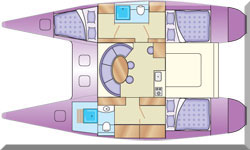
Step below decks, and you quickly realise why the Hunter 34 was such a commercial success. The layout was ahead of its time, featuring two private cabins and a spacious salon. The aft cabin is tucked under the cockpit sole, offering a large double berth that was almost unheard of in a 34-foot boat in 1983.
The galley is U-shaped and located to starboard, providing a secure place to prepare meals while underway. It typically features a two-burner stove, a deep sink, and a large icebox (often converted to refrigeration). Opposite the galley is a proper navigation station, a feature frequently omitted in modern yachts of this size.
Cruising practicality is further enhanced by the tankage. With 65 gallons (246 litres) of fresh water and a 25-gallon (95-litre) fuel tank, the boat is well-equipped for week-long coastal hops. The engine, usually a Yanmar 3GMF, is a reliable workhorse with excellent parts availability. The cockpit is deep and safe, with a T-shaped layout that allows the helmsman to move around the wheel easily. The wide side decks and effective non-skid surfaces make moving forward to handle lines or the anchor a relatively stress-free affair.
Impressed?

Has this article may suggested that this could be your ideal cruising boat and, as a result, deserves to be on your "Worth a look at" list?
But if, like me, you find sailboats to be seductive creations, then that list could rapidly get to be a pretty long one. If that is the case, wouldn't it be good if you could narrow it down bit through an objective, pragmatic process?
Well, that's where my eBook 'How to Avoid Buying the Wrong Sailboat' comes in...
Summing Up
The Hunter 34 Sailboat remains a compelling choice for sailors looking for an affordable, spacious, and capable coastal cruiser. Its design ratios reveal a boat that is stiff and predictable, though its "active" motion and capsize screening score suggest it is more at home in the Channel or the Mediterranean than in the Southern Ocean. While structural concerns like the compression post and the keel joint require a watchful eye, the solid GRP hull and reliable Yanmar power plant offer a strong foundation. For a buyer who prioritises interior comfort and "liveability" without sacrificing decent sailing performance, this Steck-designed classic continues to offer exceptional value in the second-hand market.
If you'd like to compare this boat with others in this size range, take a look at Cruising Sailboats from 30' to 35' overall.
This article was written by Dick McClary, RYA Yachtmaster and author of the RYA publications 'Offshore Sailing' and 'Fishing Afloat', member of The Yachting Journalists Association (YJA), and erstwhile member of the Ocean Cruising Club (OCC).
Frequently Asked Questions (FAQs)
Is the Hunter 34 suitable for single-handed sailing?
Is the Hunter 34 suitable for single-handed sailing?
Yes, the fractional rig and the lines led aft to the cockpit make it very manageable for a single sailor. The smaller headsail means less physical effort is required during tacks compared to a masthead rig with a large genoa.
What is the "Hunter Smile" and should I be worried?
What is the "Hunter Smile" and should I be worried?
It refers to a crack at the hull-to-keel joint. While often just a symptom of the hull flexing or the keel bolts needing a torque check, it should always be inspected by a surveyor to ensure there is no structural failure of the internal floor grid.
How does the shoal draught version compare to the deep keel?
How does the shoal draught version compare to the deep keel?
The shoal draught version is excellent for shallow estuaries but will have slightly more leeway when sailing close-hauled. The deep keel version is generally preferred for better upwind performance and slightly better stability in heavy weather.
Can the Hunter 34 handle offshore passages?
Can the Hunter 34 handle offshore passages?
It is primarily a coastal cruiser. While many have completed offshore legs successfully, its capsize screening ratio and motion comfort suggest it is better suited for protected waters and fair-weather windows rather than sustained blue-water voyaging in heavy seas.
What are the common engine options for this model?
What are the common engine options for this model?
Most Hunter 34s were fitted with the Yanmar 3GMF or 3HMF diesel engines. These are highly regarded for their reliability and ease of maintenance, with a vast network of service centres and parts suppliers worldwide.
Resources Used
SailboatData Hunter 34 https://sailboatdata.com/sailboat/hunter-34/
Hunter Owners Association Archives https://hunter.sailboatowners.com/
Yachting Monthly Boat Reviews https://www.yachtingmonthly.com/
Practical Boat Owner Forum https://www.pbo.co.uk/
Sail Calculator Pro v3.54 http://www.sailcalculator.com/
Recent Articles


-
Coastal Passage Planning Made Easy: A 5-Phase Prep Guide
Oct 24, 26 10:51 AM
Master short coastal passage planning with our 5-phase preparation system. Avoid dockside stress, set safe limits, and cast off with complete confidence. -
Nonsuch 30 Sailboat Review, Specs, Performance and Buying Guide
Oct 21, 26 05:45 PM
Independent Nonsuch 30 review covering specs, performance, Classic vs Ultra layouts, owner feedback, common faults and buying advice. -
Hallberg Rassy 42E Review, Specs & Buyer's Guide
Oct 21, 26 07:00 AM
Hallberg Rassy 42E review with specs, design ratios, sailing performance, ownership insights, common issues and buyer guidance.