- Home
- Cruising Yachts 35' to 40'
- O’Day 40 Sailboat
The O’Day 40 Sailboat:
Specs, Performance Analysis & Cruising Characteristics
Key Takeaways
The O’Day 40 is a well-regarded coastal and offshore cruiser that represents the pinnacle of the O’Day Corporation’s production history. Designed by Philippe Briand, it offers a more contemporary, performance-oriented hull shape compared to earlier O’Day models. It is characterised by its impressive interior volume, making it an excellent liveaboard candidate, and its balanced handling. While it lacks the heavy-displacement, formidable feel of traditional blue-water voyagers, its moderate displacement and solid construction make it a capable passage-maker for sailors seeking a blend of comfort and respectable boat speed.
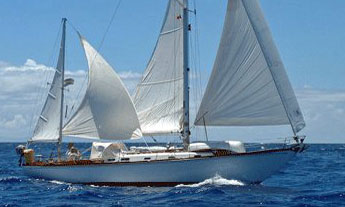
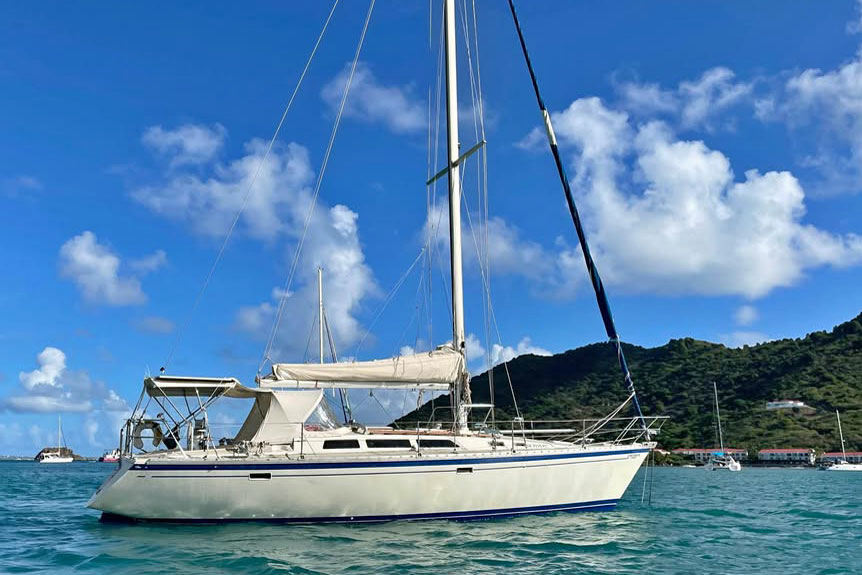 'Helga', an O'Day 40
Image courtesy of the owner
Design & Construction
The O’Day 40 emerged from a collaboration between the American builder O’Day Corporation and the renowned French naval architect Philippe Briand. By the mid-1980s, O’Day was keen to modernise its fleet, moving away from the conservative lines of previous decades toward the sleeker, faster profiles emerging from Europe. The hull is built from solid fibreglass, while the deck uses a balsa core to keep things stiff yet light.
The Defining Feature: The Briand Hull
The standout element here is the hull itself. Philippe Briand brought a flatter underbody and a finer entry to the design, which was a real departure for O’Day at the time. In practical terms, this gives the boat a much higher speed potential and better manners off the wind. For the cruising sailor, that means a boat that stays responsive and can maintain those high average speeds that make long hops between ports much less of a chore.
Variants & Layouts
Most of these boats were produced as masthead sloops with an aft cockpit. To cater to different sailing grounds, O’Day offered two main keel configurations:
- Deep Draft: A fin keel version drawing 6'8" (2.03m) for those who prioritise pointing ability.
- Shallow Draft: A wing keel version drawing 4'11" (1.50m), which is the "go-to" choice for anyone planning to cruise the shallow reaches of the Bahamas or the US East Coast.
Inside, the layout stayed fairly consistent, offering a two-cabin, two-head setup that works brilliantly for two couples who value their own space.
Sail Areas & Rig Dimensions
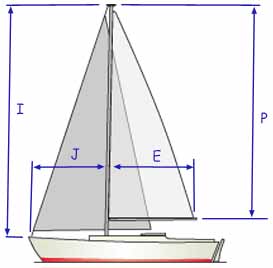 Rig dimensions
The O’Day 40 carries a generous amount of canvas, which keeps it moving nicely even when the breeze goes light—a common weak spot in many older cruisers.
- I (Forestay Height): 51'6" (15.70m)
- J (Foretriangle Base): 15'3" (4.65m)
- P (Mainsail Luff): 45'5" (13.84m)
- E (Mainsail Foot): 14'6" (4.42m)
- Mainsail Area: 329.28 ft² (30.59 m²)
- 100% Foretriangle: 392.69 ft² (36.48 m²)
- Total Sail Area (100% Foretriangle): 721.97 ft² (67.07 m²)
Published Specification: The O’Day 40 Blueprint
These are the standard factory figures for the O’Day 40.
| Specification Item | Measurement / Detail |
|---|---|
| LOA | 39'7" (12.07m) |
| LWL | 33'6" (10.21m) |
| Beam | 12'7" (3.84m) |
| Draft (Wing Keel) | 4'11" (1.50m) |
| Draft (Fin Keel) | 6'8" (2.03m) |
| Displacement | 18,000 lbs (8,165 kg) |
| Ballast | 7,200 lbs (3,266 kg) |
| Rig Type | Masthead Sloop |
| Hull Material | GRP (Glass Reinforced Plastic) |
| Production Dates | 1985 – 1989 |
Performance Analysis: Understanding the Design Ratios
To get a real sense of how this boat behaves when the sea gets up, we need to look at the numbers. These ratios offer a clear picture of its stability and "athleticism."
| Ratio Type | Value | Expert Interpretation |
|---|---|---|
| SA/D | 16.9 | A solid, moderate ratio. It has enough power to keep moving in light air without becoming twitchy or needing a reef the moment the wind hits 12 knots. |
| D/L | 214 | This puts it firmly in the "Medium" displacement category. It’s the sweet spot for modern cruising—fast enough to be fun, but with enough "meat" to carry your gear. |
| B/D | 40% | A very healthy amount of ballast. It makes for a stiff boat that holds its sail area well as the breeze picks up. |
| CSF | 1.94 | Staying under the 2.0 mark means it has the right credentials for offshore work and a good resistance to being knocked over. |
| Comfort Ratio | 27.8 | Respectable for a 40-footer. The motion is predictable and relatively kind, even if it doesn't have the heavy, dampened feel of an old-school long-keeler. |
For more on how these figures translate to your time on the water, take a look at our guide on Understanding Boat Performance & Design Ratios.
Structural Integrity & Stability Dynamics
A solid fibreglass hull provides a durable foundation, though with any boat from this era, you have to keep an eye out for osmotic blistering. O’Day used a structural grid system to help manage the rig loads, which keeps the boat feeling stiff and tight.
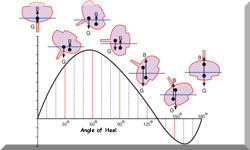
Because Briand carried the beam well aft, the boat has plenty of form stability. It resists heeling through its physical shape, not just the weight in the keel. This keeps the boat flatter in a blow, which makes life on deck a lot less exhausting for the crew.
The Buyer’s Checklist: Common Problem Areas
When you go to see an O’Day 40, bring a moisture meter and a keen eye. Here’s what usually needs a look:
- Balsa Core Moisture: The decks are balsa-cored, so check around the stanchion bases and the mast step. If water has got in, you could be looking at delamination.
- Chainplates: They are well-sized, but the deck seals can perish. Look for tell-tale water stains on the bulkheads inside.
- The "O’Day Smile": On the fin keel models, look for a hairline crack at the front of the keel-to-hull joint. It might just be the gelcoat, but it can also signal that those keel bolts need attention.
- Mast Step: Since it’s deck-stepped, check the compression post and the deck underneath for any signs of sagging.
- Through-hulls: Many of these boats still have their original plastic valves. Replacing them with proper bronze or composite fittings is usually high on the to-do list.
Comparison: The O’Day 40 vs The Competition
Back in the late 80s, the O’Day 40 was in a scrap with the Catalina 42 and the Hunter 40.
- Catalina 42: This is the most common rival. The Catalina feels a bit more "mass-produced," but parts are everywhere. The O’Day generally feels a bit more substantial in the hull.
- Hunter 40: Hunters of this period had some pretty wild interiors. The O’Day 40 appeals more to the sailor who wants a traditional rig and those sleek European lines.
- Beneteau First 405: Also a Briand design. In many ways, the O’Day 40 is the "American" cousin of this boat—it trades a little of the First's raw speed for a lot more living space.
If you'd like to compare this boat with others in this size range, take a look at Cruising Boats from 35' to 40' overall....
Configuration, Layout & Cruising Characteristics
The interior is where the O’Day 40 really wins people over. The U-shaped galley is tucked to starboard, providing a secure spot to whip up a meal while the boat is on a heel. Tankage is decent for coastal work, with about 100 gallons (378 litres) of water and 40 gallons (151 litres) of fuel.
The cockpit is deep and keeps you feeling protected, though if you’ve got six people on board, it can get a little cozy. For a couple, it’s just about perfect. The swim platform on the transom was ahead of its time and makes getting in and out of the dinghy a breeze.
Could this be your ideal cruising boat?
It may well be, but before going any further, it might be worth taking a look at my eBook 'How to Avoid Buying the Wrong Sailboat'...
Summing Up
The O’Day 40 is one of those rare boats that still looks "right" today. While you might need to put in some work to address the common moisture issues in the deck, the fundamental design is excellent. It hits that elusive middle ground: safe and capable enough for an offshore passage, but comfortable enough that you won't feel like you're camping when you're living aboard for months at a time.

This article was written by Dick McClary, RYA Yachtmaster and author of the RYA publications 'Offshore Sailing', member of The Yachting Journalists Association (YJA), erstwhile member of the Ocean Cruising Club (OCC) and owner/administrator of 'Liveaboard Sailboats for Sale'.

Frequently Asked Questions (FAQs)
Is the O’Day 40 easy to sail single-handed?
Is the O’Day 40 easy to sail single-handed?
It is, especially if the lines are led back to the cockpit. It’s a balanced boat, but an autopilot is almost essential if you're on your own, simply because of the sail area you're managing.
Does the wing keel make a big difference in performance?
Does the wing keel make a big difference in performance?
You’ll lose a few degrees of pointing ability compared to the fin keel, but for most people, being able to tuck into shallow anchorages more than makes up for it.
Is the hull cored or solid?
Is the hull cored or solid?
The hull is solid fibreglass, which is great for peace of mind. Only the decks use a balsa core.
What engine should I expect to find?
What engine should I expect to find?
Most came with the Universal M-35 or M-40 diesel. They are tough little engines, and getting parts is relatively easy.
Can I take this boat across an ocean?
Can I take this boat across an ocean?
With a CSF of 1.94, she has the right "bones" for it. Just make sure the rig, through-hulls, and safety gear are all up to scratch before you leave the sight of land.
Recent Articles


-
Offshore Internet with Starlink: Hardware, Plans, and Setup Guidance
Oct 01, 26 01:15 PM
A clear, practical guide to choosing the right Starlink hardware and plan for offshore cruising. Learn what to buy, how to install it, and how to manage power afloat. -
Offshore Liferaft Guide: Choosing, Stowing and Servicing One
Oct 01, 26 06:28 AM
Choosing an offshore liferaft? Learn what ISO 9650 Group A means, where to stow it, how often to service it and what to pack in the grab bag. -
Can an Inflatable Tender Replace a Liferaft? Offshore Verdict
Sep 30, 26 03:50 PM
Can an inflatable tender replace a liferaft? Offshore sailors get the honest answer: when a tender helps, where it fails and how to plan abandon ship.