- Home
- Cruising Yachts 35' to 40'
- Moody 37 Sailboat
The Moody 37 Sailboat
Specs, Performance Analysis & Cruising Characteristics
Key Takeaways: The Moody 37 is a robust, heavy-displacement centre cockpit cruiser renowned for its exceptional interior volume and "owner’s cabin" layout. While not a greyhound in light airs, its high ballast ratio and moderate rig provide a stable, predictable platform for offshore cruising. It is widely regarded as one of the most successful mid-sized liveaboards of its era, offering a level of privacy and comfort usually found in much larger vessels.
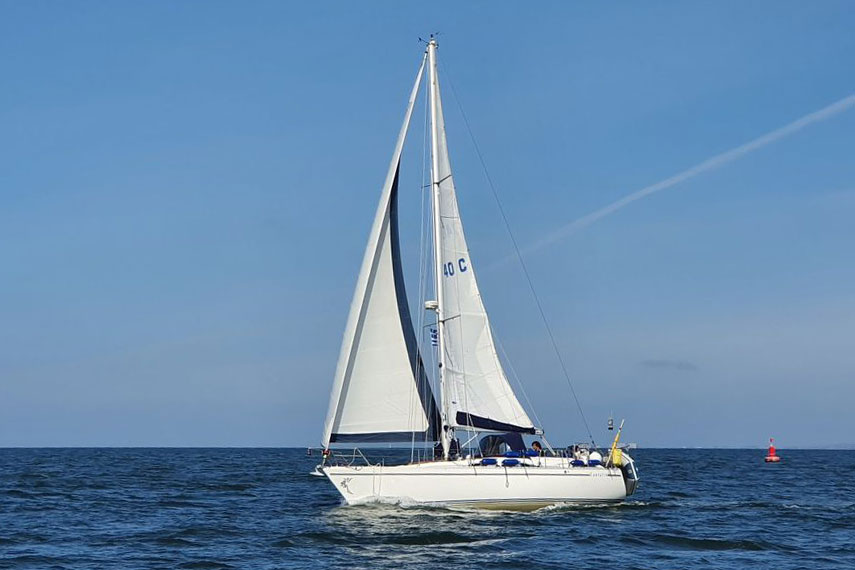
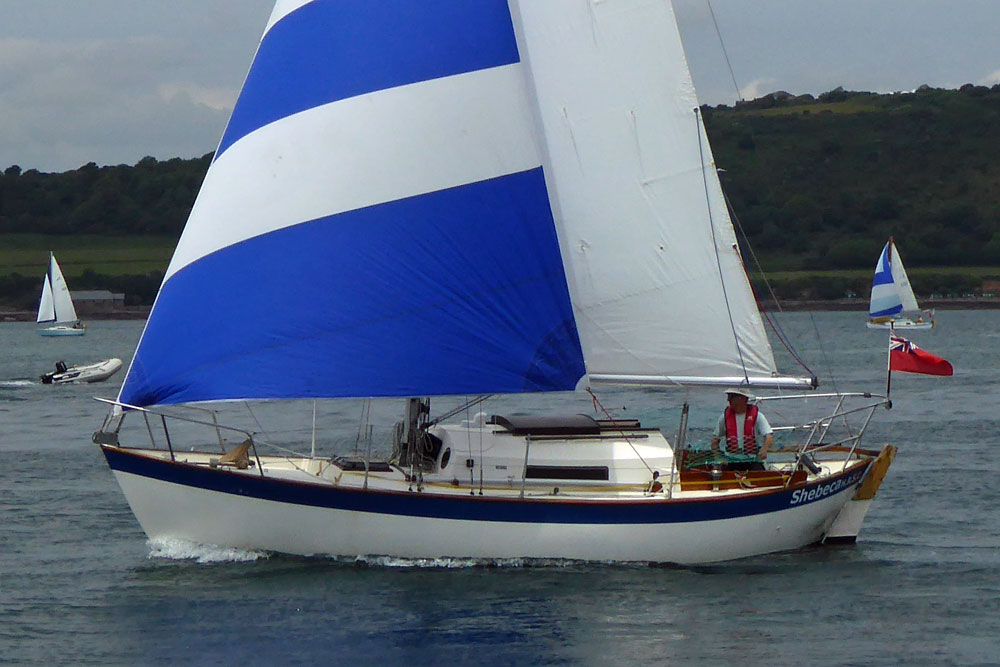
The Moody 37 stands as a cornerstone of British yacht building from the mid-1980s, representing a period when Marine Projects in Plymouth was at the height of its powers. Designed by Bill Dixon, this centre cockpit cruiser was conceived to bridge the gap between coastal hopping and serious blue water passage-making. With over 300 hulls produced, its longevity in the second-hand market speaks to a build quality that favoured substance over contemporary fashion. It is a yacht that prioritises a sea-kindly motion and interior volume, making it a perennial favourite for couples seeking a reliable liveaboard platform.
Design & Construction
The Moody 37 was designed by Bill Dixon and built by Marine Projects (Plymouth) Limited. The hull is constructed from solid glass-reinforced plastic (GRP), a material choice that, during this era, often resulted in "over-built" hulls by modern standards..
The Defining Feature: Centre Cockpit
The defining feature of the design is the centre cockpit configuration. By moving the cockpit amidships, Dixon created a cavernous aft cabin that remains the boat's primary selling point.
- Privacy: Provides separation between the owner's quarters and the forward guest cabin.
- Safety: The high cockpit position keeps the crew dry in heavy weather.
- Storage: Allows for a large engine room located beneath the cockpit sole.
Production Variants
Several versions were produced to suit various cruising requirements:
- Fin Keel: The standard 5'6" (1.68 m) draft for offshore stability.
- Bilge Keels: A twin-keel version allowing the boat to dry out upright in tidal estuaries.
- Scheel Keel: A shallow-draft option for restricted waters.
- Rigging: Almost exclusively a masthead sloop, though the later 376 variant introduced a sugar-scoop transom.
Sail Areas & Rig Dimensions
The Moody 37 carries a conservative masthead rig. The large genoa provides the primary driving force, while the mainsail remains manageable for short-handed crews.
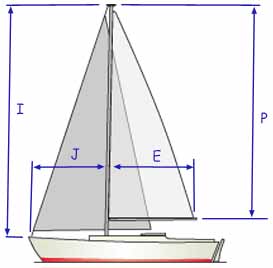 Rig dimensions
- Mainsail Area: 294 ft² (27.31 m²)
- #1 Genoa: 534 ft² (49.61 m²)
- Working Jib: 345 ft² (32.05 m²)
- I (Forestay Height): 47'0" (14.33 m)
- J (Fore-triangle Base): 15'0" (4.57 m)
- P (Mainsail Luff): 41'4" (12.59 m)
- E (Mainsail Foot): 14'2" (4.32 m)
Published Specification: The Moody 37 Blueprint
| Specification Parameter | Measurement & Detail |
|---|---|
| LOA | 37'0" (11.28 m) |
| LWL | 31'3" (9.53 m) |
| Beam | 12'6" (3.81 m) |
| Draft (Fin Keel) | 5'6" (1.68 m) |
| Displacement | 16,250 lbs (7,371 kg) |
| Ballast | 6,500 lbs (2,948 kg) |
| Hull Material | GRP (Fibreglass) |
| Production Dates | 1985 – 1987 |
Performance Analysis: Understanding the Design Ratios
These ratios provide an objective look at how the Moody 37 behaves at sea. For further context, refer to our guide on Understanding Boat Performance & Design Ratios.
| Design Ratio | Value | Interpretation |
|---|---|---|
| Sail Area/Displacement (SA/D) | 16.17 | Moderate cruiser; steady in a breeze but needs 10+ knots to find its legs. |
| Displacement/Length (D/L) | 237.71 | Moderate displacement; indicates a good balance between load-carrying and speed. |
| Ballast/Displacement (B/D) | 40% | High stiffness; this boat stays upright and carries sail well in heavy weather. |
| Capsize Screening (CSF) | 1.98 | Below 2.0; officially rated as suitable for offshore and ocean passages. |
| Brewer Motion Comfort | 26.36 | Respectable; promises a steady motion that reduces crew fatigue in a seaway. |
Structural Integrity & Stability Dynamics
The heavy GRP laminate used by Marine Projects makes the hull remarkably resistant to flexing. From a maintenance perspective, this build quality reduces structural fatigue, although owners should inspect for osmotic blistering, which was common in 1980s resins.
The skeg-hung rudder is a significant safety feature, providing a robust defence against floating debris while ensuring excellent directional stability. While the high-profile centre cockpit increases windage, the 40% ballast ratio ensures the boat remains "stiff" and predictable even when caught in a gust.
Configuration, Layout & Cruising Characteristics
The interior of the Moody 37 is designed for long-term living aboard.
- The Galley: A "U" shaped layout to port provides the cook with secure bracing points when heeling under sail.
- Navigation Station: A full-sized chart table with a dedicated "pilot berth" in the passageway.
- The Aft Cabin: Features a large double berth, settee, and en-suite heads, offering a level of luxury rare in 37' vessels.
- Tankage: Generous capacities including 55 gallons (250 litres) of water and 45 gallons (204 litres) of fuel support extended cruising.
Impressed?

Has this article suggested that this could be your ideal cruising boat and, as a result, deserves to be on your "Worth a Look" list?
But if, like me, you find sailboats to be seductive creations, then that list could rapidly get to be a pretty long one. If that is the case, wouldn't it be good if you could narrow it down bit through an objective, pragmatic process?
Well, that's where my eBook 'How to Avoid Buying the Wrong Sailboat' comes in...
Summing Up
The Moody 37 is a quintessential example of a "proper" cruising yacht. It doesn't attempt to win races; instead, it offers a secure, comfortable, and well-engineered home for those who want to explore. While it requires a bit of wind to get moving, its stability and comfort once the breeze picks up are exemplary. For the pragmatic sailor, the trade-off of slightly slower light-wind performance for the safety of a high ballast ratio and a skeg-hung rudder is one worth making.
If you'd like to compare this boat with others in this size range, take a look at Cruising Boats from 35' to 40' overall....
This article was written by Dick McClary, RYA Yachtmaster and author of the RYA publications 'Offshore Sailing' and 'Fishing Afloat', member of The Yachting Journalists Association (YJA), and erstwhile member of the Ocean Cruising Club (OCC).
Frequently Asked Questions (FAQs)
Is the Moody 37 suitable for solo sailing?
Is the Moody 37 suitable for solo sailing?
Yes. Most owners have updated these boats with furling systems and winches reachable from the helm, making it very manageable for a single-handed sailor.
How does it handle in a gale?
How does it handle in a gale?
Extremely well. Its weight and ballast ratio mean it stays on its feet longer than lighter modern yachts, providing a sense of security when the weather turns.
What are the differences between the 37 and the 376?
What are the differences between the 37 and the 376?
The 376 is the later evolution, featuring a sugar-scoop transom, minor joinery updates, and often a turbocharged Volvo engine.
Is osmosis a major concern?
Is osmosis a major concern?
It is a common point for price negotiation on boats of this era. While rarely a structural issue due to the thick hull, it should be checked by a surveyor.
What engine was originally fitted?
What engine was originally fitted?
Typically a Thornycroft T90 (35 hp) or a Volvo Penta 28 hp diesel. Many have since been re-engined with more modern Beta or Yanmar units.
Recent Articles


-
Discovery 55 Sailboat Review: Specs, Ratios & Bluewater Capability
Oct 14, 26 06:04 AM
Detailed Discovery 55 buyer’s guide covering specs, ratios, sailing behaviour, problem areas and bluewater suitability. -
Should I Buy a Boat? Four Questions to Answer Before You Commit
Oct 02, 26 04:40 AM
Thinking "Should I buy a boat?" This guide helps you decide, with key considerations from cost & maintenance to your personal sailing aspirations. -
Offshore Internet with Starlink: Hardware, Plans, and Setup Guidance
Oct 01, 26 01:15 PM
A clear, practical guide to choosing the right Starlink hardware and plan for offshore cruising. Learn what to buy, how to install it, and how to manage power afloat.