- Home
- Cruising Yachts 35' to 40'
- Ohlson 38
The Ohlson 38 Sailboat: Comprehensive Specs, Performance Analysis & Cruising Characteristics
Key Takeaways
The Ohlson 38 is a quintessential offshore cruiser with an aristocratic racing pedigree. Designed by the Swedish legend Einar Ohlson, it is defined by a heavy-displacement hull, a narrow beam, and exceptional upwind performance. While it lacks the cavernous interior volume of modern wide-stern designs, its high stability, impressive comfort ratio, and robust build quality make it a top-tier choice for serious ocean voyaging and traditionalists who value seaworthiness over dockside living space.
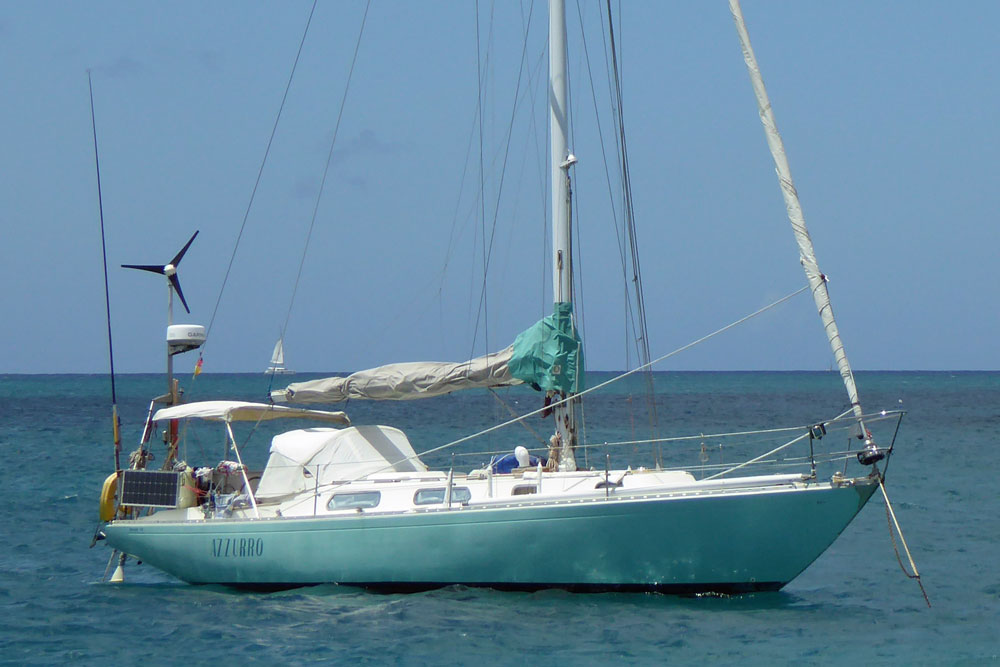
Table of Contents
Design & Construction
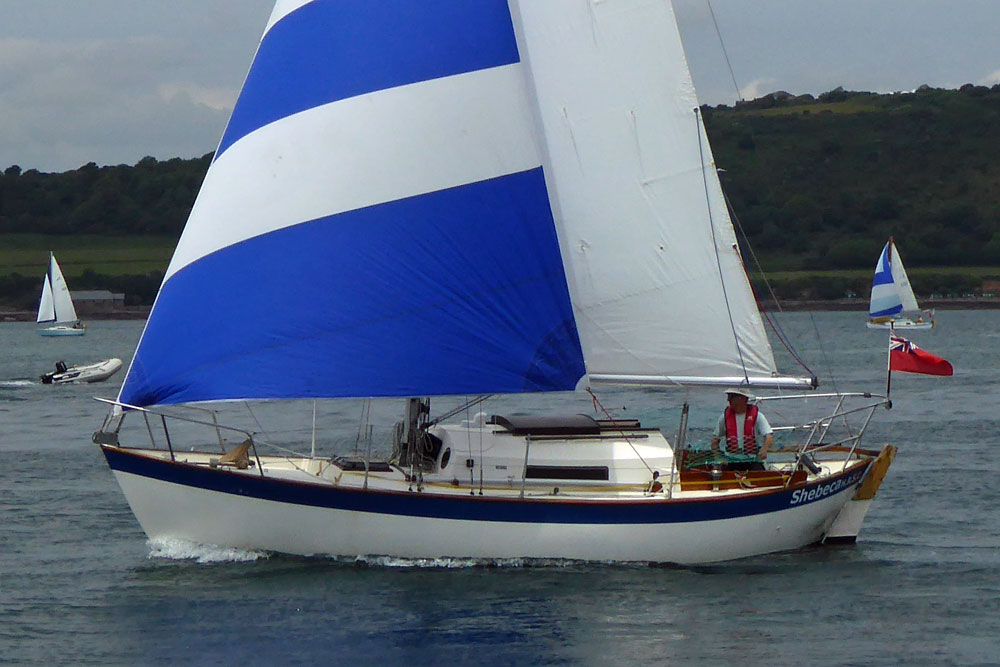
The Ohlson 38 emerged from a lineage of pure-bred racing yachts. Designed by Einar Ohlson, whose success in the 5.5 Metre class and the Olympic arena is legendary, the boat was conceived as a transition from the beautiful wooden hulls of the 1960s to the then-emerging world of Glass Reinforced Plastic (GRP). The hulls were primarily moulded by the Tyler Boat Company in the United Kingdom, a firm renowned for its heavy-duty laminates and structural integrity. Final fitting-out was often completed by prestigious yards such as Matthiessen & Paulsen in Germany or various UK yards, resulting in a vessel that combined British industrial strength with Swedish elegance.
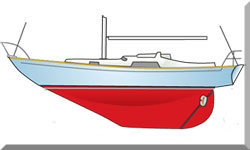
The key defining feature of the Ohlson 38 is its traditional deep-V hull form and elegant long overhangs. Unlike modern flat-bottomed yachts that "slam" into head seas, the Ohlson 38 is designed to slice through them. This hull shape, combined with a lead keel, provides a low centre of gravity and a very high level of directional stability. For the cruising sailor, this means the boat is exceptionally well-mannered when the weather deteriorates. It does not demand constant attention at the helm and tracks beautifully, making it an ideal candidate for long-distance passage-making where fatigue is a primary concern.
Published Specification: The Ohlson 38 Blueprint
Performance Analysis: Understanding the Design Ratios
To truly understand how an Ohlson 38 behaves at sea, we must look beyond the aesthetics and examine the engineering metrics. These ratios provide a scientific basis for its reputation as a formidable offshore cruiser. For a deeper dive into these concepts, see our guide on Understanding Boat Performance & Design Ratios.
While the numbers paint a picture of a sturdy vessel, the hull material and design philosophy offer deeper insights. The use of solid GRP by Tyler was a hallmark of an era where "more is better." These boats were built long before computer-aided stress analysis allowed manufacturers to shave off every possible gram of resin. Consequently, the Ohlson 38 possesses a thickness of laminate that modern boats simply cannot match. This provides an immense sense of security when cruising in areas where floating debris or poorly charted rocks might be a concern.
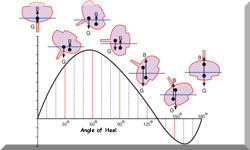
The defining feature—the narrow beam of only 10'3"—is what separates this design from the modern "wedge" shaped yachts. From a performance standpoint, this narrowness reduces the wetted surface area when heeled and allows the boat to maintain a symmetrical waterplane. This is the secret to her legendary upwind ability; where modern wide boats might fight the helm as they heel, the Ohlson 38 remains balanced and light. However, the trade-off is stability derived from shape (form stability). The Ohlson 38 relies more on its 6,000 lbs of lead ballast to keep it upright, which results in a more graceful, if steeper, angle of heel before the boat "locks in" and powers forward.
Notable Voyages
The most famous endorsement of the Ohlson 38’s offshore pedigree came during the 1976 Observer Single-handed Trans-Atlantic Race (OSTAR). While the race is often remembered for the giant yachts and the tragic loss of several vessels, it was Clare Francis and her Ohlson 38, Robertson’s Golly, that captured the public imagination.
The 1976 OSTAR was one of the most brutal on record, plagued by a series of North Atlantic depressions that battered the fleet with persistent gales. Francis, navigating a vessel that was considered small even by the standards of the time, demonstrated the incredible resilience of the Ohlson design. She finished 13th overall out of a field of 125 starters, many of whom were forced to retire due to structural failures or exhaustion.
Her crossing time of 29 days, 4 hours, and 38 minutes set a new women's single-handed transatlantic record. This voyage was not merely a feat of individual endurance; it was a practical demonstration of the Ohlson 38's ability to maintain high average speeds in punishing conditions while keeping its skipper relatively safe and dry. The success of Robertson’s Golly cemented the yacht's reputation as a "giant killer" and a premier choice for those venturing into high-latitude or blue-water cruising.
Configuration, Layout & Cruising Characteristics
Step aboard an Ohlson 38, and you are transported back to a time when yachts were designed around the human scale at sea. The cockpit is deep and well-protected, though by modern standards, it may feel cramped. For the offshore sailor, this is a virtue; there is always a brace point within reach, and the volume is small enough that a pooping sea won't dangerously weight down the stern.
The interior layout is traditional. You will typically find a sea-going galley to one side of the companionway and a proper navigation station to the other. The main saloon features two settee berths, often with pilot berths above them—a configuration that is vastly superior for sleeping while underway compared to the large island doubles found on modern coastal cruisers. The joinery in these boats, especially those finished in Germany, is often of a very high standard, featuring rich mahoganies and teak.
Cruising suitability is high for a couple or a solo sailor, but the tankage and storage capacity reflect her racing roots. Prospective owners often find they need to supplement the original water and fuel tanks for long-range voyaging. The galley, while compact, is designed to be used in a seaway, with deep sinks and secure footings for the chef. One must be prepared for the lack of "headroom" and "elbow room" compared to a modern 38-footer; the Ohlson 38 feels more like a modern 32-footer inside, but it sails like a 45-footer when the wind picks up to a Force 6.
Could this be your ideal cruising boat?
It may well be, but before going any further, it might be worth taking a look at my eBook 'How to Avoid Buying the Wrong Sailboat'...
Summing Up
The Ohlson 38 is a masterclass in traditional yacht design. It offers a blend of aesthetic beauty, heavy-duty construction, and a sea-kindly motion that is increasingly rare in the contemporary market. While its performance in light winds is eclipsed by modern designs, and its interior may feel restrictive to those used to open-plan living, its offshore credentials are unarguable. The high ballast ratio and low capsize screening score provide a level of safety that is the ultimate peace of mind for an ocean sailor. It is a boat for the person who enjoys the journey as much as the destination, and who values a vessel that will look after them when the horizon turns grey.
Boats in this size range include the most popular cruising boats. You can take a look at a good selection of them at Sailboats from 35' to 40' overall...

This article was written by Dick McClary, RYA Yachtmaster and author of the RYA publications 'Offshore Sailing' and 'Fishing Afloat', member of The Yachting Journalists Association (YJA), erstwhile member of the Ocean Cruising Club (OCC) and owner/administrator of 'Liveaboard Sailboats for Sale'.

Frequently Asked Questions (FAQs)
Is the Ohlson 38 prone to osmosis?
Is the Ohlson 38 prone to osmosis?
Like many yachts of the late 1960s and early 1970s, the Ohlson 38 can be susceptible to osmotic blistering if the gelcoat was not properly maintained or if it has spent its entire life in warm waters. However, because the Tyler-built hulls are so thick, it is rarely a structural issue and is usually treated as a cosmetic or maintenance task during a refit.
How does the Ohlson 38 handle under power?
How does the Ohlson 38 handle under power?
Due to its long-ish keel and the proximity of the propeller to the rudder, the Ohlson 38 can be a handful in reverse. It suffers from significant prop walk, which can be harnessed by an experienced skipper but may be intimidating for a novice. Forward manoeuvrability is generally good once steerageway is established.
Can the Ohlson 38 be sailed single-handed?
Can the Ohlson 38 be sailed single-handed?
Yes. While it was designed for a crew in its racing days, its inherent balance and directional stability make it an excellent candidate for single-handed sailing. Many owners lead the control lines back to the cockpit and install a high-quality windvane or autopilot to manage the heavy displacement.
Is the rig height a concern for coastal cruising?
Is the rig height a concern for coastal cruising?
The Ohlson 38 has a reasonably tall masthead rig, but it generally fits within standard bridge clearances for major cruising routes. The main concern is usually the weight of the spar; ensuring the standing rigging is oversized and in top condition is vital for offshore work given the loads a heavy-displacement hull can generate.
What should I look for when buying a used Ohlson 38?
What should I look for when buying a used Ohlson 38?
Pay close attention to the chainplates and the mast step, as these are areas of high stress. Also, check the condition of the engine; many original boats were fitted with underpowered units that have likely been replaced. A modern 30hp to 40hp diesel is the ideal upgrade for this hull.
Recent Articles


-
Mystery 35 Review: Specs, Performance & Buying Guide
Aug 29, 26 09:42 AM
An in-depth review of the Mystery 35 sailboat. Read technical specs, design ratios, sail performance, and common buyer inspection areas. -
Beneteau First 405 Review: Specs, Performance & Buyer’s Guide
Aug 26, 26 03:58 AM
Detailed Beneteau First 405 review covering specs, performance, bluewater capability, layouts and buyer’s checklist. -
Moody S38 Review: Specs, Ratios & Buyer’s Guide
Aug 12, 26 04:22 AM
In‑depth Moody S38 review covering specs, performance, design ratios, layout, strengths, trade‑offs & buyer inspection points.