Parachute Sea Anchors & Drogues: A Guide to Heavy Weather Sailing
Key Takeaways...
The fundamental choice between a sea anchor and a drogue depends on your vessel’s hull shape and your intended survival strategy. Long-keeled, heavier boats generally respond better to the "stop & wait" method of a sea anchor, whereas modern fin-keeled hulls often require the active speed management of a drogue to avoid rhythmic rolling or pitchpoling. Proper rigging, including specific rode lengths and industrial-grade chafe protection, is the difference between a successful deployment and a catastrophic gear failure.
Table of Contents
- What's the real difference between a sea anchor and a drogue?
- What is a parachute sea anchor & when should I use one?
- What are the different types of drogues & how do they work?
- Which should I choose: a sea anchor or a drogue?
- How do I deploy & retrieve a sea anchor or drogue?
- Storage & Maintenance
- Summing Up
- Frequently Asked Questions
What's the real difference between a sea anchor and a drogue?
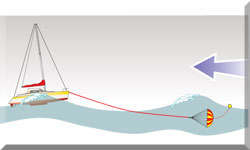
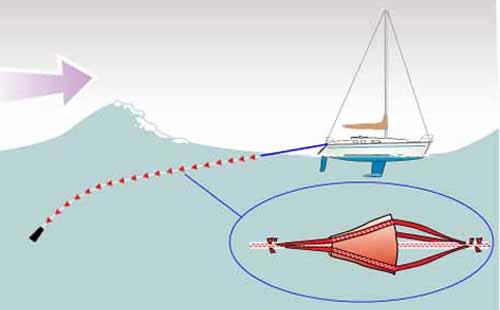
For anyone who has been through a proper storm at sea, you'll know that the difference between these two bits of kit is huge. While they both manage a boat in heavy weather, they do so in entirely different ways. Think of a parachute sea anchor as a giant, underwater brake. You deploy it from the bow to bring the boat to a dead stop, head-on to the waves. It's a passive, survival tactic—a "heave-to" for the digital age, letting you and your crew ride out a proper storm in a relatively stable state.
A drogue is a different beast altogether. It’s a series of smaller underwater cones or a single larger one towed from the stern. The main job of a drogue is to slow the boat down. It's for those times when you're running downwind in big seas and need to stop the boat from surfing dangerously fast, which could cause a pitchpole—something no one wants to experience. It's a more active approach, allowing you to maintain some control and steerage.
What is a parachute sea anchor & when should I use one?
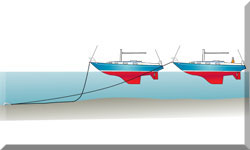
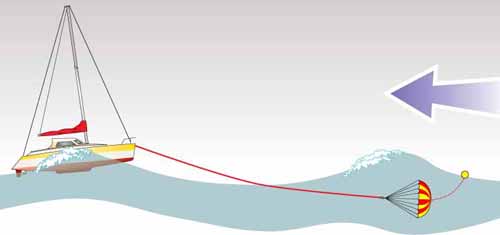 A parachute sea anchor is always deployed from the bow - never the stern.
A parachute sea anchor, or para-anchor, is a robust bit of kit designed to bring your boat to a near standstill in a real monster of a storm. It's a bit like a circular parachute that you launch from the bow. It's got a long, heavy rode—usually a good length of nylon line—with a bit of chain near the anchor itself to make sure it stays well and truly submerged. Once it's in the water, the sheer drag holds the boat’s bow right into the wind and waves, letting her ride over the swells safely. The goal is to kill all forward motion.
I've heard firsthand accounts of these things being deployed in gales that would make your hair stand on end. One friend of mine, sailing a 40-footer in the middle of the Atlantic, said it was the difference between a hellish, sleepless night and being able to get some rest while the storm raged overhead. It's a serious piece of gear for a serious situation. But he did also tell me that getting it all back aboard when the storm had passed was not easy — a master of understatement.
The Physics of the Hull
- Full-Keeled & Heavy Displacement: These boats have a natural tendency to "find the groove" when stopped. While you might initially heave-to under storm sails, there comes a point where the wind speed makes carrying any cloth dangerous. Once the sails are furled, the parachute takes over.
- Modern Fin Keels: These boats often lack the directional stability to stay head-to-wind without active steering. On these hulls, a sea anchor can sometimes cause the boat to "tack" back and forth, creating massive shock loads.
What are the different types of drogues & how do they work?
Drogues are for when you're running before a storm and need to take the edge off. They’re a lifesaver for stopping a boat from getting out of control and surfing down the face of a wave, which is where things can go horribly wrong. You'll find two main types of drogues on the market:
Medium-Pull or Series Drogues
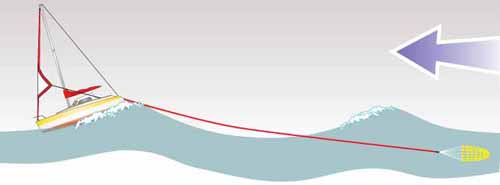
 Drogues are always deployed from the stern - never the bow.
The most famous of these is the Jordan Series Drogue. It's a proper piece of engineering, consisting of a string of over a hundred small, cone-shaped drogues tied at intervals along a long nylon rode. When you get it in the water, it creates a massive amount of drag, typically slowing the boat down to a knot or two. It's a passive system, just like the sea anchor, because you're moving too slowly to steer. The clever bit is that all those small cones distribute the load evenly, which means you avoid that nasty, jarring shock you'd get from a single large device.
Read more about the Jordan Series Drogues...
Low-Pull Drogues
 The drogue must be positioned such that it remains below the surface at all times.
These drogues are designed for a different kind of job. They'll slow the boat down, but only to a speed of around four to six knots. This is still fast enough to maintain some steerage, letting you actively guide the boat through the seas. They're not just for survival, either. Using a speed-limiting drogue in boisterous trade winds to take the ‘roller coaster’ out of a downwind passage makes a huge difference, turning a wild ride into a comfortable sail where you can actually get some sleep. They're typically built from heavy canvas and webbing, and are towed on a single line from the stern or on a bridle for better control.
These things are no-nonsense bits of kit, with a lot of the design work coming from aerospace—think devices used to slow down space capsules on re-entry. It's a serious business, and you shouldn't be tempted to knock one up yourself. Chances are it'll let you down when you need it most.
Which should I choose: a sea anchor or a drogue?
The choice between a parachute sea anchor and a drogue really comes down to a matter of personal preference and how your boat handles in heavy weather.
- For the "stop and wait" approach: If you're a believer in heaving-to and want to stop the boat and let the storm pass over, then a parachute sea anchor is the way to go.
- For the "run with it" approach: If you're more comfortable running with the seas and maintaining some level of control, a drogue is a better fit. Low-pull drogues, in particular, give you that extra bit of flexibility to manage your speed in all sorts of conditions.
- For the best of both worlds: Plenty of experienced offshore sailors carry both. It gives you the ultimate flexibility to choose the best tactic for whatever the sea is doing. A sea anchor for the absolute worst, and a drogue for when you just need to manage a fast downwind run.
| Feature | Parachute Sea Anchor | Drogue (Series or Single) |
|---|---|---|
| Deployment Point | The Bow | The Stern |
| Primary Goal | Stop forward motion (Survival) | Slow down (Controlled Run) |
| Best Hull Fit | Full-Keeled / Heavy Displacement | Modern Fin-Keeled / Light Hulls |
| Sail Status | Sails Furled (Bare Poles) | May use small scrap of jib |
How do I deploy & retrieve a sea anchor or drogue?
Having the right gear is one thing; knowing how to use it when the wind is howling is another. These are not things you want to be figuring out for the first time in a storm.
- Getting Ready: Before you even think about deployment, make sure the whole system is completely free of twists. For a sea anchor, have the rode, trip line, and floats ready on the foredeck. For a drogue, get everything set up at the stern. And of course, everyone needs to be in a lifejacket and harness.
- Deployment: First, get the trip line and its float into the water. This is your lifeline for retrieval. Then, carefully throw the device into the water, making sure it doesn’t snag on anything. Pay out the rode steadily, keeping some tension so the device can get to work.
- Retrieval: Getting this stuff back can be as tough as getting it out. It's always best to do it in the lee of the boat. Use a boat hook to grab the trip line float. By pulling on the trip line, you can collapse the device and pull it in without fighting against all that drag. Don’t be afraid to use a winch to help with the heavy lifting.
Essential Components & Rigging
A strong system needs more than just the main device.
- Rode: You need a long, strong nylon rode for both devices—that stretch is crucial for absorbing shock loads from the waves. A good rule of thumb is a rode at least ten times your boat's length overall, with a bit of chain near the device to help it sink.
- Chafe Protection: This is essential. At any point where the rode touches the boat—be it a bow roller, fairlead, or cleat—you must use heavy-duty chafe guards. Under load, a line can chafe through quicker than you’d think.
- Strong Points: The point where you attach the rode to the boat has to be a proper, well-backed cleat or bitt. Attaching it to a weak point is just asking for trouble.
- Trip Line & Floats: These are lifesavers. The trip line is a light, floating line that attaches to the device, letting you collapse it for an easier retrieval. Floats on the main rode and trip line keep them visible and away from your prop.
Storage & Maintenance
This gear is only as good as its last inspection.
- Post-Use Care: After any use in saltwater, make sure you rinse the device and all lines thoroughly with fresh water. Let it all dry completely out of direct sunlight to prevent mildew and UV damage.
- Routine Inspection: Before and after any serious passage, or at least once a year, give everything a good look-over. Check for signs of wear, cuts, or chafe. A small weakness can lead to a big problem.
- Proper Stowage: Store the device and its lines in a dedicated, breathable bag. This keeps everything untangled and protected from the elements. Keep the bag in a dry, accessible locker.
Summing Up
Whether you choose a parachute sea anchor or a drogue, the success of the tactic relies on understanding your boat's specific physics and ensuring your rigging is up to the task. A sea anchor provides a stationary refuge for traditional hulls when it is no longer safe to heave-to under sail, while a drogue offers vital speed control for more modern designs. Ultimately, carrying both and knowing how to rig them with proper chafe protection and adequate rode length is the hallmark of a prepared offshore sailor. These tools are the final step in a heavy weather strategy, which begins with getting to grips with how to correctly and safely reef your sails, a topic we explore in our comprehensive guide, Reefing a Sail: The Ultimate Guide to Control & Safety at Sea.

This article was written by Dick McClary, RYA Yachtmaster and author of the RYA publications 'Offshore Sailing', member of The Yachting Journalists Association (YJA), erstwhile member of the Ocean Cruising Club (OCC) and owner/administrator of 'Liveaboard Sailboats for Sale'.

Frequently Asked Questions
Can I use a drogue from the bow?
Can I use a drogue from the bow?
No, a drogue should only ever be deployed from the stern. Tying it to the bow would just drag the boat backwards, which is both dangerous and useless.
How do I get a sea anchor or drogue back on board?
How do I get a sea anchor or drogue back on board?
Most good quality devices come with a retrieval line. This line is designed to collapse the device for an easier and safer pull-in. You've got to be careful doing this, though, to avoid getting lines tangled or injured.
How do I know what size I need?
How do I know what size I need?
Sizing is crucial. Both sea anchors and drogues are sized based on your yacht's displacement. It's vital to check the manufacturer’s recommendations or even talk to a naval architect to be sure you're getting the right size. If it’s too small, it won't work, and if it's too big, it can put too much stress on the boat.
Can I make my own drogue?
Can I make my own drogue?
Some people have tried, but I really wouldn't recommend it. The forces involved in heavy weather are immense, and a professionally designed and tested drogue is made to withstand them. A homemade device might not have the right strength or shape and could fail when you really need it most.
How do sea anchors & drogues relate to reefing?
How do sea anchors & drogues relate to reefing?
These tools are your last line of defence. They’re used when traditional measures like reefing a sail are no longer enough to keep the vessel and crew safe.
Can I heave-to under sail and use a sea anchor at the same time?
Can I heave-to under sail and use a sea anchor at the same time?
No. Using both creates conflicting forces that can damage your sails and put the boat at a dangerous angle. You should choose one or the other based on the severity of the wind.
What happens if I use a sea anchor on a light fin-keeled boat?
What happens if I use a sea anchor on a light fin-keeled boat?
The boat may "skate" or tack wildly behind the anchor, creating massive shock loads on the rigging and potentially being caught broadside by a breaking wave.
Recent Articles


-
Should I Buy a Boat? Four Questions to Answer Before You Commit
Oct 02, 26 04:40 AM
Thinking "Should I buy a boat?" This guide helps you decide, with key considerations from cost & maintenance to your personal sailing aspirations. -
Offshore Internet with Starlink: Hardware, Plans, and Setup Guidance
Oct 01, 26 01:15 PM
A clear, practical guide to choosing the right Starlink hardware and plan for offshore cruising. Learn what to buy, how to install it, and how to manage power afloat. -
Offshore Liferaft Guide: Choosing, Stowing and Servicing One
Oct 01, 26 06:28 AM
Choosing an offshore liferaft? Learn what ISO 9650 Group A means, where to stow it, how often to service it and what to pack in the grab bag.