- Home
- Cruising Yachts 30' to 35'
- Beneteau Oceanis 331 Clipper
The Beneteau Oceanis 331 Sailboat: Specs, Performance Analysis & Cruising Characteristics
Key Takeaways: The Beneteau Oceanis 331 is a voluminous, user-friendly coastal cruiser that punches above its weight in terms of interior accommodation. While not a greyhound in light airs due to its conservative sail plan and substantial wetted surface area, it offers a predictable, stiff, and forgiving ride. It is ideally suited for couples or small families seeking a reliable "turn-key" yacht with a focus on comfort and ease of handling over raw offshore speed. Whether opting for the standard 331 or the upgraded Clipper version, this model remains a pragmatic choice for coastal exploration.
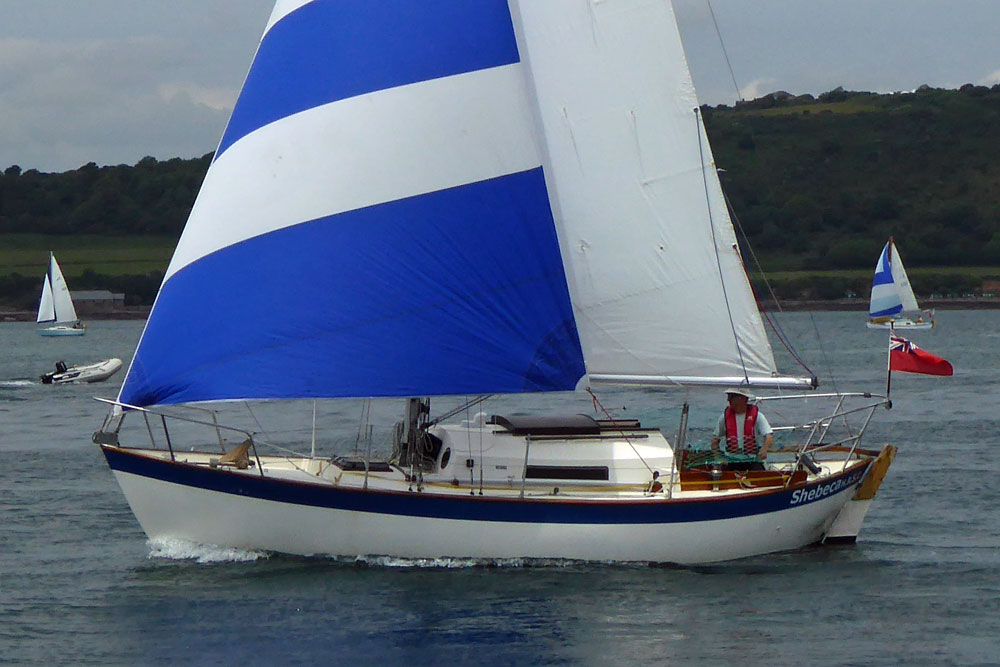
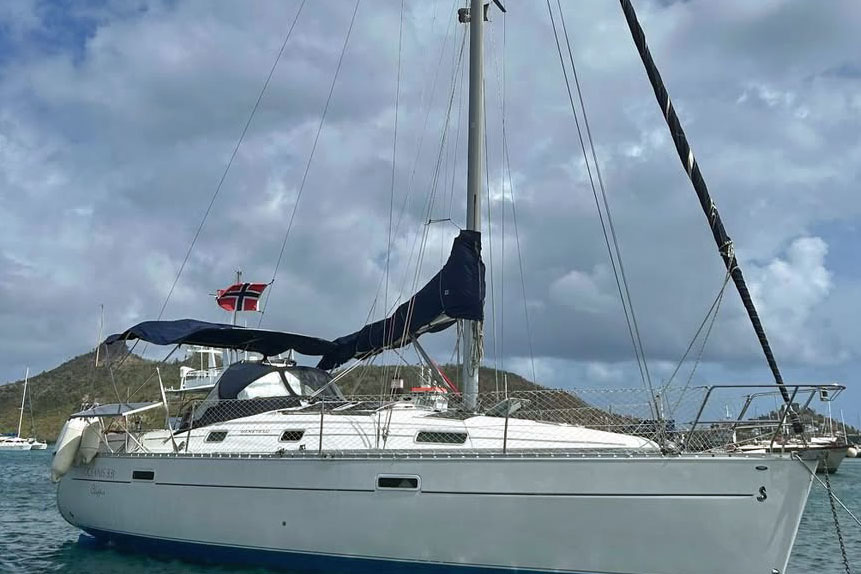 A Beneteau Oceanis 331 Clipper
Design & Construction
The Beneteau Oceanis 331 was designed by the prolific Groupe Finot and built by Beneteau in France and the USA between 1999 and 2005. Constructed with a solid GRP hull and a balsa-cored deck, the 331 followed a design philosophy that prioritised providing maximum internal volume and cockpit space within a manageable hull length.
Many hulls were delivered as the Oceanis 331 Clipper. The "Clipper" designation essentially represented an upgraded trim level, often including more robust deck hardware, improved electronics, and higher-quality interior finishes compared to the base specification. Regardless of the trim, a defining feature of the 331 is its impressive beam-to-length ratio, which is carried well aft. This design choice provides two primary practical benefits for cruising. Firstly, it creates an expansive cockpit and an aft cabin area that was almost unheard of in the 33-foot bracket at the turn of the millennium. Secondly, the wide stern provides significant form stability, allowing the boat to remain relatively upright and composed even as the breeze freshens.
Beneteau produced the 331 in several distinct versions to suit global cruising requirements. While the standard fin keel (approximately 5'3" or 1.60m) is most common, a shallow-draft bulb keel (3'11" or 1.20m) was produced for regions with depth constraints. Most notably for those in tidal areas, a lifting keel (centreboard) version was also available. This variant features a shallow weighted stub keel and twin rudders, allowing for a minimum draft of just 2'11" (0.90m). Internal layouts also varied; the two-cabin "Owner" version features a massive athwartships aft berth, while the three-cabin version provides two separate aft cabins.
Sail Areas & Rig Dimensions
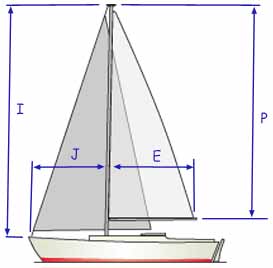 Rig dimensions
The 331 is typically rigged as a masthead sloop with swept-back spreaders, doing away with the need for a backstay adjuster in most cruising contexts. The dimensions provided below reflect the standard mast configuration.
- I (Forestay Height): 40'7" (12.37m)
- J (Fore-triangle Base): 12'11" (3.94m)
- P (Mainsail Luff): 34'11" (10.64m)
- E (Mainsail Foot): 12'8" (3.86m)
- Mainsail Area: 221.00 ft² (20.53 m²)
- Genoa Area (140%): 367.50 ft² (34.14 m²)
- Total Upwind Sail Area: 588.50 ft² (54.67 m²)
Published Specification: The Beneteau Oceanis 331 Clipper Blueprint
| Parameter | Specification Detail |
|---|---|
| LOA | 33'11" (10.34m) |
| LWL | 30'6" (9.30m) |
| Beam | 11'3" (3.43m) |
| Draft (Standard Fin) | 5'3" (1.60m) |
| Draft (Centreboard Up/Down) | 2'11" (0.90m) & 6'11" (2.10m) |
| Displacement | 11,173 lbs (5,068kg) |
| Ballast | 3,417 lbs (1,550kg) |
| Rig Type | Masthead Sloop |
| Hull Material | GRP (Solid Hull / Balsa Deck) |
| Production Dates | 1999 – 2005 |
Performance Analysis: Understanding the Design Ratios
To truly understand how the 331 behaves on the water, we must look at the mathematical relationships between its dimensions. For a broader context on these figures, you may wish to consult our guide on Understanding Boat Performance & Design Ratios.
| Ratio Name | Calculated Value | Interpretation |
|---|---|---|
| Sail Area/Displacement (SA/D) | 18.84 | A balanced ratio that places the 331 in the "cruiser-racer" category, though it leans toward cruising. It has enough power to move in moderate breezes but will require the engine in very light airs. |
| Displacement/Length (D/L) | 176.40 | Classified as a light-medium displacement hull. This suggests a boat that is relatively easy to drive and capable of good speeds on a reach, though it lacks the momentum of a heavy blue-water cruiser. |
| Ballast/Displacement (B/D) | 30.58% | A respectable figure for a modern production cruiser. Much of its stability comes from its wide beam, but this ballast ratio ensures it feels secure when the boat begins to heel. |
| Capsize Screening Formula (CSF) | 2.02 | A value of 2.0 is often cited as the threshold for ocean passages. At 2.02, the 331 is technically just over that line, suggesting it is better suited for coastal and near-shore cruising. |
| Brewer Motion Comfort Ratio | 20.80 | This confirms the 331 is a light coastal cruiser. It may feel "lively" in a choppy sea compared to a heavy-displacement yacht, which can lead to crew fatigue on long passages. |
Structural Integrity & Stability Dynamics
The use of GRP for the hull ensures a relatively low-maintenance ownership experience. Beneteau utilised a structural inner grid bonded to the hull to provide rigidity and distribute loads. In the centreboard version, this integrity is critical as the stub keel must house the pivoting cast iron foil and manage the stresses of the lifting mechanism.
Stability in the 331 is heavily influenced by its hull shape. The wide beam provides high initial stability, making the boat feel very "stiff" at the dock. The centreboard version, despite its shallower draft when the board is up, maintains a low centre of gravity thanks to the weighted stub. When the board is fully deployed to 6'11" (2.10m), the yacht gains significant "grip" and lift, allowing it to point higher than its shallow-draft bulb siblings. However, the high freeboard across all models does increase windage, which can be noticed when manoeuvring in tight marinas during a blow.
Configuration, Layout & Cruising Characteristics
The internal volume of the 331 is its primary draw. The galley is typically L-shaped and positioned to starboard, offering good bracing positions for the cook while underway. Tankage is generous for a boat of this size, usually carrying around 170 litres of water and 70 litres of fuel.
In the cockpit, the design prioritises ergonomics. The wheel steering is mounted on a pedestal that houses the engine controls and instruments. On the lifting keel models, twin rudders are utilised to maintain steering authority even when the draft is reduced. A walk-through transom provides easy access to the water or a dinghy.
The choice between a two or three-cabin layout significantly alters the cruising experience. The two-cabin "Owner" layout provides a massive heads compartment and a dedicated wet locker, making it superior for long-term cruising couples. The three-cabin version, while excellent for hosting guests, sacrifices some of this utility and galley space to accommodate the extra berths.
Impressed?

Has this article suggested that this could be your ideal cruising boat and, as a result, deserves to be on your "Worth a Look" list?
But if, like me, you find sailboats to be seductive creations, then that list could rapidly get to be a pretty long one. If that is the case, wouldn't it be good if you could narrow it down bit through an objective, pragmatic process?
Well, that's where my eBook 'How to Avoid Buying the Wrong Sailboat' comes in...
Summing Up
The Beneteau Oceanis 331 Clipper remains a stalwart of the second-hand market because it masterfully balances the needs of a modern cruising family. Whether in the standard fin keel or the versatile centreboard configuration, it offers an interior that feels significantly larger than its 33-foot length suggests. While its motion comfort ratio suggests a spirited ride in a blow, its predictability, twin-rudder options for shallow water, and ease of maintenance make it an ideal entry-point for coastal exploration. It is a pragmatic choice for those who value cabin space and cockpit comfort over the ability to cross oceans in heavy weather.
If you'd like to compare this boat with others in this size range, take a look at Cruising Boats from 30' to 35' overall....
This article was written by Dick McClary, RYA Yachtmaster and author of the RYA publications 'Offshore Sailing' and 'Fishing Afloat', member of The Yachting Journalists Association (YJA), and erstwhile member of the Ocean Cruising Club (OCC).
Frequently Asked Questions (FAQs)
What is the difference between the 331 and the 331 Clipper?
What is the difference between the 331 and the 331 Clipper?
The "Clipper" designation generally refers to a specific equipment package common in Europe, which often included upgraded winches, electronics, and interior finishes compared to the base models.
Is the Beneteau 331 capable of offshore passage making?
Is the Beneteau 331 capable of offshore passage making?
While many have crossed oceans in a 331, it is designed primarily as a coastal or near-shore vessel. Its design ratios suggest it is most comfortable in island-hopping scenarios rather than extended periods in heavy, breaking seas.
What are the specific maintenance needs for the centreboard version?
What are the specific maintenance needs for the centreboard version?
Owners must periodically inspect the pivot pin, the lifting cable (pennant), and the internal shims of the board. It is also vital to ensure the centreboard trunk is kept clear of marine growth to prevent the board from jamming.
Can the centreboard 331 dry out safely?
Can the centreboard 331 dry out safely?
Yes, provided the ground is level and firm. The yacht sits on its stub keel and twin rudders, though beaching legs are often recommended for added security and peace of mind during a full tide cycle.
How does the 331 handle under power?
How does the 331 handle under power?
Most 331s are equipped with a 27hp or 29hp engine, which is ample for its displacement. The main challenge is the high windage and the relative lightness of the hull, which can cause the bow to blow off when docking in a crosswind.
How many people can comfortably live aboard the 331?
How many people can comfortably live aboard the 331?
The two-cabin version is ideal for a couple, offering a massive aft berth and a large heads. The three-cabin version can accommodate six for short trips, though storage for gear and provisions becomes a challenge at full capacity.
Recent Articles


-
Discovery 55 Sailboat Review: Specs, Ratios & Bluewater Capability
Oct 14, 26 06:04 AM
Detailed Discovery 55 buyer’s guide covering specs, ratios, sailing behaviour, problem areas and bluewater suitability. -
Should I Buy a Boat? Four Questions to Answer Before You Commit
Oct 02, 26 04:40 AM
Thinking "Should I buy a boat?" This guide helps you decide, with key considerations from cost & maintenance to your personal sailing aspirations. -
Offshore Internet with Starlink: Hardware, Plans, and Setup Guidance
Oct 01, 26 01:15 PM
A clear, practical guide to choosing the right Starlink hardware and plan for offshore cruising. Learn what to buy, how to install it, and how to manage power afloat.