- Home
- Cruising Yachts 40' to 45'
- Sea Wolf 40 Sailboat
The Sea Wolf 40 Sailboat
Specs, Performance Analysis & Cruising Characteristics
Key Takeaways
The Sea Wolf 40 is a heavy-displacement cruiser, designed for those who value safety and liveability over outright speed. With its classic ketch rig and substantial ballast, it offers exceptional stability and a high comfort ratio, making it an ideal candidate for long-term blue-water voyaging. However, its heavy build and traditional hull shape mean it requires a stiff breeze to find its groove and lacks the agility of modern performance cruisers.
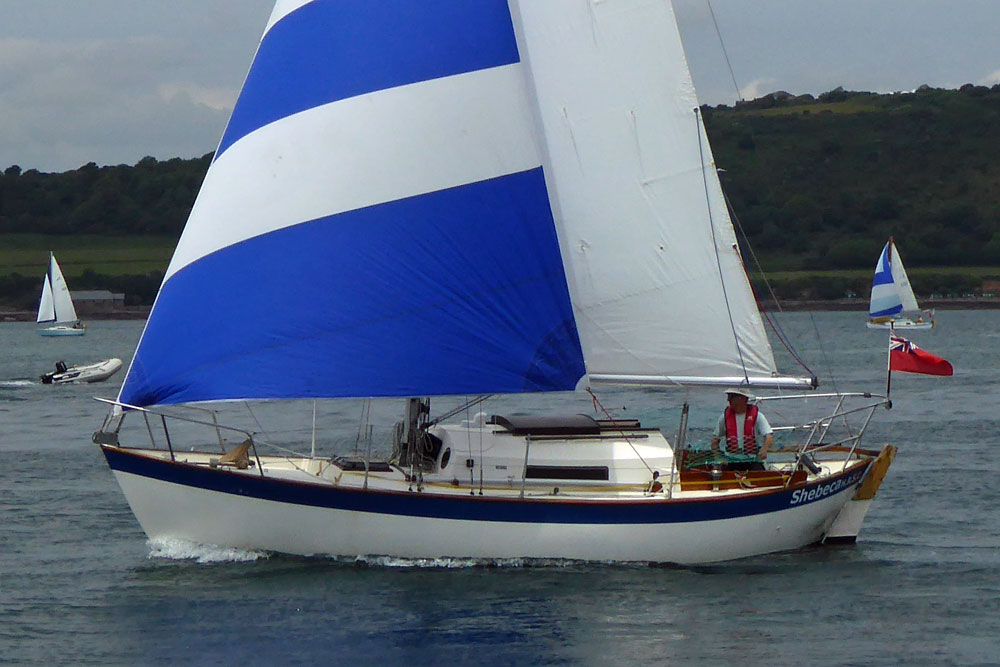
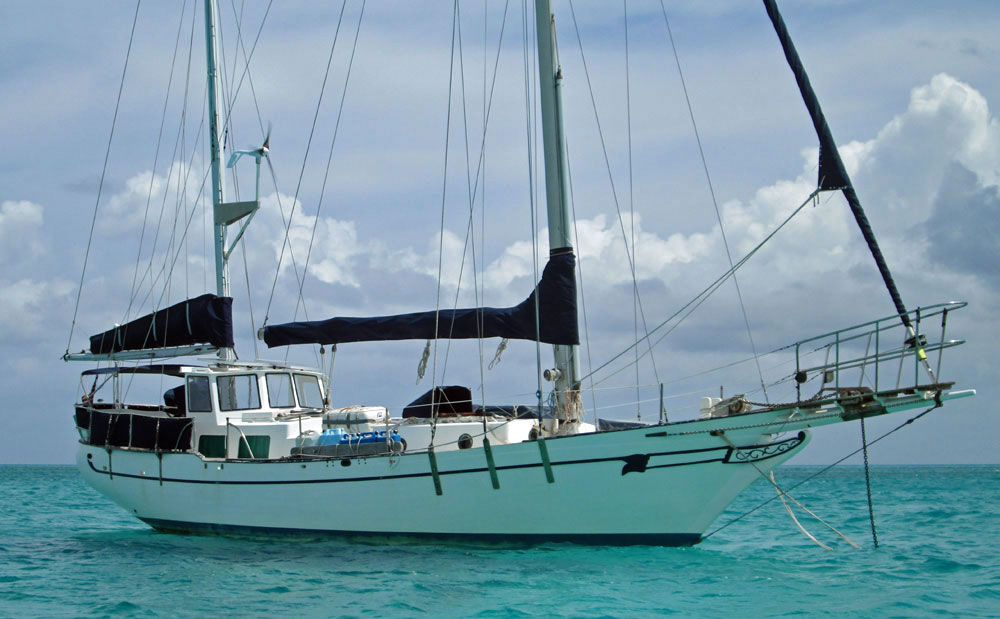 The Sea Wolf 40
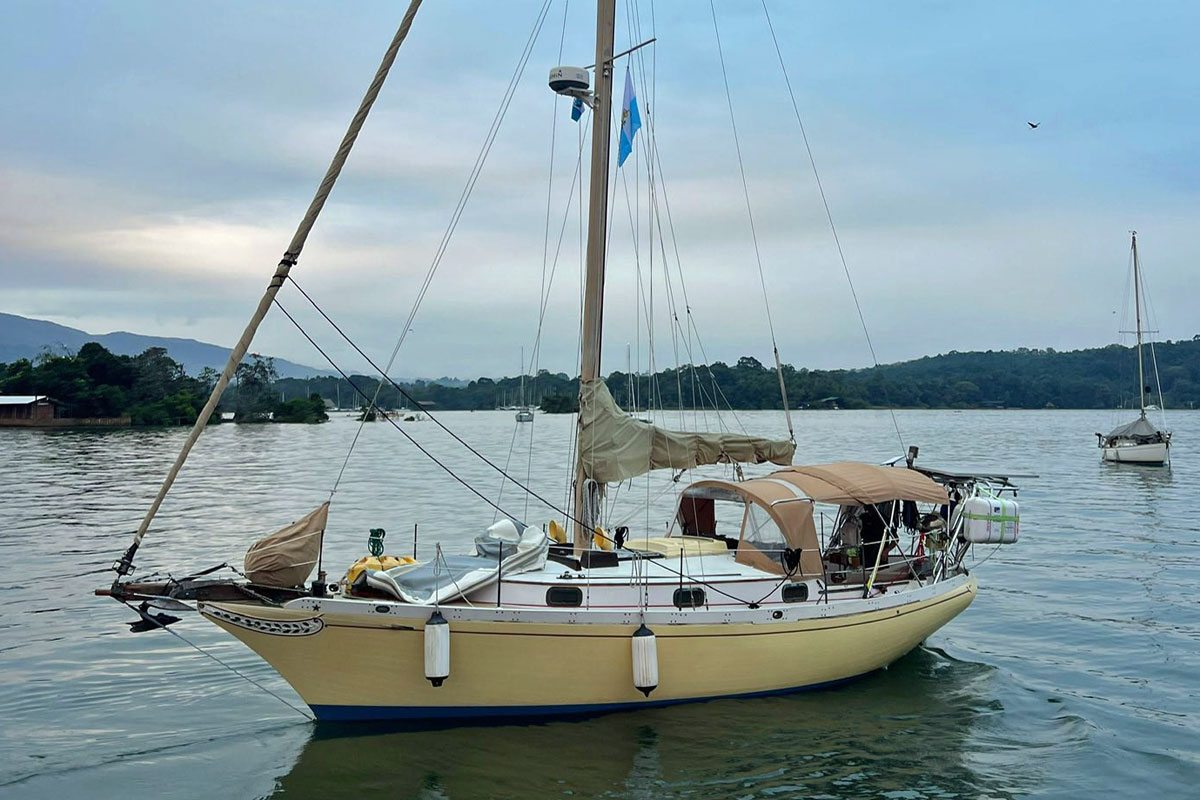
This example has been fitted with a custom-built hard dodger
The world of traditional cruising yachts is often dominated by designs that prioritise substance over style, yet the Sea Wolf 40 manages to capture both. Emerging from the thriving boat-building industry of Taiwan in the 1970s, this 40' (12.19 m) ketch has become a familiar sight in remote anchorages across the globe. It was built during an era when "heavy" was synonymous with "seaworthy," and while modern design trends have shifted toward lighter materials and flatter hulls, this vessel remains a steadfast choice for sailors who prefer the motion of a proper sea boat.
Design & Construction
The Sea Wolf 40 was designed by Bill Hardin and primarily built by Hardin Yachts in Taiwan. During the 1970s and 1980s, Taiwan was a hub for high-quality glass-reinforced plastic (GRP) construction, often finished with an abundance of heavy teak joinery that gave these boats their "Far East" charm.
Key Structural Attributes
- Hull Material: Solid, hand-laid fibreglass (GRP) providing immense impact resistance.
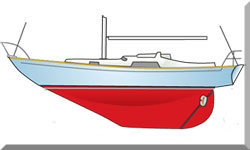
- Underbody: A traditional full keel that ensures exceptional directional stability and protects the rudder and propeller.
- Tracking: Designed to track well on a reach, significantly reducing strain on the helmsman or autopilot during ocean crossings.
Customisation & Builder Flexibility
Operating in an era of semi-custom manufacturing, Hardin Yachts frequently accommodated owner requests, meaning no two boats are identical. While the 40' (12.19 m) ketch is standard, variations include:
- Rig Options: The standard factory offering was a masthead ketch, favoured for its simplicity in coastal waters. The staysail ketch (or cutter-ketch) was a popular upgrade for offshore work, and rare sloop or cutter versions were also produced for specific owners.
- Spars: Choices between traditional wooden masts or lower-maintenance aluminium.
- Internal Layouts: Master-centric cabins with double berths or traditional V-berth arrangements.
- Tankage: Custom fuel and water capacities based on the original owner’s intended cruising range.
Identifying a factory-built staysail version involves looking for dedicated mast tangs and heavy-duty deck reinforcement for the inner stay. Because the Sea Wolf 40 is such a robust platform, many standard ketches were retrofitted with staysails by owners preparing for world voyages.
Sail Areas & Rig Dimensions
The ketch rig of the Sea Wolf 40 is designed for versatility rather than high-speed racing. By spreading the sail plan across two masts, the crew can easily balance the boat in varying wind conditions.
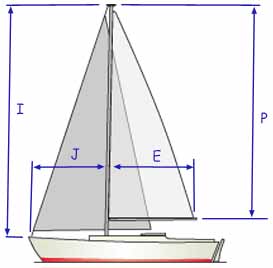 Rig dimensions
- Total Sail Area: 784 ft² (72.84 m²)
- I (Forestay Height): 43'0" (13.11 m)
- J (Foretriangle Base): 17'6" (5.33 m)
- P (Mainsail Hoist): 36'6" (11.13 m)
- E (Mainsail Foot): 13'0" (3.96 m)
Published Specification: The Sea Wolf 40 Blueprint
| Specification | Data |
|---|---|
| LOA (Length Overall) | 40'0" (12.19 m) |
| LWL (Length at Waterline) | 32'0" (9.75 m) |
| Beam | 12'0" (3.66 m) |
| Draft | 5'10" (1.78 m) |
| Displacement | 25,000 lbs (11,340 kg) |
| Ballast | 9,000 lbs (4,082 kg) |
| Rig Type | Ketch (typically) |
| Hull Material | GRP (Fibreglass) |
| Production Dates | 1970 – 1982 (approx.) |
Performance Analysis: Understanding the Design Ratios
To truly understand how the Sea Wolf 40 behaves at sea, we must look at the mathematical relationships between its dimensions. For a deeper dive into these metrics, see our guide on Understanding Boat Performance & Design Ratios.
| Ratio | Value | Interpretation |
|---|---|---|
| Sail Area/Displacement (SA/D) | 14.6 | A "motor-sailer" profile. Needs significant wind (12+ knots) to perform well. |
| Displacement/Length (D/L) | 341 | Heavy Cruiser category. Exceptional load-carrying capacity for long voyages. |
| Ballast/Displacement (B/D) | 36% | Respectable ratio for a full-keel boat, ensuring good ultimate stability. |
| Capsize Screening Formula (CSF) | 1.64 | Very safe score. Well below the 2.0 threshold for ocean-going safety. |
| Brewer Motion Comfort Ratio | 42.5 | Extremely high. Delivers a slow, predictable motion in heavy seas. |
Structural Integrity & Stability Dynamics
The use of solid GRP for the hull material is a double-edged sword. While it contributes to the 25,000 lbs (11,340 kg) displacement, it offers immense impact resistance and simplifies long-term maintenance compared to sandwich cores. This mass provides the "cadillac" ride; where a lighter boat might be tossed by a short chop, the Sea Wolf 40 punches through with momentum.
The full keel is a massive safety asset for blue-water sailors. By shielding the rudder and propeller, it reduces the risk of entanglement with lobster pots or debris. While it makes the boat slower to tack and harder to manoeuvre in tight marinas, the peace of mind offered offshore often outweighs these harbour-side inconveniences.
Configuration, Layout & Cruising Characteristics
The interior of the Sea Wolf 40 is a masterclass in traditional craftsmanship, designed for long-term living.
- Tankage: Typically generous, allowing for weeks of self-sufficiency in remote areas.
- Galley: Usually U-shaped and positioned near the companionway for security while cooking underway.
- Cockpit: Deep and well-protected, offering a "snug" feel that is highly desirable in foul weather.
- Storage: Abundant lockers throughout the vessel facilitate the stowage of spare parts and provisions without cluttering living spaces.
Impressed?
Has this article suggested that this could be your ideal cruising boat and, as a result, deserves to be on your "Worth a Look" list?
But if, like me, you find sailboats to be seductive creations, then that list could rapidly get to be a pretty long one. If that is the case, wouldn't it be good if you could narrow it down bit through an objective, pragmatic process?
Well, that's where my eBook 'How to Avoid Buying the Wrong Sailboat' comes in...
Summing Up
The Sea Wolf 40 is a specialised vessel. It is not designed to win club races or perform in light afternoon breezes. However, for the sailor whose ambitions involve crossing oceans or living aboard, it is an excellent contender. Its design ratios confirm its identity: a heavy, stable, and incredibly comfortable sea boat. While the maintenance of extensive exterior teak and ageing GRP systems requires a dedicated owner, the reward is a vessel with character and a proven track record of safety in all conditions.
If you'd like to compare this boat with others in this size range, take a look at Cruising Boats from 35' to 40' overall and from 40' to 45' overall...
This article was written by Dick McClary, RYA Yachtmaster and author of the RYA publications 'Offshore Sailing' and 'Fishing Afloat', member of The Yachting Journalists Association (YJA), and erstwhile member of the Ocean Cruising Club (OCC).
Frequently Asked Questions (FAQs)
How does the Sea Wolf 40 handle in light winds?
How does the Sea Wolf 40 handle in light winds?
Due to its high displacement and modest sail area, it is not a light-air performer. Expect to use the engine in anything under 10 knots of true wind.
Is the Sea Wolf 40 suitable for single-handed sailing?
Is the Sea Wolf 40 suitable for single-handed sailing?
The ketch rig makes sail handling easier for one person, but the boat's mass and full keel make it less nimble. A bow thruster is a common and recommended addition for solo docking.
What are the common maintenance issues with older models?
What are the common maintenance issues with older models?
Owners should inspect the condition of teak decks for leaks, check stainless steel chainplates, and monitor the original black iron fuel tanks for corrosion.
How does the Motion Comfort Ratio of 42.5 feel in practice?
How does the Motion Comfort Ratio of 42.5 feel in practice?
It translates to a "kindly" motion. The boat does not snap back at the top of a wave, which significantly reduces crew fatigue during long passages.
How can I tell if a Sea Wolf 40 has been customised?
How can I tell if a Sea Wolf 40 has been customised?
Look for variations in rig type (ketch vs cutter), spar material (wood vs aluminium), and specific interior cabinetry or tankage sizes that deviate from the standard brochure specs.
Recent Articles


-
Offshore Internet with Starlink: Hardware, Plans, and Setup Guidance
Oct 01, 26 01:15 PM
A clear, practical guide to choosing the right Starlink hardware and plan for offshore cruising. Learn what to buy, how to install it, and how to manage power afloat. -
Offshore Liferaft Guide: Choosing, Stowing and Servicing One
Oct 01, 26 06:28 AM
Choosing an offshore liferaft? Learn what ISO 9650 Group A means, where to stow it, how often to service it and what to pack in the grab bag. -
Can an Inflatable Tender Replace a Liferaft? Offshore Verdict
Sep 30, 26 03:50 PM
Can an inflatable tender replace a liferaft? Offshore sailors get the honest answer: when a tender helps, where it fails and how to plan abandon ship.