- Home
- Seamanship
- Single Handed Sailing
- Self-tacking Headsails
The Evolution of Self-Tacking Headsails
Key Takeaways: If you're looking to simplify sail handling while maintaining a robust offshore setup, self-tacking headsails are the way to go for shorthanded efficiency. While the concept of a "set and forget" tack is enticing, not all systems are created equal. The evolution of this technology has moved from the rugged, traditional club-footed spar to the modern curved track—which, despite its popularity, suffers from significant aerodynamic flaws on a reach—and finally to the high-performance Hoyt Jib Boom. This guide explores why the Hoyt involvement was a game-changer for the yachting industry, solving the inherent shortfalls of track-based systems and providing the ultimate tool for effortless, precision sail trim.
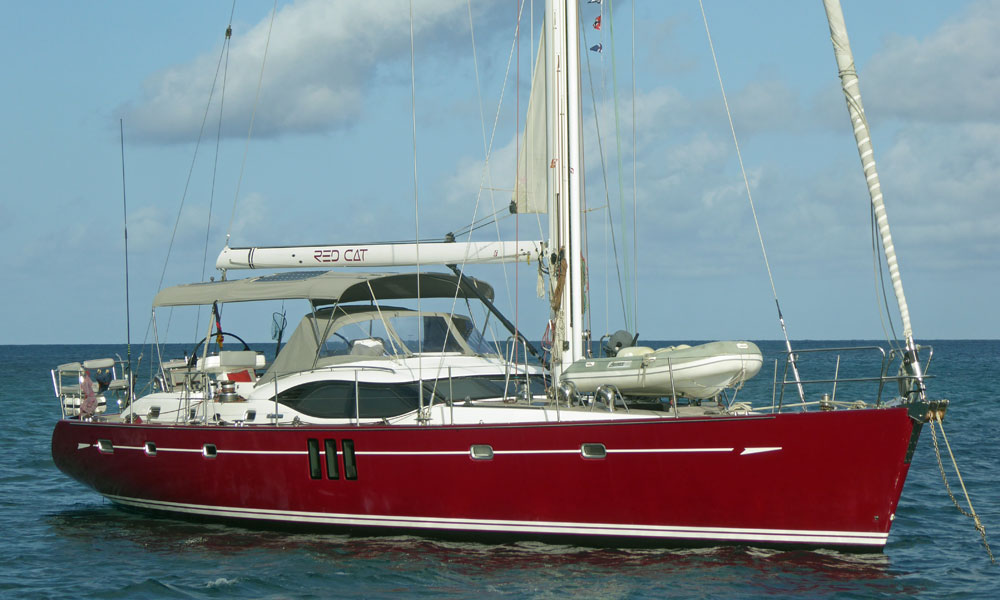
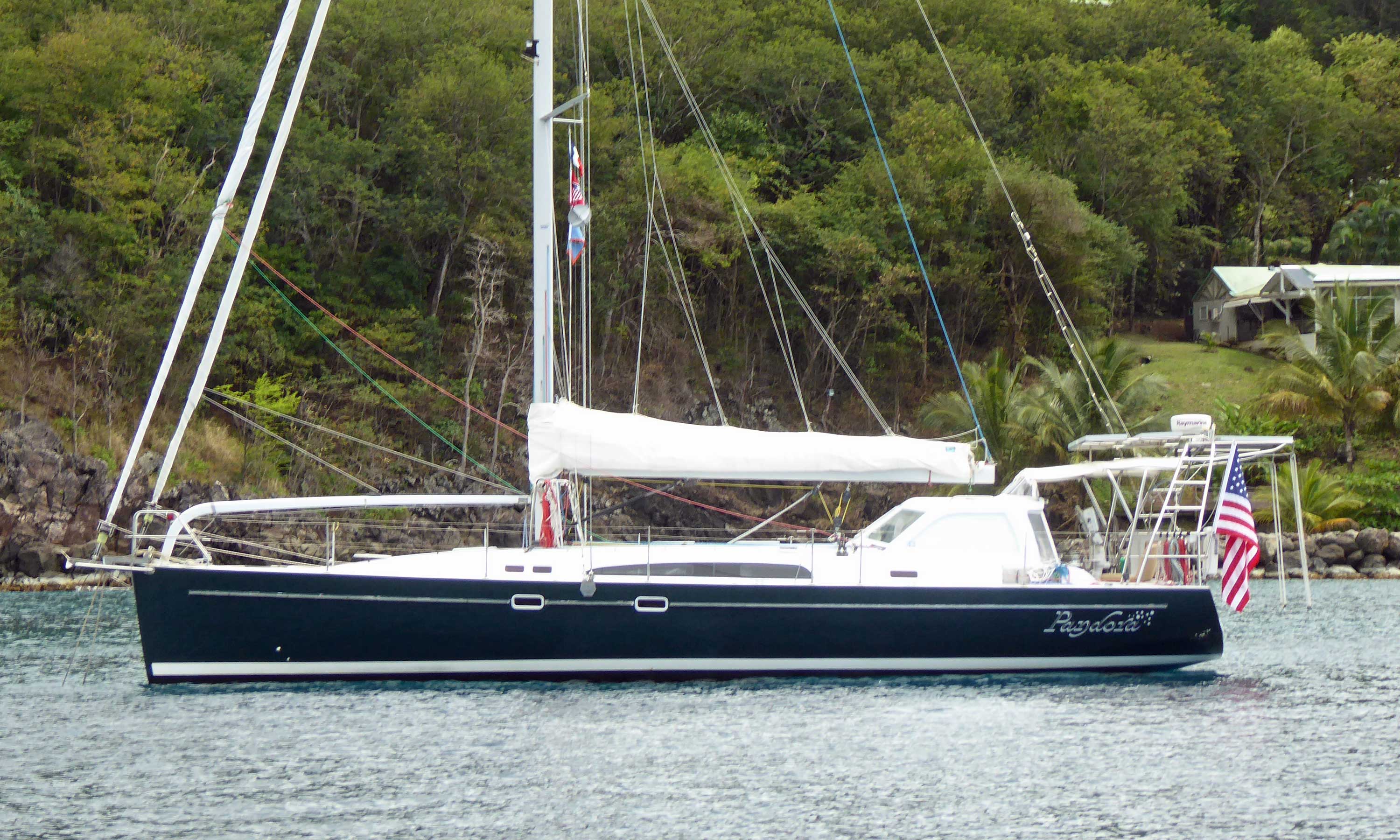 This Solent-rigged Aerodyne 47 performance cruiser sports a self-tacking Hoyt Jib Boom.
Table of Contents
- The Traditional Club-Footed Headsail: Rugged Simplicity
- The Modern Curved Track: The Boomless Compromise
- The Structural & Aerodynamic Shortfalls of the Track
- The Hoyt Jib Boom: The Engineered Solution
- Performance Comparison: Why the Hoyt Pedestal Wins
- Integration with the Blue Water Cruiser’s Sail Plan
- Summing Up
- Frequently Asked Questions
The Traditional Club-Footed Headsail: Rugged Simplicity
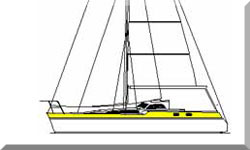
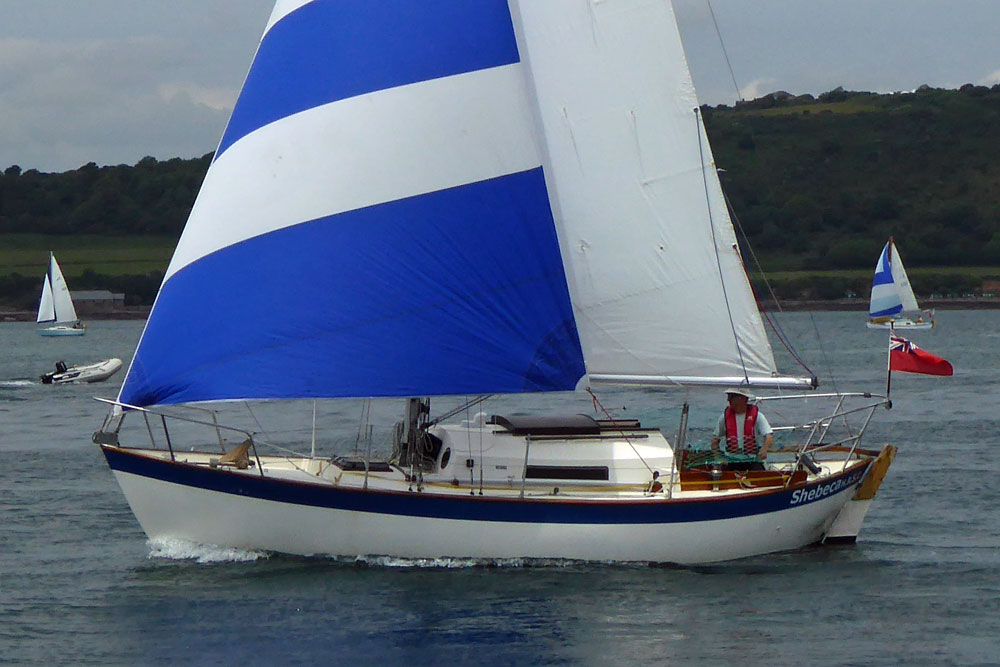
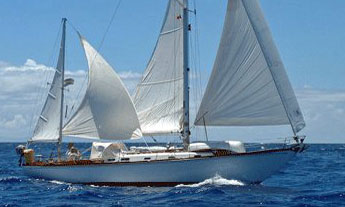
The journey of the self-tacking headsail begins with the traditional club-footed rig. Long before modern tracks were engineered, working sailors used a simple wooden or aluminium spar—the "club"—attached to the foot of a staysail.
In this configuration, the boom is typically pivoted on a simple deck fitting just aft of the forestay. The sail’s clew is lashed to the end of the boom, and a single sheet is led from the spar to a "horse" (a fixed metal bar) on the deck. When the vessel tacks, the entire assembly swings across.
The primary advantage here is that the boom acts as a permanent outhaul, keeping the foot of the sail flat. However, the traditional club has a major flaw: as the sheet is eased for a reach, the low pivot point allows the boom to rise, causing the leech to twist off and spill power. Furthermore, the low-swinging spar creates a significant safety hazard for crew working on the foredeck.
 A traditional club-footed staysail on this cutter
The Modern Curved Track: The Boomless Compromise
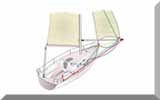
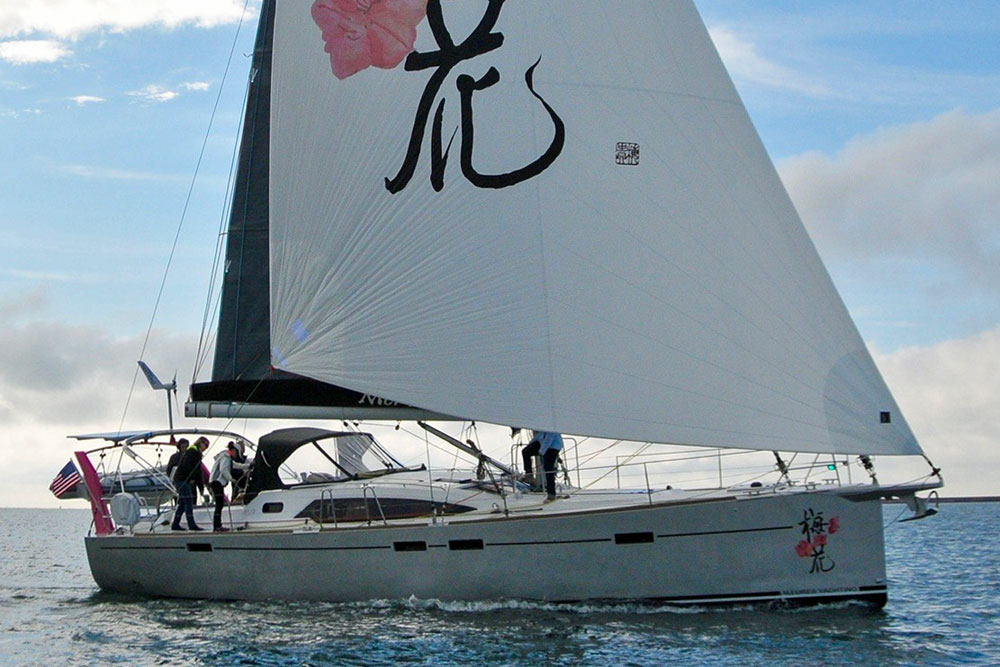
In an effort to clear the foredeck of heavy, swinging spars, modern yacht designers moved toward the curved track system. This is a "boomless" approach where the clew of a non-overlapping jib is attached to a car that slides along a radius-matched rail mounted forward of the mast.
On a close-hauled beat, the track system is excellent. It allows for narrow sheeting angles and effortless tacks with no moving parts on the deck other than the small car. It is the standard on the vast majority of production cruising yachts today because it is cost-effective to install and leaves the foredeck clear for anchor handling or picking up a mooring.
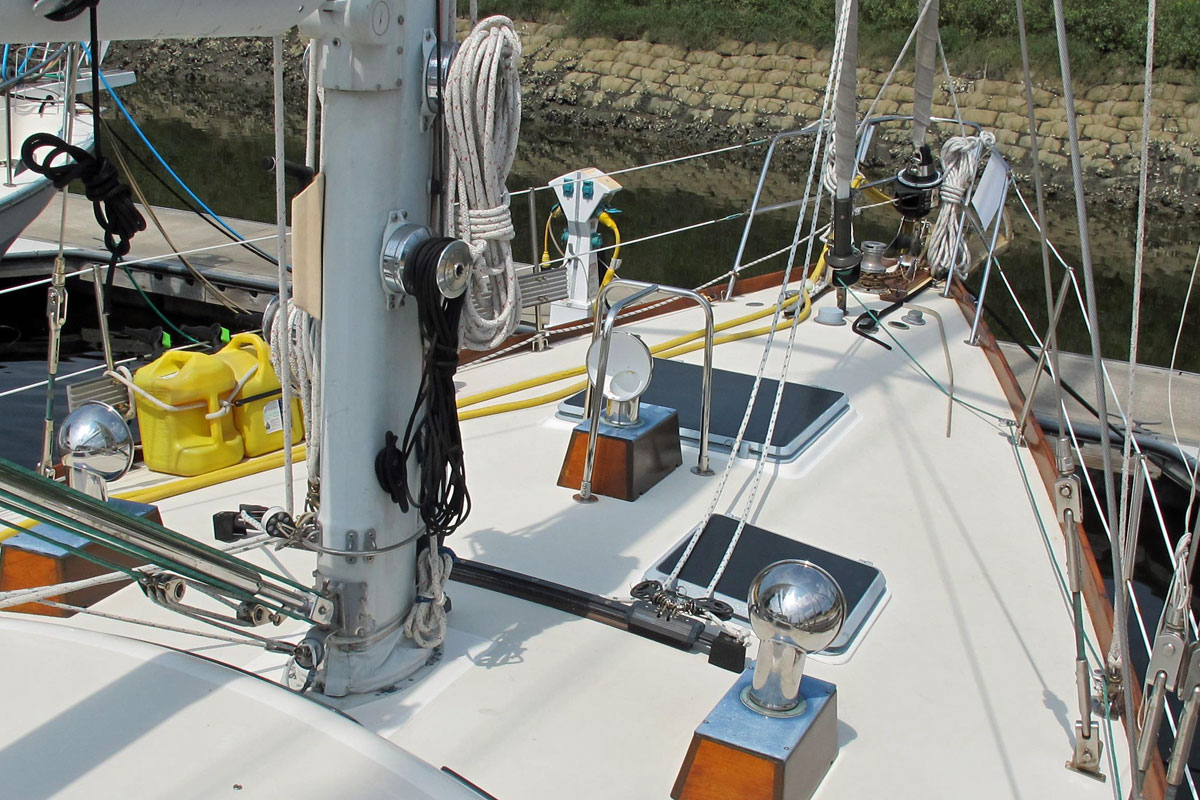 A track version for this boat's staysail
The Structural & Aerodynamic Shortfalls of the Track
Despite its popularity, the track system possesses significant shortfalls that Garry Hoyt famously set out to address. The moment you move off a beat, the track system’s geometry fails. Without a boom to provide downward "vang" pressure, easing the sheet causes the clew to move upwards and inwards. This results in an inefficient, "baggy" sail profile that loses drive exactly when you need it most.
To "fix" this, many sailors resort to rigging "tweakers" or outboard leads. This involves a secondary line led to the toe rail to pull the clew down. This arrangement is fundamentally flawed for two reasons:
- Complexity: It destroys the "self-tacking" benefit. If you must adjust a tweaker every time you tack, the system is no longer hands-free.
- Structural Integrity: Most aluminium toe rails are not designed for the massive vertical loads of a headsail sheet. Relying on them can lead to bent rails and compromised deck-to-hull seals.
The Hoyt Jib Boom: The Engineered Solution
Garry Hoyt recognized that the only way to have a truly "smart" self-tacker was to bring back the boom, but with a revolutionary change in geometry. The Hoyt Jib Boom is the definitive evolution of the club-footed concept.
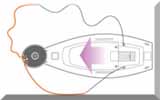
The breakthrough lies in the offset, angled pedestal. Instead of pivoting on the deck, the boom is mounted on a substantial pedestal that dictates a specific arc of travel. This geometry ensures that as the boom swings outboard for a reach, it maintains downward tension on the clew.
This creates a "self-vanging" effect. The Hoyt Jib Boom holds the sail flat and powerful across all points of sail without ever requiring a secondary line or a trip to the foredeck. It provides the aerodynamic precision of a fully crewed racing boat with the absolute simplicity of a self-tacker.
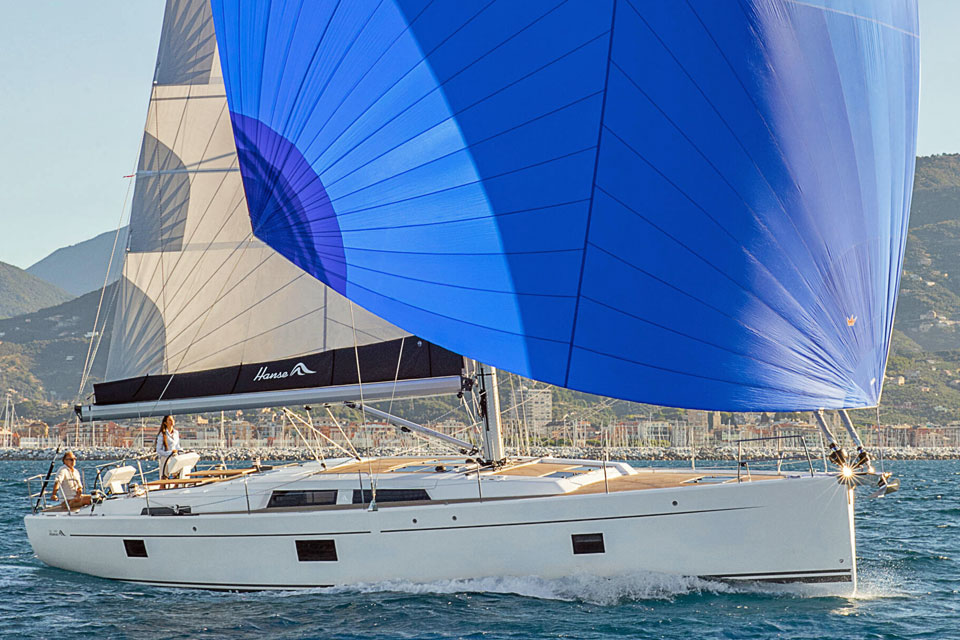
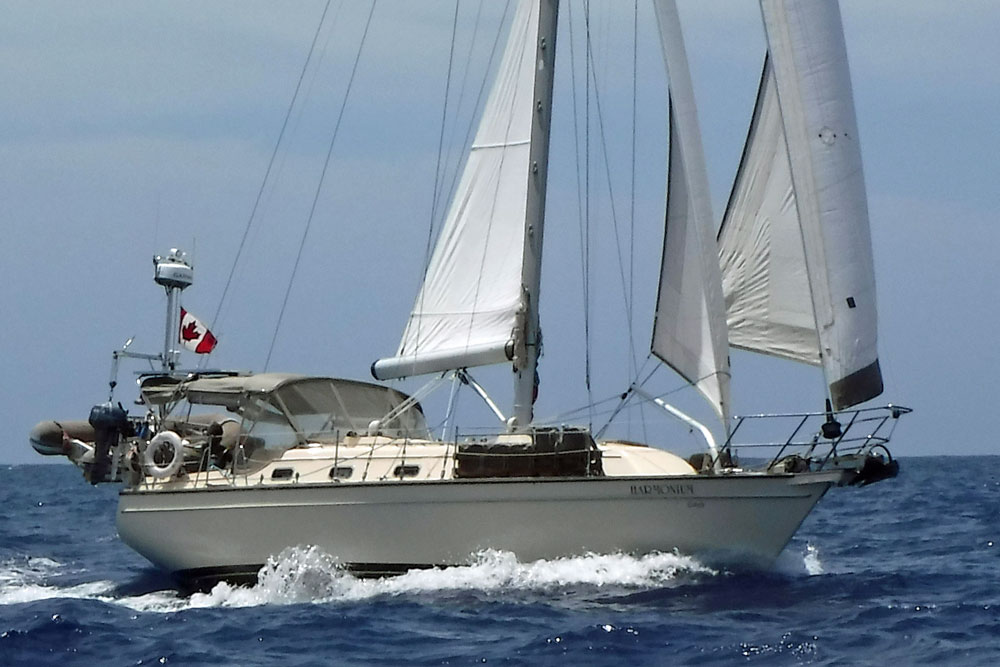 The Hoyt Jib Boom in use
Performance Comparison: Why the Hoyt Pedestal Wins
When comparing these three systems, the Hoyt Jib Boom emerges as the only setup that does not require a performance compromise.
| Feature | Traditional Club | Modern Curved Track | Hoyt Jib Boom |
|---|---|---|---|
| Self-Tacking | Yes | Yes | Yes |
| Off-Wind Control | Fair (Boom lifts) | Poor (Needs Tweakers) | Superior (Self-Vanging) |
| Hands-Free? | Yes | No (if trimming for reach) | 100% Yes |
| Deck Safety | Hazardous | Excellent | Moderate (High Spar) |
| Structural Load | On Deck/Horse | On Track/Toe Rail | On Reinforced Pedestal |
Integration with the Blue Water Cruiser’s Sail Plan
For the serious offshore navigator, the Hoyt Jib Boom is more than just a convenience; it is a critical component of a balanced sail plan. On long-distance passages, especially when sailing shorthanded, the ability to maintain high average speeds on a reach without constant sail adjustment is invaluable.
The Hoyt system is often integrated into a "Solent" rig, where the boomed staysail handles the heavy lifting in high winds while a larger reaching sail is furled ahead of it. By choosing the Hoyt boom over a compromised track system, you ensure that your vessel is balanced, your autopilot is under less strain, and your crew remains safe in the cockpit—especially so if your main boom is equipped with a GybeEasy Boom Break and a BoomKicker.
This system goes a long way towards making Single Handed Sailing a serious option.
Summing Up
The evolution of self-tacking headsails has brought us from the rugged simplicity of the traditional club to the aerodynamically superior Hoyt Jib Boom. While curved track systems are the modern "boom-less" norm, their reliance on compromised tweaker arrangements makes them less efficient for serious offshore work. Garry Hoyt’s involvement in re-engineering the boomed headsail provided a solution that manages leech tension automatically, proving that sometimes the best way forward is to refine the classics with better geometry. For the sailor who values both ease of use and precision performance, the Hoyt Jib Boom remains the superlative choice.

This article was written by Dick McClary, RYA Yachtmaster and author of the RYA publications 'Offshore Sailing', member of The Yachting Journalists Association (YJA), erstwhile member of the Ocean Cruising Club (OCC) and owner/administrator of 'Liveaboard Sailboats for Sale'.

Frequently Asked Questions
Does a Hoyt Jib Boom work with a furling sail?
Does a Hoyt Jib Boom work with a furling sail?
Yes. The sail furls around the stay as normal, and the boom remains in place. The clew furls to the end of the spar, allowing you to deploy a perfectly shaped sail at any reefing point.
Why is the Hoyt boom better than a track on a reach?
Why is the Hoyt boom better than a track on a reach?
A track system has no way to hold the clew down when the sheet is eased, causing the sail to twist. The Hoyt pedestal is angled so that it pulls the boom down as it moves outboard, acting as an automatic vang.
Is it safe to have a boom on the foredeck?
Is it safe to have a boom on the foredeck?
While any moving spar requires respect, the Hoyt boom is usually mounted on a high pedestal, keeping it further away from the deck than a traditional club-footed rig. This provides better clearance for crew and anchoring gear.
Can I retrofit a Hoyt Jib Boom to a boat with a track?
Can I retrofit a Hoyt Jib Boom to a boat with a track?
It is possible but requires significant deck reinforcement. The loads on a Hoyt pedestal are substantial, and you must ensure your deck can handle the prying forces that the spar exerts.
Why don't all cruising boats use the Hoyt system?
Why don't all cruising boats use the Hoyt system?
The primary reasons are cost and deck space. A track is cheaper for builders to install and leaves the foredeck clear, even if it requires the owner to compromise on sail performance.
Recent Articles


-
Should I Buy a Boat? Four Questions to Answer Before You Commit
Oct 02, 26 04:40 AM
Thinking "Should I buy a boat?" This guide helps you decide, with key considerations from cost & maintenance to your personal sailing aspirations. -
Offshore Internet with Starlink: Hardware, Plans, and Setup Guidance
Oct 01, 26 01:15 PM
A clear, practical guide to choosing the right Starlink hardware and plan for offshore cruising. Learn what to buy, how to install it, and how to manage power afloat. -
Offshore Liferaft Guide: Choosing, Stowing and Servicing One
Oct 01, 26 06:28 AM
Choosing an offshore liferaft? Learn what ISO 9650 Group A means, where to stow it, how often to service it and what to pack in the grab bag.