- Home
- Cruising Yachts 30' to 35'
- Beneteau First 345 Review
Beneteau First 345 Sailboat
Specs, Performance Analysis & Cruising Characteristics
Key Takeaways: The Beneteau First 345 is an 11m (around 34'7") mid‑80s cruiser‑racer from Jean Berret that blends decent pace with a genuinely usable cruising interior. It is light to moderate in displacement, with a fin keel and spade rudder, and a powerful masthead sloop rig that rewards sailors who trim actively rather than set‑and‑forget. You get good upwind performance for the era, a lively but predictable motion, and a cockpit that works for both club racing and family cruising.
The trade‑offs are typical of mid‑80s production boats: modest structural scantlings by modern offshore standards, iron ballast, limited fuel capacity, and age‑related issues such as osmosis, windows, and systems refits. In good condition it suits experienced coastal and occasional offshore sailors who value sailing feel and speed over heavy‑displacement comfort.
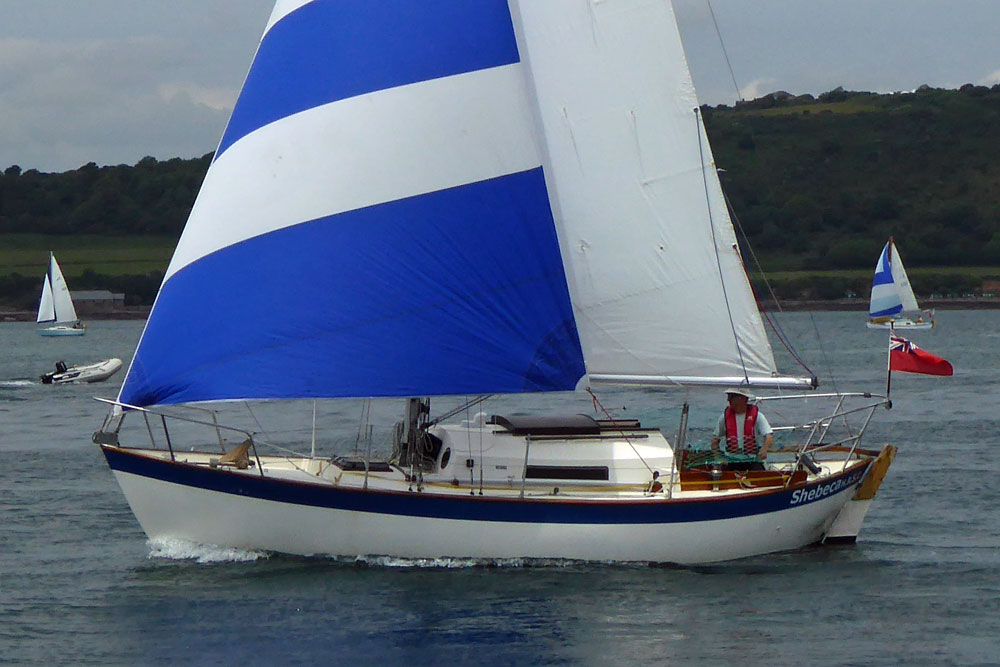
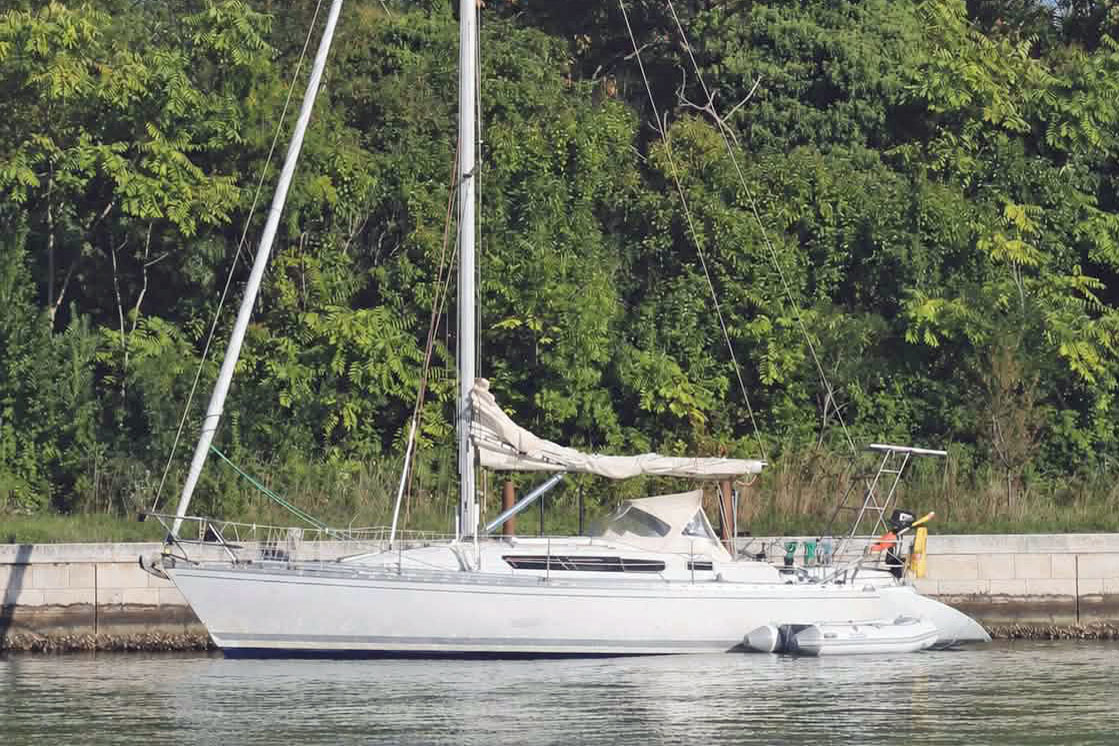 'Diva', a Beneteau First 345 sailboat
Image by kind permission of owner Lorenzo Lapini
Table of Contents
- The Beneteau First 345 at a Glance
- Design & Construction
- Published Specification: The Beneteau First 345 Blueprint
- Sail Areas & Rig Dimensions
- Performance Analysis: Understanding the Design Ratios
- How the Beneteau First 345 Sails
- Bluewater Capability: Strengths & Trade-Offs
- Configuration, Layout & Cruising Characteristics
- Who This Boat Is Best For
- The Buyer’s Checklist: Common Problem Areas
- Summing Up
- Frequently Asked Questions (FAQs)
The Beneteau First 345 at a Glance
- Type: Masthead sloop, fin keel, spade rudder performance cruiser
- Designer: Jean Berret
- Builder: Beneteau, France
- Production years: 1984–1988 (around 460 built)
- Rig: Masthead sloop, single spreaders, optional tall rig
- Best for: Fast coastal cruising, club racing, occasional offshore passages in the right hands
- Strengths: Lively performance, responsive helm, practical three‑cabin layouts, good water capacity, strong owner community
- Trade‑offs: Iron keel, moderate motion comfort, limited fuel, age‑related GRP and systems issues, some examples heavily used in charter
Design & Construction
The First 345 sits in the classic Berret First family alongside the 375 and 405, conceived as cruiser‑racers that could also work in the charter market. The hull is a fairly fine entry with moderate beam carried well aft, a fin keel with iron ballast, and a semi‑balanced spade rudder. The underwater profile is very much of its time: enough keel depth and area to stand up to a decent sail plan, but without the extreme draft or bulb shapes of later performance designs.
The hull is glass‑reinforced plastic with internal structural members moulded in and bonded to the hull. Decks are GRP with local core in way of flat panels on most boats of this era, though individual build sheets should be checked if you want absolute confirmation. The keel is an iron fin bolted to a GRP stub; keel bolts and the surrounding matrix deserve careful inspection on any mid‑80s Beneteau, particularly if the boat has grounded or lived on a drying mooring.
Cabin windows are typically framed acrylic units set into the coachroof moulding rather than through‑bolted portlights with heavy cast frames. Many brokerage listings mention replacement saloon windows, which tells you that crazing, leaks and seal failure are now common age‑related jobs.
Chainplates are taken to internal structure rather than being simply bolted through the deck edge, but the exact detail varies and is not well documented in public sources. On survey you want to see how the chainplates are attached to the hull or grid, and check for any signs of movement, crevice corrosion or moisture staining around the attachment points.
Keel, rudder & variants
- Keel: Standard deep fin around 6'2" (1.9 m) draft, with an optional shoal version around 4'9" (1.45 m). Both use iron ballast.
- Rudder: Spade rudder on a stock supported by bearings within the hull; age‑related play in bearings and moisture ingress into the blade are both worth checking.
Layout variants
The First 345 was offered with:
- Two aft cabins, forward heads: Aft cabins port and starboard, smaller forecabin, heads amidships.
- Single aft cabin, aft heads: One larger aft cabin and a more generous forward cabin, with the heads aft.
Both share a saloon with opposing settees and a central table, an L‑shaped galley by the companionway, and a proper forward‑facing chart table.
Published Specification: The Beneteau First 345 Blueprint
| Specification | Value |
|---|---|
| LOA | 34'8" (10.55 m) |
| LWL | 29'2" (8.90 m) |
| Beam | 11'6" (3.50 m) |
| Draft (deep) | 6'2" (1.90 m) |
| Draft (shoal) | 4'9" (1.45 m) |
| Displacement | 12,125 lb (5,500 kg) |
| Ballast | 4,409 lb (2,000 kg) iron |
| Rig type | Masthead sloop (optional tall rig) |
| Hull material | GRP (fibreglass) |
| Engine (original) | Volvo Penta 2003 diesel, 22 gal (83 L) fuel |
| Water capacity | 106 gal (401 L) |
| Production dates | 1984–1988, approx. 460 built |
Sail Areas & Rig Dimensions
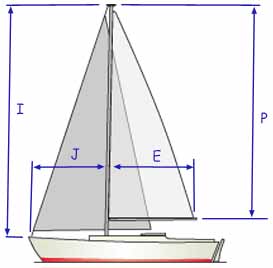 Rig dimensions
From the standard rig:
- I: 44'0" (13.41m)
- J: 12'11" (3.93m)
- P: 37'9" (11.52m)
- E: 12'1" (3.69m)
Sail areas (standard rig, typical inventory):
- Mainsail: 24m² (approx. 258ft2)
- Genoa (150%): 40m² (approx. 431ft2)
- Working jib: 23m² (approx. 248ft2)
- Storm jib: 7.65m² (approx. 82ft2)
- Spinnaker: 89.15m² (approx. 960ft2)
Tall‑rig versions carry slightly longer I, P and E, with a modest bump in total area, which helps in lighter airs but increases the need to reef early.
Performance Analysis: Understanding the Design Ratios
Using the widely published displacement, sail area and dimensions, the key ratios come out as follows (standard rig, deep keel):
| Ratio | Value | What it means |
|---|---|---|
| SA/D (reported full inventory) | ≈ 21 | Plenty of power for a 34‑footer; rewarding to sail, especially in lighter airs. |
| SA/D (100% foretriangle) | ≈ 15.6 | On the lively side of moderate when using only working sails. |
| D/L | ≈ 217 | Moderate displacement; not an ultralight, but clearly performance‑oriented. |
| B/D | ≈ 36% | Reasonable stiffness for a fin‑keel cruiser‑racer of this era. |
| Capsize Screening (CSF) | ≈ 2.0 | Right on the usual offshore/coastal threshold; demands sensible loading and seamanship. |
| Brewer Comfort Ratio | ≈ 23 | Typical of a coastal cruiser; motion is livelier than heavier bluewater designs. |
In practical terms, the First 345 is no plodding caravan. It accelerates readily, rewards trimming, and will keep up with or outpace many modern “cruiser” designs of similar length. The flip side is that it does not have the slow, heavy, corkscrew‑damping motion of a true long‑distance heavy‑displacement boat.
For more on this topic, you might want to take a look at Understanding Boat Performance & Design Ratios...
How the Beneteau First 345 Sails
Upwind, the First 345 has a reputation for being quick and fairly close‑winded when sailed flat. Owners and testers describe a responsive helm and good pace, with the caveat that the boat can load up on the helm if pressed too hard with too much sail in a breeze. Reefing the main early and keeping the boat on its feet transforms the feel, turning weather helm into a light, positive grip.
Downwind and reaching, the generous foretriangle and spinnaker area give plenty of horsepower. In moderate seas the boat will surf modestly without feeling skittish, provided the rudder bearings and steering linkages are in good order. The relatively fine bow and moderate beam mean it does not have the “on rails” form stability of a very beamy modern hull, but it also avoids the snappy roll that some wide‑stern designs can develop.
Short‑handed, the cockpit layout works well. Primary winches are within reach of the helm, and the mainsheet is accessible without gymnastics. Many boats have been set up for family cruising rather than full‑on racing, with furling headsails and slab‑reefed mains. With sensible sail choices and modern reefing systems, a competent couple can handle the boat comfortably on coastal passages.
The motion is on the lively side of comfortable. In a short, steep chop you will feel the boat’s relatively light displacement, but it is not a bone‑shaker. In longer ocean swells, the moderate D/L and decent ballast ratio give a predictable, if active, ride.
Bluewater Capability: Strengths & Trade-Offs
The First 345 has a solid offshore track record in the hands of experienced crews. Yachting Monthly highlighted a 345 that cruised extensively to the Caribbean, Newfoundland, Greenland, Iceland and Norway, and owner reports on YBW echo the view that these Berret Firsts are capable sea boats when well prepared.
Strengths for offshore use:
- Decent ballast ratio and moderate D/L: Enough stiffness to carry sail without feeling flighty.
- Good water capacity: Around 106 gal (401 L) is generous for a 34‑footer, giving real autonomy.
- Functional deck layout: Clear side decks, workable cockpit, and sensible control line runs.
Trade‑offs and limitations:
- Capsize and comfort numbers: A CSF around 2.0 and comfort ratio in the low‑20s put it in the “coastal to moderate offshore” band rather than purpose‑built bluewater territory.
- Iron keel: More maintenance than lead, and keel‑to‑hull interface needs careful inspection.
- Tankage balance: Fuel at around 22 gal (83 L) is marginal for long motoring legs; many serious cruisers add flexible tanks or jerrycan storage.
- Age and usage: A number of boats saw charter service; structure and systems must be judged on individual condition, not brochure promises.
For Biscay crossings, Atlantic loops or similar, a well‑surveyed and sensibly upgraded First 345 can be a realistic option for an experienced skipper who accepts that it is a performance‑leaning platform, not a heavy‑weather specialist.
Configuration, Layout & Cruising Characteristics
On deck, the cockpit is deep enough to feel secure without being a bath. Coamings are comfortable to sit on, and there is space for a wheel or tiller depending on the specific boat. Locker volume is adequate rather than huge; long‑term liveaboards will need to be disciplined with gear.
Below, the three‑cabin layouts make very good use of the 34‑foot hull. The saloon feels open, with long settees that double as sea berths and a central table. The L‑shaped galley by the companionway works well at sea, with bracing points and a gimballed cooker. Stowage is more open than enclosed by modern standards, reflecting the charter and racer‑cruiser brief, but there is enough space for a couple or small family to cruise comfortably.
The forward cabin is adequate for two, though not palatial. In the twin‑aft‑cabin version, both aft cabins offer decent doubles with hanging lockers, making the boat attractive for two‑couple cruising or for families with older children. Headroom is around 6'0"–6'1" (about 1.85 m) in the saloon.
As a liveaboard, the First 345 can work for a couple who value sailing performance and are happy to manage stowage carefully. The generous water capacity helps, but limited fuel and refrigeration volume, plus the need to retrofit modern charging and heating, are all factors to budget for.
Who This Boat Is Best For
Good fit for:
- Experienced coastal cruisers who enjoy sailing performance and want a boat that feels lively rather than sedate.
- Club racers looking for a dual‑purpose boat that can still be competitive in mixed fleets with a modern sail wardrobe.
- Cruising couples or families who want three cabins in a 34‑foot hull and are comfortable with a bit of motion at sea.
Less ideal for:
- Sailors seeking a heavy, slow‑motion bluewater platform with very high comfort ratios.
- Owners who want minimal maintenance; by now every First 345 is an older boat that will need ongoing structural and systems care.
- Very inexperienced skippers planning ambitious offshore passages; the design rewards good sail handling and judgement.
The Buyer’s Checklist: Common Problem Areas
For a buyer, the First 345 is all about finding a structurally sound hull and deck, then budgeting realistically for refits. Key areas to inspect:
- Osmosis and hull condition: Mid‑80s Beneteaus are known for osmosis in some cases. Look for blistering, previous peel and epoxy treatments, and moisture readings.
- Keel bolts and keel‑to‑hull joint: Check for rust staining, cracking around the keel stub, and any evidence of grounding repairs.
- Rudder and bearings: Play in the rudder, moisture in the blade, and any signs of delamination or weeping at the stock.
- Deck core and hardware: Pay attention around chainplates, stanchion bases, winches and the mast step for signs of core compression or moisture.
- Windows and hatches: Many boats have had saloon windows and forehatches replaced; if not, expect crazing, leaks and perished seals.
- Rig and chainplates: Standing rigging older than ten years should be treated as due for replacement. Inspect chainplate attachments and surrounding structure carefully.
- Engine and fuel system: Original Volvo 2003 engines are now old; many boats have repowered with Beta or similar. Check mounts, exhaust, fuel tank corrosion and access.
- Interior headlinings and joinery: Sagging headlinings, tired veneers and worn upholstery are common but cosmetic; they can be used as negotiation points.
Typical refit spends for a tired but fundamentally sound example might include:
- Standing rigging and associated hardware
- New sails (main and genoa)
- Keel and rudder work as needed
- Electronics upgrade
- Heating, charging and lighting modernisation
On a UK‑based boat, it is easy to spend £15,000–£30,000 over a few years bringing a cheap example up to a very solid standard, so price accordingly.
Could this be your ideal cruising boat?
It may well be, but before going any further, it might be worth taking a look at my eBook 'How to Avoid Buying the Wrong Sailboat'...
Summing Up
The Beneteau First 345 is a classic mid‑80s cruiser‑racer that still makes sense today for sailors who enjoy actually sailing their boat. The design ratios tell you most of what you need to know: moderate displacement, decent ballast, plenty of sail area, and comfort numbers that sit squarely in the coastal to moderate offshore band. In practice that translates into a boat that is quick, responsive and engaging, with enough tankage and interior volume to cruise properly, but without the heavy, slow‑motion feel of a dedicated bluewater heavyweight.
As a buyer, the real story is condition. A well‑kept First 345 with sound structure, a dry hull, good keel and rudder, modern rigging and a sensible systems refit can be a very satisfying, good‑value boat for coastal and occasional offshore work. A neglected example with osmosis, keel issues and tired systems can become an expensive project. Go in with eyes open, a good surveyor, and a realistic refit budget, and the First 345 can still deliver a lot of sailing for the money.
This article was written by Dick McClary, RYA Yachtmaster and author of the RYA publications 'Offshore Sailing' and 'Fishing Afloat', member of The Yachting Journalists Association (YJA), and erstwhile member of the Ocean Cruising Club (OCC).
Frequently Asked Questions (FAQs)
1. Is the Beneteau First 345 suitable for ocean crossings?
1. Is the Beneteau First 345 suitable for ocean crossings?
Yes, in the hands of an experienced skipper and with appropriate preparation. The design has a CSF around 2.0 and a comfort ratio in the low‑20s, so it is not a heavy‑weather specialist, but there are documented examples of extensive high‑latitude and Atlantic cruising. Treat it as a performance‑leaning cruiser that needs careful loading, good sail choices and robust systems.
2. How does the First 345 compare to heavier bluewater cruisers of similar length?
2. How does the First 345 compare to heavier bluewater cruisers of similar length?
Compared with a heavy long‑keel 34‑footer, the First 345 will be faster, more responsive and more rewarding to sail in light to moderate conditions, but will have a livelier motion and less ultimate comfort in big seas. It suits sailors who prioritise sailing enjoyment and passage times over maximum motion damping.
3. Are the shoal‑draft versions a compromise worth making?
3. Are the shoal‑draft versions a compromise worth making?
The shoal‑draft keel (around 4'9"/1.45 m) inevitably gives up some pointing ability and stiffness compared with the deep fin, but for cruising in shallow areas it can be a sensible trade. If you are primarily racing or sailing in open water, the deep keel is the better choice; for creek crawling and drying harbours, the shoal version is attractive.
4. What are the most important refits to prioritise on a newly purchased First 345?
4. What are the most important refits to prioritise on a newly purchased First 345?
Assuming the hull and keel are structurally sound, the big three are usually: standing rigging (and often chainplates), sails, and engine/fuel system reliability. After that, attention typically turns to windows and hatches, electrics and electronics, and comfort upgrades such as heating and better refrigeration.
5. How does the First 345 stack up against similar boats like the Sigma 362 or Westerly Storm?
5. How does the First 345 stack up against similar boats like the Sigma 362 or Westerly Storm?
The First 345 is broadly comparable in pace to a Sigma 362, with a slightly more cruising‑oriented interior and iron rather than lead ballast. Compared with a Westerly Storm, it is generally lighter, quicker and a bit more performance‑biased, while the Westerly feels more heavily built and slightly more traditional inside. Choice comes down to whether you lean more towards performance or perceived ruggedness.
Recent Articles


-
Should I Buy a Boat? Four Questions to Answer Before You Commit
Oct 02, 26 04:40 AM
Thinking "Should I buy a boat?" This guide helps you decide, with key considerations from cost & maintenance to your personal sailing aspirations. -
Offshore Internet with Starlink: Hardware, Plans, and Setup Guidance
Oct 01, 26 01:15 PM
A clear, practical guide to choosing the right Starlink hardware and plan for offshore cruising. Learn what to buy, how to install it, and how to manage power afloat. -
Offshore Liferaft Guide: Choosing, Stowing and Servicing One
Oct 01, 26 06:28 AM
Choosing an offshore liferaft? Learn what ISO 9650 Group A means, where to stow it, how often to service it and what to pack in the grab bag.