- Home
- Cruising Yachts 35' to 40'
- Tayana 37
- Canoe Stern Sailboats
The Merits & Compromises of Canoe Sterns
Seaworthiness vs Functionality
Key Takeaways: Choosing between canoe stern sailboats and modern wide-transom designs often feels like a battle between romanticism and reality. For the offshore sailor, the double-ender offers unparalleled peace of mind in a following sea, as the symmetrical hull shape parts the waves rather than being shoved by them. However, this classic silhouette comes with a significant trade-off in cockpit volume, lazarette storage, and the ease of boarding from a dinghy or a pontoon. While the aesthetic is timeless, the modern voyager must decide if the safety margins in extreme weather outweigh the daily convenience of a sugar-scoop stern.
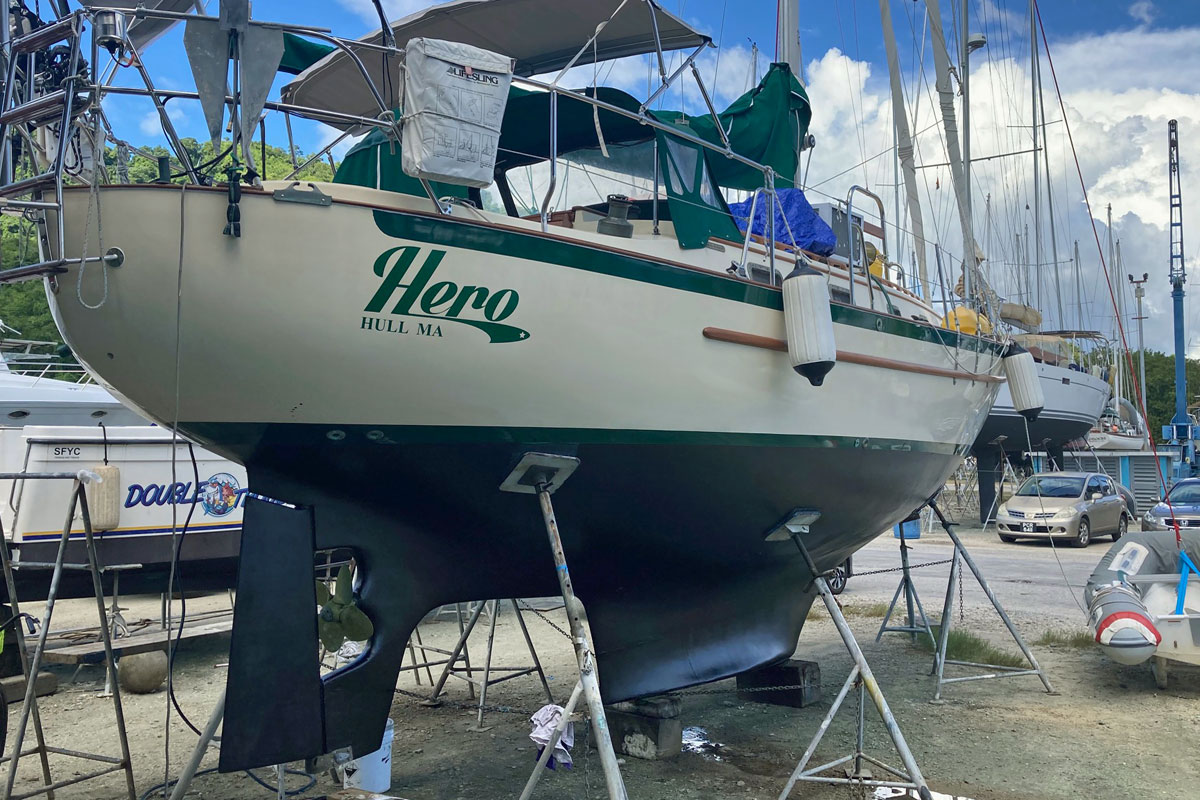
Table of Contents
Canoe Sterns & the Double-Ender Tradition
The allure of the double-ender is rooted deeply in maritime history, drawing inspiration from Viking longships and the whaleboats of the nineteenth century. Designers like Colin Archer and William Atkin championed the form, arguing that a boat with two "ends" was more naturally buoyant and balanced. In the golden age of offshore cruising, the canoe stern became the hallmark of a "proper" yacht, symbolising a vessel built to endure the Southern Ocean rather than a weekend jaunt to a local marina.
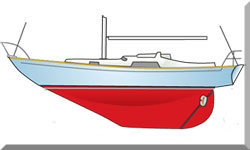
The technical definition of a canoe stern involves the hull planks or plating meeting at a point or a very narrow round, mirrored by the bow’s entry. This symmetry ensures that as the boat heels, the immersed volume remains balanced, reducing the tendency to "broach" or veer wildly off course when a large wave catches the quarter.
Hydrodynamics in Following Seas
The primary functional benefit of a canoe stern is its behaviour in a following sea. In heavy weather, a wide, flat transom acts like a large sail area for a breaking wave to hit. This can result in the stern being lifted and pushed forward, often slewing the boat sideways into the trough.
Conversely, a double-ender allows the water to split and pass around the hull. The buoyancy is distributed more centrally, meaning the boat rises and falls with a more predictable motion. However, this tapered shape comes with a caveat: at higher speeds, the water tends to "cling" to the hull rather than releasing cleanly, which can increase drag and limit the vessel to its theoretical hull speed.
Comparing Stern Designs: A Technical Overview
Canoe stern sailboats, also known as double-enders, have both advantages and disadvantages. Many cruising sailors are staunch devotees; others not so much. The following comparison highlights the trade-offs between traditional safety and modern convenience.
| Feature & Characteristic | Canoe Stern (Double-Ender) | Modern Transom Stern |
|---|---|---|
| Seaworthiness & Motion | Excellent in following seas; splits waves & reduces broaching risk. | Prone to being "pushed" or lifted by large following waves. |
| Interior Volume | Tapered aft section significantly reduces cabin & locker space. | Maximum beam carried aft allows for large cabins & garages. |
| Cockpit Ergonomics | Usually smaller, deeper, & more protected but cramped for guests. | Wide, open, & ideal for socialising & easy movement. |
| Hull Speed & Drag | Higher drag at top speeds; water "clings" to the stern. | Cleaner water release; better for surfing & high-speed reaching. |
| Boarding & Access | Difficult to board from a tender; requires complex ladders. | Often features "sugar-scoop" steps or a fold-down platform. |
| Equipment Mounting | Challenging to fit wide solar arches or davits. | Ample width for mounting arches, tenders, & antennas. |
The Seaworthiness Argument: Fact or Maritime Lore?
While the seaworthiness of the canoe stern is often cited as gospel, modern naval architecture has introduced some nuance to the debate. Critics argue that while a double-ender is excellent at parting waves, it lacks the initial stability provided by a wider beam carried aft.
A boat with a narrow stern may "hobby-horse" more in certain conditions, and because it lacks the "bearing" (buoyancy) of a flat transom, it might sink deeper into its own wake when under power. Furthermore, if a canoe stern is not designed with adequate drainage and large scuppers, it can still be vulnerable to "pooping" (waves breaking into the cockpit) because the narrow stern lacks the volume to lift quickly enough when a wave approaches from astern.
The Practical Cost: Storage & Deck Space
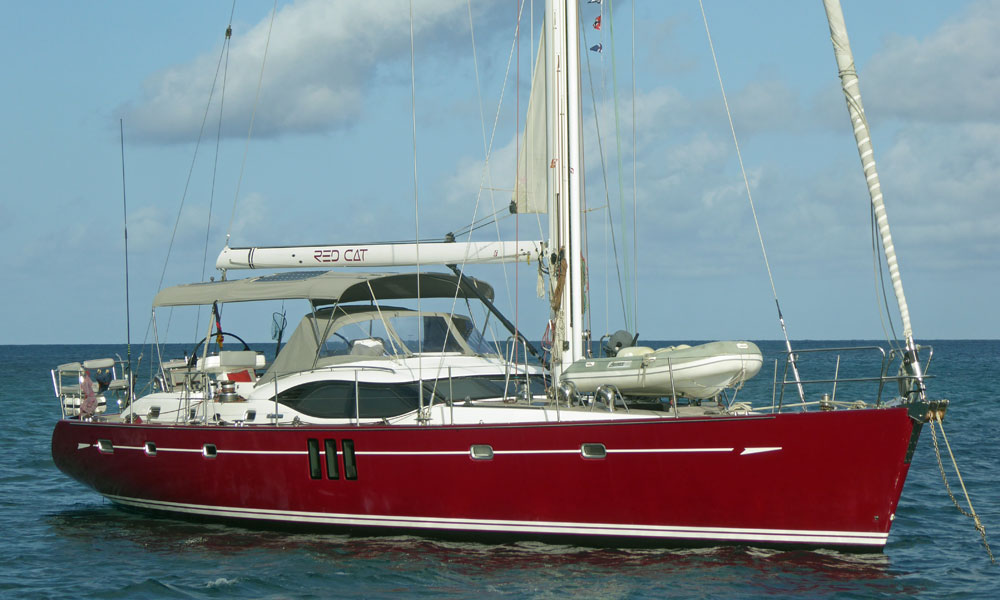
The most immediate drawback of the canoe stern is the loss of "real estate." In a modern 40-foot yacht with a wide transom, the aft section often houses two double cabins, a massive lazarette, and a spacious cockpit. In a 40-foot double-ender, that space simply does not exist.
The hull tapers to a point, meaning the cockpit is usually pushed forward towards the mast, and the storage lockers are cramped and awkward to access. You will struggle to find a place for a rolled-up inflatable dinghy, outboard engines, or bulky fenders. For the long-term cruiser, this requires a disciplined approach to minimalism that many find difficult to maintain in the modern age of equipment-heavy sailing.
Boarding Access & Stern Arch Challenges
In the 1970s, sailors were happy to scramble over a lifeline to get ashore. Today, we expect "sugar-scoop" platforms and walk-through transoms. A canoe stern is notoriously difficult to board from the water or a tender. Without a custom-built stainless steel ladder that follows the curve of the hull, getting back on board after a swim can be a gymnastic feat.
Furthermore, fitting a modern stern arch for solar panels and wind generators is a geometric nightmare. While a flat transom provides a wide base for these structures, a canoe stern requires complex, narrow-based mounts that can look cluttered and interfere with the self-steering gear.
Summing Up
The canoe stern remains one of the most beautiful and seaworthy designs ever conceived for the open ocean. It offers a level of protection in following seas that a wide-transom boat can rarely match. Yet, the price of that safety is paid daily in the form of reduced storage, cramped cockpits, and difficult boarding access. For the traditionalist who prioritises the journey through the storm, the double-ender is the ultimate choice. For the cruiser who spends most of their time at anchor or in a marina, the modern transom is likely the more rational companion.

This article was written by Dick McClary, RYA Yachtmaster and author of the RYA publications 'Offshore Sailing' and 'Fishing Afloat', member of The Yachting Journalists Association (YJA), erstwhile member of the Ocean Cruising Club (OCC) and owner/administrator of 'Liveaboard Sailboats for Sale'.

Frequently Asked Questions
Are canoe stern boats slower than transom stern boats?
Are canoe stern boats slower than transom stern boats?
Generally, yes. Because they lack the flat surface aft to promote planing or semi-planing, they are restricted to their theoretical hull speed. They also tend to have more "drag" at higher speeds as the stern sinks into the water rather than allowing it to release.
Can I fit a windvane to a canoe stern?
Can I fit a windvane to a canoe stern?
Yes, and many of the best windvanes, such as the Aries or Monitor, have specific mounting brackets for double-enders. However, the installation is often more complex due to the lack of a flat mounting surface and the need to clear the rudder post.
Do canoe sterns have less interior room?
Do canoe sterns have less interior room?
Significantly less. The tapering hull prevents the installation of the large "aft cabins" found in modern production boats, usually resulting in a single "pilot berth" or storage area in the stern.
Is a double-ender safer in a storm?
Is a double-ender safer in a storm?
In a survival situation with large breaking waves from behind, the double-ender is widely considered safer because it is less likely to be broached or "shoved" by the sea. However, modern designs with high-volume transoms provide more initial stability.
Why are few modern boats built with canoe sterns?
Why are few modern boats built with canoe sterns?
Modern buyers prioritise interior volume, cockpit space, and easy boarding. Manufacturing a curved stern is also more expensive and labour-intensive than a flat transom, making it less viable for mass-market production.
Recent Articles


-
Mystery 35 Review: Specs, Performance & Buying Guide
Aug 29, 26 09:42 AM
An in-depth review of the Mystery 35 sailboat. Read technical specs, design ratios, sail performance, and common buyer inspection areas. -
Beneteau First 405 Review: Specs, Performance & Buyer’s Guide
Aug 26, 26 03:58 AM
Detailed Beneteau First 405 review covering specs, performance, bluewater capability, layouts and buyer’s checklist. -
Moody S38 Review: Specs, Ratios & Buyer’s Guide
Aug 12, 26 04:22 AM
In‑depth Moody S38 review covering specs, performance, design ratios, layout, strengths, trade‑offs & buyer inspection points.