- Home
- Cruising Yachts 35' to 40'
- Pacific Seacraft 37
The Pacific Seacraft 37 Sailboat
Specs, Performance Analysis & Cruising Characteristics
Key Takeaways
The Crealock 37 is a heavy-displacement, cutter-rigged cruiser designed for ultimate safety and long-distance comfort rather than outright speed. Its defining features include a hand-laid solid fibreglass hull, a protected skeg-hung rudder, and a canoe stern that excels in following seas. While it is not a light-air performer, its high comfort ratio and impressive stability make it an ideal choice for short-handed crews looking to cross oceans with minimal fatigue.
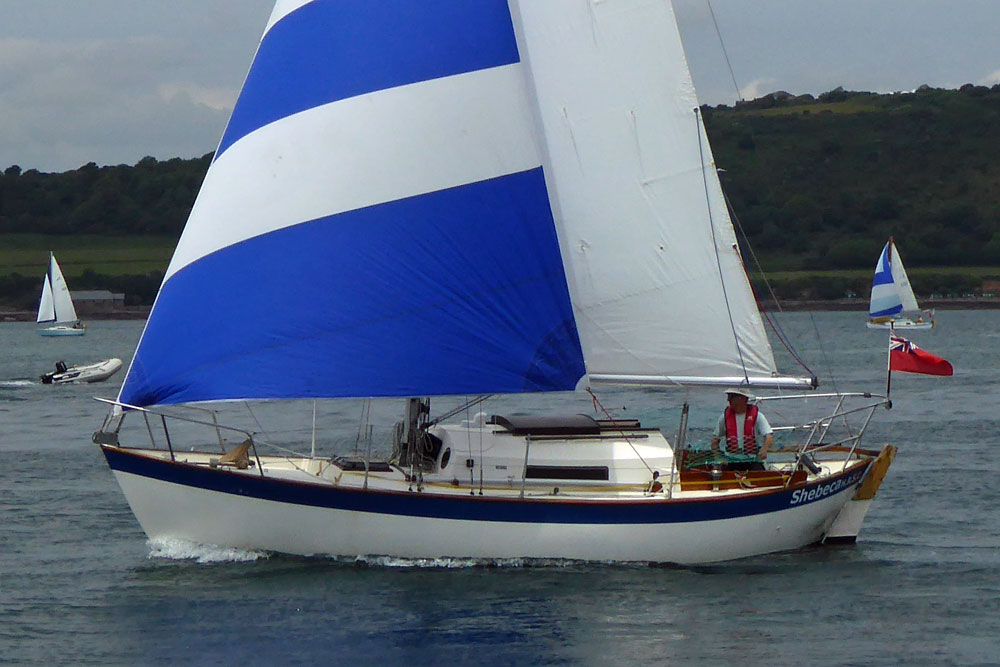
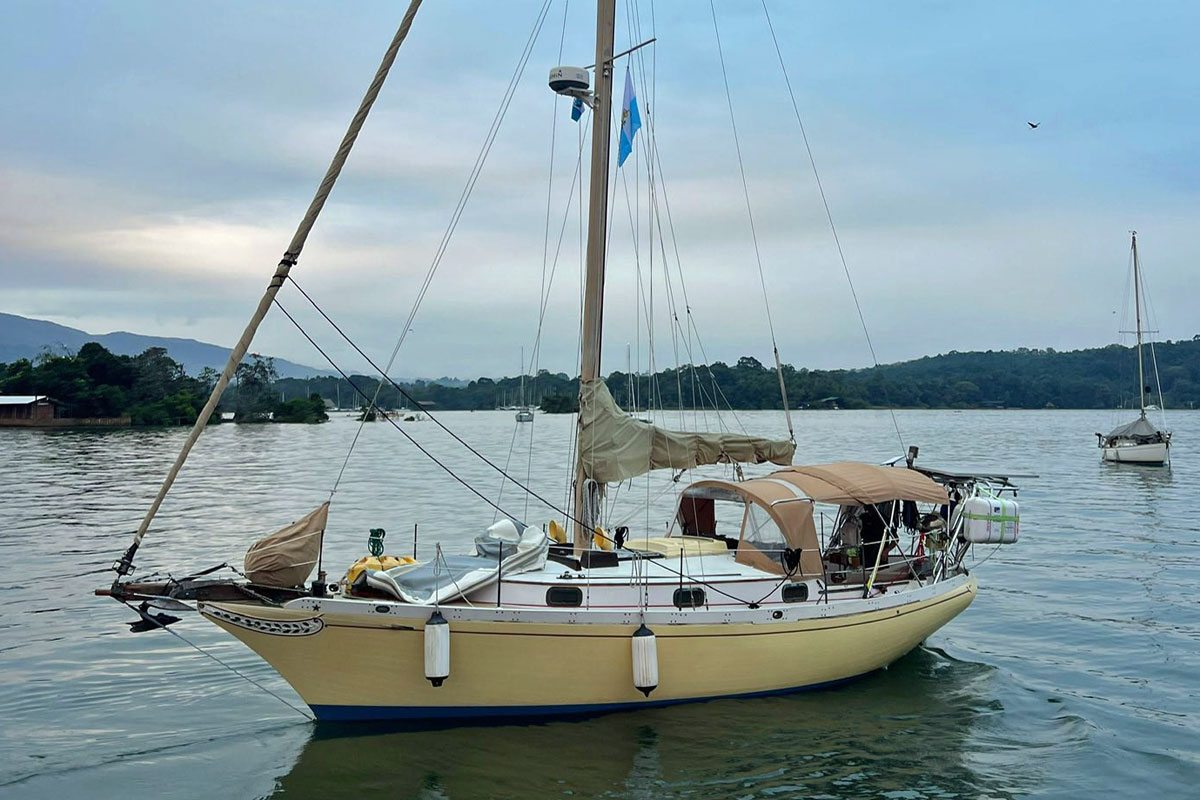
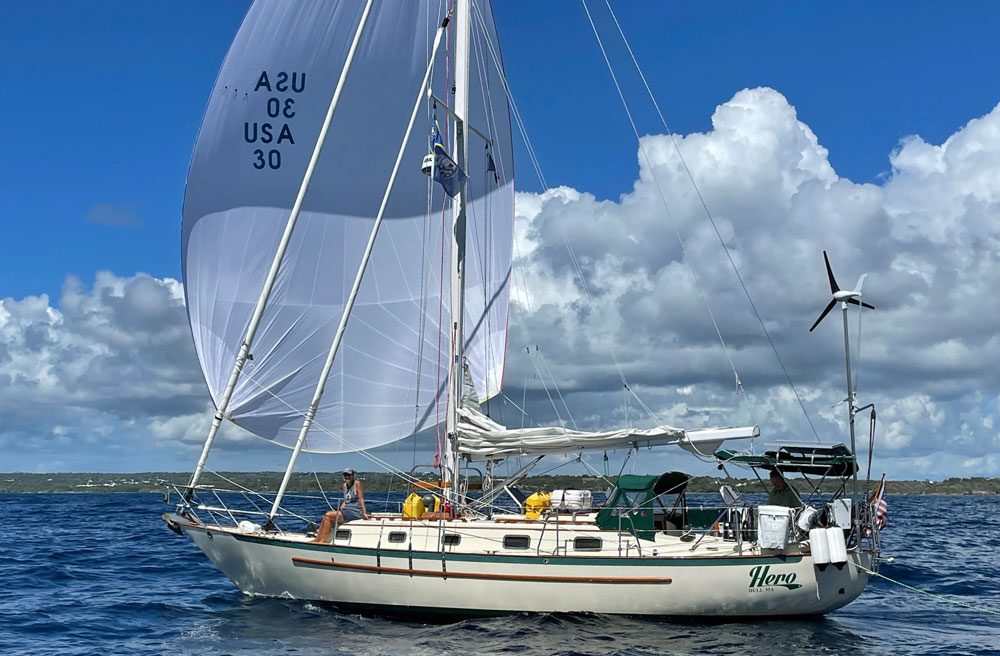 Hero, a Pacific Seacraft 37
The Pacific Seacraft Crealock 37 is a quintessential bluewater cruiser, widely regarded as one of the finest production sailboats ever built in the United States. Designed by the legendary W.I.B. "Bill" Crealock, it represents a harmonious balance between traditional aesthetics and modern underwater geometry. Known for its robust construction, seakindly motion, and the iconic canoe stern, the PSC 37 has earned a place in the hearts of serious offshore sailors and was famously named one of the "100 best products made in America" by Fortune magazine. Whether you are navigating coastal waters or embarking on a transoceanic passage, this vessel offers a sense of security and craftsmanship that is increasingly rare in the contemporary yachting market.
Design & Construction
The story of the Crealock 37 began in the late 1970s, born from the drafting board of British naval architect Bill Crealock. While the design was briefly produced by Cruising Consultants, it found its true home with Pacific Seacraft in 1980. Pacific Seacraft established a reputation for "modern traditional" yachts—vessels that look like classics above the waterline but feature efficient, split-keel underbodies below.
It is worth noting that while some high-end cruisers of this era experimented with materials like aluminium for extreme self-sufficiency, Pacific Seacraft remained dedicated to high-quality fibreglass (GRP). The hull is an uncored, solid laminate wetted out with vinylester resin in later models to provide superior osmotic blister resistance. This approach results in a tremendously strong, heavy hull that can withstand the rigours of accidental groundings or collisions with submerged objects far better than lighter, cored production boats.
The key defining feature of the Crealock 37 is undoubtedly its canoe stern. Unlike the broad, flat transoms found on modern "med-style" cruisers, the pointed stern of the PSC 37 is designed to part a following sea rather than be lifted and slewed by it. This makes the boat exceptionally easy to steer when running downwind in heavy weather, reducing the load on both the helmsman and the autopilot.
While the cutter rig is the most common configuration, the boat was also offered as a sloop or even a rare yawl. Below the waterline, the standard deep fin keel provides excellent tracking and windward ability, though a "Scheel" shoal draft keel was a popular option for sailors in shallower regions like the Bahamas or the Chesapeake Bay.
Sail Areas & Rig Dimensions
The Pacific Seacraft Crealock 37 is primarily designed as a cutter, which provides a versatile sail plan for varied weather conditions. By splitting the foretriangle between a yankee and a staysail, the crew can easily reduce sail area without losing the balance of the boat. The rig is relatively conservative in height, which keeps the centre of effort low and contributes to the vessel's overall stability.
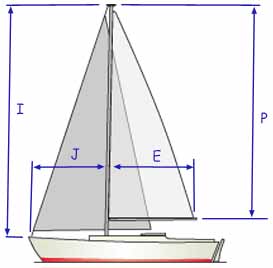
The rig dimensions are as follows:
- I (Foretriangle Height): 44'0" (13.41 m)
- J (Foretriangle Base): 15'9" (4.80 m)
- P (Mainsail Luff): 38'2" (11.63 m)
- E (Mainsail Foot): 14'3" (4.34 m)
These dimensions result in a total sail area (100% foretriangle) of approximately 621 ft² (57.7 m²). In the cutter configuration, the added staysail increases the total working sail area, providing the "gears" necessary to maintain momentum in moderate breezes or to keep the boat moving comfortably under "jib and jigger" when the wind picks up.
Published Specification: The Pacific Seacraft Crealock 37 Blueprint
| Specification Parameter | Measurement & Detail |
|---|---|
| Length Overall (LOA) | 36'11" (11.25 m) |
| Length at Waterline (LWL) | 27'9" (8.46 m) |
| Beam | 10'10" (3.30 m) |
| Draft (Standard Keel) | 5'6" (1.68 m) |
| Draft (Shoal/Scheel Keel) | 4'11" (1.50 m) |
| Displacement | 16,000 lbs (7,257 kg) |
| Ballast (Lead) | 6,200 lbs (2,812 kg) |
| Rig Type | Cutter (Standard), Sloop or Yawl |
| Hull Material | Solid Fibreglass (GRP) |
| Production Dates | 1978 – Present (Current custom order) |
Performance Analysis: Understanding the Design Ratios
To truly understand how the Pacific Seacraft Crealock 37 behaves at sea, we must look at the mathematical relationships between its dimensions. These ratios provide an objective look at performance and stability, allowing for a comparison with other vessels in the same class.
| Performance Ratio | Calculated Value | Expert Interpretation |
|---|---|---|
| Sail Area / Displacement (SA/D) | 15.65 | Moderate cruiser; requires a decent breeze to reach hull speed. |
| Displacement / Length (D/L) | 335 | Heavy displacement; indicates high load-carrying capacity & stability. |
| Ballast / Displacement (B/D) | 38.8% | Stiff; the boat carries its sail well and resists heeling. |
| Capsize Screening Formula (CSF) | 1.72 | Excellent; values under 2.0 are considered safe for ocean passage. |
| Brewer Motion Comfort Ratio | 34.4 | High comfort; the motion is predictable and gentle in a seaway. |
For those interested in how these numbers compare to more modern or lighter designs, you may wish to explore our article Understanding Boat Performance and Design Ratios.
The SA/D of 15.65 places the PSC 37 firmly in the cruising category. It is not a light-air flyer and will likely need the engine or a cruising chute in winds below 8 knots. However, once the breeze fills in, it finds its stride and remains manageable when others are forced to reef early.
The D/L of 335 reflects the boat's heavy-duty nature. With a relatively short waterline compared to its overall length, it carries a lot of "vessel" for its size. This translates to an incredibly smooth ride and the ability to carry weeks of fuel, water, and provisions without significantly affecting performance.
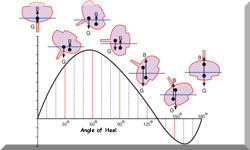
The Capsize Screening Formula of 1.72 and a Comfort Ratio of 34.4 are the standout numbers here. This is a boat designed to keep the crew safe and comfortable during a multi-day passage. It doesn't pound into head seas but rather slices through them, and its ultimate stability (Angle of Vanishing Stability) is reported to be around 140 degrees, which is exceptional for a production boat.
Structural Integrity & Stability Dynamics
When evaluating the construction of the Crealock 37, the choice of solid fibreglass over cored hulls or aluminium is significant. While aluminium offers incredible impact resistance, it requires meticulous electrical monitoring to prevent galvanic corrosion. The solid GRP hull of the Pacific Seacraft is effectively "low maintenance" by comparison, providing massive structural integrity without the complexity of metal hull ownership. Furthermore, Pacific Seacraft uses a plywood core in the deck rather than balsa. Plywood is far superior for resisting compression loads from deck hardware and prevents the widespread rot often seen in balsa-cored decks if a seal fails.
The impact of the canoe stern on performance is a subject of much debate among enthusiasts. From a purely hydrodynamic perspective, a canoe stern is slightly less efficient than a modern broad transom because it limits the effective waterline length when the boat is heeled. However, for a cruising sailor, the trade-off is well worth it. The canoe stern prevents the "squatting" motion in heavy following seas and makes the boat much more "balanced" under sail. This balance means the boat is less likely to round up into the wind during a gust, making it a joy to hand-steer and a dream for windvane self-steering systems.
Configuration, Layout & Cruising Characteristics
Step below deck, and the Pacific Seacraft Crealock 37 reveals an interior that is as functional as it is beautiful. With 6'4" (1.93 m) of headroom, the cabin feels spacious, though it is narrower than modern 37-footers due to the traditional beam.
The layout is classic: a comfortable V-berth forward with an offset double to starboard, a head with a shower, and a main salon with two sea berths (including a U-shaped settee that converts to a double). The galley is located to starboard at the foot of the companionway, featuring a deep double sink and a gimballed stove, perfectly positioned for use while underway. Opposite the galley is a proper, forward-facing navigation station—a feature often sacrificed in modern designs but essential for the offshore navigator.
Cruising storage is a major strength. The boat carries 95 gallons (360 litres) of water and 40 gallons (151 litres) of fuel, typically housed in tanks below the cabin sole to keep the weight low. One minor critique often mentioned by owners is the placement of the aluminium fuel tank in the bilge, which requires monitoring for exterior corrosion, though many older boats have had these replaced with modern plastic or stainless steel alternatives.
The cockpit is deep and secure, with high coamings that provide excellent back support. While it is not as large as a modern "entertainment" cockpit, it is the right size for a small crew to work safely. All lines are typically led aft, allowing the boat to be handled without leaving the safety of the cockpit.
Impressed?
Has this article may suggested that this could be your ideal cruising boat and, as a result, deserves to be on your "Worth a look at" list?
But if, like me, you find sailboats to be seductive creations, then that list could rapidly get to be a pretty long one. If that is the case, wouldn't it be good if you could narrow it down bit through an objective, pragmatic process?
Well, that's where my eBook 'How to Avoid Buying the Wrong Sailboat' comes in...
Summing Up
The Pacific Seacraft Crealock 37 is a boat that refuses to follow trends. It prioritises seakindliness over internal volume and structural integrity over light-air speed. While its heavy displacement and moderate sail area mean it won't be winning many around-the-buoys races, its performance in a gale is where it truly shines. For the sailor who values the "honesty of design" and wants a boat that will look after them when the weather turns foul, there are few vessels that can match the pedigree of this Crealock masterpiece. It remains a benchmark for what a proper cruising yacht should be: safe, beautiful, and exceptionally well-built.
If you'd like to compare this boat with others in this size range, take a look at Cruising Sailboats in the range 35' to 40' length overall.
This article was written by Dick McClary, RYA Yachtmaster and author of the RYA publications 'Offshore Sailing' and 'Fishing Afloat', member of The Yachting Journalists Association (YJA), and erstwhile member of the Ocean Cruising Club (OCC).
Frequently Asked Questions (FAQs)
How does the Crealock 37 perform in light air?
How does the Crealock 37 perform in light air?
Given its heavy displacement and SA/D ratio of 15.65, the PSC 37 is not a light-air specialist. In winds under 10 knots, you will likely find yourself reaching for a cruising chute or starting the engine to maintain a respectable pace.
Is the Scheel keel version significantly different from the standard draft?
Is the Scheel keel version significantly different from the standard draft?
The Scheel keel reduces the draft to approximately 4'11" (1.50 m) without sacrificing significant stability. While it may result in slightly more leeway when beating to windward compared to the 5'6" (1.68 m) standard keel, most cruisers find the trade-off worth it for the increased access to shallow anchorages.
Can the Pacific Seacraft 37 be easily single-handed?
Can the Pacific Seacraft 37 be easily single-handed?
Yes. The cutter rig allows for easy sail handling, and most models have lines led aft to the cockpit. The boat’s inherent stability and tendency to track well make it one of the most popular choices for solo or couple-only offshore sailing.
What are the common maintenance issues to look for in a used PSC 37?
What are the common maintenance issues to look for in a used PSC 37?
Prospective buyers should check the condition of the aluminium fuel tanks located in the bilge for corrosion. Additionally, early 1980s models were known for occasional osmotic blistering, though this is rarely a structural concern and is often addressed during refits.
Why is it called a "Voyagemaker" in some listings?
Why is it called a "Voyagemaker" in some listings?
In later years of production, Pacific Seacraft began marketed their boats as "Voyagemakers" to emphasize their offshore capabilities. These models often included updated hardware and higher standard specifications like Corian countertops and improved electronics packages.
Recent Articles


-
Discovery 55 Sailboat Review: Specs, Ratios & Bluewater Capability
Oct 14, 26 06:04 AM
Detailed Discovery 55 buyer’s guide covering specs, ratios, sailing behaviour, problem areas and bluewater suitability. -
Should I Buy a Boat? Four Questions to Answer Before You Commit
Oct 02, 26 04:40 AM
Thinking "Should I buy a boat?" This guide helps you decide, with key considerations from cost & maintenance to your personal sailing aspirations. -
Offshore Internet with Starlink: Hardware, Plans, and Setup Guidance
Oct 01, 26 01:15 PM
A clear, practical guide to choosing the right Starlink hardware and plan for offshore cruising. Learn what to buy, how to install it, and how to manage power afloat.