- Home
- Types of Sailboats
- Cat Ketch Sailboats
- Carbon Vs Aluminium Spars
Carbon vs Aluminium Spars: Benefits & Trade-Offs
Key Takeaways: Choosing between carbon and aluminium spars means balancing weight savings and stability against cost, conductivity concerns, and fragility. It’s a defining decision for any offshore sailor because it shapes both your boat's motion at sea and your long-term maintenance budget. While aluminium remains the dependable, cost-effective workhorse of the cruising world, carbon fibre offers transformative weight savings that improve stability and reduce pitching. That performance, however, comes with a higher initial price tag and specific concerns around lightning protection and fragility that every blue-water cruiser must weigh before heading offshore.
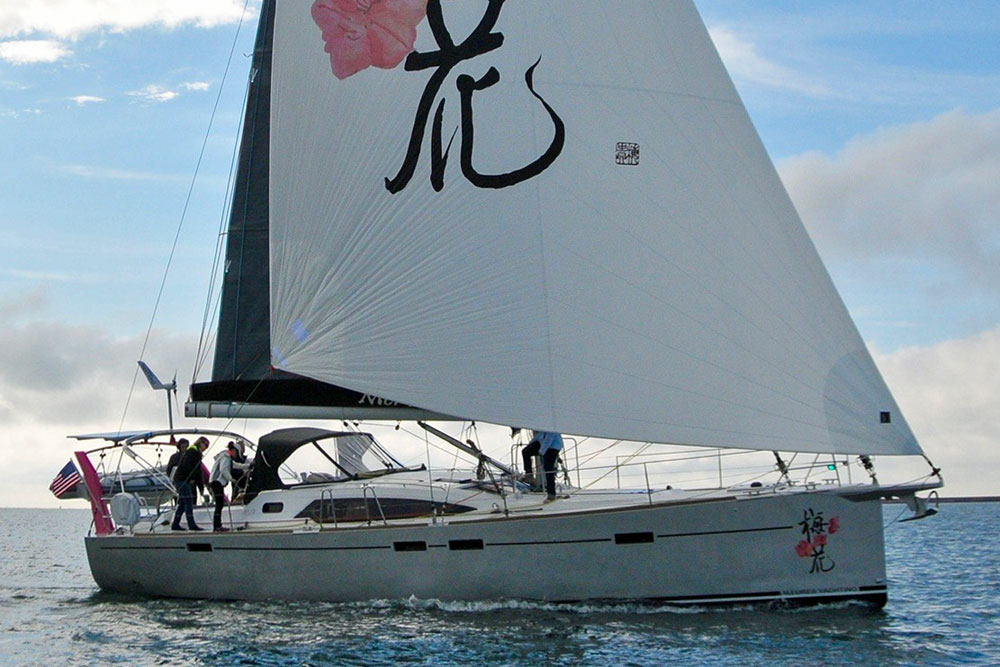
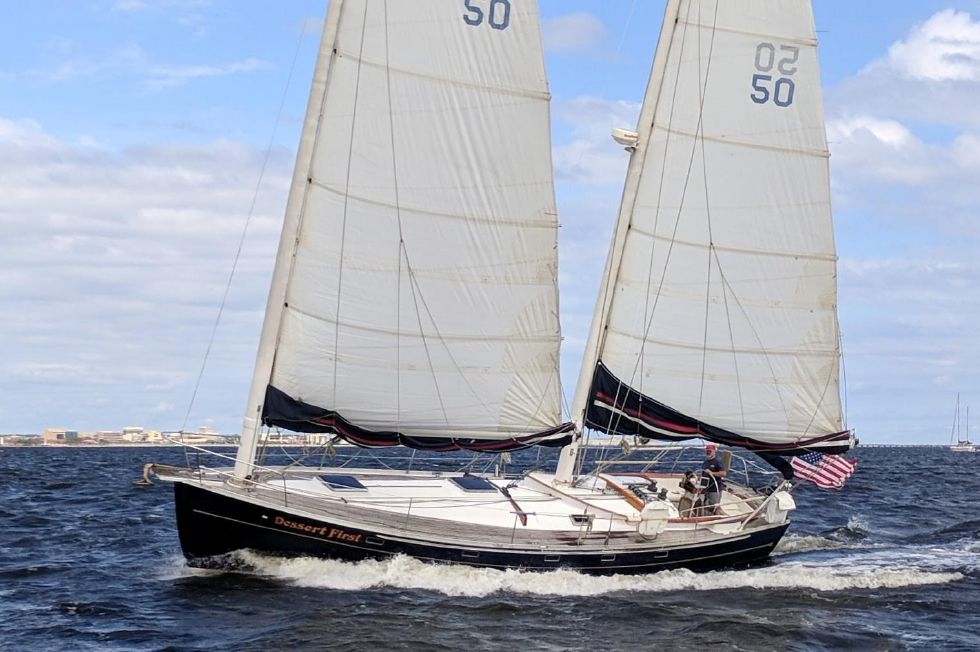 Unstayed white-painted carbon masts on this Freedom 44 Cat Ketch
Table of Contents
- The Physics of Weight Aloft & Stability
- Aluminium: The Tried & Tested Standard
- Carbon Fibre: Performance & Handling Benefits
- The Achilles Heel: Conductivity & Fragility
- Comparing Maintenance & Longevity
- Carbon vs Aluminium: The Cost-Benefit Analysis
- Modern Hybrid Solutions & Future Trends
- Summing Up
- Frequently Asked Questions
The Physics of Weight Aloft & Stability
Every kilogram saved at the masthead is equivalent to several kilograms added to the lead in your keel. When we discuss carbon vs aluminium spars, we are primarily discussing moment of inertia. A heavy aluminium mast increases the pendulum effect, causing the boat to roll more aggressively and pitch in a seaway.
By switching to carbon, you significantly reduce the weight aloft. This doesn't just make the boat faster; it makes it safer. A lighter rig means the boat returns upright more quickly after being heeled by a gust, and it reduces the hobby-horsing motion when slamming into head seas. For those exploring the unique characteristics of Unstayed Rigs, the benefits of carbon become even more pronounced, as the lack of standing rigging puts the entire structural load on the mast tube itself.
Aluminium: The Tried & Tested Standard
Aluminium has been the dominant material for yacht masts since it replaced wood in the mid-twentieth century. It’s predictable, relatively inexpensive, and well-understood by riggers in every corner of the globe.
The primary advantage of aluminium is its ductility. If an aluminium mast is overstressed, it often bends or deforms before it suffers a catastrophic failure. This offers a small but vital safety margin for the offshore sailor. Furthermore, aluminium is naturally conductive, which simplifies the grounding process for lightning protection, though it remains susceptible to galvanic corrosion if stainless steel fittings aren’t properly isolated.
Carbon Fibre: Performance & Handling Benefits
Carbon fibre spars are no longer reserved for America's Cup contenders or grand prix racers. Many modern blue-water cruisers are choosing carbon to improve their vessel's motion. A carbon mast is typically 30% to 50% lighter than its aluminium counterpart.
This weight reduction allows for a taller rig without sacrificing stability, or conversely, a more modest rig that makes the boat feel much "stiffer." On a long passage, a stiffer boat is less tiring for the crew and puts less strain on the autopilot. Because carbon is stiffer than aluminium, the mast holds its shape better under load, which maintains the aerodynamic profile of your sails and improves upwind performance.
The Achilles Heel: Conductivity & Fragility
Despite the performance gains, carbon fibre has two significant drawbacks: impact fragility and how it reacts to electricity.
Unlike aluminium, carbon is brittle. While it’s incredibly strong, it doesn’t "give." A sharp impact from a heavy falling object or a collision with a quay can cause internal delamination that isn’t always visible to the naked eye. While an aluminium mast might show a dent, a carbon mast might have hidden structural damage that may require ultrasound testing to detect.
Then there’s the issue of lightning*. Carbon fibre is conductive, but not in the same way as metal. A lightning strike on a carbon mast can cause the resin to vaporize as the energy seeks a path to the ground, potentially shattering the spar. Modern carbon masts incorporate dedicated lightning protection systems, but the risk remains a primary concern for those sailing in tropical, storm-prone regions.
* As a lad, I was very proud of myself when I had saved enough money to buy a carbon-fibre fishing rod. It was 14'6" long, an XLT model made by the long defunct Bruce & Walker company. Then I read an article about an angler using a similar carbon-fibre rod in drizzly conditions. He lifted his rod to cast, unwittingly bringing its tip within flashover distance of overhead power lines—an omission which brought his fishing days to an end, for ever. That may be why I've never owned a boat with a carbon rig.
Comparing Maintenance & Longevity
Maintenance profiles differ significantly between the two materials. Aluminium requires constant vigilance against corrosion, particularly where winches, spreaders, and tangs are through-bolted. Once the anodised coating is breached, the white powder of aluminium oxide begins to form.
Carbon fibre is immune to corrosion, which is a major advantage for long-term cruising. However, it’s sensitive to UV degradation. Most carbon masts are painted to protect the resin from the sun. If this paint is scratched or begins to peel, the mast's structural integrity can eventually be compromised.
| Feature | Aluminium Spars | Carbon Fibre Spars |
|---|---|---|
| Weight | Heavy (Higher Moment of Inertia) | Light (Lower Moment of Inertia) |
| Initial Cost | Budget Friendly & Accessible | Premium (2x to 3x Price) |
| Durability | Dents & Bends; Predictable | Brittle; High Tensile Strength |
| Corrosion | Prone to Galvanic Corrosion | Immune to Corrosion |
| Lightning | Naturally Conductive Ground | Requires Complex Protection |
Carbon vs Aluminium: The Cost-Benefit Analysis
For many, the decision comes down to the cruising kitty. A carbon rig can easily cost double or triple the price of an aluminium one. For a coastal cruiser or a weekend sailor, this investment rarely makes financial sense.
However, for the offshore sailor planning to cross oceans, the "cost" isn’t just the invoice from the spar maker. A boat that sails better, heels less, and pitches softly is a boat that’s easier on its equipment and its inhabitants. Many owners find that the reduction in heel alone justifies the price, as it makes life at 15o rather than 20o much more bearable.
Modern Hybrid Solutions & Future Trends
We’re seeing a rise in hybrid approaches, such as using an aluminium mast with carbon spreaders or carbon reinforcing in high-load areas. Additionally, the advent of "standard modulus" carbon has brought prices down slightly, making it more accessible to the mid-range cruising market.
Innovations in resin technology and 3D printing are also beginning to impact how these spars are manufactured, potentially leading to carbon masts that are more impact-resistant and better integrated with lightning grounding systems.
Summing Up
Choosing between carbon and aluminium is a balance of priorities. If you value simplicity, ease of repair, and a lower entry cost, aluminium remains the logical choice for a blue-water yacht. It’s the reliable companion that’s served sailors for decades. But if you seek the ultimate in comfort and performance, and you’ve the budget to support it, the weight savings of carbon fibre offer a transformative experience. Reducing weight aloft is perhaps the single most effective way to improve a boat's handling, provided you’re willing to manage the nuances of its fragility and electrical conductivity.

Written by Dick McClary, cruising sailor and yachting journalist, publisher of Sailboat‑Cruising.com and admin of the Liveaboard Sailboats for Sale community.

Frequently Asked Questions
Is a carbon mast much harder to repair in remote locations?
Is a carbon mast much harder to repair in remote locations?
Yes, while aluminium can often be sleeved or welded by a competent metalworker, carbon fibre requires specialised resins, vacuum bagging equipment, and a temperature-controlled environment for a proper structural repair.
Does a carbon mast really help with sea-sickness?
Does a carbon mast really help with sea-sickness?
By reducing the pitching and rolling moment, a carbon mast creates a more predictable and dampened motion. This can significantly reduce the physical fatigue and vestibular confusion that leads to sea-sickness.
How long does an aluminium mast last compared to carbon?
How long does an aluminium mast last compared to carbon?
An aluminium mast can last thirty years or more if corrosion is managed, though the standing rigging must be replaced every ten years. A well-maintained, painted carbon mast can theoretically last longer because it does not fatigue or corrode, provided it avoids major impacts or lightning strikes.
Are carbon masts always painted?
Are carbon masts always painted?
Most are painted to provide UV protection. While the "clear coat" look is popular, it requires much more frequent maintenance to prevent the sun from damaging the epoxy resin. White paint is the standard for cruising yachts to reflect heat.
Can I swap my aluminium mast for carbon without other changes?
Can I swap my aluminium mast for carbon without other changes?
Usually, yes, but you should consult a naval architect. Because the boat will be "stiffer" and more stable, the loads on the chainplates and hull structure may change, and you might even be able to reduce the amount of ballast in your keel.
Recent Articles


-
Mystery 35 Review: Specs, Performance & Buying Guide
Aug 29, 26 09:42 AM
An in-depth review of the Mystery 35 sailboat. Read technical specs, design ratios, sail performance, and common buyer inspection areas. -
Beneteau First 405 Review: Specs, Performance & Buyer’s Guide
Aug 26, 26 03:58 AM
Detailed Beneteau First 405 review covering specs, performance, bluewater capability, layouts and buyer’s checklist. -
Moody S38 Review: Specs, Ratios & Buyer’s Guide
Aug 12, 26 04:22 AM
In‑depth Moody S38 review covering specs, performance, design ratios, layout, strengths, trade‑offs & buyer inspection points.