- Home
- Cruising Yachts 45' to 50'
- Shearwater 45
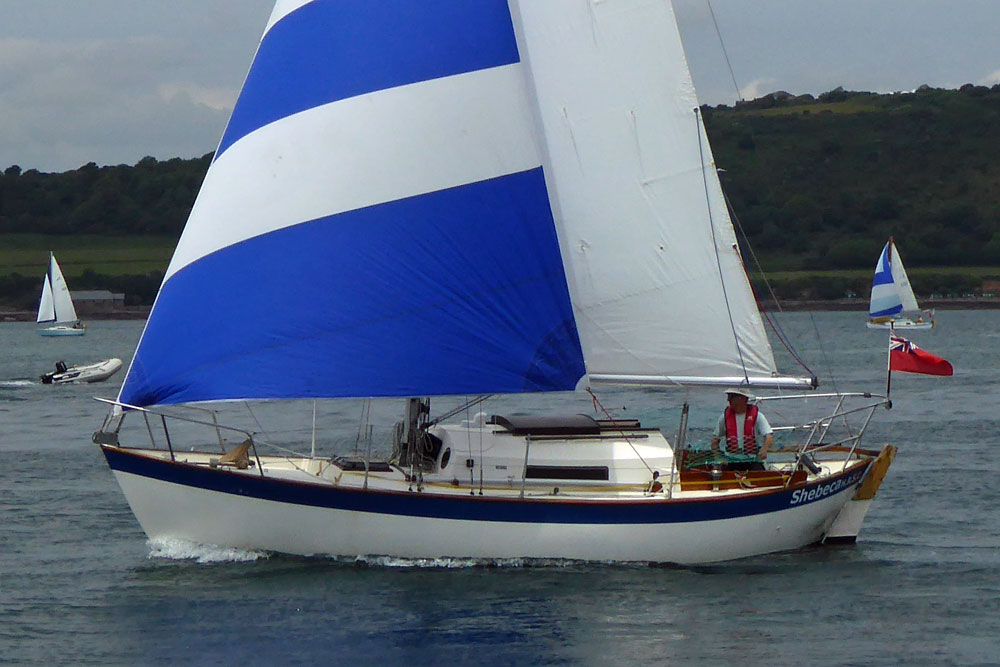
The Shearwater 45 Sailboat
Specs, Performance Analysis & Cruising Characteristics
Key Takeaways: The Shearwater 45 is a moderate displacement, bluewater‑leaning 45' (13.7 m) cruiser aimed at sailors who value a solid build, sensible sailplan and liveable interior over outright speed. It is happiest as a passagemaker and long‑term cruising home rather than a light‑air coastal flyer. The hull form, ballast ratio and motion comfort numbers point to a steady, predictable boat that looks after its crew when loaded with cruising gear. In return, you accept average light‑air performance and the usual age‑related refit jobs of a thirty‑plus‑year‑old GRP cruiser. It suits experienced owners planning serious coastal or ocean passages who are comfortable maintaining an older, semi‑custom yacht.
Table of Contents
- The Shearwater 45 at a Glance
- Design & Construction
- Published Specification: The Shearwater 45 Blueprint
- Sail Areas & Rig Dimensions
- Performance Analysis: Understanding the Design Ratios
- How the Shearwater 45 Sails
- Bluewater Capability: Strengths & Trade-Offs
- Configuration, Layout & Cruising Characteristics
- Who This Boat Is Best For
- The Buyer’s Checklist: Common Problem Areas
- Summing Up
- Frequently Asked Questions (FAQs)
The Shearwater 45 at a Glance
| Item | Summary |
|---|---|
| Type | 45' (13.7 m) bluewater cruising monohull |
| Designer | Custom cruiser design from the late 1980s era (moderate displacement, cruising‑oriented) |
| Builder | GRP production in small numbers by a specialist yard (semi‑custom fit‑out typical) |
| Production years | Approx. late 1980s to early 1990s, low production run |
| Rig | Masthead cutter or sloop, deck‑stepped aluminium spar |
| Best for | Bluewater passagemaking, liveaboard cruising, extended coastal work |
| Strengths | Solid GRP hull, conservative sailplan, comfortable motion, sensible systems layout |
| Trade‑offs | Not a light‑air rocket, older systems now due for renewal, limited production means patchy documentation |
Design & Construction
The Shearwater 45 sits firmly in the late‑1980s school of bluewater design: a moderate displacement hull with a fairly fine entry, a longish waterline for its day and a fin keel with a separate skeg‑hung rudder. The aim was a boat that would track well, carry cruising stores without complaint and remain manageable for a couple offshore.
Hull, deck and structure
Most examples are solid GRP below the waterline with a cored deck (typically foam or end‑grain balsa, depending on yard practice at the time). The hull laminate is on the heavy side by modern standards, which is exactly what many long‑distance owners want. Structural floors and stringers are glassed in, with a substantial keel stub taking the ballast keel bolts.
The deck is moulded with raised bulwarks or a small toerail, giving a secure feel when moving forward. Pay attention to any signs of core moisture around deck fittings, stanchion bases and the chainplates, as these are classic age‑related issues on boats of this era.
Windows, chainplates and fittings
On the boats that appear in brokerage photos and owner reports, the fixed cabin windows are framed and mechanically fastened rather than large, frameless bonded acrylic panels. That means you are more likely to be dealing with gasket and sealant renewal than wholesale rebonding of big glued‑on windows.
Chainplates are typically internal stainless steel plates bolted to substantial glassed‑in knees or bulkheads, rather than being fully hidden, bonded laminates. That is good news for inspection, but after three decades you should still plan to expose and assess them carefully for crevice corrosion, wet core around the fasteners and any cracking in the surrounding tabbing.
Keel, rudder and underwater profile
The standard Shearwater 45 is a fin‑keel cruiser with a fairly deep foil, around 6'6" (1.98 m), carrying a lead or iron ballast keel bolted to the stub. There is no strong evidence of a factory centreboard or twin‑keel variant; any draft differences you see in listings are usually down to measurement conventions or minor yard variations rather than a fundamentally different design.
The rudder is skeg‑hung, which appeals to conservative offshore sailors. It offers better protection than a spade rudder and tends to give a steady feel on the helm. As with any older GRP rudder, check for moisture ingress, play in the bearings and any signs of grounding damage at the lower edge of the skeg.
Versions and stability index
Production numbers were low and the boats were often semi‑custom, so interior layouts and cockpit details vary. Expect a conventional aft cockpit, two‑cabin or three‑cabin layout with a generous saloon and a seagoing galley. There is no widely published STIX stability index for the Shearwater 45, so you are relying instead on traditional ratios, ballast numbers and real‑world passage history when assessing its offshore credentials.
Published Specification: The Shearwater 45 Blueprint
The figures below are compiled from specification sheets and multiple brokerage listings. Treat them as typical rather than absolute, and always confirm against the actual boat in front of you.
| Specification | Value |
|---|---|
| LOA | 45'0" (13.72 m) |
| LWL | 36'0" (10.97 m) |
| Beam | 13'6" (4.11 m) |
| Draft (typical) | 6'6" (1.98 m) |
| Displacement | c. 28,000 lb (12,700 kg) |
| Ballast | c. 10,000 lb (4,540 kg) |
| Rig type | Masthead cutter or sloop |
| Hull material | GRP (solid hull, cored deck) |
| Production dates | Late 1980s to early 1990s (low‑volume build) |
Sail Areas & Rig Dimensions
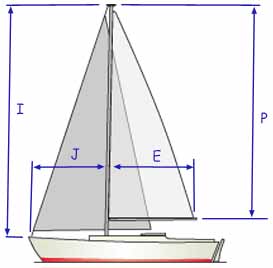 Rig dimensions
Again, numbers vary slightly between sources, but a typical Shearwater 45 rig looks like this:
| Rig element | Dimension / area |
|---|---|
| I | 54'0" (16.46 m) |
| J | 16'0" (4.88 m) |
| P | 48'0" (14.63 m) |
| E | 15'5" (4.70 m) |
| Mainsail area | c. 370 ftsuperscript2 (34.4 msuperscript2) |
| Foretriangle (100% foretriangle) | c. 430 sq.ft (40.0 sq.m) |
| Working sail area (main plus 100% headsail) | c. 800 sq.ft (74.3 sq.m) |
| Typical genoa (130%) | c. 560 sq.ft (52.0 sq.m) |
Some boats are set up as cutters with a high‑cut yankee and a staysail on an inner forestay. Others are more conventional masthead sloops with a single furling headsail. When comparing boats, note whether the inner forestay is structural and permanent or a removable, inner stay added later.
Performance Analysis: Understanding the Design Ratios
Using the typical figures above, we can derive the key ratios that offshore buyers care about. These are approximate but good enough to characterise the design.
Assumptions used:
- Displacement: 28,000 lb
- Ballast: 10,000 lb
- Working sail area: 800 ftsuperscript2
- LWL: 36'0
| Ratio | Value | What it means |
|---|---|---|
| SA/D | c. 17 | Moderate power. Enough sail to keep moving in average conditions, but not a light‑air flyer. Suits cruisers who reef early and value control. |
| D/L | c. 260 | Moderate to moderately heavy. Indicates a boat that carries stores well and has a steadier motion than modern lightweights, at the cost of acceleration. |
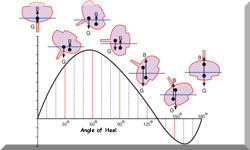
| B/D | c. 0.36 | A healthy ballast ratio for a cruising fin‑keeler. Suggests good stiffness when combined with the hull form and keel depth. |
| CSF | c. 1.8 | Below 2.0 is generally considered favourable for offshore work. Indicates a relatively low tendency to capsize compared with lighter, beamier designs. |
| Brewer Comfort Ratio | c. 32 | In the “comfortable cruiser” band. Points to a slower, more deliberate motion that many crew find less tiring on long passages. |
Taken together, these numbers paint a consistent picture: the Shearwater 45 is a moderate, bluewater‑oriented cruiser that trades some speed for comfort and load‑carrying. It is not extreme in any direction, which is exactly what many long‑distance sailors want.
For more on this topic, you might want to take a look at Understanding Boat Performance & Design Ratios...
How the Shearwater 45 Sails
Upwind
Upwind, the Shearwater 45 rewards patience and trim. In flat water and 12–16 knots of breeze, it will settle into a steady groove at around 6.5–7 knots, pointing adequately but not as high as a modern performance cruiser. The relatively deep keel and decent ballast ratio give it good grip, but the hull form is not razor‑sharp. Owners report that it prefers to be sailed slightly cracked off rather than pinched.
In lighter airs, the moderate SA/D shows. You will want a decent genoa and a clean bottom to keep it moving. If you are coming from a lighter, racier 40‑footer, expect a more sedate feel.
Reaching and downwind
On a reach, the boat comes alive. The longish waterline and moderate displacement let it build speed steadily, and the hull tracks well. With a cutter rig, you can play with combinations of yankee, staysail and main to keep the helm balanced as the breeze builds.
Downwind, the skeg‑hung rudder and moderate beam help keep the boat under control. It is not a surfing machine, but it will happily sit on 7–8 knots in trade‑wind conditions with the right sailplan. Many owners favour twin headsails on poles for long downwind legs, which suits the rig well.
Helm, motion and short‑handed behaviour
The helm is generally described as light to moderate, with a reassuring amount of feedback. The boat tracks well, which is kind to self‑steering gear. The motion is on the gentle side for a 45‑footer, thanks to the D/L and comfort ratio, which reduces crew fatigue on passage.
Short‑handed, the key is a sensible sailplan. A well‑set‑up Shearwater 45 with furling headsail, slab‑reefed main with good reefing gear and a manageable staysail is entirely realistic for a couple. The rig is not excessively tall, and the loads are significant but not outrageous for a boat of this size.
Bluewater Capability: Strengths & Trade-Offs
Offshore suitability and seakindliness
The numbers and the real‑world usage both point to a boat that is comfortable offshore. The moderate displacement, decent ballast ratio and skeg‑hung rudder all appeal to conservative bluewater sailors. The motion is slower and more predictable than many newer, lighter designs, which matters a great deal after several days at sea.
The trade‑off is that you will not be first into port in a mixed fleet. If your priority is 200‑mile days, you may find the Shearwater 45 a little too relaxed. If your priority is arriving rested and with the boat in one piece, it makes more sense.
Tankage, load‑carrying and deck safety
Tankage varies between boats, but many examples carry in the region of 500–600 litres of water and 300–400 litres of diesel. That is adequate for serious cruising, especially if you add a watermaker. The hull form tolerates extra weight reasonably well, although like any boat it will lose some light‑air performance when heavily loaded.
Deck safety is generally good. The side decks are wide enough to move forward in a seaway, and the raised bulwarks or toerails help keep feet on the boat. Check the height and condition of guardrails, the integrity of stanchion bases and the non‑skid on deck. Many boats have been upgraded with additional handholds and jackstay points; if not, budget for that.
Configuration, Layout & Cruising Characteristics
Cockpit and deck ergonomics
The Shearwater 45 is typically an aft‑cockpit boat with a deep, secure cockpit and a substantial coaming. Wheel steering is standard. The primary winches are within reach of the helm on many examples, which helps when sailing short‑handed. The mainsheet is usually on the coachroof, which keeps the cockpit clear but means you rely on good rope handling and clutches.
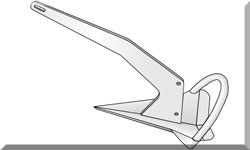
On deck, look for sensible anchoring arrangements: a strong bow roller, a decent windlass and space for at least 60–80 m of chain. Many boats have had their ground tackle upgraded; if not, that is an early project.
Interior layout and liveaboard notes
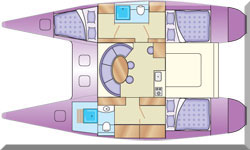
Interiors vary, but a common layout is:
- Forward cabin with double berth and lockers
- Large saloon with U‑shaped dinette to port and settee to starboard
- Seagoing galley near the companionway, often to port
- Navigation station opposite
- Aft cabin (or cabins) with double berth and storage
- One or two heads compartments, often with a separate shower
Headroom is generous for most people. The joinery is usually in warm hardwoods, giving a traditional feel. Ventilation depends heavily on the number and condition of opening hatches and portlights; in the tropics, extra fans are a worthwhile upgrade.
Storage is a strong point. There is usually ample space for provisions, spares and personal gear, which is one reason the boat appeals as a liveaboard platform. Check carefully for any signs of water ingress in lockers, especially under side decks and around chainplate areas.
Who This Boat Is Best For
Good fit for:
- Sailors planning extended cruising or ocean passages who value comfort and seakindliness over outright speed
- Couples or small crews who want a solid, moderate 45‑footer that can be managed without a large team
- Owners comfortable taking on a refit of an older GRP cruiser in exchange for a capable hull at a sensible purchase price
Less ideal for:
- Those seeking high‑performance coastal sailing or club racing in light airs
- Buyers who want a “turn‑key”, modern production boat with factory support and abundant documentation
- Owners unwilling to tackle age‑related jobs such as rig replacement, tank renewal, wiring upgrades and deck hardware rebedding
The Buyer’s Checklist: Common Problem Areas
For a Shearwater 45 pre‑purchase inspection, you should focus on:
- Rig and spars: Age of standing rigging, condition of chainplates, mast step corrosion, spreader roots and any signs of compression at the mast partners. Budget for a full rig replacement if there is no recent evidence.
- Keel and structure: Check keel bolts, any signs of weeping rust or movement at the keel‑to‑hull joint, and cracking in internal floors or the keel stub. Groundings are not always declared.
- Rudder and steering: Look for play in the bearings, moisture in the rudder blade and any damage to the skeg. Inspect steering cables, sheaves and quadrant.
- Deck and core: Tap around deck fittings, stanchion bases, winches and the mast step for signs of core breakdown. Look for stress cracks around high‑load areas.
- Windows and leaks: Even framed windows can leak after decades. Check for staining, soft headlining and hidden rot in plywood liners.
- Engine and systems: Many original engines are now at or beyond their expected life. A repower is a major cost but can transform reliability. Assess fuel tanks for corrosion, especially if they are mild steel.
- Electrics and plumbing: Expect to find a mixture of original and added wiring. A tidy, labelled system is a good sign; a rat’s nest behind the panel is not. Hoses, seacocks and pumps should all be inspected and budgeted for as needed.
Typical refit items on a newly purchased Shearwater 45 might include standing rigging, new sails, electronics, safety gear, some deck hardware rebedding and selective tank or hose replacement. Costs vary by region, but it is realistic to allow a significant percentage of the purchase price for bringing an older bluewater boat up to modern cruising standards.
Could this be your ideal cruising boat?
It may well be, but before going any further, it might be worth taking a look at my eBook 'How to Avoid Buying the Wrong Sailboat'...
Summing Up
The Shearwater 45 is not a fashion statement. It is a moderate, quietly capable 45‑footer from an era when bluewater cruisers were built with a bit more laminate and a bit less emphasis on marina‑side volume. The design ratios, hull form and skeg‑hung rudder all point in the same direction: a boat that looks after its crew, carries stores without complaint and rewards steady, seamanlike sailing.
For the right buyer, that is exactly the appeal. If you are prepared to invest time and money in updating an older hull, you can end up with a serious cruising platform at a fraction of the cost of a new boat. The key is to go in with clear eyes: survey thoroughly, budget realistically for refit work and prioritise structural and safety‑critical items before cosmetics.
If your sailing plans involve long passages, mixed weather and living aboard for months at a time, the Shearwater 45 deserves a place on the shortlist. If you want instant gratification and regatta silverware, you are probably looking in the wrong corner of the market.
This article was written by Dick McClary, RYA Yachtmaster and author of the RYA publications 'Offshore Sailing' and 'Fishing Afloat', member of The Yachting Journalists Association (YJA), and erstwhile member of the Ocean Cruising Club (OCC).
Frequently Asked Questions (FAQs)
Is the Shearwater 45 a true bluewater boat?
Is the Shearwater 45 a true bluewater boat?
In design terms, yes. The displacement, ballast ratio, skeg‑hung rudder and overall hull form are all consistent with conservative bluewater cruisers of its era. As always, the real question is the condition of the individual boat and how well it has been maintained and upgraded.
How fast is the Shearwater 45 on passage?
How fast is the Shearwater 45 on passage?
In typical trade‑wind conditions, many owners plan on 6–7 knots average over 24 hours, with faster days when the wind is in the sweet spot. It will not match a modern performance cruiser of the same length, but it will deliver steady, predictable daily runs if sailed sensibly.
Can a couple handle a Shearwater 45?
Can a couple handle a Shearwater 45?
Yes, provided the boat is set up with sensible sail handling systems: furling headsail, well‑organised reefing, reliable autopilot or windvane and decent winches. The loads are those of any 45‑footer, so physical fitness and good technique matter, but many boats are successfully cruised by couples.
What are the biggest refit costs to expect?
What are the biggest refit costs to expect?
The big‑ticket items are usually standing rigging, sails, engine or major engine work, electronics and sometimes fuel or water tank replacement. On a boat of this age, it is wise to assume that at least some of these will be due unless there is clear, recent documentation to the contrary.
How does the Shearwater 45 compare to other bluewater cruisers of similar size?
How does the Shearwater 45 compare to other bluewater cruisers of similar size?
Compared with lighter, more modern designs, the Shearwater 45 is slower but more comfortable and forgiving offshore. Compared with heavy, long‑keel classics, it is easier to manoeuvre, points better and is less tiring to sail. It sits in a middle ground that many long‑distance sailors find attractive.
Recent Articles


-
Mystery 35 Review: Specs, Performance & Buying Guide
Aug 29, 26 09:42 AM
An in-depth review of the Mystery 35 sailboat. Read technical specs, design ratios, sail performance, and common buyer inspection areas. -
Beneteau First 405 Review: Specs, Performance & Buyer’s Guide
Aug 26, 26 03:58 AM
Detailed Beneteau First 405 review covering specs, performance, bluewater capability, layouts and buyer’s checklist. -
Moody S38 Review: Specs, Ratios & Buyer’s Guide
Aug 12, 26 04:22 AM
In‑depth Moody S38 review covering specs, performance, design ratios, layout, strengths, trade‑offs & buyer inspection points.