- Home
- Cruising Yachts 30' to 35'
- Ericson 31 Independence Review
The Ericson 31 Independence Sailboat
Specs, Performance Analysis & Cruising Characteristics
Key Takeaways
The Ericson 31 Independence is a robust, heavy-displacement cruiser designed by Bruce King for sailors who value sea-kindly motion and traditional aesthetics. Built during a period of transition in yacht design, it features a long fin keel and a transom-hung rudder, providing a unique balance between directional stability and mechanical accessibility. With its double-ended "canoe" stern and high ballast-to-displacement ratio, it is a secure platform for offshore passages, though its significant weight means it requires a decent breeze to reach its hull speed.
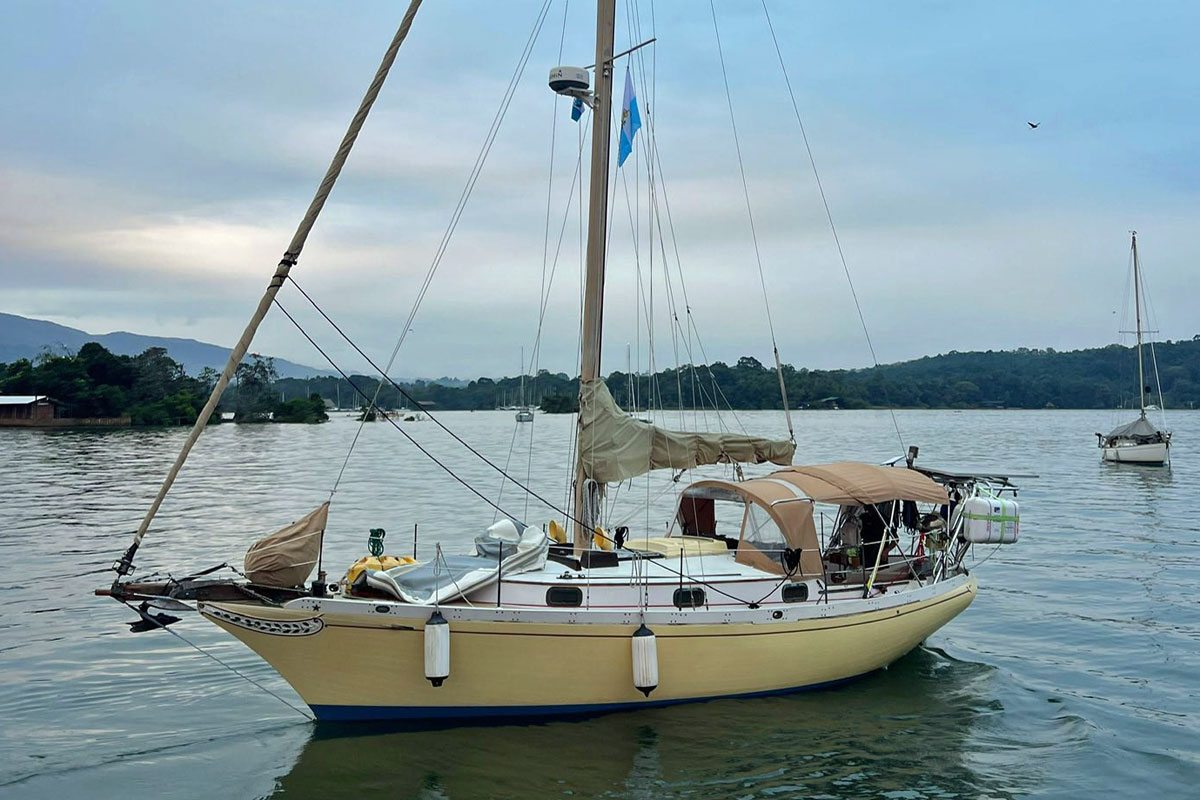 The Ericson 31 Independence
Design & Construction
The Ericson 31 Independence was launched in 1977, standing apart from the performance-first "E" series models that dominated the Ericson Yachts factory at the time. Bruce King looked to the timeless safety of Scandinavian double-enders to create a boat that would look after its crew in a blow.
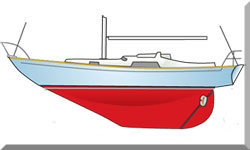
The hull is hand-laid solid fibreglass, a construction method that has proven its durability over decades of blue-water use. The underbody is defined by a long fin keel and a transom-hung rudder. This configuration is highly prized by cruising traditionalists; the long fin offers better "bite" and less wetted surface than a true full keel, while the transom-hung rudder is entirely external to the hull. This eliminates the need for a rudder post and stuffing box inside the boat, making the pintles and gudgeons easy to inspect and maintain at sea.
While most were rigged as cutters to provide versatility in sail handling, a few sloop variants exist. The Independence is widely regarded as an "Ocean" class vessel, capable of handling significant sea states due to its weight and high limit of positive stability.
Sail Areas & Rig Dimensions
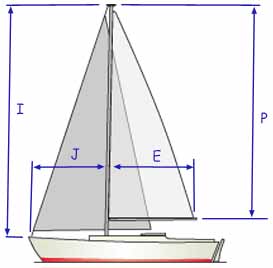 Rig dimensions
The Independence was designed to be easily managed from the cockpit, often employing a cutter rig to break the sail area into smaller, more manageable pieces.
- Mainsail Area: 215 ft² (19.97 m²)
- Total Sail Area (100% Foretriangle): 513 ft² (47.66 m²)
- I (Forestay Height): 39'0" (11.89 m)
- J (Foredeck Length): 15'3" (4.65 m)
- P (Mainsail Luff): 34'0" (10.36 m)
- E (Mainsail Foot): 12'8" (3.86 m)
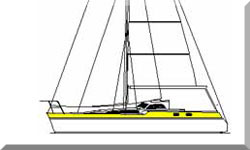
Published Specification: The Ericson 31 Independence Blueprint
| Feature | Specification |
|---|---|
| Length Overall (LOA) | 30'11" (9.42 m) |
| Length at Waterline (LWL) | 23'11" (7.29 m) |
| Beam | 10'6" (3.20 m) |
| Draft | 4'11" (1.50 m) |
| Displacement | 11,700 lbs (5,307 kg) |
| Ballast (Lead) | 4,500 lbs (2,041 kg) |
| Rig Type | Cutter & Sloop |
| Keel Type | Long Fin |
| Rudder Type | Transom-Hung |
Performance Analysis: Understanding the Design Ratios
| Design Ratio | Value | Interpretation |
|---|---|---|
| SA/D | 15.9 | Moderate sail power; excels in 15 knots or more. |
| D/L | 382 | Heavy displacement; high momentum and storage capacity. |
| B/D | 38% | Stiff; provides a safe, upright sailing experience. |
| CSF | 1.87 | Good offshore rating; well under the 2.0 safety limit. |
| Comfort Ratio | 35.4 | Very high; ensures a predictable, easy motion at sea. |
The D/L ratio of 382 places this boat firmly in the heavy cruiser category. It will not surf or plane, but it will track with a steady persistence that lighter hulls cannot match. For more on these calculations, see our article on Understanding Boat Performance & Design Ratios.
Structural Integrity & Stability Dynamics
The transom-hung rudder is a key advantage for blue-water sailors. Unlike an internal rudder, all components—the gudgeons, pintles, and the tiller head—are visible and accessible. If a pintle were to fail mid-ocean, it is far easier to effect a repair on the transom than it is to deal with a failing rudder post inside a dark lazarette.
The canoe stern further enhances safety. In a following sea, waves split and move past the hull rather than lifting the stern and causing a broach, which is a common hazard for boats with broad, flat transoms.
The Buyer’s Checklist: Common Problem Areas
- Transom Gudgeons: Inspect the mounting points on the stern post for stress cracks. The loads on a transom-hung rudder on a heavy boat are significant.
- Deck Delamination: Focus your inspection on the balsa core around the bowsprit and the mast step.
- Chainplate Inspection: Look for water staining on the bulkheads inside the cabin. Rotting structural plywood where the chainplates attach is a critical issue.
- Original Engine: Many older units still have original Universal engines. Assess the cooling system and mounts carefully.
Comparison: The Ericson 31 Independence vs The Competition
When evaluating the Independence 31, it is best compared to other "pocket" blue-water cruisers that prioritise heavy-weather capability over light-air speed.
- Hallberg-Rassy Monsun 31: Similar in philosophy but features a long keel with a keel-hung rudder. The Ericson's transom-hung rudder is generally easier to maintain.
- Westsail 32: A significantly heavier double-ender. The Ericson 31 is more "lively" and easier to handle in light conditions than the Westsail, thanks to its long fin keel.
- Cape Dory 30: Another traditionalist favourite, though the Ericson's 10'6" beam makes it feel significantly more spacious below decks.
If you'd like to compare this boat with others in this size range, take a look at Cruising Boats from 30' to 35' overall....
Configuration, Layout & Cruising Characteristics
Stepping below, the Independence feels larger than its 31' length suggests, primarily due to the 10'6" beam. The layout is traditional: a V-berth forward, followed by a head and hanging locker. The main saloon features a settee and a pilot berth, though many owners use the pilot berth for storage.
The galley is usually U-shaped and located near the companionway, which is ideal for bracing oneself while cooking at sea. Tankage is modest—typically around 50 gallons (189 litres) of water and 20 gallons (75 litres) of fuel. For serious long-distance cruising, most owners find they need to add flexible water tanks or a small watermaker. The cockpit is deep and secure, though the large bridge deck—designed to keep water out of the cabin—can make moving in and out a bit of a scramble.
Could this be your ideal cruising boat?
It may well be, but before going any further, it might be worth taking a look at my eBook 'How to Avoid Buying the Wrong Sailboat'...
Summing Up
The Ericson 31 Independence is a purposeful boat that values safety over speed. Its design ratios and underwater profile describe a vessel that is slow to start but steady once moving. For the traditionalist sailor, the mechanical simplicity of its transom-hung rudder and its predictable motion make it one of the most sea-kindly choices in its size class.

This article was written by Dick McClary, RYA Yachtmaster and author of the RYA publications 'Offshore Sailing', member of The Yachting Journalists Association (YJA), erstwhile member of the Ocean Cruising Club (OCC) and owner/administrator of 'Liveaboard Sailboats for Sale'.

Frequently Asked Questions (FAQs)
What are the benefits of a transom-hung rudder?
What are the benefits of a transom-hung rudder?
It is visible, easy to inspect, and simple to repair at sea without risking water ingress into the hull.
Is it a full keel boat?
Is it a full keel boat?
No, it features a long fin keel, which reduces wetted surface compared to a traditional full keel while maintaining excellent tracking.
How does it handle in light wind?
How does it handle in light wind?
With a SA/D of 15.9, it typically needs 12 knots or more to find its rhythm and reach hull speed.
Is the ballast internal?
Is the ballast internal?
Yes, the lead ballast is encapsulated within the fibreglass keel, eliminating the need for keel bolt maintenance.
Was it designed for offshore use?
Was it designed for offshore use?
Yes, the Bruce King design and its high Comfort Ratio of 35.4 are tailored for blue-water passages.
Recent Articles


-
Offshore Internet with Starlink: Hardware, Plans, and Setup Guidance
Oct 01, 26 01:15 PM
A clear, practical guide to choosing the right Starlink hardware and plan for offshore cruising. Learn what to buy, how to install it, and how to manage power afloat. -
Offshore Liferaft Guide: Choosing, Stowing and Servicing One
Oct 01, 26 06:28 AM
Choosing an offshore liferaft? Learn what ISO 9650 Group A means, where to stow it, how often to service it and what to pack in the grab bag. -
Can an Inflatable Tender Replace a Liferaft? Offshore Verdict
Sep 30, 26 03:50 PM
Can an inflatable tender replace a liferaft? Offshore sailors get the honest answer: when a tender helps, where it fails and how to plan abandon ship.