- Home
- Cruising Yachts 40' to 45'
- Hallberg Rassy 42
The Hallberg-Rassy 42F Sailboat
Specs, Performance Analysis & Cruising Characteristics
Key Takeaways: The Hallberg-Rassy 42F is a quintessential Frers-designed blue-water cruiser. Compared with its Enderlein-designed predecessor, it offers a significant performance upgrade. It’s a heavy-displacement, centre-cockpit yacht known for exceptional build quality, high stability, and a refined interior. While not a light-wind racer, it carries momentum well in a seaway and provides a secure, dry environment for long-distance liveaboard couples.
Table of Contents
- Design & Construction
- Sail Areas & Rig Dimensions
- Configuration, Layout & Cruising Characteristics
- Published Specification: The Hallberg-Rassy 42F Blueprint
- Performance Analysis: Understanding the Design Ratios
- The Buyer’s Checklist: Common Problem Areas
- Comparison: Hallberg-Rassy 42F vs The Competition
- Summing Up
- Frequently Asked Questions (FAQs)
Design & Construction
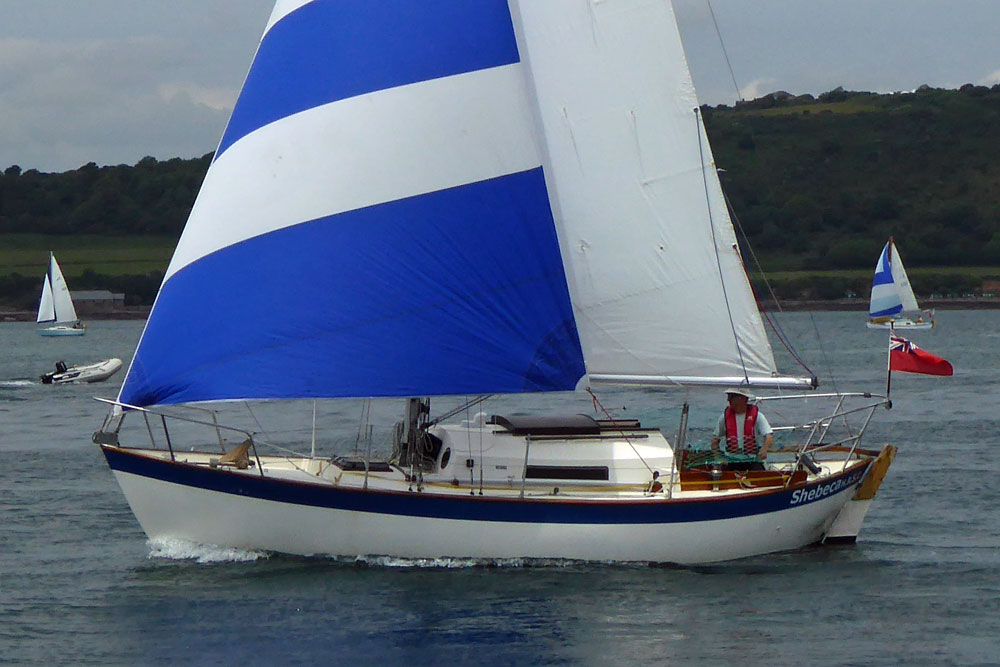
The Hallberg-Rassy 42F marks a pivotal moment in the evolution of the Swedish yard. Designed by Germán Frers and built by Hallberg-Rassy, the 42F moves away from the traditional long-keel ethos of earlier Olle Enderlein designs.
The hull is solid GRP (Glass Reinforced Plastic) below the waterline, with an Isophthalic gelcoat and a vinylester-based prime coat for osmosis resistance. Above the waterline, the hull features a Divinycell foam core for insulation and stiffness.
A defining feature of the 42F is its integrated rubbing strake with a brass strip, moulded into the hull. This provides practical protection during Mediterranean mooring or when lying alongside rough stone quays.
Unlike the earlier "Enderlein 42," which featured a ketch rig and a much heavier, slower hull form, the 42F is a modern sloop (though some were configured as cutters). It has a fin keel and a spade rudder protected by a partial skeg.
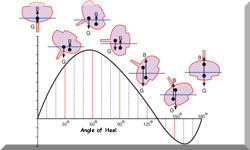
Regarding stability, the Hallberg-Rassy 42F is a Category A (Ocean) vessel under the RCD standards. Its high STIX (Stability Index) rating confirms it’s intended for extended voyages where conditions may exceed wind force 8 and significant wave heights of 4 metres. In practical terms, the boat has a strong righting moment and a wide range of positive stability—key for peace of mind when crossing oceans.
Sail Areas & Rig Dimensions
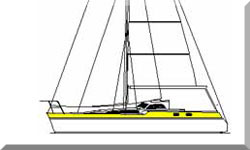
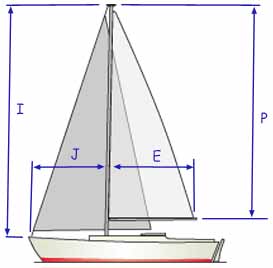 Rig dimensions
The 42F is typically a powerful masthead sloop. The double-spreader Selden rig is deck-stepped but supported by a heavy-duty compression post.
- Mainsail Area: 452 ft² (42 m²)
- 100% Foretriangle: 484 ft² (45 m²)
- Total Sail Area (approx): 936 ft² (87 m²)
- I (Forestay Height): 54'2" (16.50 m)
- J (Foredeck Length): 17'10" (5.45 m)
- P (Mainsail Hoist): 47'7" (14.50 m)
- E (Boom Length): 19'0" (5.80 m)
Configuration, Layout & Cruising Characteristics
The centre-cockpit configuration is at the heart of the 42F's appeal. It provides a deep, well-protected space with the iconic Hallberg-Rassy windscreen, which can be supplemented by a sprayhood or a full hard-top. Below deck, the layout is a masterclass in maritime joinery, finished in silk-smooth mahogany.
The aft cabin is a true sanctuary, usually featuring a large double berth to starboard and a single to port, or one massive island bed. The galley sits in the passageway to the aft cabin, which adds security when cooking at sea: the chef can brace against the engine casing or the hull. Tankage is generous, with fuel and water capacities designed for long-range autonomy. The engine room is exceptionally well-insulated and accessible, a hallmark of the yard's engineering standards.
Published Specification: The Hallberg-Rassy 42F Blueprint
| Specification | Measurement |
|---|---|
| LOA (Length Overall) | 43'4" (13.22 m) |
| LWL (Load Waterline) | 34'5" (10.50 m) |
| Beam | 12'11" (3.95 m) |
| Draft | 6'7" (2.00 m) |
| Displacement | 27,557 lbs (12,500 kg) |
| Ballast (Lead) | 10,362 lbs (4,700 kg) |
| Rig Type | Masthead Sloop |
| Hull Material | GRP (Solid & Sandwich) |
| Production Dates | 1991 – 2001 |
Performance Analysis: Understanding the Design Ratios
To understand how the 42F behaves, it helps to look at the relationships between its dimensions.
| Ratio | Value |
|---|---|
| Sail Area/Displacement (SA/D) | 16.4 |
| Displacement/Length (D/L) | 301 |
| Ballast/Displacement (B/D) | 37.6% |
| Capsize Screening Formula (CSF) | 1.72 |
| Brewer Motion Comfort Ratio | 36.5 |
Interpretation:
- SA/D (16.4): This places the 42F in the "Cruiser" category. It suggests the boat is decently powered but requires a freshening breeze to really get moving. It is not a light-wind specialist.
- D/L (301): A classic heavy-displacement figure. This indicates the boat has a high load-carrying capacity and will not be significantly affected by the weight of cruising gear, fuel, and water.
- B/D (37.6%): A very respectable ballast ratio for a modern fin-keel cruiser, ensuring plenty of stiffness and the ability to carry full sail into the upper teens of apparent wind.
- CSF (1.72): Values below 2.0 are considered suitable for ocean passages. At 1.72, the 42F is exceptionally resistant to capsize.
- Comfort Ratio (36.5): This is a high score, indicating a slow, predictable motion in a seaway. It will not "jerk" or snap back, making it much less fatiguing for the crew on long passages.
For more information on these metrics, see our guide on Understanding Boat Performance & Design Ratios.
Structural Integrity & Stability Dynamics
The use of GRP with a Divinycell core above the waterline provides a significant advantage in terms of thermal and acoustic insulation. For a liveaboard sailor, this reduces condensation in winter and keeps the cabin cooler in the tropics. Structurally, the lead keel is bolted to a deep bilge sump with stainless steel bolts, keeping the weight low and providing a secure area for any bilge water to collect away from the cabin sole.
Unlike many modern mass-production boats, the 42F rudder is protected by a partial skeg. This provides a balance between the responsiveness of a spade rudder and the protection of a full-skeg design, a vital compromise for those sailing in waters where debris or fishing gear may be encountered.
The Buyer’s Checklist: Common Problem Areas
When inspecting a Hallberg-Rassy 42F, focus on these model-specific points:
Teak Decks: Most 42Fs were delivered with vacuum-glued teak decks. While high quality, those on older Mark I versions (pre-1994) may be reaching the end of their life. Look for thinning wood and failing caulking.
Volvo Penta Engine: Check the service history of the Volvo Penta TMD22. While robust, the heat exchangers can suffer from internal corrosion if the anodes have been neglected.
Mast Step: Inspect the base of the compression post and the deck around the mast step for any signs of compression or crazing, though this is rare on this model.
Rigging Age: Many of these boats still have original or very old standing rigging. Given the blue-water nature of the boat, assume a full replacement is needed if it is over ten years old.
Sail Drive Seal: If the boat has a saildrive (some had shaft drives), ensure the rubber diaphragm has been replaced within the last seven years.
Comparison: The Hallberg-Rassy 42F vs The Competition
Najad 420: The most direct competitor. The Najad often features a slightly more "modern" interior and a different joinery style, but shares the same Swedish heavy-weather pedigree.
Malö 42: Often considered even more "hand-built," the Malö features a distinctive targa arch for the mainsheet, which some sailors prefer for cockpit safety.
Westerly Oceanlord 41: A more affordable UK alternative. While a capable cruiser, it lacks the refined finish and the sophisticated insulation of the Hallberg-Rassy.
If you'd like to compare this boat with others in this size range, take a look at Cruising Boats from 40' to 45' overall....
Could this be your ideal cruising boat?
It may well be, but before going any further, it might be worth taking a look at my eBook 'How to Avoid Buying the Wrong Sailboat'...
Summing Up
The Hallberg-Rassy 42F is a benchmark for the 40-foot cruising class. By combining Germán Frers’ eye for performance with the yard’s uncompromising approach to construction, it offers a blend of speed and security that few can match.
While the design ratios confirm it is a heavy vessel that prefers a good breeze, the motion comfort and internal volume make it an almost perfect platform for a couple with global ambitions. It is a yacht that holds its value remarkably well, reflecting its status as a premier choice for serious sailors.
This article was written by Dick McClary, RYA Yachtmaster and author of the RYA publications 'Offshore Sailing' and 'Fishing Afloat', member of The Yachting Journalists Association (YJA), and erstwhile member of the Ocean Cruising Club (OCC).
Frequently Asked Questions (FAQs)
What is the difference between the Mark I and Mark II versions?
What is the difference between the Mark I and Mark II versions?
The Mark II, introduced around 1994, featured a slightly revised transom with integrated bathing steps and some minor refinements to the interior cabinetry and ventilation.
Is the Hallberg-Rassy 42F easy to sail shorthanded?
Is the Hallberg-Rassy 42F easy to sail shorthanded?
Yes, the centre-cockpit design brings all primary controls within reach of the helm. Most are fitted with furling mainsails and genoas, making sail handling straightforward for a couple.
How does the 42F handle in heavy weather?
How does the 42F handle in heavy weather?
It excels. The high displacement and comfort ratio mean it tracks well and maintains speed through waves rather than being stopped by them. The deep cockpit provides excellent protection from spray.
Should I choose the sloop or cutter rig?
Should I choose the sloop or cutter rig?
For ocean crossing, the cutter rig is highly desirable as it allows for a staysail, which provides a better sail plan in heavy weather. Many sloops have been retrofitted with a removable inner forestay.
Does the 42F suffer from "GRP pox" or osmosis?
Does the 42F suffer from "GRP pox" or osmosis?
Hallberg-Rassy used high-quality resins and vinylester primers early on. While no GRP boat is completely immune, the 42F has an excellent track record for hull integrity.
Recent Articles


-
Nonsuch 30 Sailboat Review, Specs, Performance and Buying Guide
Oct 21, 26 05:45 PM
Independent Nonsuch 30 review covering specs, performance, Classic vs Ultra layouts, owner feedback, common faults and buying advice. -
Hallberg Rassy 42E Review, Specs & Buyer's Guide
Oct 21, 26 07:00 AM
Hallberg Rassy 42E review with specs, design ratios, sailing performance, ownership insights, common issues and buyer guidance. -
Discovery 55 Sailboat Review: Specs, Ratios & Bluewater Capability
Oct 14, 26 06:04 AM
Detailed Discovery 55 buyer’s guide covering specs, ratios, sailing behaviour, problem areas and bluewater suitability.