- Home
- Yacht Construction & Cat A Standards
- Lithium Integration & Fire Safety
Lithium Integration & Structural Fire Safety
Key Takeaways
The shift toward Lithium Iron Phosphate (LiFePO4) battery banks has revolutionised cruising autonomy, allowing modern yachts to run high-load appliances without the weight of massive lead-acid arrays. However, Lithium Integration & Fire Safety requires a significantly more rigorous engineering approach than traditional systems. Beyond the sophisticated Battery Management Systems (BMS), a Category A offshore vessel must account for the structural containment of these cells. This involves dedicated fire-resistant compartments, specific ventilation pathways to manage potential off-gassing, and a careful re-evaluation of weight distribution to maintain the yacht's intended stability and righting moment.
Table of Contents
- The Chemistry of Choice: Why LiFePO4 is the Offshore Standard
- Structural Containment: Designing a Fire-Safe Battery Locker
- Thermal Runaway & Management: Beyond the BMS
- Weight Distribution: How Lighter Batteries Affect Stability
- Ventilation Requirements: Managing the "What If" Scenario
- Regulatory Compliance: Meeting MGN 550 & ISO Standards
- Summing Up
- Frequently Asked Questions (FAQs)
The Chemistry of Choice: Why LiFePO4 is the Offshore Standard
In the context of yacht construction, not all lithium is created equal. While the lithium-ion batteries found in mobile phones (Lithium Cobalt Oxide) are susceptible to aggressive thermal runaway, the marine industry has almost universally adopted Lithium Iron Phosphate (LiFePO4).
This chemistry is inherently more stable. It has a higher thermal runaway temperature and, crucially, does not release oxygen if a cell does fail, making a fire much easier to contain. However, the sheer energy density of these banks means that any electrical short or external fire in the vicinity can still lead to a high-intensity event. For an offshore sailor, the safety of the system is a combination of stable chemistry and robust structural isolation.
Structural Containment: Designing a Fire-Safe Battery Locker
Traditional lead-acid batteries were often tucked under a bunk or in a plywood box. For lithium integration, this is no longer sufficient. Modern safety protocols suggest that the battery compartment should be a dedicated "fire zone."
This involves lining the battery locker with fire-resistant materials, such as specialised GRP fire-shield mats or intumescent coatings. The goal is to ensure that if a thermal event occurs, the fire is contained within the locker for a sufficient duration—ideally at least 30 to 60 minutes—to allow the crew to deploy suppression systems or prepare life-saving equipment.
| Safety Feature | Traditional Lead-Acid | Modern Lithium (LiFePO4) |
|---|---|---|
| Containment | Vented Plywood / Plastic Box | Fire-Resistant / Isolated Locker |
| Monitoring | Visual (Hydrometer/Voltage) | Active BMS with External Cut-off |
| Ventilation | Top-vented for Hydrogen | Direct Exterior Overboard Vent |
| Fire Suppression | Standard ABC Extinguisher | Specialised Aerosol or Water-Mist |
Thermal Runaway & Management: Beyond the BMS
While the Battery Management System (BMS) is the brain of the system, it is a piece of electronics that can fail. Structural safety relies on physical barriers. If a cell suffers a catastrophic failure, it can release high-temperature gases.
In a confined yacht interior, this smoke is toxic and blinding. Modern Category A installations now include a "venting path" that leads directly from the battery box to the outside of the hull. This ensures that even if a battery "cooks off," the resulting fumes do not enter the living quarters, allowing the skipper to maintain control of the vessel.
Remote Monitoring Systems
Another useful way of keeping your boat’s electrical consumption under control is to install a remote monitoring system. These devices track battery state, charging performance and onboard loads in real time, and send the information to your phone wherever you happen to be. A system such as Sentinel Marine can highlight unexpected current draw, show how well your charging sources are performing, and alert you if something onboard isn’t behaving as it should. For anyone who leaves their boat on a mooring or in a marina for extended periods, it’s a simple way to spot small drains before they become bigger problems.
Weight Distribution: How Lighter Batteries Affect Stability
One of the most overlooked aspects of Lithium Integration & Fire Safety is the effect on the yacht’s centre of gravity. A typical 600Ah lead-acid bank might weigh 200kg. A lithium bank of the same usable capacity might weigh only 60kg.
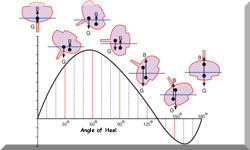
While losing weight is usually good, removing 140kg from a low-down bilge location can slightly raise the boat’s centre of gravity. If the lithium bank is moved to a more convenient but higher location (such as under a saloon settee rather than in the deep bilge), the impact on the Angle of Vanishing Stability (AVS) must be considered. Always try to keep the new bank as low and as central as possible to maintain your Category A stability rating.
Ventilation Requirements: Managing the "What If" Scenario
A properly engineered lithium installation assumes that while the chemistry is stable, the electronic or mechanical environment may fail. If a LiFePO4 cell is pushed into a high-temperature state—whether through an external fire, a dead short, or a failure in the charging regulation—it can undergo a process called "venting."
Unlike a lead-acid battery, which slowly outgasses hydrogen, a compromised lithium cell can release a concentrated volume of white, acrid smoke containing carbon monoxide and hydrogen fluoride. In an offshore environment, allowing this smoke to enter the cabin is a catastrophic safety failure.
1. The Primary Cooling Path
Lithium batteries are highly efficient, but the internal Battery Management System (BMS) and high-amperage busbars generate significant heat during "bulk" charging or when running high-load inverters.
- Active Cooling: For banks exceeding 400Ah, dedicated DC extraction fans should be installed to pull air across the terminals.
- Thermostatic Control: These fans should be triggered by the BMS or a thermal switch set to 35°C, ensuring that the cells remain within their optimal operating window to prevent premature capacity loss.
2. The Emergency "Overboard" Vent
This is the most critical "What If" component for a Category A vessel. The battery locker should be airtight relative to the cabin but vented directly to the exterior of the hull.
- The Chimney Effect: By using a sealed box with a vent hose leading to a dedicated transom or topside port, any smoke or gas produced by a cell failure is shunted overboard.
- One-Way Valves: To prevent green water from entering the battery box in heavy seas, these vents should be fitted with high-capacity "swan neck" loops or one-way flapper valves.
| Ventilation Type | Operational Goal | Offshore Requirement |
|---|---|---|
| Passive Airflow | Ambient Temperature Control | Dual-port (Inlet/Outlet) for natural convection |
| Forced Extraction | Managing Bulk Charge Heat | BMS-activated spark-protected fans |
| Emergency Exhaust | Off-gassing Containment | Airtight ducting to exterior topsides |
3. Separation of Gas and Electronics
A common mistake in yacht construction is housing the batteries and the high-current fuses or relays in the same unventilated space. If a battery vents, the gas is often flammable. Any spark from a fuse blowing or a relay switching can trigger an explosion.
In a robust "Cat A" installation, the batteries should be in a ventilated sub-compartment, with all switching and fusing located in a separate, adjacent dry space.
Regulatory Compliance: Meeting MGN 550 & ISO Standards
As of 2026, maritime authorities have caught up with the lithium trend. In the UK, MGN 550 (Marine Guidance Note) provides strict frameworks for the installation of lithium-ion batteries. Compliance is no longer just about safety; it is about insurance. If a fire occurs and the installation does not meet the standards for fused protection, thermal monitoring, and structural isolation, a claim may be rejected.
Summing Up
The integration of lithium into modern yachting is a transformative step toward sustainable, self-sufficient cruising. However, it requires moving away from the "drop-in replacement" mindset. By treating the battery bank as a critical structural component—properly isolated, ventilated, and positioned—sailors can enjoy the benefits of high-capacity power without compromising the fundamental safety of their vessel. In a Category A environment, the goal is redundancy and containment; lithium is no exception.

This article was written by Dick McClary, RYA Yachtmaster and author of the RYA publications 'Offshore Sailing' and 'Fishing Afloat', member of The Yachting Journalists Association (YJA), erstwhile member of the Ocean Cruising Club (OCC) and owner/administrator of 'Liveaboard Sailboats for Sale'.

The article is #8 in an 8-part series on the topic of Modern Yacht Construction & Compliance with Cat A (Ocean) Standards.
Frequently Asked Questions (FAQs)
Do I need a special fire extinguisher for Lithium batteries?
Do I need a special fire extinguisher for Lithium batteries?
While LiFePO4 does not release its own oxygen, a standard ABC extinguisher may not be enough to cool the cells. Specialised aqueous vermiculite dispersion (AVD) extinguishers or aerosol systems are now recommended for lithium fire zones.
Can I store other gear in the lithium battery locker?
Can I store other gear in the lithium battery locker?
No. The battery compartment should be kept clear of all other equipment, especially flammable liquids or metal tools that could cause a short circuit or fuel a fire.
How do I ventilate a lithium bank?
How do I ventilate a lithium bank?
Ideally, the locker should have a dedicated duct that leads to a transom vent or high on the topsides. This prevents the accumulation of heat during fast-charging and provides a path for smoke in an emergency.
Will my old charger work with Lithium?
Will my old charger work with Lithium?
Probably not. Lithium batteries require a specific charging profile (CC/CV) without an "equalisation" stage. Using a traditional lead-acid charger can overvoltage the cells and cause damage or fire.
Does a lithium bank affect my compass?
Does a lithium bank affect my compass?
Any large electrical bank can create a magnetic field. However, because lithium batteries are often housed in aluminium or plastic and use high-quality internal busbars, they often have less of an impact than the sprawling wiring of an old lead-acid bank.
Recent Articles


-
Mystery 35 Review: Specs, Performance & Buying Guide
Aug 29, 26 09:42 AM
An in-depth review of the Mystery 35 sailboat. Read technical specs, design ratios, sail performance, and common buyer inspection areas. -
Beneteau First 405 Review: Specs, Performance & Buyer’s Guide
Aug 26, 26 03:58 AM
Detailed Beneteau First 405 review covering specs, performance, bluewater capability, layouts and buyer’s checklist. -
Moody S38 Review: Specs, Ratios & Buyer’s Guide
Aug 12, 26 04:22 AM
In‑depth Moody S38 review covering specs, performance, design ratios, layout, strengths, trade‑offs & buyer inspection points.