- Home
- Sailboats 50'-55'
- Skye 51 Sailboat
The Skye 51 Sailboat
Specs, Performance Analysis & Cruising Characteristics
Key Takeaways
The Skye 51 is a heavy-displacement, ocean-going cutter designed by Kaufmann & Ladd and built by Mao Ta in Taiwan. It is a high-volume liveaboard known for its exceptional motion comfort and robust construction. While not a light-airs performer, its high ballast ratio and 51' (15.54 m) waterline make it a powerful passage maker capable of maintaining high average speeds in heavy weather.
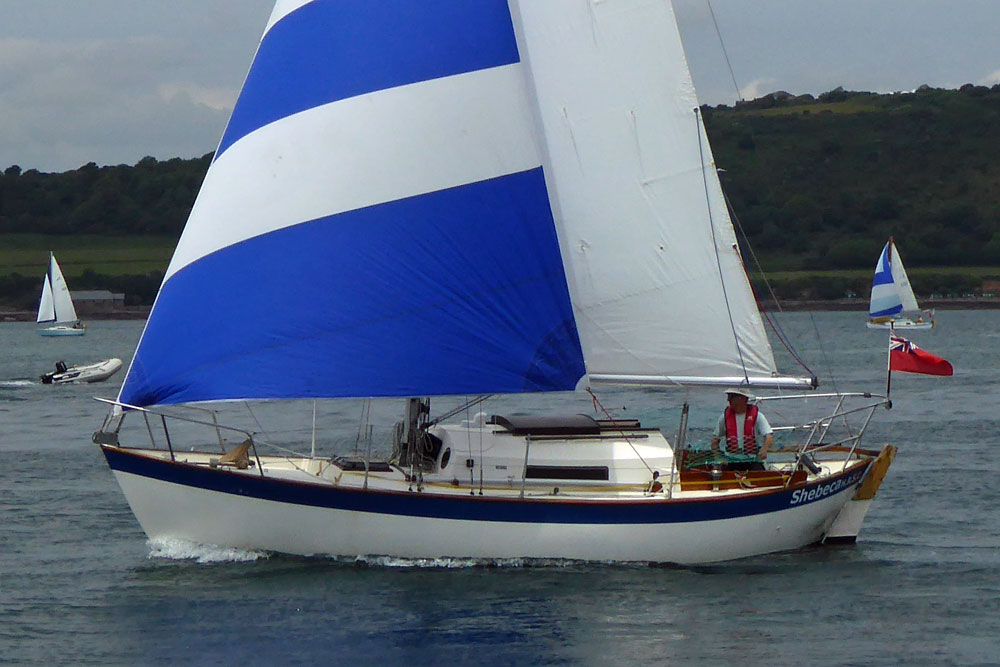
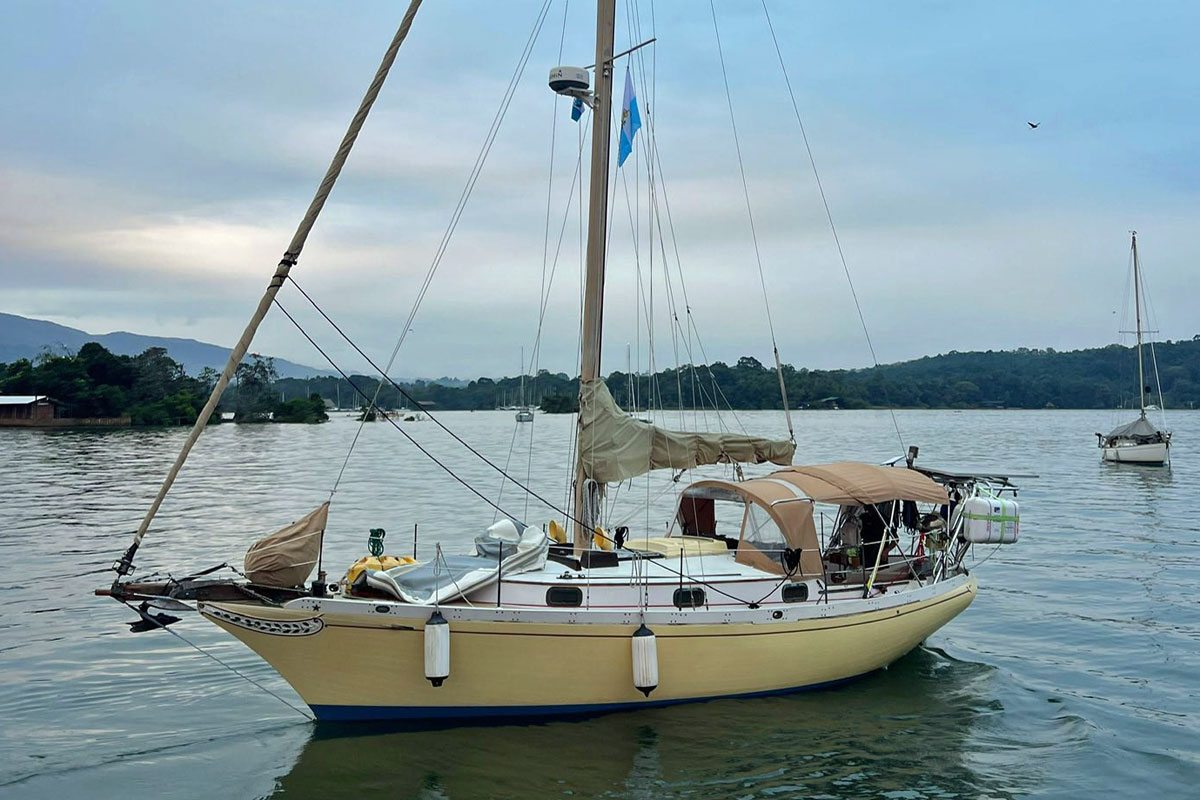
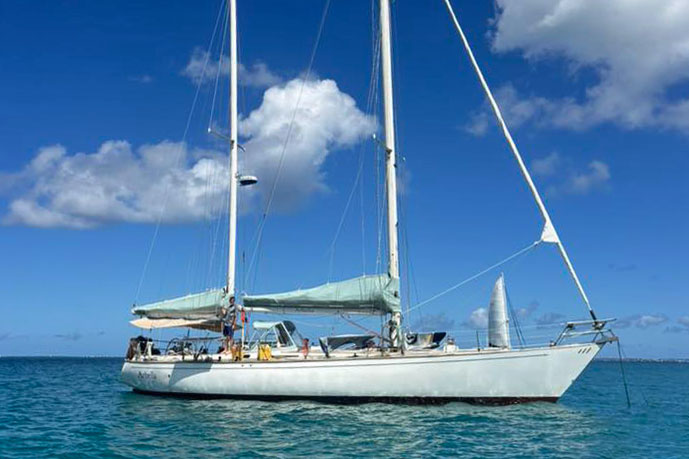 'Arbella', a Skye 51 sailboat
Pic by permission of the owner
Design & Construction
The Skye 51 was born from the drawing board of Kaufmann & Ladd and constructed by the Mao Ta shipyard in Taiwan during the late 1970s and early 1980s. Built from heavy-duty GRP (Glass Reinforced Plastic), the hull reflects the "Taiwan Turkey" era of overbuilt, sturdy cruisers, though the Skye 51 is often considered a tier above many of its contemporaries in terms of finishing and naval architecture.
The defining feature of this vessel is its traditional cruising lines blended with a modern underbody for its time. Unlike many full-keel cruisers of that era, the Skye 51 features a modified fin keel and a skeg-hung rudder. This configuration provides a significant boost to manoeuvrability and reduces drag without sacrificing the directional stability required for long offshore legs.
While most were produced as cutters, there are variations in the interior layout, typically offering a three-cabin arrangement. Some versions featured a more open "charter" style, but the majority were commissioned for private owners planning circumnavigations.
Sail Areas & Rig Dimensions
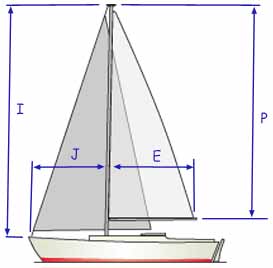 Rig dimensions
The Skye 51 is a powerful rig, usually configured as a cutter to allow for versatile sail plans in varying wind strengths.
- Total Sail Area (100% Foretriangle): 1,173 ft² (108.97 m²)
- I (Forestay Height): 61'6" (18.75 m)
- J (Foretriangle Base): 21'9" (6.63 m)
- P (Mainsail Luff): 55'0" (16.76 m)
- E (Mainsail Foot): 18'4" (5.59 m)
Published Specification: The Skye 51 Blueprint
| Feature | Specification |
|---|---|
| LOA | 51'0" (15.54 m) |
| LWL | 42'8" (13.00 m) |
| Beam | 14'3" (4.34 m) |
| Draft | 7'0" (2.13 m) |
| Displacement | 42,000 lbs (19,051 kg) |
| Ballast | 16,000 lbs (7,257 kg) |
| Rig Type | Cutter |
| Hull Material | GRP |
| Production | 1978 – 1985 |
Performance Analysis: Understanding the Design Ratios
To truly grasp how the Skye 51 handles, we must look at the mathematical profile of the hull. For a deeper understanding of these metrics, see our guide on Understanding Boat Performance & Design Ratios.
| Ratio | Value | Interpretation |
|---|---|---|
| SA/D | 15.5 | Motorsailer territory; requires significant breeze to move. |
| D/L | 241 | Moderate-heavy cruiser; excellent load-carrying capacity. |
| B/D | 38% | Stiff and stable; can carry sail well into the upper wind ranges. |
| CSF | 1.65 | Well under 2.0; very safe for offshore and trans-oceanic use. |
| Comfort Ratio | 42.4 | Extremely high; provides a slow, predictable motion in a seaway. |
Structural Integrity & Stability Dynamics
The solid GRP hull of the Skye 51 is a product of an era where thickness was the primary solution for strength. This mass contributes to the vessel's high comfort ratio. In a seaway, the boat does not jerk or accelerate over waves; instead, it moves through them with a deliberate, reassuring motion that reduces crew fatigue on long passages.
The modified fin keel and skeg-hung rudder provide a balance between protection and performance. Unlike a traditional full keel, this setup allows the Skye 51 to tack reliably in light air and back up under power with far more control than many of its contemporaries.
The Buyer’s Checklist: Common Problem Areas
When inspecting a Skye 51, the age of the vessel and its Taiwanese origins dictate the focus of the survey:
- Teak Decks: Many were delivered with thick teak decks screwed into the sub-deck. Over forty years, these screws can become paths for water ingress into the core. Check for soft spots and staining on the interior headliner.
- Fuel and Water Tanks: The original tanks were often made of mild steel or stainless steel buried deep in the bilge or under joinery. Replacement is a major undertaking involving the removal of the cabin sole.
- Chainplates: Given the rig's power, the chainplates and their attachment points should be pulled and inspected for crevice corrosion.
- Osmosis: While the hulls are thick, earlier GRP resins were prone to blistering. A moisture meter is an essential tool here.
- Electrical Systems: Many older Skye 51s still have original wiring that was not tinned. Expect to factor in a total rewire if the boat hasn't seen a recent refit.
Comparison: The Skye 51 vs The Competition
When looking at a vessel of this scale, comparisons must be made against other offshore powerhouses that prioritise volume and heavy-weather momentum over light-airs agility.
Skye 51 vs Hylas 54
The Hylas 54 is often the first alternative that comes to mind. While the Hylas is a more modern Germán Frers design with a faster hull shape and a more contemporary interior, the Skye 51 offers a more traditional, rugged aesthetic. The Hylas 54 will generally outrun the Skye 51 in light to moderate conditions, but many traditionalists prefer the Skye's heavier displacement and the way it handles a head sea.
Skye 51 vs Stevens 47
Though slightly shorter on paper, the Stevens 47—another Perry design—is the Skye’s closest spiritual cousin. The Stevens 47 is often praised for having a slightly better balance between performance and comfort. However, the Skye 51 uses its extra 4' (1.22 m) of length to offer significantly more internal volume and larger tankage. For long-term living, that extra space is hard to beat.
Skye 51 vs Hans Christian 48T
The Hans Christian 48T is the heavyweight alternative for those who love the traditional look. While the Hans Christian is renowned for its beautiful (and abundant) teak joinery, it is often considered slower than the Skye 51. The Skye's modified fin keel and skeg-hung rudder give it a definitive edge in manoeuvrability and pointing ability over the more traditional full-keel Hans Christian.
If you'd like to compare this boat with others in this size range, take a look at Cruising Boats from 50' to 55' overall....
Configuration, Layout & Cruising Characteristics
The interior of the Skye 51 is a showcase of traditional joinery, usually finished in rich teak. The galley is typically U-shaped and positioned to be secure at sea, with deep sinks and plenty of bracing points.
Tankage is generous, often exceeding 200 gallons (757 litres) of fuel and water, which is essential for remote cruising. The cockpit is deep and well-protected. On deck, the wide side decks make moving forward to handle sails or the anchor a safe affair even when the boat is heeled.
Could this be your ideal cruising boat?
It may well be, but before going any further, it might be worth taking a look at my eBook 'How to Avoid Buying the Wrong Sailboat'...
Summing Up
The Skye 51 is a purist's bluewater cruiser. It trades light-air agility for massive stability, comfort, and the ability to carry everything you need for years away from a marina. It is a boat that requires a captain who respects its momentum and understands that its strength lies in its endurance. Provided the teak decks and aging tanks have been addressed, it remains one of the best values on the market for a serious ocean-going home.
This article was written by Dick McClary, RYA Yachtmaster and author of the RYA publications 'Offshore Sailing' and 'Fishing Afloat', member of The Yachting Journalists Association (YJA), and erstwhile member of the Ocean Cruising Club (OCC).
Frequently Asked Questions (FAQs)
How does the Skye 51 perform in light winds?
How does the Skye 51 perform in light winds?
With a Sail Area/Displacement ratio of 15.5, it is under-canvassed for light air. You will likely find yourself starting the engine in anything under 10 knots of true wind unless you carry a dedicated cruising chute.
Is the Skye 51 suitable for single-handed sailing?
Is the Skye 51 suitable for single-handed sailing?
While large and heavy, the cutter rig allows for manageable sail segments. With a modern windlass and lines led aft, it can be handled alone, but it is much more comfortably managed by a couple.
Are the original engines reliable?
Are the original engines reliable?
Many were fitted with Perkins or Lehman diesels. These are known for extreme longevity if maintained, though they can be noisy by modern standards.
What is the bridge clearance for a Skye 51?
What is the bridge clearance for a Skye 51?
The mast height is approximately 67' (20.42 m) above the waterline, meaning it will not clear the 65' (19.81 m) fixed bridges on the US Intracoastal Waterway.
What should I expect for a typical refit budget?
What should I expect for a typical refit budget?
If the teak decks and tanks are original, a buyer should set aside £40,000 to £60,000 ($50,000 to $75,000) for professional replacement and system upgrades.
Recent Articles


-
Discovery 55 Sailboat Review: Specs, Ratios & Bluewater Capability
Oct 14, 26 06:04 AM
Detailed Discovery 55 buyer’s guide covering specs, ratios, sailing behaviour, problem areas and bluewater suitability. -
Should I Buy a Boat? Four Questions to Answer Before You Commit
Oct 02, 26 04:40 AM
Thinking "Should I buy a boat?" This guide helps you decide, with key considerations from cost & maintenance to your personal sailing aspirations. -
Offshore Internet with Starlink: Hardware, Plans, and Setup Guidance
Oct 01, 26 01:15 PM
A clear, practical guide to choosing the right Starlink hardware and plan for offshore cruising. Learn what to buy, how to install it, and how to manage power afloat.