- Home
- Cruising Yachts 45' to 50'
- Passoa 47
The Passoa 47 Sailboat
Comprehensive Specs, Performance Analysis & Cruising Characteristics
Key Takeaways
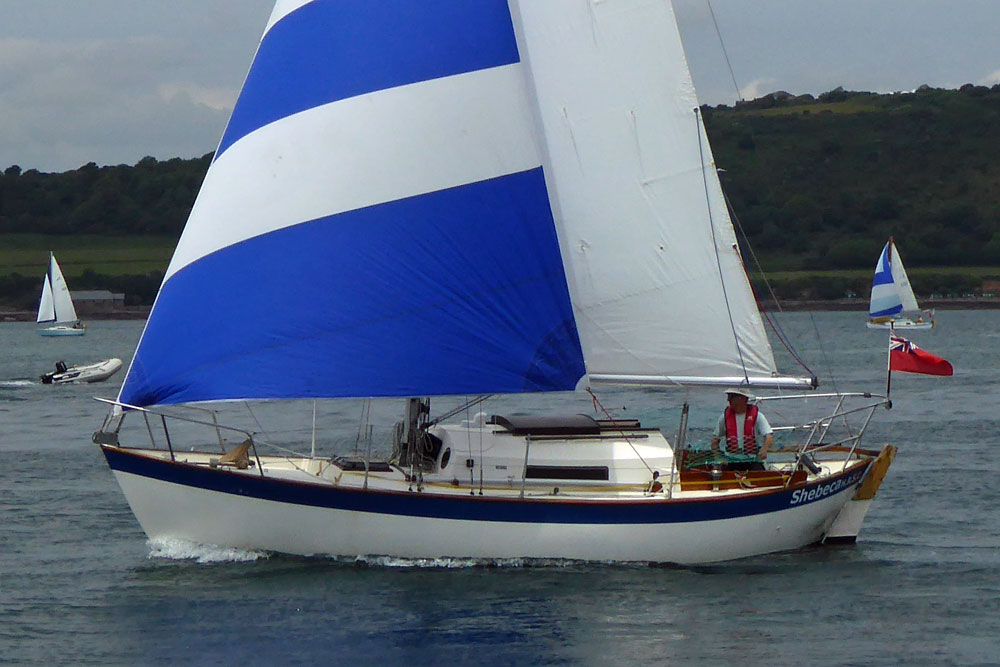
The Passoa 47 is a hoghly-regarded blue water cruiser, designed by Philippe Harlé and built in France by the Garcia shipyard. Its hallmark is a robust aluminium construction paired with an integral lifting keel, allowing for shallow-water exploration and the ability to dry out on its hull. While it is not a light-air flyer, its generous displacement and high comfort ratio make it a predictable, safe and formidable passage-maker for serious offshore sailing.
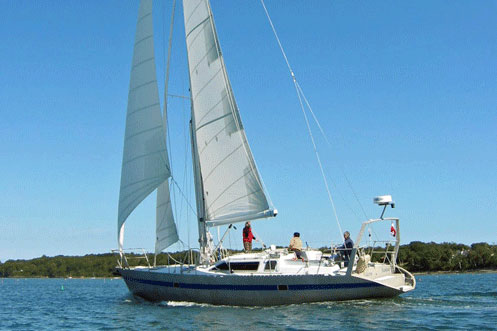
Table of Contents
Design & Construction
The Passoa 47 emerged from a collaboration between the visionary designer Philippe Harlé and Garcia Yachts, a French shipyard that has long been the gold standard for custom and semi-custom aluminium yachts. In the late 1980s and 1990s, the "Passoa" range helped define the concept of the dériveur intégral—a fully lifting keel boat that carries its ballast internally.
Constructed from high-grade 5083 or Sealium aluminium, the hull is designed for impact resistance and longevity. Unlike traditional GRP boats, an aluminium hull like that of the Passoa 47 offers a level of structural integrity that is essential for high-latitude sailing or navigating coral-strewn waters. The builder, Garcia, is known for over-engineering their vessels; the welds are often left visible on the interior to demonstrate the precision of the metalwork, and the insulation is typically far superior to mass-produced yachts, preventing condensation and maintaining a temperate cabin environment in both tropics and glacial regions.
The key defining feature of the Passoa 47 is its integral lifting keel. Unlike a swing-keel where the ballast is in the blade, the Passoa 47 keeps its ballast in the belly of the hull. This means that when the keel is raised, the boat draws a mere 3'7", allowing it to enter lagoons or tidal harbours that would be inaccessible to a fixed-keel yacht of similar size. This feature does more than just open up new anchorages; it is a safety mechanism. In heavy weather, raising the keel slightly allows the boat to "slide" down the face of breaking waves rather than tripping over a deep fin, significantly reducing the risk of a roll.
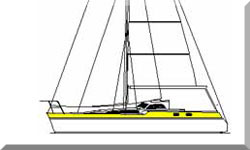
Published Specification: The Passoa 47 Blueprint
Performance Analysis: Understanding the Design Ratios
To truly appreciate how the Passoa 47 handles the rigours of the open ocean, we must look beyond the aesthetics and examine the underlying physics of its design.
The SA/D ratio of 20.6 is surprisingly high for a boat often perceived as a "moderately heavy" metal cruiser. This suggests that Jean-François André intended for the Passoa 47 to be more than just a survival capsule; it has enough sail area to move well in light to moderate airs. However, as with all cruisers, once the water and fuel tanks are topped up and the spares are stowed, the D/L ratio will climb. A loaded Passoa 47 is a momentum boat; it takes a moment to get moving, but once it finds its groove, it tracks beautifully through a sea state that would leave lighter yachts hobby-horsing. For a more detailed look at how these numbers influence your time at sea, see our guide on Understanding Boat Performance & Design Ratios.
Advanced Analysis & Context
The use of aluminium in the Passoa 47 provides a specific set of advantages that are hard to replicate in GRP or steel. Aluminium is lighter than steel but offers much of the same puncture resistance. For a blue water sailor, this provides peace of mind when navigating regions with floating debris or poorly charted shoals. Maintenance is also simplified; if the boat is left unpainted above the waterline, it develops a thin layer of aluminium oxide that protects the metal from further corrosion. There is no gelcoat to craze or osmosis to fear.
However, the integral lifting keel does change the performance profile compared to a deep-finned yacht. Because the ballast is higher up in the hull, the boat relies more on its hull form (form stability) and internal weight than on a deep lead bulb. When the 3.00m (9'10") board is fully down, the Passoa 47 points well and resists leeway effectively. When reaching or running, the board can be partially raised to reduce drag. Owners should be aware that the board itself is not ballasted; its purpose is purely hydrodynamic. This means the boat is inherently stable even with the board up, though it will slide sideways if you try to sail upwind without it.
Configuration, Layout & Cruising Characteristics
Stepping below decks on a Passoa 47, one is immediately struck by the practical, sea-going layout. Most versions feature a large, U-shaped galley to port, which is secure to use even when the boat is heeled. The saloon is typically elevated slightly, providing excellent visibility through the coachroof windows—a precursor to the modern deck saloon concept. This "pilot house" feel is a boon for long watches in cold climates, allowing the crew to keep a lookout from the warmth of the cabin.
Tankage is another area where the Passoa 47 shines. Being an aluminium boat, the tanks are often integrated into the hull structure, providing massive capacities for water and diesel. It is not uncommon to find Passoa 47s with 800 litres of fuel, giving them an incredible motoring range for crossing windless zones or navigating remote canals. The cockpit is deep and well-protected, usually featuring a massive aluminium arch at the stern for mounting solar panels, wind generators, and davits.
For those planning a life on board, the storage is cavernous. The lack of a deep keel stub means the bilge area is somewhat shallower than a fixed-keel boat, but the beam and hull volume more than make up for it.
Could this be your ideal cruising boat?
It may well be, but before going any further, it might be worth taking a look at my eBook 'How to Avoid Buying the Wrong Sailboat'...
Summing Up
The Passoa 47 is a specialist tool designed for a specific purpose: to take a crew anywhere in the world with a high degree of safety and self-sufficiency. Its aluminium construction offers unmatched durability, while the integral lifting keel provides a level of versatility that fixed-keel boats simply cannot match. It is not a boat for the casual weekend racer, nor is it the cheapest option on the second-hand market due to the high cost of aluminium fabrication. However, for the sailor who views a yacht as a rugged vehicle for exploration rather than a floating apartment, the Passoa 47 is a benchmark design that has stood the test of time.
In short, the Passoa 47 is a "go-anywhere" vessel that trades ultimate upwind speed for immense structural strength and shallow-water access. Its design ratios point to a comfortable, stable passage-maker that excels when the conditions get rough. While maintenance requires an understanding of galvanic corrosion and aluminium-specific care, the reward is a hull that can literally last a lifetime and retain its value far better than its plastic counterparts.
Interested in sailboats of a similar size to the Passoa 47? Then to might like to take a look at Cruising Sailboats in 45' to 50' size range...

This article was written by Dick McClary, RYA Yachtmaster and author of the RYA publications 'Offshore Sailing', member of The Yachting Journalists Association (YJA), erstwhile member of the Ocean Cruising Club (OCC) and owner/administrator of 'Liveaboard Sailboats for Sale'.

Frequently Asked Questions
Is the Passoa 47 difficult to maintain because it is aluminium?
Is the Passoa 47 difficult to maintain because it is aluminium?
Not necessarily, but it requires a different approach. You must be vigilant about the electrical system to prevent galvanic corrosion and ensure that any hardware added to the hull is properly insulated from the metal. However, you will never have to worry about osmosis or hull rot.
Can the Passoa 47 really be beached?
Can the Passoa 47 really be beached?
Yes. The integral keel retracts completely into the hull, and the rudder and propeller are often protected by a skeg or a "shoe." It is designed to sit flat on its hull on sandy or muddy bottoms, making it ideal for drying harbours.
How does the lifting keel affect the boat's stability?
How does the lifting keel affect the boat's stability?
Since the ballast is located in the bottom of the hull rather than in the keel itself, the boat’s centre of gravity is slightly higher than a fixed-keel boat. However, the Passoa 47 is designed with a wide beam and significant internal ballast to ensure it meets strict offshore stability standards.
What is the typical cruising speed under power?
What is the typical cruising speed under power?
With a well-matched diesel engine (usually in the 50hp to 80hp range), you can expect a comfortable cruising speed of 6.5 to 7.5 knots. Its long waterline helps maintain efficient speeds even when heavily loaded.
Is it a suitable boat for a couple to handle?
Is it a suitable boat for a couple to handle?
Yes. While it is a 47' boat, the cutter rig allows for smaller, more manageable headsails. Most are fitted with powerful winches and lines led back to the cockpit, making it a popular choice for adventurous couples.
Recent Articles


-
Offshore Lifejackets: The Complete Buyer's Guide
Sep 29, 26 10:12 AM
A practical guide to offshore lifejackets: buoyancy levels, inflation types, must-have features and servicing advice -
Serious Sailboat Safety Gear: Beacons, Lifejackets, Liferafts
Sep 29, 26 09:27 AM
Serious sailboat safety gear for offshore crews: EPIRBs, PLBs, lifejackets and liferafts, plus the 2026 UK beacon registration change and pre-passage checks. -
MOB Recovery Systems: Lifesling vs Ocean Safety Jon Buoy
Sep 29, 26 09:21 AM
Compare man overboard recovery systems for sailboats: Lifesling2, Lifesling3 and Ocean Safety's Jon Buoy, with pricing and which suits your boat.