- Home
- Cruising Yachts 35' to 40'
- Shearwater 39
The Shearwater 39 Sailboat
Specs, Performance Analysis & Cruising Characteristics
Key Takeaways: The Shearwater 39 is a South African built, Dudley Dix designed, bluewater cruiser with a traditional long fin keel and skeg-hung rudder, aimed squarely at sailors who value seakindliness, structural robustness and practical systems over interior fashion. It is a moderately canvassed cutter that rewards steady, conservative passagemaking rather than chasing daily-run records. The trade-offs are clear: a relatively heavy displacement, older systems on many examples, and a cockpit and interior that feel purposeful rather than showy. For an experienced skipper looking for a capable ocean boat, happy to budget for refit work and not obsessed with marina glamour, the Shearwater 39 can be a very serious contender.
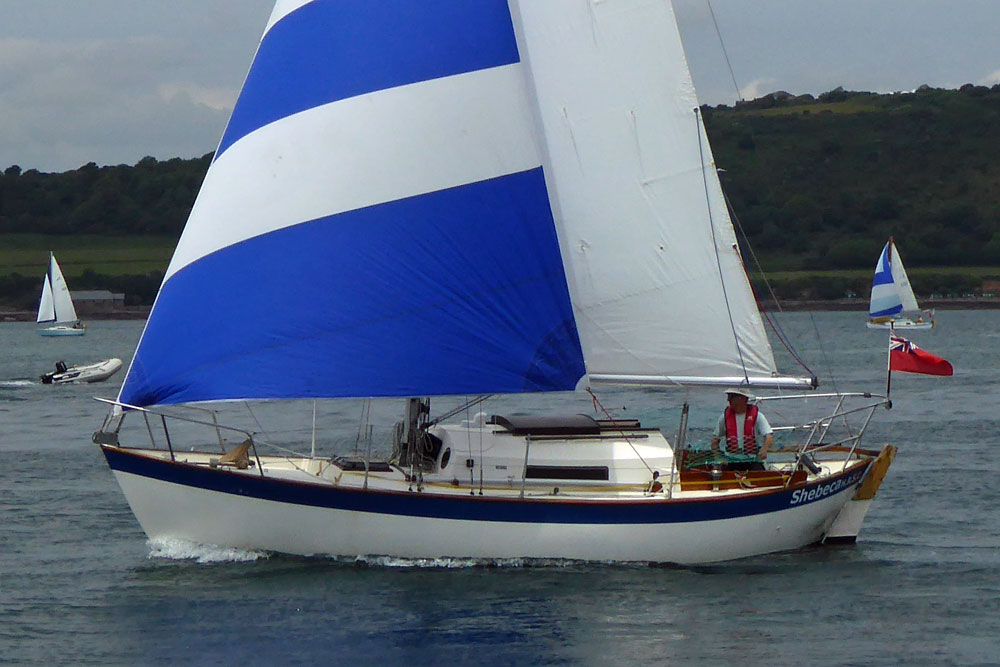
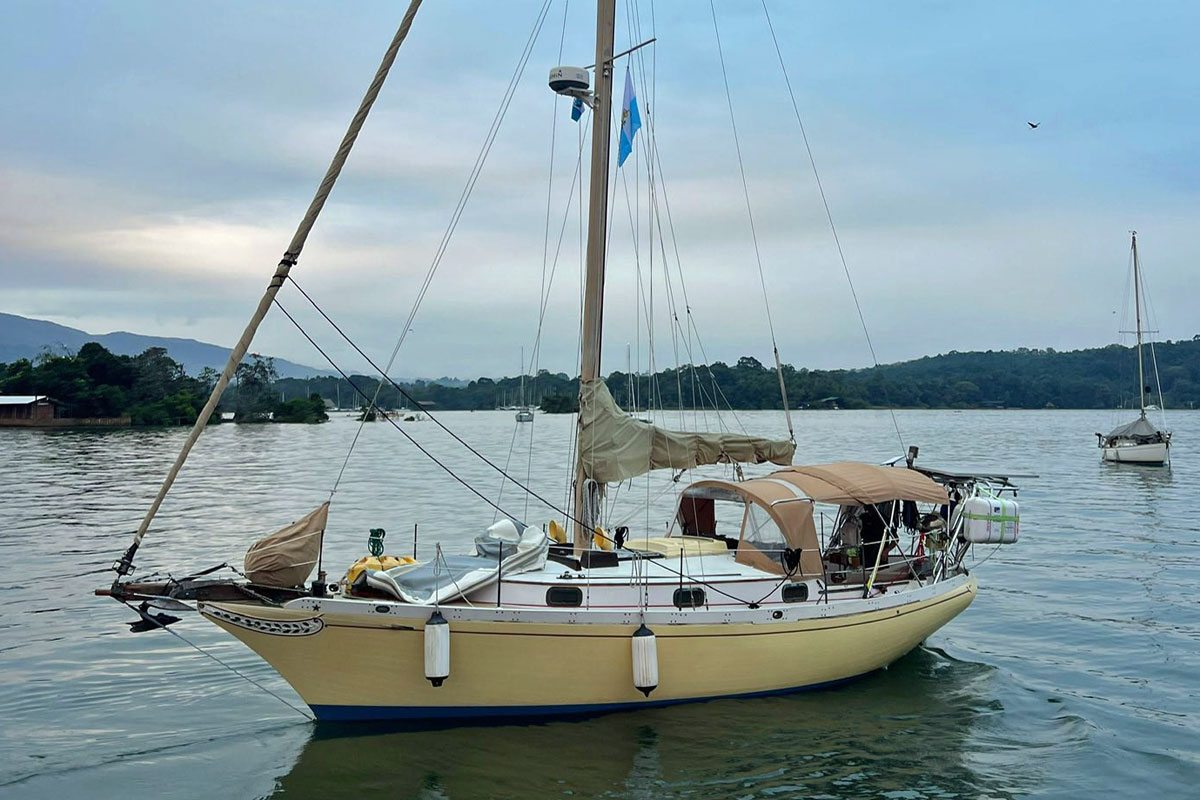
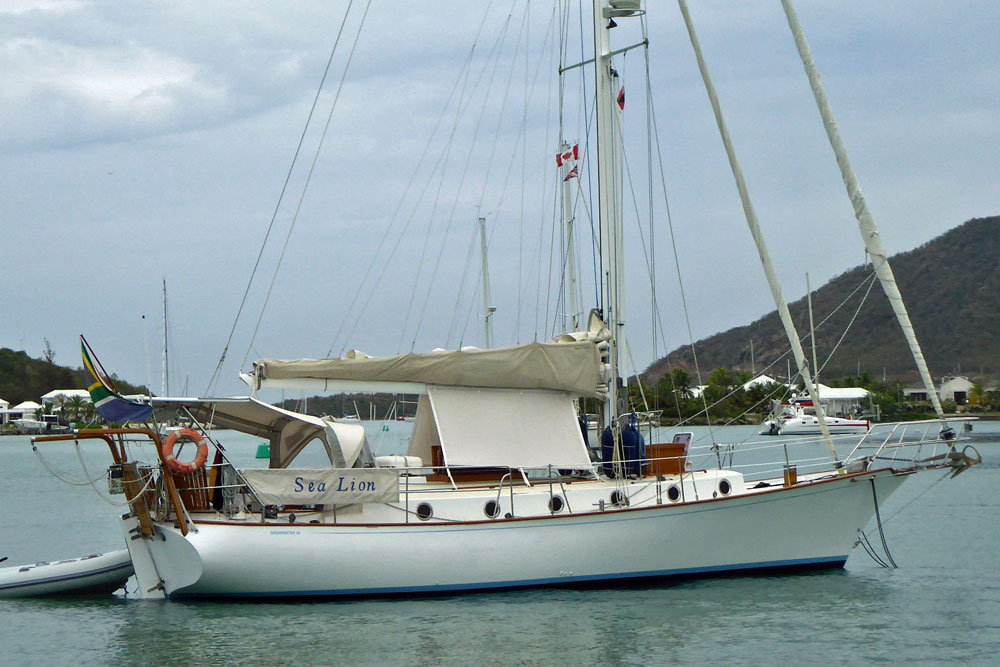 With her clipper bow and sweeping shear, the Shearwater 39 'Sea Lion', is undeniably a very handsome sailboat.
Table of Contents
- The Shearwater 39 at a Glance
- Design & Construction
- Published Specification: The Shearwater 39 Blueprint
- Sail Areas & Rig Dimensions
- Performance Analysis: Understanding the Design Ratios
- How the Shearwater 39 Sails
- Bluewater Capability: Strengths & Trade-Offs
- Configuration, Layout & Cruising Characteristics
- Who This Boat Is Best For
- The Buyer’s Checklist: Common Problem Areas
- Summing Up
- Frequently Asked Questions (FAQs)
The Shearwater 39 at a Glance
- Type: Bluewater cruising monohull
- Designer: Dudley Dix
- Builder: Primarily Jacobs Brothers / Shearwater Marine, South Africa (plus a few professionally and owner-finished hulls)
- Production Years: Early 1990s to mid‑2000s (approximate, with some later custom completions)
- Rig: Masthead cutter (some sailed as masthead sloops by omitting the inner forestay)
- Best for: Ocean passagemaking, liveaboard cruising, high-latitude capable voyaging in experienced hands
- Strengths: Strong hull and structure, conservative underwater profile, good motion comfort, sensible deck layout, serious tankage for size
- Trade-offs: Heavy displacement, modest light-air performance, older systems on most boats, limited production and parts standardisation
Design & Construction
The Shearwater 39 is a Dudley Dix design from the early 1990s, drawn as a no-nonsense offshore cruiser with a bias toward strength and seakindliness rather than marina showmanship. Hulls were moulded in South Africa, mainly by Jacobs Brothers and later by Shearwater Marine, with a mix of factory-finished and professionally completed interiors. A small number of hulls were sold for owner completion, so fit-out quality can vary and needs to be assessed case by case.
The hull is a solid glass laminate below the waterline with substantial reinforcement in way of the keel and mast step. Above the waterline and in the deck, builders typically used a cored construction (often foam or balsa, depending on year and yard) to keep weight under control while maintaining stiffness. The keel is a moderately long fin with a fairly deep root and a substantial ballast bulb, bolted to a heavily reinforced sump. The rudder is skeg-hung, with the skeg providing both directional stability and protection in the event of a grounding or floating debris strike.
Chainplates are usually internal stainless flat bar, bolted to substantial glassed-in knees or frames rather than being simply bonded into the hull. This is good news structurally, because it allows inspection and eventual replacement, but it does mean that buyers should insist on removing interior trim panels to check for crevice corrosion and cracking in the tabbing. Most boats were fitted with aluminium framed opening ports and through-bolted deck hatches. Fixed cabin windows, where fitted, are typically framed or mechanically fastened rather than purely bonded acrylic, although some later or refitted boats may have bonded replacements. Any signs of crazing, leaks or movement around the window cut-outs should be treated as a negotiation point.
There are no widely documented “official” variants such as centre cockpit or ketch rigs. The Shearwater 39 is fundamentally an aft-cockpit, masthead cutter with a long fin keel and skeg-hung rudder. However, there are meaningful differences between individual boats:
- Some have a slightly shallower custom keel (around 5'6" / 1.68 m) compared with the more common 6'0" / 1.83 m draft.
- Interior layouts vary between a classic two-cabin arrangement (forecabin and aft quarter cabin) and a more open saloon with a large technical space aft.
- A few boats are sailed as masthead sloops by removing or de-emphasising the inner forestay and staysail.
The design predates the widespread use of CE categories and there is no commonly published STIX stability index for the Shearwater 39. In practice, the combination of heavy displacement, relatively narrow beam for length, deep ballast keel and skeg-hung rudder places it firmly in the “serious offshore cruiser” camp rather than coastal weekender territory.
Published Specification: The Shearwater 39 Blueprint
Below are typical published figures for the Shearwater 39. Individual boats may differ slightly, especially custom or owner-finished examples.
| Specification | Value |
|---|---|
| LOA | 39'3" (11.96 m) |
| LWL | 31'6" (9.60 m) |
| Beam | 12'4" (3.76 m) |
| Draft (standard) | 6'0" (1.83 m) |
| Draft (some shoal versions) | approx. 5'6" (1.68 m) |
| Displacement | 22,000 lb (9,980 kg) approx. |
| Ballast | 8,800 lb (3,990 kg) approx. |
| Rig type | Masthead cutter |
| Hull material | GRP (solid below waterline, cored topsides/deck) |
| Production dates | Early 1990s to mid‑2000s (approx.) |
Sail Areas & Rig Dimensions
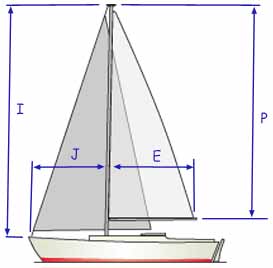 Rig dimensions
Typical rig dimensions for the Shearwater 39 are in this ballpark (always verify against the actual boat, as spars and sails may have been changed):
- I: 50.5' (15.39 m)
- J: 16.4' (5.00 m)
- P: 44.3' (13.50 m)
- E: 15.4' (4.69 m)
From these, the usual sail areas are:
- Mainsail area: roughly 340ft2 (31.6m2)
- Foretriangle (100% foretriangle): roughly 415ft2 (38.5m2)
- Typical working headsail / yankee: 120–130% of J, so around 500–540ft2 (46.5–50.2m2)
- Staysail: around 150–200ft2 (13.9–18.6m2)
In practice, most cruising Shearwater 39s carry a high-cut yankee on the outer forestay, a self-tacking or sheeted staysail on the inner forestay, and a fully battened mainsail with two or three deep reefs. Many owners also carry a cruising chute or asymmetric for lighter downwind work.
Performance Analysis: Understanding the Design Ratios
Using the typical figures above, we can derive the key design ratios that help describe how the Shearwater 39 behaves.
| Ratio | Value | What it suggests |
|---|---|---|
| Sail Area / Displacement (SA/D) | ≈ 15.4 | Moderate power; not a light-air flyer, but adequate for passagemaking with sensible sail choices. |
| Displacement / Length (D/L) | ≈ 310–320 | Firmly in the heavy-displacement camp, favouring comfort and load-carrying over speed. |
| Ballast / Displacement (B/D) | ≈ 40% | Healthy ballast ratio for offshore work, contributing to stiffness and knockdown resistance. |
| Capsize Screening Formula (CSF) | ≈ 1.7–1.8 | Below 2.0, which is generally considered favourable for offshore and ocean passages. |
| Brewer Motion Comfort Ratio | ≈ 35 | High comfort ratio, indicating a gentle motion and reduced fatigue on long passages. |
In plain language, these numbers describe a boat that is heavy for its length, with enough sail to keep moving but not so much that it becomes twitchy or overpowered. The ballast and capsize numbers are reassuring for offshore work, and the motion comfort ratio is in the territory of respected bluewater cruisers of similar size.
For more on this topic, you might want to take a look at Understanding Boat Performance & Design Ratios...
How the Shearwater 39 Sails
Upwind, the Shearwater 39 is not a modern, high-aspect fin keeler, but it is no slouch either. With a clean bottom and a decent set of sails, it will tack through a respectable angle and make steady progress in 12–18 knots of breeze. The long fin keel and skeg-hung rudder give a steady, predictable feel on the helm rather than a lively, fingertip response. In a seaway, that translates into less correction and less fatigue for the helmsman.
In lighter airs, the moderate SA/D and relatively heavy displacement mean you will need to keep the boat moving. A larger genoa or a cruising chute helps, and many owners report that the boat rewards active trimming and a willingness to change gears rather than simply pinching. Once the breeze is up into the mid-teens, the design comes into its own. The cutter rig allows you to shorten down in stages, rolling away the yankee and sailing under staysail and a reefed main while keeping the centre of effort low and close to the mast.
Downwind, the Shearwater 39 tracks well. The skeg-hung rudder and longish keel reduce the tendency to broach, and the hull form does not encourage surfing in the way that a flatter, lighter boat might. That is a trade-off: you will not see the same exhilarating surfs, but you also get fewer white-knuckle moments when a squall hits at night. With twin headsails poled out or a poled-out yankee and a preventer on the main, the boat will chug along steadily with a comfortable motion.
Short-handed, the cutter rig and conservative sail plan are real assets. Many boats have all lines led aft, and the ability to drop to staysail and deep-reefed main without leaving the cockpit is a big plus for a couple on passage. The helm remains light and predictable even when reefed down, and the boat does not develop nasty vices as it heels. Owners who have crossed oceans in the type often comment that the boat feels “on rails” once trimmed correctly.
Bluewater Capability: Strengths & Trade-Offs
The Shearwater 39 was conceived as a bluewater cruiser, and that shows in several areas. The hull form, keel and rudder arrangement, and structural detailing are all aimed at offshore work. The relatively high D/L and comfort ratio translate into a motion that is kind to crew, particularly when beating into a head sea or running in a quartering swell. The skeg-hung rudder offers both protection and directional stability, which is reassuring when contemplating long passages or higher-latitude routes.
Tankage is generally good for a 39-footer. Many boats carry in the region of 400–500 litres of water and 250–300 litres of diesel, sometimes more in custom builds. That gives a useful motoring range and the ability to be reasonably independent of shore water for extended periods, especially when combined with a watermaker. The hull will accept a fair amount of cruising gear without becoming overwhelmed, although, as with any heavy cruiser, there is a temptation to keep loading it up. Sensible stowage and weight management remain important.
Deck safety is another strong point. The side decks are usually wide, with substantial bulwarks or toe rails and strong stanchions. Handholds are generally well placed, and the cockpit is deep enough to feel secure without being a bathtub. The trade-offs are mostly about speed and aesthetics. Compared with a modern, lighter cruiser of similar length, the Shearwater 39 will be slower in light airs and may feel more “traditional” in its interior styling. For some buyers that is a positive; for others, it may be a compromise.
Configuration, Layout & Cruising Characteristics
The Shearwater 39 is an aft-cockpit boat with a relatively deep, secure cockpit and a straightforward deck layout. Primary winches are usually within easy reach of the helm, and the mainsheet is often on a traveller just forward of the companionway, which keeps loads central and allows good control of leech tension. The foredeck is uncluttered, with a substantial bow roller and windlass, and there is usually space for a serious ground tackle setup.
Below decks, layouts vary, but a common arrangement is:
- Forecabin with V-berth and good locker space
- Separate heads compartment just aft, often with a proper shower area
- Saloon with opposing settees and a central table, sometimes with a pilot berth outboard
- L-shaped galley near the companionway, secure at sea
- Navigation station opposite the galley
- Aft quarter cabin or large technical/storage area to starboard or port
The interior feel is that of a proper seagoing boat: plenty of handholds, secure seating, and sea berths that can be used on passage. Headroom is generally good for a 39-footer, and the beam is used sensibly rather than to create a floating apartment. Ventilation depends on the specific boat, but most have a decent number of opening ports and hatches.
For liveaboard use, the Shearwater 39 works well for a couple, with occasional guests. Two couples can live aboard for extended periods if they are organised and tolerant, but storage and privacy will be tighter. The boat’s systems layout, with good access to engine, tanks and wiring on most professional builds, makes ongoing maintenance more manageable than on some production boats where systems are buried behind mouldings.
Who This Boat Is Best For
Good fit for:
- Sailors planning serious offshore passages or circumnavigation who value strength and motion comfort
- Couples or small crews who sail short-handed and want a forgiving, predictable boat
- Owners willing to invest in a thoughtful refit rather than chasing the newest hull
- Those who prefer a traditional, purposeful interior to a show-home finish
Less ideal for:
- Buyers focused on light-air performance and fast weekend sailing
- Owners who want a large, open-plan interior with multiple cabins and big windows
- Those unwilling to take on older systems, potential osmosis treatment, or rig and engine upgrades
- Sailors who mainly day-sail in sheltered waters and rarely leave the marina
The Buyer’s Checklist: Common Problem Areas
When viewing a Shearwater 39, approach it as you would any serious offshore boat of this age: assume some refit work will be needed and budget accordingly. Key areas to inspect include:
- Rig and chainplates: Check standing rigging age and condition, including terminals and toggles. Inspect chainplates where they pass through the deck and where they bolt to internal knees. Look for rust streaks, cracking in surrounding laminate and any signs of movement.
- Keel and keel sump: Examine the keel-to-hull joint for any signs of weeping, cracking or previous repairs. Inside, inspect the keel bolts, backing plates and surrounding laminate for rust, cracking or compression.
- Rudder and skeg: Check for play in the rudder bearings, cracks at the skeg-to-hull joint and any signs of water ingress into the rudder blade. Tap the rudder for voids or delamination.
- Deck, core and windows: Look for soft spots around chainplates, stanchion bases, mast step and deck fittings. Check all hatches and windows for leaks, crazing and signs of previous resealing. Any bonded replacement windows should be inspected carefully for proper preparation and bedding.
- Engine and systems: Many boats will now be on their second or even third engine. Assess installation quality, access, exhaust routing and fuel system. Wiring on older South African boats can be variable; look for tidy looms, proper labelling and modern breakers.
- Tanks and plumbing: Original mild steel fuel tanks, if fitted, may be at the end of their life. Water tanks should be checked for contamination and leaks. Hose runs and seacocks deserve close attention.
Typical refit items on a Shearwater 39 might include new standing rigging, new sails, electronics upgrades, partial or full rewiring, tank replacement, and cosmetic work such as headlining and upholstery. None of this is unique to the design, but the cost can be significant, so it should be factored into any offer.
Could this be your ideal cruising boat?
It may well be, but before going any further, it might be worth taking a look at my eBook 'How to Avoid Buying the Wrong Sailboat'...
Summing Up
The Shearwater 39 sits in an interesting niche. It is not a mass-produced production cruiser, nor is it an exotic custom one-off. Instead, it is a thoughtfully drawn, strongly built, moderate-displacement bluewater boat that has quietly carried crews across oceans without much fanfare. The design ratios tell a clear story: heavy enough to be comfortable, with enough sail to keep moving, and with ballast and capsize numbers that inspire confidence offshore.
For a buyer who understands what that means in practice, and who is prepared to tackle the usual list of age-related jobs, the Shearwater 39 can offer a lot of boat for the money. It will not win many club races, and it will not impress those who judge boats by the size of their saloon windows. But if your priority is a trustworthy hull, a sensible rig and a motion that lets you sleep on passage, it deserves a place on your shortlist.
This article was written by Dick McClary, RYA Yachtmaster and author of the RYA publications 'Offshore Sailing' and 'Fishing Afloat', member of The Yachting Journalists Association (YJA), and erstwhile member of the Ocean Cruising Club (OCC).
Frequently Asked Questions (FAQs)
1. How fast is the Shearwater 39 on passage?
1. How fast is the Shearwater 39 on passage?
In typical trade-wind conditions, many owners report average daily runs in the 130–150 mile range when sailed conservatively. With a clean bottom, good sails and a crew willing to push, higher averages are possible, but the design is optimised for steady, comfortable progress rather than outright speed.
2. Can a couple handle a Shearwater 39 on ocean passages?
2. Can a couple handle a Shearwater 39 on ocean passages?
Yes. The cutter rig, sensible sail areas and predictable handling make it well suited to short-handed sailing. With decent autopilot or windvane gear, a couple can manage long passages without exhausting themselves, provided sail changes are planned and reefing is done early.
3. Is the Shearwater 39 suitable for high-latitude cruising?
3. Is the Shearwater 39 suitable for high-latitude cruising?
Structurally, the solid hull, skeg-hung rudder and robust keel attachment are all positives for higher latitudes. The limiting factors are more about insulation, heating, window integrity and deck hardware. A well-prepared Shearwater 39, with appropriate storm sails and protection, can be a capable high-latitude platform.
4. What are typical refit priorities when buying a Shearwater 39?
4. What are typical refit priorities when buying a Shearwater 39?
The big-ticket items are usually standing rigging, sails, engine and tanks, followed by electronics and wiring. Many buyers also invest in upgraded ground tackle, a modern windlass, improved charging (solar, alternator, possibly wind), and interior refreshes such as headlining and lighting.
5. How does the Shearwater 39 compare to similar bluewater cruisers like the Valiant 40 or Rustler 36?
5. How does the Shearwater 39 compare to similar bluewater cruisers like the Valiant 40 or Rustler 36?
Compared with a Valiant 40, the Shearwater 39 is in a similar conceptual space but with slightly more conservative sail area and a South African rather than North American build heritage. Against a Rustler 36, it offers more interior volume and tankage, with a similar focus on seakindliness. It is less “yachty” in finish than some European semi-custom builders, but often more robust than volume production cruisers of the same era.
Recent Articles


-
Best PLBs for Sailors in 2026 — Top Personal Locator Beacons Reviewed
Sep 26, 26 05:54 PM
Discover the best PLBs for sailors in 2026. Compact, reliable personal locator beacons ideal for man‑overboard emergencies and offshore cruising. -
Best AIS Systems for Cruising Sailboats 2026 — Class B & B+ Guide
Sep 25, 26 05:20 PM
Find the best AIS systems for cruising sailboats in 2026. Clear guidance on Class B vs Class B+, transceivers vs receivers, NMEA 2000 compatibility, and top AIS units available on Amazon. -
Comparing Handheld VHF Radios
Sep 25, 26 04:38 PM
Budget, Mid-Range and Premium VHF Radios functionality and performance compared