- Home
- Cruiser Yachts under 30'
- Vertue 25 Heavy‑displacement Long‑keel Offshore Cruiser Review & Buyer’s Guide
The Vertue 25 Sailboat
Specs & Key Performance Indicators
Key Takeaways: The Vertue 25 is a small, ultra‑heavy long‑keel cruiser with a reputation that far exceeds its size. Designed by Jack Laurent Giles, it is built for offshore passages rather than marina posing or club racing. You get a slow but immensely reassuring boat that carries weight well, looks after its crew in ugly weather, and rewards patient, thoughtful sailing. The trade‑offs are obvious: limited interior volume, modest speed, and the maintenance burden of an ageing, traditionally built hull. It suits sailors who value seakindliness, structural integrity and self‑sufficiency over pace, and who are prepared to invest time and money into keeping a classic design in sound condition.
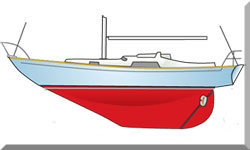
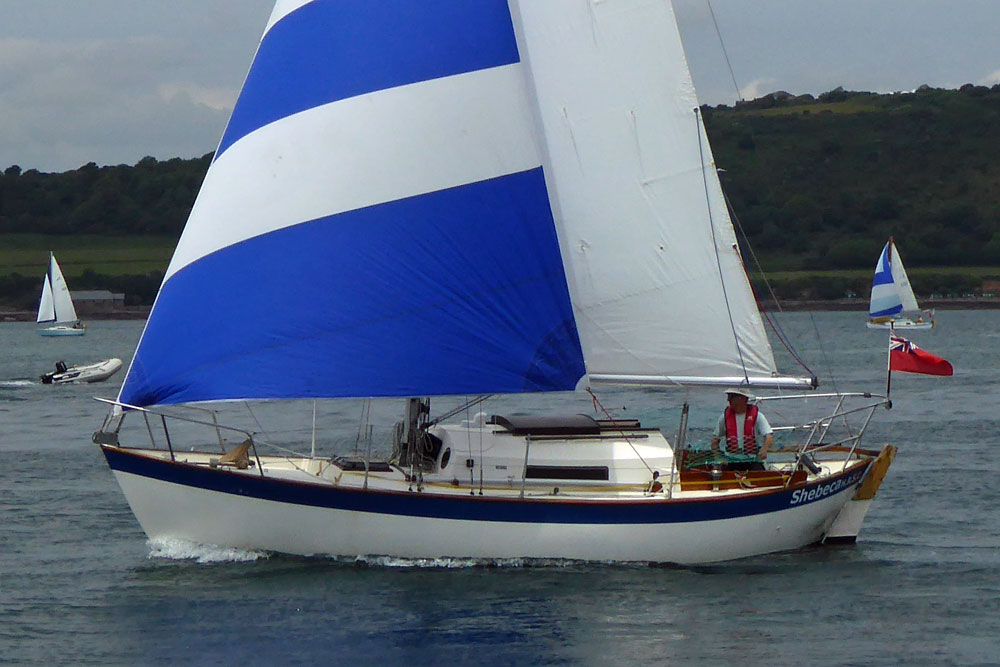
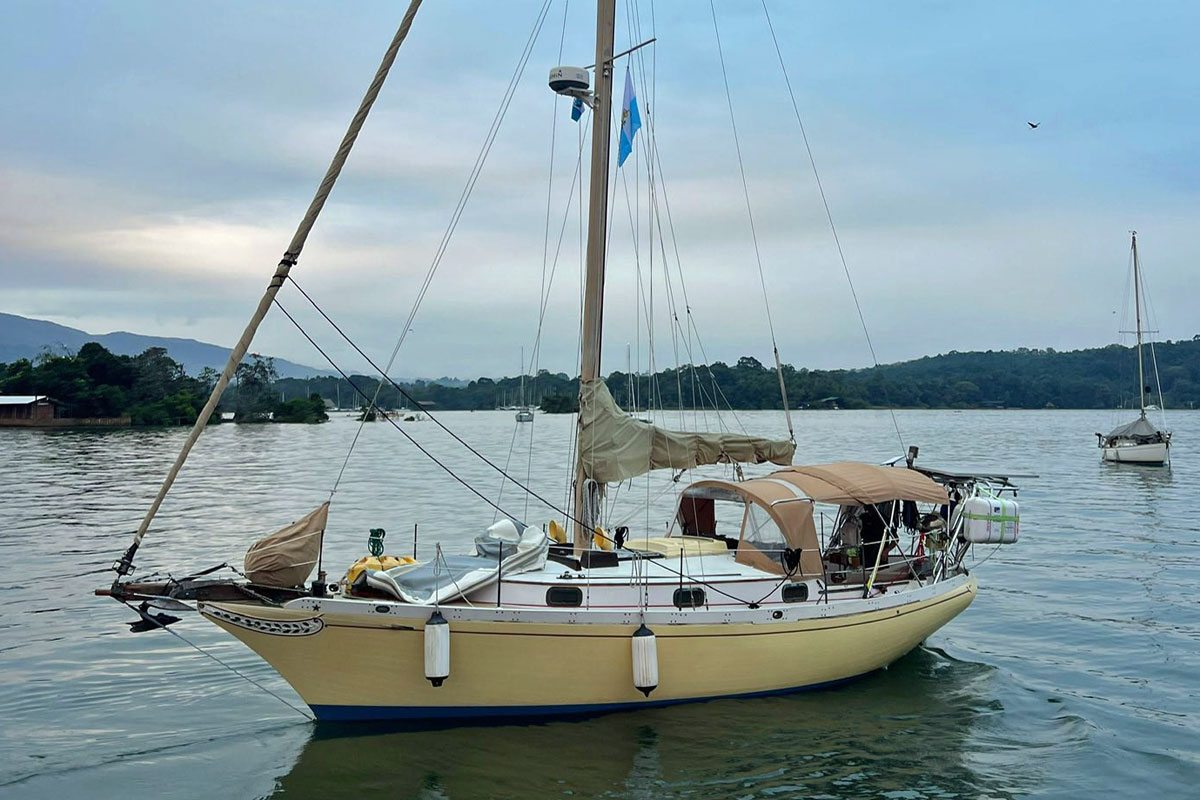
 An original wooden-hulled Vertue 25 from the 1930s
Table of Contents
- The Vertue 25 at a Glance
- Design & Construction
- Published Specification: Vertue 25 Blueprint
- Sail Areas & Rig Dimensions
- Performance Analysis: Understanding the Design Ratios
- How the Vertue 25 Sails
- Bluewater Capability: Strengths & Trade-Offs
- Configuration, Layout & Cruising Characteristics
- Who This Boat Is Best For
- The Buyer’s Checklist: Common Problem Areas
- Summing Up
- Frequently Asked Questions (FAQs)
The Vertue 25 at a Glance
- Type: Heavy‑displacement long‑keel cruiser
- Designer: Jack Laurent Giles
- Builder: A.H. Moody & Sons, Cheoy Lee, E.F. Elkins & others (UK & overseas yards)
- Production years: From 1936 (Andrillot/early Vertues) through post‑war decades; Vertue 25 specification widely adopted from late 1940s onwards
- Rig: Masthead sloop (earlier boats also gaff or Bermudan cutter variants)
- Best for: Ocean‑minded cruisers wanting a compact but proven offshore boat
- Strengths: Seaworthiness, motion comfort, load‑carrying, long‑keel tracking, strong owner community
- Trade‑offs: Modest speed, tight interior, age‑related maintenance, limited tankage by modern standards
Design & Construction
The Vertue story begins in 1936 with 'Andrillot', drawn by Jack Laurent Giles for Humphrey Barton. The hull that became known as the Vertue 25 is essentially that same 25' long‑keel form refined over time: deep sections, a full keel with a transom‑hung rudder, and a spoon bow with modest overhangs. The design earned its name when 'Epeneta' won the Little Ship Club’s Vertue Cup for a Biscay passage, and from there the class built a reputation through a string of serious voyages, including transatlantic passages and high‑latitude cruises.
Construction is traditional. Most Vertue 25s are wooden—typically carvel planked in pitch pine or mahogany on oak frames, with substantial floors and a hefty ballast keel bolted on. The long keel and transom‑hung rudder give excellent directional stability and a forgiving, predictable feel, at the cost of agility in tight marinas. Hulls from different yards vary in detail: sheer line, coachroof height, doghouse arrangements and cockpit depth all differ slightly, but the underwater profile is remarkably consistent.
Decks are usually laid in marine ply or solid timber, often sheathed later in glass cloth or epoxy. Cabin windows on wooden Vertues are generally framed ports or through‑bolted acrylic rather than modern bonded units, so leaks tend to come from failed sealant or corroded fastenings rather than adhesive failure. Chainplates are typically substantial stainless or bronze fittings bolted through the deck and tied into frames or knees; they are not usually bonded or laminated into the hull, which makes inspection and replacement more straightforward but demands vigilance for crevice corrosion and movement.
Over the years, rigs have evolved. Early boats carried gaff cutter rigs; many post‑war Vertues moved to Bermudan cutter or “slutter” configurations, and the published Vertue 25 specification is a masthead sloop with a single headsail. There are no centreboard or bilge‑keel variants in the core Vertue 25 specification; the keel is always long and deep, with a draft around 4'6" (1.4m). Cockpits are aft, modest in size, and interiors follow a familiar small‑cruiser pattern: two saloon berths, a forecabin with heads, and a compact galley.
Published Specification: The Vertue 25 Blueprint
| Specification | Value |
|---|---|
| LOA | 25'3" (7.7m) |
| LWL | 21'6" (6.6m) |
| Beam | 7'2" (2.2m) |
| Draft (max) | 4'6" (1.4m) |
| Draft (min) | Fixed long keel (no variable draft) |
| Displacement | 11,000lb (4,990kg) |
| Ballast | Approx. 4,500lb (2,041kg) lead or iron, depending on build |
| Rig type | Masthead sloop (some cutter/slutter variants) |
| Hull material | Primarily wood; some GRP examples |
| Production dates | From late 1940s Vertue 25 spec; class origins 1936 |
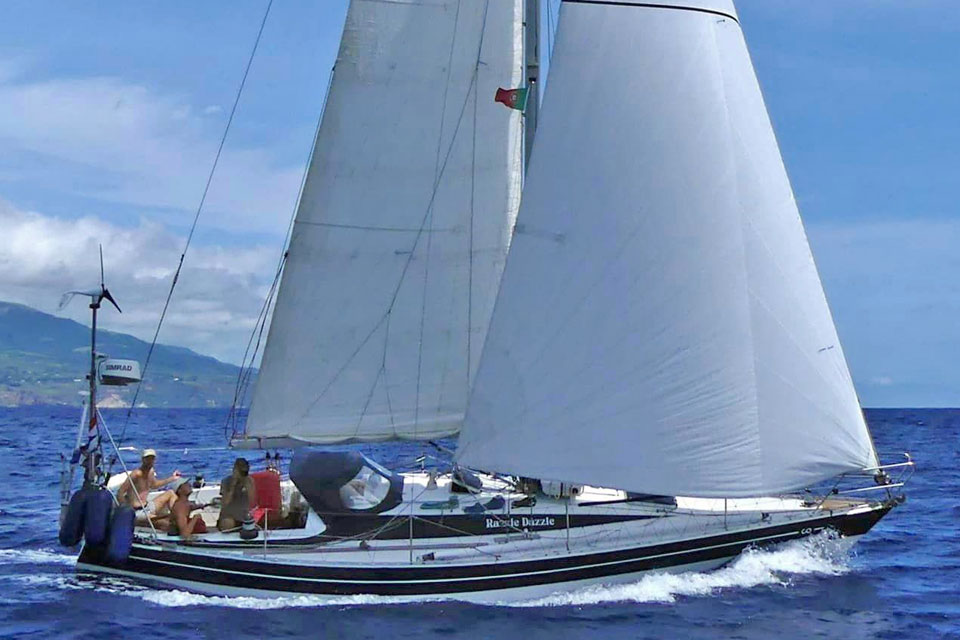
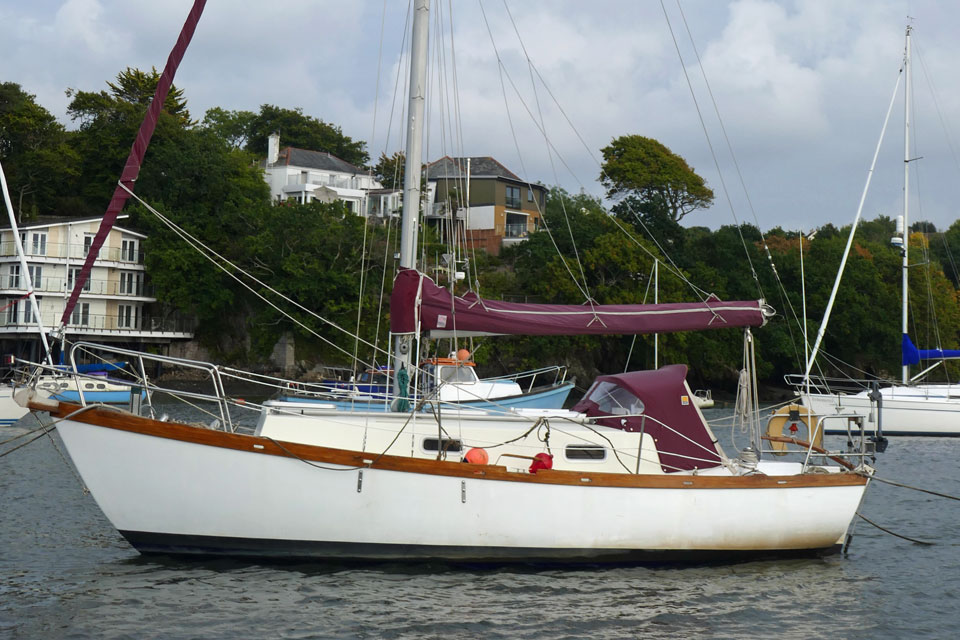 The later GRP Vertue MkII from the 1970s
A later GRP development of the design, known as the Vertue II, was introduced by Bossoms Boatyard in the 1970s. It retains the Laurent Giles hull form but adds more beam, slightly higher freeboard and a more standardised interior, along with GRP hull construction and iron ballast. The Vertue II is not simply a modernised Vertue 25; it is a distinct production variant with different maintenance considerations and a subtly different sailing feel. Sailors comparing the two will find the wooden Vertue 25 more traditional and heavier, while the Vertue II offers a little more interior volume and simpler upkeep. You can read a full review of the Vertue II here...
Sail Areas & Rig Dimensions
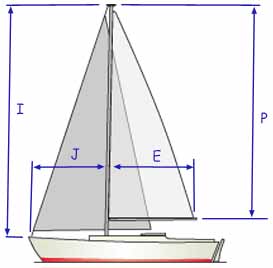 Rig dimensions
Published data for the Vertue 25 gives a total working sail area of around 395ft² (36.7m²) for the masthead sloop rig. In practice, most boats carry a mainsail of roughly 200–210ft² (18.6–19.5m²) and a headsail in the 180–195ft² (16.7–18.1m²) range as their everyday working combination, with larger genoas and smaller jibs added to suit local conditions and owner preference.
Exact rig dimensions (I, J, P and E) are not consistently published for all Vertue 25 builds, and there is some variation between yards and individual boats. As a guide, owners typically find:
- I: Foretriangle height in the mid‑30s ft (around 10.5–11.0m)
- J: Foretriangle base in the 10–11' (3.0–3.4m) range
- P: Mainsail luff length around 28–30' (8.5–9.1m)
- E: Mainsail foot length around 10–11' (3.0–3.4m)
Given the age and diversity of the fleet, any buyer planning new sails should have the rig measured on the actual boat rather than relying on generic numbers; many Vertues have had spars, chainplates and sail plans altered over the decades.
Performance Analysis: Understanding the Design Ratios
Using the widely published Vertue 25 specification, the key ratios are:
| Ratio | Value | Interpretation |
|---|---|---|
| Sail Area/Displacement (SA/D) | 9.7 | Under‑powered by modern standards; needs a solid breeze or generous canvas to keep moving. |
| Displacement/Length (D/L) | 494 | Firmly in the ultra‑heavy category; speed is modest, but load‑carrying and momentum are excellent. |
| Ballast/Displacement (B/D) | 40.9% | Stiff for its size; stands up well to canvas and resists excessive heel. |
| Capsize Screening Formula (CSF) | 1.3 | Comfortably below the 2.0 threshold often used for ocean work; favourable for offshore passages. |
| Brewer Motion Comfort Ratio | 54.6 | Exceptionally high for a 25' boat; motion more akin to a much larger heavy cruiser. |
Taken together, these ratios describe a boat that is slow but very steady. The Vertue 25 is not a light‑air flyer, and it will never feel lively in the way a modern fin‑keel cruiser does, but it carries weight without complaint and moves through a seaway with a calm, predictable rhythm that many owners value more than speed.
For more on this topic, you might want to take a look at Understanding Boat Performance & Design Ratios...
How the Vertue 25 Sails
Upwind, the Vertue 25 is steady rather than sparkling. With its long keel, deep sections and modest sail area, it points adequately but not aggressively, and it rewards a slightly fuller, “cruising” angle rather than pinching. In flat water and a good breeze, it will hold 5–6 knots happily; in light airs, progress can be slow enough that motor‑sailing becomes the pragmatic choice. The helm is typically light and positive, with a gentle tendency to weather helm as the boat heels, which many skippers find reassuring.
Downwind and on a reach, the boat comes into its own. The long keel and weight give a strong sense of tracking, and the hull shape resists sudden lurches or broaches. Owners who have taken Vertues offshore often comment that the boat feels far larger than its 25'3" (7.7m) length when running in a swell; it holds its line, the rudder remains effective, and the motion stays within a comfortable envelope. Reefing is straightforward on most boats, with slab reefs in the main and a choice of smaller headsails. Given the low SA/D, many owners carry a generous genoa and a spinnaker or cruising chute to keep the boat moving in moderate conditions.
Short‑handed behaviour is one of the Vertue’s strengths. The long keel and balanced rig make it easy to heave‑to, and the boat will sit quietly while you sort out sails, cook, or rest. Self‑steering gear works well, whether windvane or tiller‑pilot, because the hull does not demand constant correction. In harbour, the long keel and transom‑hung rudder mean tight manoeuvres require forethought, but once you accept that, the boat is manageable and predictable.
Bluewater Capability: Strengths & Trade-Offs
The Vertue 25’s bluewater credentials are well established. Numerous boats have crossed oceans, and the design has been used for Atlantic and long‑distance passages since the 1950s.* The combination of ultra‑heavy displacement, high motion comfort ratio and low CSF gives a hull that behaves kindly in rough water. The long keel protects the rudder, the deep sections resist slamming, and the boat’s modest freeboard keeps windage under control.
Tankage is limited by modern standards. Original installations often carried modest fuel and water capacities, with owners adding extra tanks or jerrycans for longer voyages. The boat will carry stores well, though: the high D/L means that adding weight does not dramatically change performance, and many Vertues sail offshore with heavy loads of gear, spares and provisions without feeling overwhelmed. Deck safety is generally good, with high coamings, strong guardrails and a secure cockpit, but details vary between builds. Some boats have narrow side decks and small foredecks, which demand care when working forward in a seaway.
The trade‑offs are clear. You gain a boat that looks after you when the weather turns foul, but you accept slow passages and the need to plan routes with realistic expectations of speed. For sailors who measure success in safe arrivals rather than passage times, that is a fair exchange.
* In 1950, Humphrey Barton sailed from England to New York in 'Vertue XXXV' in 40 days. This was the first transatlantic crossing by a small yacht and inspired many other sailors to follow his example.
Configuration, Layout & Cruising Characteristics
On deck, the Vertue 25 is compact but purposeful. The cockpit is small by modern standards, which is good news offshore: you sit low, protected by coamings, and there is less volume to flood if a wave comes aboard. Winches and cleats are usually within easy reach, and the long‑keel rigging layout keeps loads modest. Many boats have simple, robust hardware rather than complex systems, which suits the boat’s ethos.
Below, the layout is classic small‑cruiser. A short companionway leads into a saloon with two settee berths, often with stowage behind and under. The galley is typically to one side near the companionway, with a compact cooker and sink, and the heads are forward, either in a separate compartment or tucked near the forecabin. The forecabin usually offers two narrow berths, more suited to occasional use than permanent liveaboard life. Headroom is limited; most Vertues offer sitting headroom with perhaps a little more under a doghouse, but you will not stand upright unless you are short or the boat has been modified.
Storage is surprisingly good for the size, thanks to deep bilges, lockers under berths and space in the forepeak. For extended cruising, owners often add extra lockers, shelves and tie‑down points. As a liveaboard, the Vertue 25 is tight but workable for a single sailor or a committed couple who are comfortable living simply. For coastal pottering with occasional longer trips, it feels snug and secure rather than cramped, provided expectations are realistic.
Who This Boat Is Best For
Good fit for:
- Offshore‑minded cruisers: Sailors who want a small but proven boat for ocean passages and are happy to trade speed for security.
- Solo or short‑handed sailors: Those who value predictable handling, easy heaving‑to and forgiving motion.
- Classic boat enthusiasts: Owners who enjoy traditional construction, timber joinery and the character of a Laurent Giles design.
- Budget‑conscious ocean sailors: People willing to invest sweat equity into an older hull rather than buying a larger modern cruiser.
Less ideal for:
- Performance‑oriented sailors: Anyone who prioritises speed, racing or lively handling will find the Vertue 25 frustrating.
- Families wanting space: The interior is too tight for comfortable family cruising over long periods.
- Owners unwilling to maintain timber: If you do not want to deal with planking, fastenings and varnish, a GRP design may suit better.
- Marina‑focused sailors: Those who mostly day‑sail and entertain in harbour may prefer a roomier, lighter boat.
The Buyer’s Checklist: Common Problem Areas
Buying a Vertue 25 demands a careful survey and a realistic view of age‑related issues. Key areas to inspect include:
- Hull planking & fastenings: Look for sprung seams, soft spots, cracked frames and signs of previous repairs. Pay attention to the garboards and areas around the ballast keel. Fastenings (often copper or bronze) can suffer from corrosion or movement; re‑fastening is a known job on older timber hulls.
- Ballast keel & keel bolts: Check for rust streaks, movement at the keel‑to‑hull joint and evidence of past bolt replacement. Many Vertues have original keel bolts; replacing them is a significant but worthwhile refit.
- Deck & coachroof: Inspect for rot around mast partners, chainplates and hatch openings. Plywood decks under sheathing can hide problems; tap‑testing and moisture readings help. Any soft spots or flex underfoot need investigation.
- Chainplates & rigging: Chainplates should be removed and inspected if there is any doubt. Look for crevice corrosion at deck level and movement in the surrounding structure. Standing rigging on older boats is often overdue for replacement; budget accordingly.
- Rudder & sternpost: The transom‑hung rudder and its fittings take significant loads. Check pintles, gudgeons and the sternpost for wear, rot or movement.
- Engine & installation: Many Vertues have had multiple engine changes. Assess the current unit, mounts, shaft, stern tube and exhaust system. Access can be tight, and older installations may not meet modern standards.
- Interior structure & bilges: Look for signs of long‑term leaks, blackened timber, and any structural modifications. Bilges on heavy cruisers can hide a lot of history; cleanliness and dryness are good signs.
Typical refit costs can be substantial if you need to address keel bolts, rigging, sails and deck repairs in one go. The upside is that once these major jobs are done, the underlying design is robust and forgiving.
Could this be your ideal cruising boat?
It may well be, but before going any further, it might be worth taking a look at my eBook 'How to Avoid Buying the Wrong Sailboat'...
Summing Up
The Vertue 25 is not a boat for everyone, and that is part of its appeal. On paper, the numbers look extreme: ultra‑heavy displacement, low SA/D, high motion comfort ratio. In practice, those figures translate into a small cruiser that behaves like a much larger vessel when the sea gets up. It is slow, yes, but it is steady, and it carries weight and responsibility with ease.
For a buyer prepared to tackle the maintenance demands of an older, traditionally built hull, the Vertue 25 offers a credible path into serious offshore sailing without stepping into the 35–40' bracket. The key is to find a structurally sound example, understand the likely refit jobs, and accept that this is a boat built for safe arrivals rather than fast passages. If that matches your priorities, the Vertue 25 remains one of the most compelling small bluewater cruisers ever drawn.

Written by Dick McClary, cruising sailor and yachting journalist, publisher of Sailboat‑Cruising.com and admin of the Liveaboard Sailboats for Sale community.

Frequently Asked Questions (FAQs)
Q1: How does the Vertue 25 compare to the Vertue II in terms of offshore capability?
Q1: How does the Vertue 25 compare to the Vertue II in terms of offshore capability?
The Vertue II carries the same design philosophy into GRP with slightly more beam and headroom, but the original Vertue 25 is heavier and often more ballasted. Both are capable offshore boats; the choice comes down to your preference for timber versus GRP, interior volume and maintenance style.
Q2: What passage speeds can I realistically expect from a Vertue 25 on ocean routes?
Q2: What passage speeds can I realistically expect from a Vertue 25 on ocean routes?
Most owners plan on an average of 4–5 knots over long passages, with higher speeds in sustained favourable conditions. Routing should be based on conservative polars rather than optimistic figures; the boat rewards patience and good seamanship.
Q3: Is it practical to live aboard a Vertue 25 full‑time?
Q3: Is it practical to live aboard a Vertue 25 full‑time?
It is possible, particularly for a solo sailor, but space and headroom are limited. Long‑term liveaboard life demands careful organisation, modest expectations of comfort, and a willingness to accept a compact, simple environment.
Q4: What upgrades make the biggest difference to a Vertue 25’s cruising capability?
Q4: What upgrades make the biggest difference to a Vertue 25’s cruising capability?
Key upgrades include modern self‑steering (windvane or reliable tiller‑pilot), renewed standing rigging, good sails, improved tankage, and robust deck hardware. Many owners also add better insulation, ventilation and storage solutions below.
Q5: How does the Vertue 25 handle heavy weather compared with modern fin‑keel cruisers of similar length?
Q5: How does the Vertue 25 handle heavy weather compared with modern fin‑keel cruisers of similar length?
In heavy weather, the Vertue 25 tends to feel calmer and more predictable, with less snappy motion and a strong sense of security. Modern fin‑keel boats may be faster and more agile, but they often move more abruptly. The Vertue’s long keel and weight favour comfort and control over speed.
Recent Articles


-
Rigging a Carbon Mast: Carbon, PBO or Dyneema Compared
Sep 20, 26 08:01 AM
Rigging a carbon mast: how carbon rod, PBO and Dyneema compare on cost, weight and inspection, and why stainless wire or rod rarely make sense. -
Top-Down Furling Guide: Code Zeros and Asymmetric Spinnakers
Sep 19, 26 04:57 PM
Top-down furling explained for cruisers: how it works, which boats need one, common faults, sock versus furler costs, and the rule everyone forgets. -
Standing Rigging Inspection Checklist: A Sailor's Full Guide
Sep 19, 26 03:46 PM
A complete standing rigging inspection checklist covering swage fittings, chainplates, tension and going aloft safely, plus when to call in a professional rigger.