- Home
- Yacht Construction & Cat A Standards
- Assessing Keel Bolts & Structural Grids
Assessing Keel Bolts & Structural Grids in Production Yachts
Key Takeaways
A Category A yacht’s structural integrity depends on managing the immense leverage of a deep-draft keel. In practice, that load is carried through high-tensile keel bolts into an internal structural grid (or matrix), and then spread across the hull.
For the offshore sailor, one detail matters immediately: is the grid hand-laminated to the hull skin, or simply bonded in with structural adhesive? That choice heavily influences impact resilience and how failures show up over time.
Core maintenance and inspection checks include:
- Inspecting the keel stub for stress crazing
- Monitoring keel bolt torque
- Watching for “popped” bonds or movement in the bilge
Table of Contents
- The Physics of Keel Leverage: Why the Stub Matters
- Incorporating the Grid: Lamination vs. Bonding Techniques
- Identifying "The Smile": Keel-to-Hull Joint Separation
- Internal Inspection: Crazing, Delamination & Hard Spots
- Material Matters: Stainless Steel vs. Mild Steel Bolts
- The Impact of Groundings on Grid Integrity
- Summing Up
- Frequently Asked Questions
The Physics of Keel Leverage: Why the Stub Matters
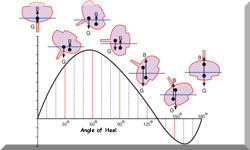
When a yacht is heeled at 30 degrees, the keel is no longer a simple weight hanging down. It becomes a massive lever trying to tear itself out of the hull.
The area where the keel meets the hull—the keel stub—is the most highly stressed part of the boat. In Category A construction, this area is often reinforced with solid GRP laminate that is significantly thicker than the rest of the hull.
However, even the thickest stub cannot support the keel alone. It relies on the internal structural grid to distribute those loads across the entire hull surface.
Incorporating the Grid: Lamination vs. Bonding Techniques
The internal structural grid is the skeleton of the yacht. It resists the “working” loads of the rig and the leverage of the keel. But how that grid is integrated into the hull skin strongly affects how the boat handles a grounding impact and years of offshore stress.
1. Hand-Lamination: The Robust "Integrated" Approach
In high-end “Category A” construction, the grid is physically laminated to the hull. This involves “tabbing”: layers of glass-fibre and resin that bridge the grid to the hull skin.
- The Benefit: This creates a monocoque structure where the grid and hull act as a single unit. Because the glass-fibre continues from the hull up and over the grid, there is no single "glue line" that can fail.
- The Offshore Advantage: If the boat suffers a hard grounding, the laminate will flex and absorb energy. Even if the laminate "crazes," it is unlikely to detach completely from the hull.
2. Structural Bonding: The "Adhesive" Approach
Most high-volume production yachts use structural adhesives (such as Plexus or high-modulus epoxies) to bond a pre-moulded grid into the hull.
- The Process: The grid is lowered into the hull, and the adhesive fills the gap between the two.
- The Concern: While these adhesives are incredibly strong in tension, they can be brittle. Under the massive, localised stress of a keel impact, the bond can “pop” or shear. Unlike a laminated joint, once a bonded joint fails, the grid is effectively “floating,” leading to structural movement that is difficult to repair.
| Feature | Hand-Laminated Grid | Bonded Structural Grid |
|---|---|---|
| Primary Join | Continuous Glass-Fibre Tabbing | Structural Adhesive / Glue Line |
| Impact Resistance | High (Absorbs & distributes force) | Moderate (Risk of bond shearing) |
| Repairability | Visible & easy to re-tab | Difficult (Requires liner removal) |
| Common Use | Custom / Blue-Water Cruisers | Mass Production Yachts |
Identifying "The Smile": Keel-to-Hull Joint Separation
One of the first things to look for during a haul-out is the “keel smile.” This is a crack that appears at the leading edge of the keel where it meets the hull.
A hairline crack in the filler is common as a boat flexes. But a significant gap—especially one that reappears immediately after being faired and painted—suggests that the keel is moving.
If the keel can move, it usually points to one (or more) of the following: the bolts are stretching, the backing plates are compressing the laminate, or the internal grid is no longer holding the hull rigid.
| Visual Sign | Location | Potential Structural Issue |
|---|---|---|
| The "Smile" Crack | External Lead/Hull Joint | Keel movement or bolt stretching |
| Gelcoat Crazing | Internal Grid Edges | Grid delamination or "popped" bonds |
| Rusty Weeping | Bilge / Keel Nuts | Crevice corrosion or failed sealant |
| Dust / Powder | Under Sole Boards | Friction from moving bulkheads |
Internal Inspection: Crazing, Delamination & Hard Spots
When inspecting the bilge, look for “stress crazing”—fine, spider-web-like cracks in the gelcoat. These usually occur at the corners of the structural grid where stress is most concentrated.
Another red flag is “weeping” from the grid. If you see rusty water or salt crystals emerging from the join between the grid and the hull, it indicates that water has found its way into the void between the two components. This is particularly dangerous because it can lead to hidden corrosion of the keel bolts where they pass through the laminate.
Material Matters: Stainless Steel vs. Mild Steel Bolts
Keel bolts are generally made from either 316-grade stainless steel or galvanised high-tensile steel.
- Stainless Steel: Offers excellent resistance to surface rust but is susceptible to crevice corrosion if water sits stagnant in the bolt hole.
- Galvanised Steel: Extremely strong and resistant to fatigue, but if the galvanising is chipped or worn, the bolt can rot quickly.
For the Category A sailor, the "hidden" part of the bolt—the section passing through the laminate—is the primary concern. If the sealant at the keel-to-hull joint fails, salt water can wick up the threads, starting a corrosion process that is invisible from the bilge.
The Impact of Groundings on Grid Integrity
Modern Category A yachts are designed to withstand a grounding at hull speed, but that does not mean they emerge unscathed. The force of a 10-tonne boat stopping instantly on a rock is immense.
The keel acts as a massive lever. The trailing edge is pushed up into the hull, while the leading edge pulls the bolts down. This often causes the internal grid to fracture at the aft end of the keel.
If you are buying a used boat, always check the area behind the keel for signs of repair or reinforced glasswork. This is a classic “signature” of a previous grounding.
Summing Up
Assessing keel bolts and structural grids requires a shift in perspective. Stop viewing the keel as an isolated part, and start seeing it as the primary load-bearing pivot of the entire hull.
For the offshore sailor, the peace of mind that comes from a dry bilge, a tight keel joint, and a pristine structural grid is immeasurable. Production boats are built to a high standard, but the forces of the ocean are relentless—and regular, intrusive inspection is the only way to ensure a boat remains “Category A” in spirit as well as on paper.

This article was written by Dick McClary, RYA Yachtmaster and author of the RYA publications 'Offshore Sailing' and 'Fishing Afloat', member of The Yachting Journalists Association (YJA), erstwhile member of the Ocean Cruising Club (OCC) and owner/administrator of 'Liveaboard Sailboats for Sale'.

The article is #1 in an 8-part series on the topic of Modern Yacht Construction & Compliance with Cat A (Ocean) Standards.
Frequently Asked Questions
Can I tighten my keel bolts while the boat is in the water?
Can I tighten my keel bolts while the boat is in the water?
It is possible but not recommended. If the joint has opened up, tightening the bolts may trap water or old sealant in the gap. It is best to do this on the hard when the weight of the boat is resting on the keel.
What is crevice corrosion in keel bolts?
What is crevice corrosion in keel bolts?
This is a form of corrosion that attacks stainless steel in the absence of oxygen. If water seeps into the bolt hole, the stainless steel cannot maintain its protective oxide layer and can rot from the inside out.
Is an iron keel worse than a lead one?
Is an iron keel worse than a lead one?
Iron is cheaper and harder, which is better for groundings, but it rusts. Lead is denser and softer, providing a lower centre of gravity and better stability, but it requires more careful engineering of the bolt attachments.
How do I know if my grid has "popped"?
How do I know if my grid has "popped"?
Look for a "hollow" sound when tapping the bilge with a plastic hammer. If the sound changes from a solid "thud" to a hollow "clack," the grid may have delaminated from the hull skin.
Should I re-torque my keel bolts every year?
Should I re-torque my keel bolts every year?
No, constant re-torquing can compress the laminate. However, they should be checked with a torque wrench according to the manufacturer's specifications every few years or after any significant grounding.
Recent Articles


-
Mystery 35 Review: Specs, Performance & Buying Guide
Aug 29, 26 09:42 AM
An in-depth review of the Mystery 35 sailboat. Read technical specs, design ratios, sail performance, and common buyer inspection areas. -
Beneteau First 405 Review: Specs, Performance & Buyer’s Guide
Aug 26, 26 03:58 AM
Detailed Beneteau First 405 review covering specs, performance, bluewater capability, layouts and buyer’s checklist. -
Moody S38 Review: Specs, Ratios & Buyer’s Guide
Aug 12, 26 04:22 AM
In‑depth Moody S38 review covering specs, performance, design ratios, layout, strengths, trade‑offs & buyer inspection points.