- Home
- Cruising Yachts 35' to 40'
- Bavaria 38
Bavaria 38 Sailboat
Specs, Performance Analysis & Cruising Characteristics
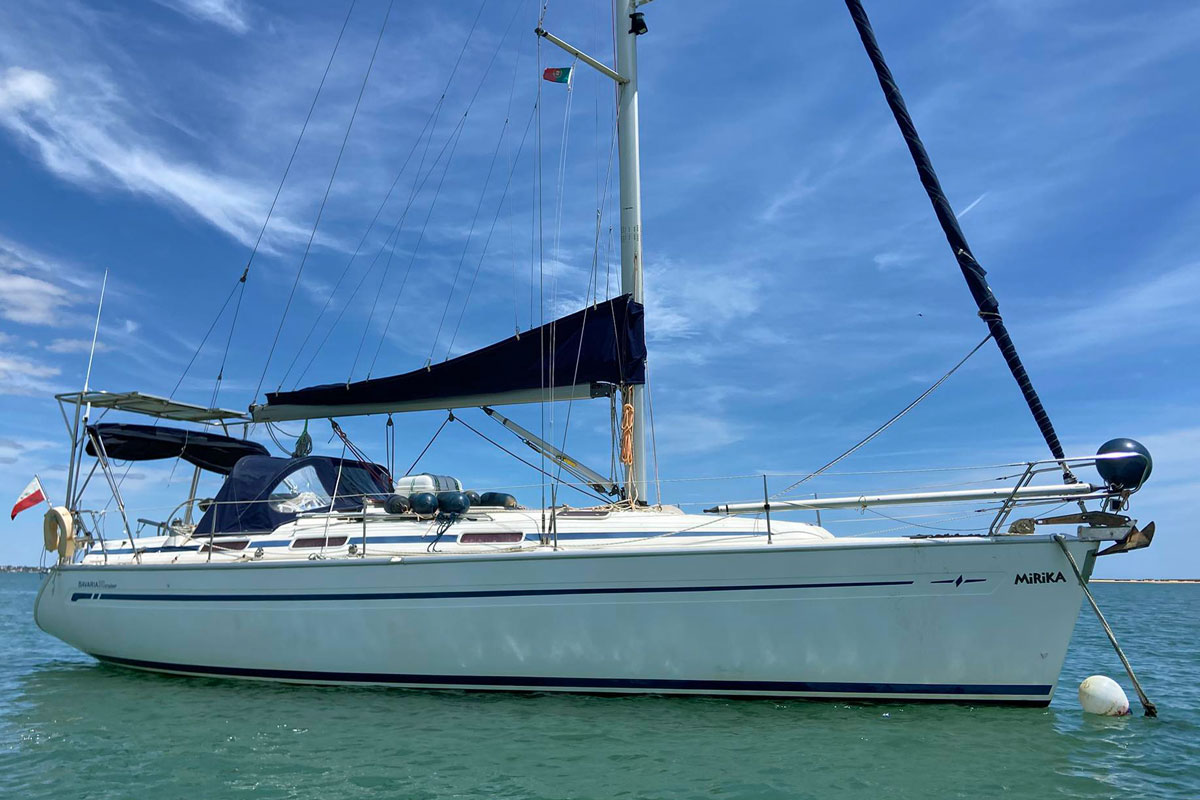 'Mirika', a Bavaria 38
Key Takeaways: The Bavaria 38 (1996–2004, J&J Design) sits in a sweet spot for sailors who want a capable coastal cruiser that can stretch into offshore passages with sensible preparation. It is a roomy, modern production cruiser with a forgiving hull form, straightforward systems, and a reputation for being easy to sail short‑handed. Build quality from this era is generally regarded as stronger than later mass‑production Bavarias, though still lighter and more industrial than Scandinavian cruisers. The boat rewards owners who value space, practicality, and predictable handling. Trade‑offs include modest tankage, a lightish displacement, and age‑related maintenance points that now deserve close inspection.
Table of Contents
- The Bavaria 38 at a Glance
- Design & Construction
- Published Specification: The Bavaria 38 Blueprint
- Sail Areas & Rig Dimensions
- Performance Analysis: Understanding the Design Ratios
- How the Bavaria 38 Sails
- Bluewater Capability: Strengths & Trade-Offs
- Configuration, Layout & Cruising Characteristics
- Who This Boat Is Best For
- The Buyer’s Checklist: Common Problem Areas
- Summing Up
- Frequently Asked Questions (FAQs)
The Bavaria 38 at a Glance
- Type: Monohull cruising sailboat
- Designer: J&J Design
- Builder: Bavaria Yachts (Germany)
- Production Years: 1996–2004
- Rig: Masthead sloop
- Best for: Coastal cruising, Mediterranean sailing, light‑to‑moderate offshore passages
- Strengths: Spacious interior, easy handling, predictable motion, good value
- Trade‑offs: Modest tankage, lightish displacement, age‑related window and deck hardware issues
Not to be confused with the Bavaria Cruiser 38 (2008+), which is a different design entirely.
Design & Construction
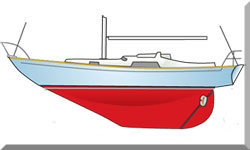
The Bavaria 38 emerged during a period when J&J Design and Bavaria Yachts were producing some of their most respected models. The hull is a moderate‑displacement GRP laminate with a single fin keel and a semi‑balanced spade rudder. The underwater profile is conventional and efficient, with a long waterline for its era and a broad stern that adds volume without compromising handling.
Hull & Deck
- Solid GRP hull with a structural grid bonded inside
- Deck is GRP with balsa or foam core in non‑high‑load areas
- Chainplates are typically laminated into the hull structure, not bolted to bulkheads
- Cabin windows are bonded, not through‑bolted, which is a known ageing point
- Stainless steel stemhead fitting and bow roller arrangement typical of late‑90s Bavarias
The cockpit is deep and secure, with a single wheel and wide coamings. Side decks are broad enough for safe movement forward, and the moulded toerail provides adequate footing.
Keel & Rudder
- Fin keel with a bulb
- Draft: 6'4" (1.95 m)
- Semi‑balanced spade rudder with stainless stock
Versions
Although marketed under names such as Bavaria 38, Bavaria 38 Holiday, and Bavaria 38 Lagoon, these are essentially the same hull and rig. Differences relate mainly to interior layout and charter‑oriented fit‑out.
Published Specification: The Bavaria 38 Blueprint
| Specification | Value |
| LOA | 37'9" (11.56 m) |
| LWL | 32'10" (10.00 m) |
| Beam | 12'8" (3.90 m) |
| Draft | 6'4" (1.95 m) |
| Displacement | 15,400 lb (6,985 kg) |
| Ballast | 5,500 lb (2,495 kg) |
| Rig Type | Masthead sloop |
| Hull Material | GRP |
| Production Dates | 1996–2004 |
Sail Areas & Rig Dimensions
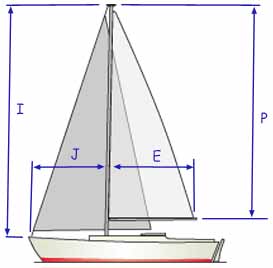 Rig dimensions
- I: 44.95'
- J: 14.70'
- P: 44.47'
- E: 15.58'
Working Sail Plan (used for ratios)
- Mainsail: 355.83 ft² (33.06 m²)
- Working Jib: 386.58 ft² (35.91 m²)
- Total Working Sail Area: 742.41 ft² (68.97 m²)
Performance Analysis: Understanding the Design Ratios
Using the working sail plan:
- SA/D: 16.0
- D/L: 204
- B/D: 0.36
- CSF: 2.02
- Comfort Ratio (Brewer): 24.1
| Ratio | Value | Interpretation |
| SA/D | 16.0 | Moderate power; good in light airs, manageable when reefed. |
| D/L | 204 | Moderate displacement; stable enough for passagemaking with care. |
| B/D | 0.36 | Reasonable stiffness; benefits from early reefing in rising winds. |
| CSF | 2.02 | Acceptable for offshore work; typical of modern production cruisers. |
| Comfort Ratio | 24.1 | Moderate motion; comfortable enough but not a heavy-displacement ride. |
For more on this topic, you might want to take a look at Understanding Boat Performance & Design Ratios...
How the Bavaria 38 Sails
Under sail, the Bavaria 38 is predictable and forgiving. The helm is light, and the boat tracks well thanks to the longish waterline and balanced rudder. Upwind, it performs best at 30–32 degrees apparent in moderate seas, with a steady groove and little weather helm. In lighter airs, the working jib is adequate, though many owners prefer a larger genoa for cruising.
Downwind, the boat is stable and easy to manage, especially with an asymmetric. Reefing early keeps the boat on its feet; the mainsail responds well to the first reef at around 18–20 knots true.
Short‑handed crews appreciate the simple deck layout, single wheel, and inboard shroud base that leaves the side decks clear.
Bluewater Capability: Strengths & Trade-Offs
The Bavaria 38 is not a heavy bluewater bruiser, but it has completed many ocean passages. Its strengths offshore include:
- Predictable handling
- Moderate displacement that avoids slamming in most conditions
- Secure cockpit
- Straightforward systems
Trade‑offs:
- Modest tankage limits long‑range autonomy
- Lightish displacement means more motion in steep seas
- Bonded windows and deck fittings need careful inspection
- Limited stowage for heavy stores
With sensible upgrades (storm sails, upgraded ground tackle, improved ventilation, and renewed standing rigging), it can handle extended cruising.
Configuration, Layout & Cruising Characteristics
The interior is one of the Bavaria 38’s biggest selling points. The saloon is bright and open, with a large table and generous seating. Two and three‑cabin versions exist, though both share the same hull.
Interior Notes
- Large aft cabin with good headroom
- Forward cabin comfortable for two adults
- Galley is L‑shaped with ample counter space
- Chart table is full‑size and practical
- Storage is adequate but not exceptional
Ventilation is decent, though many owners retrofit additional fans for warmer climates.
Who This Boat Is Best For
Good fit for:
- Coastal cruisers wanting space and comfort
- Couples or families sailing short‑handed
- Mediterranean and Caribbean cruising
- Owners seeking good value in the used market
Less ideal for:
- High‑latitude expeditions
- Heavy‑weather passagemaking without upgrades
- Sailors needing large tankage or heavy‑displacement motion
Used examples for sale
The Buyer’s Checklist: Common Problem Areas
- Bonded windows: Look for leaks or UV degradation
- Chainplate tabbing: Check for cracking or moisture ingress
- Rudder bearings: Play or stiffness indicates wear
- Keel bolts: Inspect for corrosion
- Deck hardware bedding: Rebed if original
- Standing rigging: Many boats now require full replacement
- Original sails: Often at end of life
Could this be your ideal cruising boat?
It may well be, but before going any further, it might be worth taking a look at my eBook 'How to Avoid Buying the Wrong Sailboat'...
Summing Up
The Bavaria 38 (1996–2004) is a practical, comfortable cruiser that offers excellent value on the used market. It is not a heavy offshore machine, but it is more than capable of extended cruising with thoughtful preparation. The design ratios paint a picture of a moderate, well‑balanced boat that rewards sensible sail handling and offers a comfortable ride in most conditions. For sailors seeking a reliable, roomy cruiser without Scandinavian price tags, it remains a compelling choice.

This article was written by Dick McClary, RYA Yachtmaster and author of the RYA publications 'Offshore Sailing' and 'Fishing Afloat', member of The Yachting Journalists Association (YJA), erstwhile member of the Ocean Cruising Club (OCC) and owner/administrator of 'Liveaboard Sailboats for Sale'.

Frequently Asked Questions (FAQs)
1. Is the Bavaria 38 suitable for ocean crossings?
1. Is the Bavaria 38 suitable for ocean crossings?
Yes, with upgrades to rigging, sails, and safety gear. Many have crossed the Atlantic.
2. What are the most common maintenance issues?
2. What are the most common maintenance issues?
Bonded windows, ageing rigging, and rudder bearings are the main points to inspect.
3. How does it compare to the Bavaria Cruiser 38?
3. How does it compare to the Bavaria Cruiser 38?
The Cruiser 38 (2008+) is a different boat with a newer hull, twin wheels, and different performance characteristics.
4. Is the Bavaria 38 stiff enough for windy conditions?
4. Is the Bavaria 38 stiff enough for windy conditions?
Yes, though it benefits from early reefing due to its moderate SA/D and B/D ratios.
5. What is the best sail plan for cruising?
5. What is the best sail plan for cruising?
A working jib is fine, but many owners prefer a 120–140% genoa for light‑air regions.
Recent Articles


-
Mystery 35 Review: Specs, Performance & Buying Guide
Aug 29, 26 09:42 AM
An in-depth review of the Mystery 35 sailboat. Read technical specs, design ratios, sail performance, and common buyer inspection areas. -
Beneteau First 405 Review: Specs, Performance & Buyer’s Guide
Aug 26, 26 03:58 AM
Detailed Beneteau First 405 review covering specs, performance, bluewater capability, layouts and buyer’s checklist. -
Moody S38 Review: Specs, Ratios & Buyer’s Guide
Aug 12, 26 04:22 AM
In‑depth Moody S38 review covering specs, performance, design ratios, layout, strengths, trade‑offs & buyer inspection points.