- Home
- Sailboats 50'-55'
- Beneteau Cyclades 50.5 Buyer's Guide
The Beneteau Cyclades 50.5 Sailboat
Specs & Key Performance Indicators
Key Takeaways: The Beneteau Cyclades 50.5 is a large production cruising yacht designed by Berret-Racoupeau and built by Beneteau during the mid-2000s. Conceived primarily for private owners and the charter market, it prioritises space, straightforward systems, manageable handling and strong accommodation capacity over outright sailing performance.
Under sail it is capable of covering ground efficiently, particularly on passage, while its generous beam and broad stern provide substantial interior volume. Buyers should pay close attention to charter-related wear, rigging age, deck hardware condition and water ingress around fittings.
For sailors seeking a comfortable cruising platform with good carrying capacity and sensible running costs, it remains an appealing option on the used market.
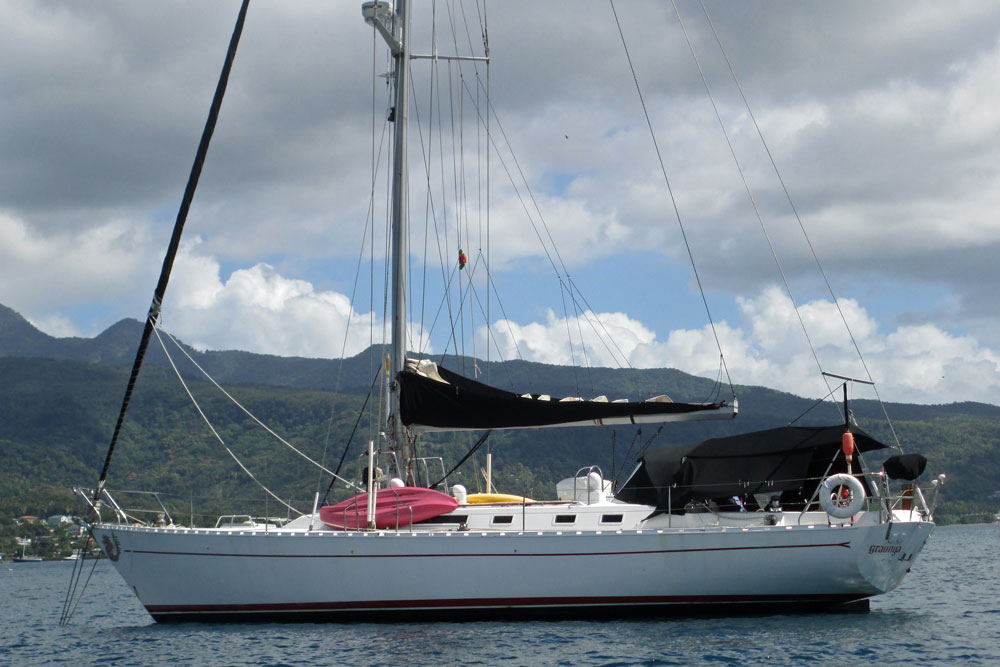 A Beneteau Cyclades 50.5
Table of Contents
- The Beneteau Cyclades 50.5 at a Glance
- Design & Construction
- Published Specification: The Beneteau Cyclades 50.5 Blueprint
- Sail Areas & Rig Dimensions
- Performance Analysis: Understanding the Design Ratios
- How the Beneteau Cyclades 50.5 Sails
- Bluewater Capability: Strengths & Trade-Offs
- Configuration, Layout & Cruising Characteristics
- Who This Boat Is Best For
- The Buyer’s Checklist: Common Problem Areas
- Summing Up
- Frequently Asked Questions (FAQs)
The Beneteau Cyclades 50.5 at a Glance
| Beneteau Cyclades 50.5 at a Glance | |
|---|---|
| Type | Production Cruising Monohull |
| Designer | Berret-Racoupeau Yacht Design |
| Builder | Beneteau |
| Production Years | 2005–2008 |
| Rig | Masthead Sloop |
| Best For | Family cruising, liveaboard use, charter operation, long-distance coastal cruising |
| Strengths | Spacious interior, large cockpit, manageable sailplan, straightforward systems, excellent accommodation capacity |
| Trade-Offs | Moderate ballast ratio, average windward performance compared with dedicated offshore cruisers, many examples have charter history |
Design & Construction
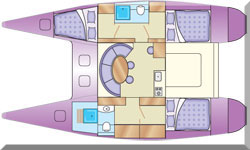
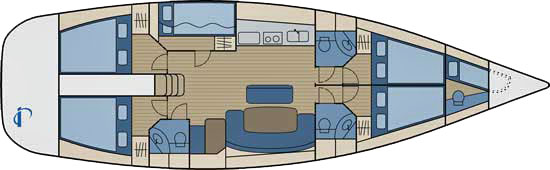 The Beneteau Cyclades 50.5 Layout Plan. The bijou cabin in the forepeak is normally reserved for the charter skipper
The Cyclades range was developed by Beneteau to deliver robust, user-friendly cruising yachts aimed at owners who valued practicality and volume over racing credentials. The Cyclades 50.5 sits close to the top of that range and reflects the design thinking prevalent in European production cruisers of the period.
The hull is hand-laid GRP below the waterline with balsa-cored structures used selectively to control weight and stiffness. Deck construction employs cored laminates to improve rigidity while maintaining reasonable displacement figures. The hull features a broad beam carried well aft, moderate freeboard and a relatively flat run towards the stern, all contributing to interior volume and form stability. A deep fin keel was standard, while some markets offered a shallower draft option to improve access to cruising grounds with depth restrictions. Steering is via twin wheels linked to a semi-balanced spade rudder.
The large coachroof windows are bonded rather than mechanically through-bolted, a construction technique widely used by Beneteau during this period. Buyers should inspect the integrity of these bonded installations carefully as ageing sealants can eventually permit leaks.
The stainless steel chainplates are attached to structural bulkheads and internal reinforcement rather than being externally mounted. Inspection of surrounding laminates, tabbing and moisture condition remains important on older examples.
The model was generally offered in several accommodation layouts, typically ranging from four to six cabins, reflecting its popularity within the charter sector. Some boats feature substantial owner-oriented modifications carried out after charter service, making individual boat history particularly important when assessing value.
Published Specification: The Beneteau Cyclades 50.5 Blueprint
| Specification | Value |
|---|---|
| LOA | 50'6" (15.39 m) |
| LWL | 44'9" (13.64 m) |
| Beam | 16'1" (4.90 m) |
| Draft (Deep Keel) | 6'7" (2.00 m) |
| Draft (Shallow Keel) | Approx. 5'11" (1.80 m) |
| Displacement | 28,660 lb (13,000 kg) |
| Ballast | 8,421 lb (3,820 kg) |
| Rig Type | Masthead Sloop |
| Hull Material | GRP/Fibreglass |
| Production Dates | 2005-2008 (approx.) |
Sail Areas & Rig Dimensions
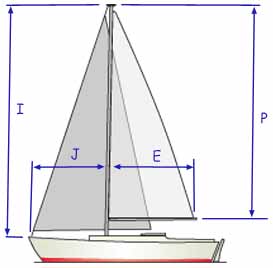 Rig dimensions
| Sail Areas & Rig Dimensions | |
|---|---|
| I | 61'8" (18.80 m) |
| J | 18'1" (5.52 m) |
| P | 57'9" (17.60 m) |
| E | 21'4" (6.50 m) |
| Mainsail Area | 618 ft² (57.4 m²) |
| Foretriangle Area | 533 ft² (49.5 m²) |
| Total Working Sail Area | 1,151 ft² (106.9 m²) |
Performance Analysis: Understanding the Design Ratios
| Ratio | Value | Interpretation |
|---|---|---|
| SA/D | 19.7 | Healthy cruising performance with enough sail power for passagemaking. |
| D/L | 143 | Moderately light displacement by cruising standards. |
| B/D | 29.4% | Moderate ballast ratio relying partly on beam for stability. |
| CSF | 2.10 | Slightly above the traditional offshore screening threshold of 2.0. |
| Brewer Comfort Ratio | 23.4 | Moderate motion comfort; firmer motion than heavier bluewater cruisers. |
Ratio Assessment
The numbers paint a fairly clear picture. This is not a heavy-displacement ocean voyager in the classic mould, nor is it a lightweight performance cruiser. The moderate SA/D figure gives sufficient sail power to keep passages moving in lighter conditions. The comparatively low D/L ratio reflects modern production-cruiser thinking and helps the boat accelerate readily.
Its moderate ballast ratio and CSF suggest a design relying considerably on beam and hull form stability rather than deep ballast alone. That approach works well for most cruising conditions but delivers a different feel at sea from heavier yachts such as a Hallberg-Rassy 53 or Oyster 53.
For more on this topic, you might want to take a look at Understanding Boat Performance & Design Ratios...
How the Beneteau Cyclades 50.5 Sails
The Cyclades 50.5 is generally regarded as an easy boat to handle for its size. The large cockpit, twin-wheel arrangement and relatively straightforward sailplan make it workable for couples once appropriate reefing systems have been maintained properly.
Upwind performance is respectable rather than exceptional. The boat will make steady progress to windward but does not exhibit the pointing angles or feedback of more performance-oriented cruiser-racers. Once wind speeds enter the mid-teens, reefing improves balance and reduces weather helm.
Off the wind, the design comes into its own. The broad stern supports good reaching performance and offers reassuring directional stability. Owners frequently report comfortable passage speeds in the 7 to 8-knot range under favourable cruising conditions.
Motion at sea is predictable but somewhat quicker than heavier displacement cruisers. For Mediterranean and trade-wind passages this typically presents little concern. Extended upwind work in steep seas reveals the compromises associated with the lighter, beamier hull form.
Bluewater Capability: Strengths & Trade-Offs
The Cyclades 50.5 has completed numerous offshore passages and ocean crossings under private ownership and charter operation. Its size alone contributes significant carrying capacity for provisions, water, fuel and cruising equipment.
Strengths include:
- Large stores capacity
- Manageable sailplan
- Good passage speeds
- Spacious deck layout
- Strong owner and charter support network
- Widely available replacement components
Trade-offs include:
- Moderate rather than heavy-displacement construction
- Form-stability-driven design philosophy
- Less forgiving motion when heavily loaded in head seas
- Many examples have seen intensive charter service
For sailors contemplating Atlantic circuits or extended European cruising, the boat is capable when properly prepared. As always, condition matters more than brochure specifications.
Configuration, Layout & Cruising Characteristics
The enormous cockpit remains one of the Cyclades 50.5's strongest selling points. The twin helm arrangement creates clear access from transom to companionway, while wide side decks support safe movement forward.
Below decks, the beam translates into genuine living space. Most layouts feature a spacious saloon, a large galley designed for practical meal preparation and multiple heads compartments. Storage volume is better than many similarly priced competitors.
Liveaboard couples will appreciate the roomy accommodation, although the six-cabin versions inevitably surrender some storage compared with owner-focused layouts. Ventilation is generally good, and many examples have benefitted from upgrades including solar installations, lithium batteries, watermakers and modern electronics.
Who This Boat Is Best For
Good fit for:
- Cruising families
- Mediterranean sailors
- Atlantic circuit cruisers
- Liveaboard couples wanting volume
- Buyers seeking 50-foot capability at a competitive used-market price
- Former charter yachts converted for private cruising
Less ideal for:
- Sailors seeking high-performance windward sailing
- Buyers wanting heavy-displacement traditional bluewater designs
- Those requiring exceptional pointing ability
- Cruisers planning continual high-latitude work in severe conditions
The Buyer’s Checklist: Common Problem Areas
- Standing rigging age and replacement history.
- Evidence of extensive charter operation.
- Rudder bearings and steering linkage wear.
- Bonded window seal condition.
- Deck hardware bedding and moisture intrusion.
- Chainplate attachment inspection.
- Engine hours and cooling-system maintenance.
- Condition of saildrive components where fitted.
- Tank corrosion or contamination issues.
- Electrical-system modifications by previous owners.
- Water damage around deck penetrations.
- Upholstery and joinery wear indicative of heavy commercial use.
Typical Refit Costs
| Typical Refit Costs | |
|---|---|
| Standing Rigging Replacement | £8,000–£15,000 |
| New Cruising Sails | £10,000–£20,000 |
| Electronics Package Refresh | £5,000–£20,000 |
| Lithium Battery Conversion | £4,000–£15,000 |
| Deck Hardware Rebedding | £1,000–£5,000 |
| Saildrive Overhaul | £2,000–£6,000 |
Could this be your ideal cruising boat?
It may well be, but before you go any further, it's worth reading my ebook...
Summing Up
The Beneteau Cyclades 50.5 occupies a sensible middle ground between heavy traditional offshore cruisers and more performance-orientated modern designs. Its design ratios highlight moderate displacement, useful sail power and stability characteristics geared towards practical cruising rather than competitive sailing.
For prospective buyers, the most important factor is rarely the design itself. It is the condition of the individual yacht. A well-maintained private example with documented upgrades can represent exceptional value, while a neglected ex-charter boat may quickly absorb a substantial refit budget.
Approached with realistic expectations, the Cyclades 50.5 remains an attractive cruising platform offering generous space, respectable passagemaking ability and manageable ownership costs.
If you're looking for other cruising boats of a similar size to the Beneteau Cyclades 50.5, check here...

Written by Dick McClary, cruising sailor and yachting journalist, publisher of Sailboat‑Cruising.com and admin of the Liveaboard Sailboats for Sale community.

Frequently Asked Questions (FAQs)
Is the Beneteau Cyclades 50.5 suitable for ocean crossings?
Is the Beneteau Cyclades 50.5 suitable for ocean crossings?
Yes. Many examples have completed Atlantic and other offshore passages. Condition, preparation and equipment specification matter more than the underlying design.
How well does the Cyclades 50.5 sail upwind?
How well does the Cyclades 50.5 sail upwind?
It performs adequately but is not known as an aggressive windward performer. It generally prefers cracked sheets and reaching angles.
Are most Cyclades 50.5 yachts ex-charter boats?
Are most Cyclades 50.5 yachts ex-charter boats?
A significant proportion entered charter fleets, particularly in the Mediterranean. Buyers should examine maintenance records closely.
What engine is commonly fitted?
What engine is commonly fitted?
Many examples were supplied with Yanmar diesel engines, although exact specifications varied by market and year.
What is the biggest ownership risk?
What is the biggest ownership risk?
Deferred maintenance. Rigging, sails, windows, steering systems and machinery history deserve careful scrutiny.
Is the shallow-draft version worth considering?
Is the shallow-draft version worth considering?
For coastal cruising grounds with depth restrictions, yes. Buyers should accept a modest reduction in ultimate windward efficiency.
Recent Articles


-
Pearson 424 Sailboat Review: Specs, Performance & Buyer's Guide
Nov 13, 26 03:16 PM
Pearson 424 design ratios and sailing performance, plus a buyer's checklist covering the fuel tank, keel sump and deck core. Honest and practical. -
Whitby 42 Sailboat Review, Specs, Performance & Buying Guide
Nov 12, 26 06:50 PM
Detailed Whitby 42 review covering specs, sailing performance, bluewater capability, ownership issues and expert buying advice. -
Valiant 40 Review: Specs, Performance & Buyer’s Guide
Nov 12, 26 06:17 PM
Expert Valiant 40 review covering specs, sailing performance, offshore capability, ownership costs and key inspection points.