- Home
- Cruising Yachts 30' to 35'
- Laurin 32 Sailboat Review and Buyer's Guide
Laurin 32 Sailboat
Specs, Performance Analysis & Cruising Characteristics
Key Takeaways: The Laurin 32 is a traditional Scandinavian long-keel cruising yacht designed by Arvid Laurin and built between the 1960s and late 1980s. Although only 32 feet overall, it has earned a strong reputation among offshore-minded sailors thanks to its moderate displacement, high ballast ratio, forgiving motion and directional stability. It is not a boat for sailors seeking large interior volume, marina agility or sparkling light-air performance. Instead, it appeals to those who value seakindliness, structural integrity and confidence in difficult conditions. Well-maintained examples remain capable coastal and offshore cruisers, but buyers should inspect core structures, deck hardware, rigging and owner-completed interior work with particular care.
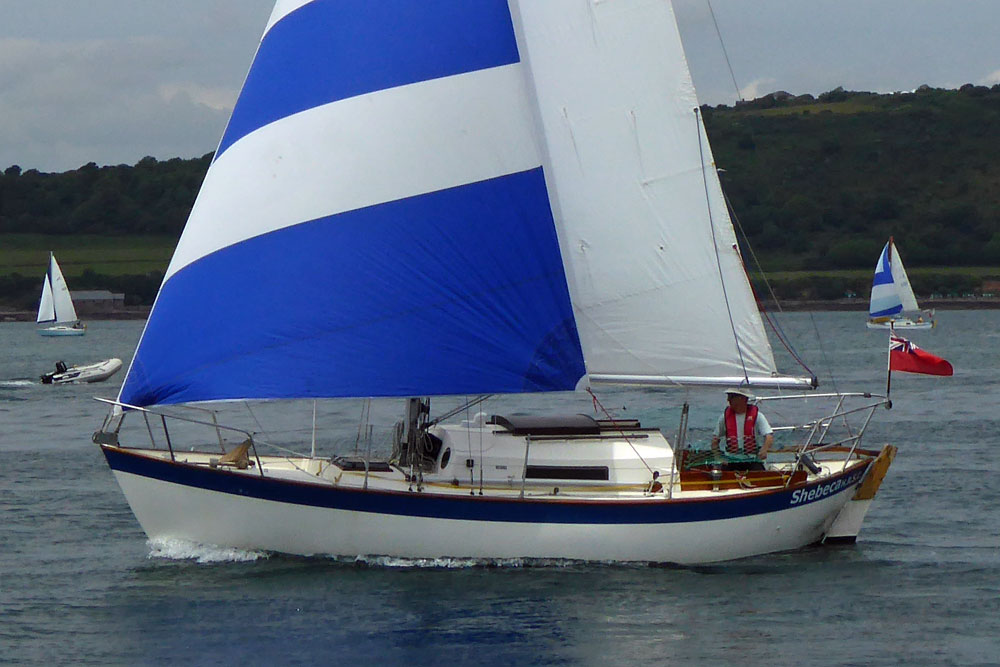
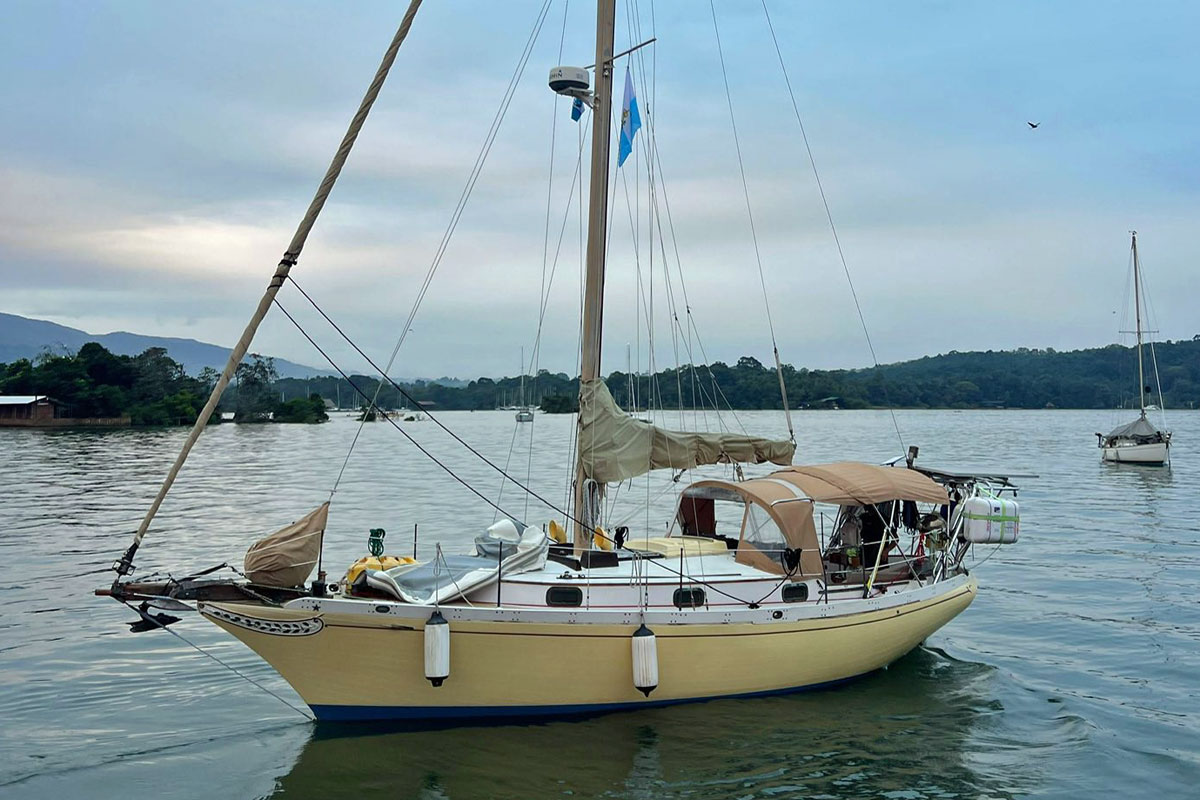
 'Clary', a Lauren 32
Table of Contents
- The Laurin 32 at a Glance
- Design & Construction
- Published Specification: The Laurin 32 Blueprint
- Sail Areas & Rig Dimensions
- Performance Analysis: Understanding the Design Ratios
- How the Laurin 32 Sails
- Bluewater Capability: Strengths & Trade-Offs
- Configuration, Layout & Cruising Characteristics
- Who This Boat Is Best For
- The Buyer’s Checklist: Common Problem Areas
- Summing Up
- Frequently Asked Questions (FAQs)
The Laurin 32 at a Glance
- Type: Offshore cruising ya
- Designer: Arvid Laurin
- Builder: Multiple builders including Malmö Flygindustri, Karlskronavarvet, Berg Marin, Arla Plastindustries and others over the production run
- Production Years: 1964-1988/89
- Rig: Masthead sloop (a small number of alternative rig variants existed)
- Best for: Coastal cruising, offshore passagemaking, Baltic and North Sea cruising, traditional yacht enthusiasts
- Strengths: Seakindly motion, strong directional stability, robust construction, high ballast ratio, offshore capability
- Trade-offs: Modest accommodation volume, slower in light airs, limited manoeuvrability astern, age-related restoration requirements
Design & Construction
The Laurin 32 was drawn by Swedish naval architect Arvid Laurin as a modern interpretation of the traditional Scandinavian Koster-type cruising yacht. Her distinctive wineglass stern, sweeping sheerline and long keel immediately identify her as a product of a period when seaworthiness and directional stability were given greater weight than marina manoeuvrability or interior volume. The design first appeared in the early 1960s and continued in production through multiple builders for more than two decades. Sources indicate approximately 232 to 234 boats were completed.
The hull is a full-length long-keel design carrying an externally attached rudder. Ballast is iron and accounts for nearly half the vessel's displacement, contributing significantly to stability. Most production boats were moulded in GRP, although a small number of timber-built versions also existed. Several builders supplied hull-and-deck kits, leaving interior completion to owners or local craftsmen. Consequently, accommodation quality and joinery standards vary considerably between individual boats.
The hull and deck employed sandwich construction, with both balsa and Divinycell core materials reported depending on build period and builder. Sandwich construction improved insulation and stiffness but requires careful inspection around deck fittings, chainplates, stanchions and mast supports to detect moisture ingress.
Three principal variants emerged during production. The Mk I featured the shorter coachroof. The Mk II incorporated a longer cabin trunk. The Mk III gained additional freeboard, a raised coachroof, increased ballast and changes to mast position and sail plan. A small number of unusual rig variants are also documented. These distinctions matter because interior comfort, headroom and sailing balance can differ slightly between versions.
Published Specification: The Laurin 32 Blueprint
Sail Areas & Rig Dimensions
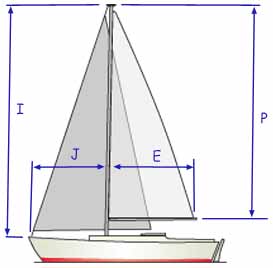 Rig dimensions
Performance Analysis: Understanding the Design Ratios
These figures paint a coherent picture. The Laurin 32 is neither an ultra-heavy traditional cruiser nor a lightweight performance boat. The high ballast ratio and favourable capsize number point towards offshore confidence, while the moderate D/L suggests a vessel that can still make respectable daily runs when properly sailed. The numbers align closely with owner reports describing the boat as steady, forgiving and unfussed by deteriorating conditions.
For more on this topic, you might want to take a look at Understanding Boat Performance & Design Ratios...
How the Laurin 32 Sails
Under sail, the Laurin 32 behaves much as her profile suggests. The long keel promotes excellent tracking and reduces the amount of steering correction required on passage. Many owners describe the boat as particularly comfortable when close-reaching and reaching, where she settles into a steady groove and maintains progress with little drama.
Upwind performance is respectable rather than exceptional. Compared with modern fin-keel yachts she sacrifices pointing ability and acceleration. However, her motion through chop is often more comfortable than beamy modern designs. The narrow beam and relatively fine ends help the boat pass through head seas without excessive pounding.
As the breeze freshens the substantial ballast becomes apparent. Heel angles remain predictable and gradual, and reefing can often be postponed slightly longer than on lighter contemporary yachts. Downwind, the long keel contributes to excellent directional stability.
Short-handed sailors generally appreciate the boat's forgiving temperament. The trade-off appears in confined marinas, where prop walk and long-keel inertia require planning and experience.
Bluewater Capability: Strengths & Trade-Offs
The Laurin 32 has long been regarded as one of the more capable offshore cruising boats available in the 30-foot range. Several documented boats have completed extensive European cruising and long-distance voyages, reinforcing the design's reputation for passage-making rather than marina living. [laurinkoster32.com]
Strengths include:
- Strong ballast ratio.
- Long-keel directional stability.
- Attached rudder protection.
- Comfortable motion in rough water.
- Robust Scandinavian construction standards.
- Manageable sail plan.
Trade-offs include:
- Limited payload compared with larger heavy cruisers.
- Restricted interior volume by modern standards.
- Smaller tankage than many dedicated ocean cruisers.
- Reduced manoeuvrability under power.
- Slower light-air performance.
For sailors intending coastal passages, North Atlantic cruising, Baltic exploration or occasional ocean crossings, the design remains credible when thoroughly maintained and properly equipped.
Configuration, Layout & Cruising Characteristics
Most Laurin 32s follow a conventional arrangement with a V-berth forward, heads compartment aft of the forecabin, a saloon with opposing settees, navigation area and quarter berth, and a compact galley near the companionway. Interior layouts vary because many boats were sold in semi-complete form.
Cockpit dimensions are modest compared with modern cruisers, something many offshore sailors regard as a virtue. The deck is easy to move around on and the relatively low freeboard reduces windage.
Storage is adequate for extended cruising if owners exercise discipline. Liveaboard suitability depends heavily on expectations. Couples accustomed to traditional yachts often find the boat comfortable. Those seeking apartment-like accommodation will likely prefer a newer and beamier design.
Who This Boat Is Best For
Good fit for:
- Offshore-minded cruisers.
- Traditional yacht enthusiasts.
- Couples planning extended coastal cruising.
- Sailors prioritising comfort at sea over marina accommodation.
- Owners comfortable maintaining a classic yacht.
Less ideal for:
- Charter-style family cruising.
- Sailors wanting large aft cabins.
- Racers and performance-oriented crews.
- Those needing effortless marina manoeuvring.
- Buyers seeking turnkey ownership with minimal maintenance.
The Buyer’s Checklist: Common Problem Areas
The newest Laurin 32 is now decades old, making condition far more important than specification.
Inspect carefully for:
- Wet deck core around fittings, chainplates and stanchions.
- Osmotic blistering in older GRP hulls.
- Corrosion around original chainplates.
- Mast-step compression issues.
- Deteriorated standing rigging.
- Original engine condition and parts availability.
- Rudder fittings and gudgeons.
- Keel-to-hull integrity and grounding history.
- Ageing seacocks and skin fittings.
- Home-completed interior workmanship.
- Leaking windows and deck penetrations.
- Old teak decks and associated fastener leaks where fitted.
Could this be your ideal cruising boat?
It may well be, but before you go any further, it's worth reading my ebook...

Summing Up
The Laurin 32 remains an interesting example of Scandinavian offshore yacht design from an era when seaworthiness was often placed ahead of accommodation volume. Her numbers support her reputation: a high ballast ratio, favourable capsize figure and moderate displacement combine to produce a yacht that feels reassuring when conditions become challenging. She will not match modern cruisers for interior space, marina handling or light-air speed, but that misses the point. The Laurin 32 was designed to look after her crew rather than impress them at the dock.
For buyers seeking a traditional cruising yacht with a genuine offshore pedigree, a properly maintained Laurin 32 still deserves serious consideration. The caveat is simple: after fifty or sixty years afloat, individual condition matters far more than brochure specifications.
If you're looking for other cruising boats of a similar size to the Laurin 32, check here...

Written by Dick McClary, cruising sailor and yachting journalist, publisher of Sailboat‑Cruising.com and admin of the Liveaboard Sailboats for Sale community.

Frequently Asked Questions (FAQs)
Is the Laurin 32 a genuine bluewater cruising boat?
Is the Laurin 32 a genuine bluewater cruising boat?
Yes. Its long keel, high ballast ratio, moderate displacement and extensive cruising history place it among the more capable offshore designs of its size.
How well does the Laurin 32 sail upwind?
How well does the Laurin 32 sail upwind?
Respectably, but not like a modern fin-keeler. It tracks steadily and remains comfortable in chop, though pointing angles are typically less impressive.
What is the biggest issue buyers should inspect?
What is the biggest issue buyers should inspect?
Moisture intrusion into sandwich-cored structures deserves particular attention, along with rigging, chainplates and owner-completed modifications.
Can a couple live aboard a Laurin 32?
Can a couple live aboard a Laurin 32?
Yes, many have done so successfully, although storage and living space are modest compared with modern boats of similar length.
Are Laurin 32 parts difficult to source?
Are Laurin 32 parts difficult to source?
Most hardware, engines, rigging and systems use standard marine components. Hull-specific mouldings and original fittings can require patience to locate.
Which version is best: Mk I, Mk II or Mk III?
Which version is best: Mk I, Mk II or Mk III?
There is no universally preferred version. Mk III boats generally offer slightly more interior volume and revised sailing characteristics, while many enthusiasts appreciate the original proportions of the Mk I.
Recent Articles


-
Laurin 32 Sailboat Review, Specs & Bluewater Capability
Nov 14, 26 06:58 AM
An in-depth Laurin 32 review covering specs, performance, seaworthiness, ownership costs, problem areas and offshore cruising suitability. -
Pearson 424 Sailboat Review: Specs, Performance & Buyer's Guide
Nov 13, 26 03:16 PM
Pearson 424 design ratios and sailing performance, plus a buyer's checklist covering the fuel tank, keel sump and deck core. Honest and practical. -
Whitby 42 Sailboat Review, Specs, Performance & Buying Guide
Nov 12, 26 06:50 PM
Detailed Whitby 42 review covering specs, sailing performance, bluewater capability, ownership issues and expert buying advice.