- Home
- Cruising Yachts 40' to 45'
- Malo 40
The Malo 40 Sailboat
Specs, Performance Analysis & Cruising Characteristics
Key Takeaways
The Malö 40 is a premium Swedish blue-water cruiser defined by its heavy displacement, high ballast ratio, and exceptional build quality. Designed for serious offshore work, it offers a secure motion in a seaway and a protected cockpit thanks to its signature Targa arch. While not a light-airs flyer, its stability and "tank-like" construction make it a top choice for long-distance liveaboards who value safety and craftsmanship over raw racing speed.
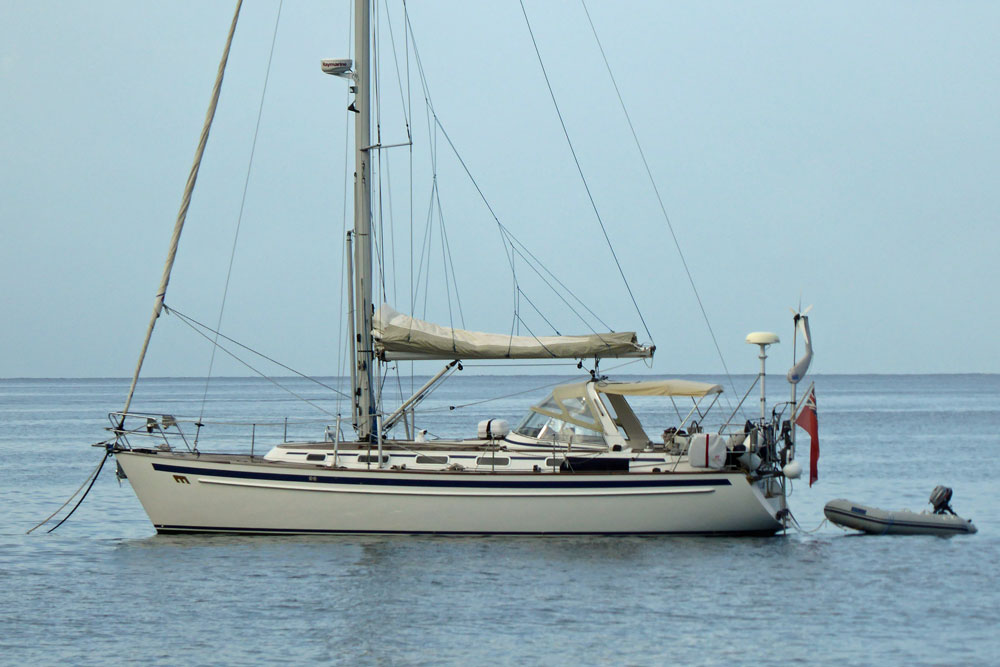 The Malo 40
Design & Construction
The Malö 40 name has graced two distinct eras of Swedish boatbuilding. The original Malö 40, designed by Olle Enderlein and built by Malö Yachts in the 1970s and 80s, was a sturdy long-keeled cruiser. This era included the notable Malö 40H (the 'H' standing for Häckerkabin), which refers to the separate aft cabin layout. Interestingly, while the modern version is a true 40' (12.19 m) yacht, the original 40H measured approximately 31'3" (9.55 m), named instead for its upwind sail area of 40 m².
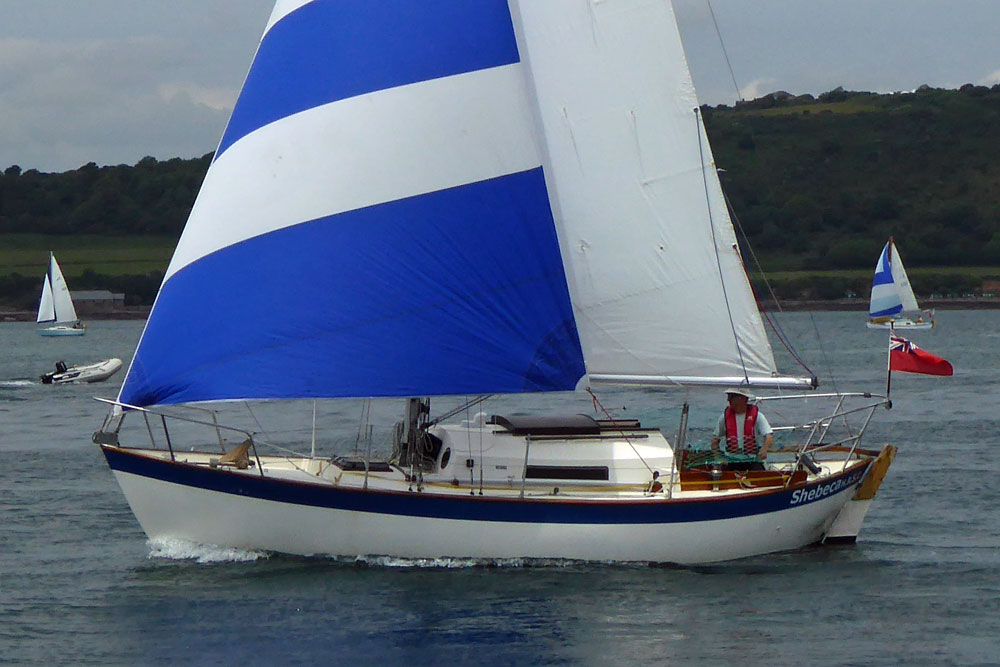
The modern Malö 40, designed by Leif Ängermark, is the version most sought after by contemporary ocean sailors. Built in Kungsviken, Sweden, the hull is constructed of hand-laid GRP with a balsa core above the waterline for insulation and stiffness. The defining feature is the GRP Targa arch, which moves the mainsheet traveller out of the cockpit for safety and provides a robust frame for enclosures.
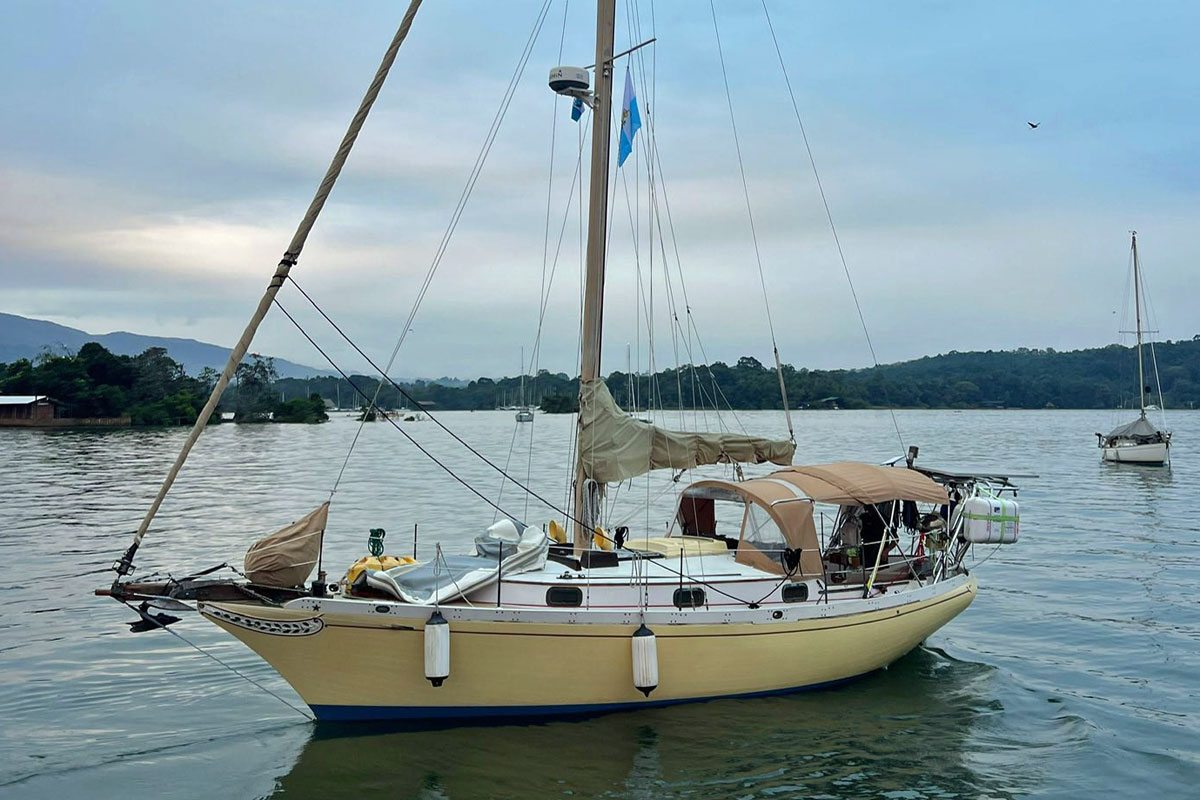
Variants include the standard transom and the "Classic" version, which features a counter-stern and an extended aft deck, adding a traditional aesthetic and extra storage. Most models feature a deep lead fin keel and a rudder on a substantial skeg. The Malö 40 carries a STIX Category A (Ocean) rating, confirming its ability to handle significant wave heights and wind speeds exceeding Force 8.
Sail Areas & Rig Dimensions
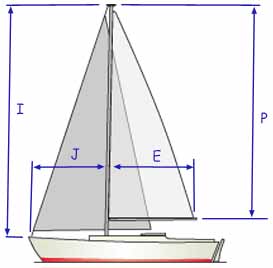 Rig dimensions
The Malö 40 is typically rigged as a masthead sloop, often fitted with in-mast furling as a factory preference.
- I: 50'10" (15.50 m)
- J: 14'9" (4.50 m)
- P: 44'11" (13.70 m)
- E: 15'9" (4.80 m)
- Total Sail Area (100% Foretriangle): 836 ft² (77.7 m²)
- Mainsail Area: 353 ft² (32.8 m²)
- Genoa Area (140%): 517 ft² (48.0 m²)
Published Specification: The Malo 40 Blueprint
| Feature | Malö 40 (Modern) | Malö 40H (Vintage) |
| LOA | 40'6" (12.35 m) | 31'3" (9.55 m) |
| LWL | 34'5" (10.50 m) | 27'9" (8.46 m) |
| Beam | 12'7" (3.83 m) | 10'0" (3.05 m) |
| Draft | 6'3" (1.92 m) | 4'5" (1.35 m) |
| Displacement | 20,944 lbs (9,500 kg) | 11,023 lbs (5,000 kg) |
| Ballast | 7,937 lbs (3,600 kg) | 4,409 lbs (2,000 kg) |
| Hull Material | GRP (Balsa Core) | Solid GRP |
| Production | 2002 – 2011 | 1974 – 1984 |
Performance Analysis: Understanding the Design Ratios
| Ratio | Value | Interpretation |
| SA/D | 17.6 | Moderate; indicates a cruiser that needs a bit of breeze to get moving. |
| D/L | 228 | Medium displacement; well-balanced for carrying cruising stores. |
| B/D | 38% | High; provides excellent stiffness and safety in heavy weather. |
| CSF | 1.82 | Well under 2.0; confirms high offshore seaworthiness. |
| Comfort Ratio | 31.5 | High; suggests a predictable, gentle motion in rough seas. |
For a deeper understanding of how these numbers impact your time on the water, see our guide on Understanding Boat Performance & Design Ratios.
Structural Integrity & Stability Dynamics
The construction of a Malö is often compared to a vault. The modern 40's hull and deck are joined with an internal flange, bolted and bonded with glass-fibre laminate, essentially creating a monocoque structure. This rigidity is palpable when sailing through a chop. In contrast, the vintage Malö 40H utilized a traditional long keel with the ballast encapsulated within a single casting, eliminating the worry of keel bolt failure during a grounding.
The Targa arch acts as a structural component, reinforcing the mid-section. Because the mainsheet loads are taken by the arch, the boom is higher and safer. For the older 40H, while the arch was not yet a standard feature, the fixed windscreen provided a similarly protected cockpit environment that became a hallmark of the yard.
The Buyer’s Checklist: Common Problem Areas
- Teak Decks: Malö used vacuum-glued teak decks. While superior to screwed-down decks, they will eventually wear. Replacement is a significant expense.
- Saildrive Diaphragm: Modern Malö 40s with Volvo Penta engines require the rubber seal to be replaced every seven to ten years.
- Arch Fittings: Inspect the points where the Targa arch meets the deck for any signs of stress cracking.
- 40H Aft Cabin Access: On the vintage Malö 40H, the aft cabin is often accessed via a separate entrance from the cockpit. Ensure the seals on this hatch are watertight to prevent moisture in the sleeping quarters
Comparison: The Malo 40 vs The Competition
The Malö 40 sits in the same category as Hallberg-Rassy and Najad. Compared to a Hallberg-Rassy 40, the Malö often feels more "hand-built" with a greater emphasis on deep mahogany joinery. Against a Najad 400, the Malö 40 is generally heavier and more focused on comfort than speed. The older Malö 40H competes well with the Hallberg-Rassy 31 Monsun, offering more interior volume thanks to the separate aft cabin.
If you'd like to compare this boat with others in this size range, take a look at Cruising Boats from 40' to 45' overall....
Configuration, Layout & Cruising Characteristics
The standard layout features a large forward V-berth, a spacious saloon, and a linear or L-shaped galley. The Malö 40H variant is famous for its "Häckerkabin" layout, which provides a private owner's or guest retreat in the stern, quite rare for a boat of its length. Cruising characteristics are heavily influenced by the tankage. With roughly 121 gallons (455 litres) of water, the Malö 40 is well-equipped for long stretches. The cockpit is deep and safe, with the Targa arch providing a natural handhold.
Could this be your ideal cruising boat?
It may well be, but before going any further, it might be worth taking a look at my eBook 'How to Avoid Buying the Wrong Sailboat'...
Summing Up
The Malö 40 is a sailboat for the discerning owner who prioritises safety and build quality. Whether you are looking at the vintage, long-keeled Malö 40H for coastal cruising or the modern 40 Classic for ocean passages, the DNA remains the same: a stable, sea-kindly vessel that will protect its crew in the harshest conditions. While maintenance of the teak and age-related engine updates are necessary, the residual value and peace of mind are second to none.
This article was written by Dick McClary, RYA Yachtmaster and author of the RYA publications 'Offshore Sailing' and 'Fishing Afloat', member of The Yachting Journalists Association (YJA), and erstwhile member of the Ocean Cruising Club (OCC).
Frequently Asked Questions (FAQs)
What does the 'H' stand for in Malö 40H?
What does the 'H' stand for in Malö 40H?
It stands for Häckerkabin, referring to the separate aft cabin accessible from the cockpit.
Is the modern Malö 40 actually 40 feet long?
Is the modern Malö 40 actually 40 feet long?
Yes, it is 40'6" (12.35 m). However, the vintage Malö 40H is smaller, measuring 31'3" (9.55 m), as the "40" referred to its sail area.
How does it handle single-handed?
How does it handle single-handed?
The Targa arch allows control lines to be led back to the helm, making it very manageable for a solo sailor.
Is the hull solid or cored?
Is the hull solid or cored?
The modern 40 has a balsa-cored hull above the waterline for insulation, while the older 40H is typically solid GRP.
Does it have a STIX rating?
Does it have a STIX rating?
The modern Malö 40 is Category A (Ocean) rated. The vintage models predated the system but are widely considered ocean-capable.
Recent Articles


-
Should I Buy a Boat? Four Questions to Answer Before You Commit
Oct 02, 26 04:40 AM
Thinking "Should I buy a boat?" This guide helps you decide, with key considerations from cost & maintenance to your personal sailing aspirations. -
Offshore Internet with Starlink: Hardware, Plans, and Setup Guidance
Oct 01, 26 01:15 PM
A clear, practical guide to choosing the right Starlink hardware and plan for offshore cruising. Learn what to buy, how to install it, and how to manage power afloat. -
Offshore Liferaft Guide: Choosing, Stowing and Servicing One
Oct 01, 26 06:28 AM
Choosing an offshore liferaft? Learn what ISO 9650 Group A means, where to stow it, how often to service it and what to pack in the grab bag.