- Home
- Cruising Yachts 30' to 35'
- Morgan 31 Sailboat
Morgan 31 Sailboat
Specs, Performance Analysis & Cruising Characteristics
Key Takeaways: Designed as a genuine offshore cruiser in a compact package, the Lavranos Morgan 31 has the ratios, hull form, and construction to handle serious weather in experienced hands. In practice, many examples are now used mainly for coastal cruising unless refitted for longer passages, but the underlying design is far more than a fair‑weather coastal boat.
Table of Contents
- The Morgan 31 at a Glance
- Design & Construction
- Published Specification: The Morgan 31 Blueprint
- Sail Areas & Rig Dimensions
- Performance Analysis: Understanding the Design Ratios
- How the Morgan 31 Sails
- Bluewater Capability: Strengths & Trade-Offs
- Configuration, Layout & Cruising Characteristics
- Who This Boat Is Best For
- The Buyer’s Checklist: Common Problem Areas
- Summing Up
- Frequently Asked Questions (FAQs)
The Morgan 31 at a Glance
- Type: Long‑keel cruising monohull
- Designer: Angelo Lavranos
- Builder: Morgan Mosenthal Marine / Wilbur Marine (South Africa)
- Production Years: Late 1970s–1980s
- Rig: Masthead sloop
- Best for: Offshore‑capable cruising in a compact hull, including coastal work and well‑prepared ocean passages.
- Strengths: Strong hull, predictable handling, forgiving motion, offshore‑leaning keel
- Trade-offs: Modest performance, limited tankage, ageing systems on most examples
Design & Construction
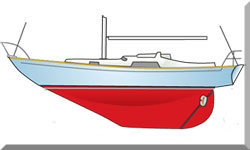
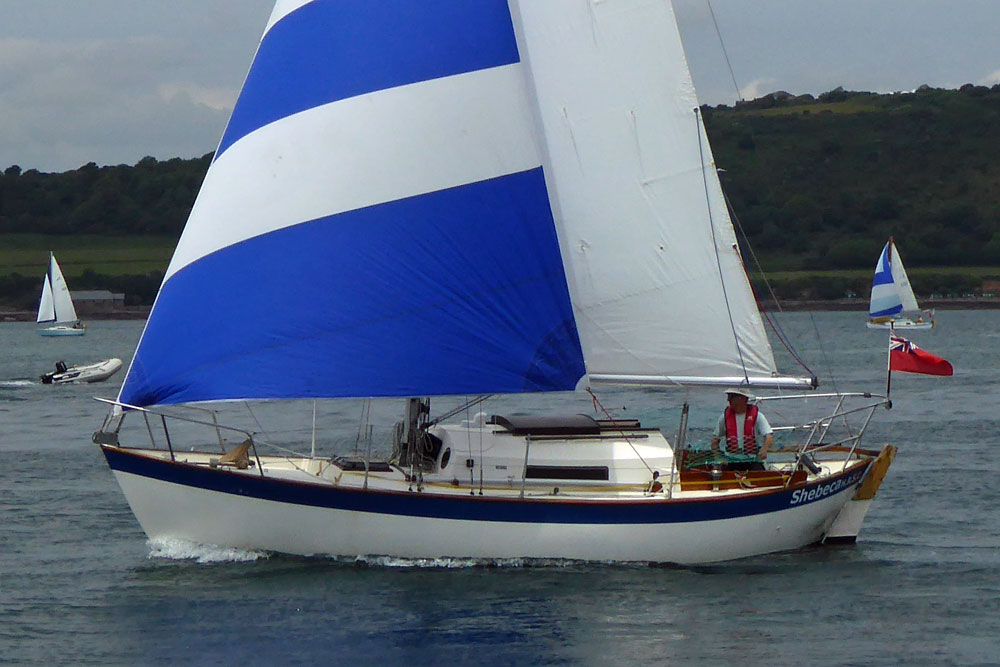
Angelo Lavranos designed the Morgan 31 as a compact, tough cruiser suited to South African coastal conditions, which often demand a boat that tracks well, copes with steep chop, and remains controllable when the breeze pipes up. The hull is a traditional long‑keel form with a cutaway forefoot and a transom‑hung rudder, giving directional stability and a steady feel on passage.
Important Clarification
This boat should not be confused with any American‑built yachts designed by Henry Morgan or produced by Morgan Yachts in Florida.
The two lines share a name only. The Lavranos Morgan 31 is a completely different design, built in South Africa, with its own hull form, construction approach, and performance profile.
Hull & Deck
The hull is GRP, heavily laid up by the standards of the era. Owners frequently comment on the thickness of the laminate and the absence of structural surprises. The deck is also GRP with plywood coring in some areas. Most boats of this vintage will have had deck hardware re‑bedded at least once; if not, it should be on the buyer’s shortlist.
The cabin windows are typically framed and through‑bolted, not bonded, which makes replacement straightforward.
The Morgan 31 uses internal stainless‑steel chainplates bolted to GRP knees. They are hidden behind interior joinery, so inspection requires access panels or trim removal. Any long‑term deck leaks around the chainplate slots can lead to concealed corrosion.
Keel & Rudder
The Morgan 31 has an integral long keel with encapsulated ballast.
This means:
- There are no keel bolts to worry about
- The ballast is set inside the GRP keel cavity
- Grounding damage is usually laminate‑related rather than structural bolt failure
The transom‑hung rudder is simple, robust, and easy to service. It also gives good feedback through the tiller.
Published Specification: The Morgan 31 Blueprint
| LOA | 30'6" (9.30 m) |
| LWL | 25'0" (7.62 m) |
| Beam | 10'4" (3.15 m) |
| Draft | 4'9" (1.45 m) |
| Displacement | 11,984 lb (5,436 kg) |
| Ballast | 3,889 lb (1,764 kg) |
| Rig Type | Masthead sloop |
| Hull Material | GRP |
| Production Dates | Late 1970s–1980s |
Sail Areas & Rig Dimensions
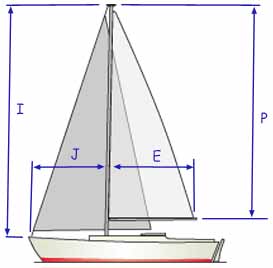 Rig dimensions
- I: 40.19' (12.25 m)
- J: 13.32' (4.06 m)
- P: 35.10' (10.70 m)
- E: 12.53' (3.82 m)
Sail Areas:
- Mainsail: 219.9 ft2 (20.43 m²)
- Foretriangle: 267.7 ft2 (24.87 m²)
- Total Working Sail Area: 487.6 ft2 (45.30 m²)
Performance Analysis: Understanding the Design Ratios
| SA/D | 14.9 |
| D/L | 342 |
| B/D | 32.4% |
| Capsize Screening Formula | 1.81 |
| Brewer Comfort Ratio | 31.0 |
Interpretation
- SA/D 14.9: Moderate sail power; respectable in lighter airs, comfortable in stronger winds.
- D/L 342: Heavy displacement; prioritises comfort and tracking over acceleration.
- B/D 32.4%: Sensible ballast ratio for a long‑keel cruiser; contributes to stiffness.
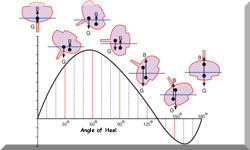
- CSF 1.81: Below the offshore threshold of 2.0, indicating favourable capsize resistance.
- Comfort Ratio 31.0: Suggests a gentle motion in a seaway, consistent with owner reports.
For more on this topic, you might want to take a look at Understanding Boat Performance & Design Ratios...
How the Morgan 31 Sails
Upwind, the Morgan 31 tracks reliably but does not point as high as fin‑keel designs. The long keel rewards patience: build speed first, then ease into the groove. In light winds, a larger genoa helps. In stronger breezes, the boat stiffens early and carries sail well until the first reef.
Downwind, the long keel keeps her straight, and the transom‑hung rudder gives good control. She is not prone to rolling excessively, and the motion is predictable.
Short‑handed sailors appreciate the forgiving helm and the boat’s reluctance to round up abruptly. Reefing early keeps the boat comfortable and reduces weather helm.
Bluewater Capability: Strengths & Trade-Offs
Strengths include:
- Strong hull and simple underwater profile
- Good directional stability
- Low CSF and reassuring motion
- Easy‑to‑service rudder and external chainplates
Trade‑offs:
- Limited tankage for long passages
- Modest sail area
- Storage adequate but not generous
- Heavy displacement slows progress in light winds
For ocean crossings, owners typically upgrade tankage, renew standing rigging, and add windvane steering or an efficient autopilot.
Configuration, Layout & Cruising Characteristics
The cockpit is deep and secure, with tiller steering and space for two to three adults. Side decks are wide enough for safe movement, and the long keel makes the boat steady when working forward.
Below, the layout is traditional:
- V‑berth forward
- Heads compartment aft of the forecabin
- Saloon with opposing settees
- Compact galley to port
- Quarter berth to starboard
Headroom is reasonable for a 31‑footer of this era. Ventilation depends on the condition of the forward hatch and any retrofitted vents. Storage is adequate for coastal cruising and short liveaboard periods.
Who This Boat Is Best For
Good fit for:
- Sailors wanting a tough, predictable cruiser
- Budget‑minded buyers seeking offshore‑leaning design
- Short‑handed crews
- Liveaboards who value simplicity
Less ideal for:
- Performance‑oriented sailors
- Those needing large tankage for extended passagemaking
- Buyers wanting modern interior volume
The Buyer’s Checklist: Common Problem Areas
- Fuel tanks: Many boats still carry their original mild‑steel tanks. Corrosion is common, especially around baffles and welds. Replacement is a known refit item.
- Deck hardware bedding: Stanchions, handrails, and genoa tracks should all be checked for moisture ingress. Older South African GRP can hide water in the deck core if fittings have not been re‑bedded.
- Standing rigging: A significant number of Morgan 31s still have older wire. Age, not mileage, is the deciding factor here. Budget for replacement unless there is documented evidence of recent renewal.
- Rudder fittings: The transom‑hung rudder is simple and robust, but pintles and gudgeons should be checked for wear, elongation of bolt holes, and crevice corrosion.
- Engine access: Space is tight on some examples. Look for oil leaks, worn mounts, and corrosion around the exhaust elbow. Many boats are now on their second or third engine.
- Chainplates: The Morgan 31 uses internal stainless‑steel chainplates bolted to GRP knees. They are hidden behind interior joinery, so inspection requires removing trim or access panels. Any long‑term deck leaks around the chainplate slots can cause concealed corrosion.
- Keel structure: The Morgan 31 has an integral long keel with encapsulated ballast, so there are no keel bolts. Inspect the keel laminate for grounding damage, moisture, and any signs of internal ballast movement.
- Osmosis: Not unusual on older South African GRP hulls. Cosmetic blistering is common; structural issues are rare but should be assessed by a surveyor.
- Windows & hatches: Through‑bolted aluminium‑framed windows often need resealing. Forward hatches may have crazing or UV damage.
- Electrical systems: Many boats still carry original wiring. Look for brittle insulation, DIY additions, and outdated fuse panels.
Could this be your ideal cruising boat?
It may well be, but before going any further, it might be worth taking a look at my eBook 'How to Avoid Buying the Wrong Sailboat'...
Summing Up
The Lavranos Morgan 31 is a sturdy, honest cruiser with a reassuring feel and a design that favours comfort and control over outright speed. Its long keel, solid construction, and predictable behaviour make it appealing to sailors who value reliability and a steady motion. While tankage and performance are modest, the boat’s strengths lie in its simplicity, toughness, and suitability for coastal passages and occasional offshore ventures. With careful inspection and sensible upgrades, it remains a dependable 31‑footer for sailors who prefer substance over flash.

This article was written by Dick McClary, RYA Yachtmaster and author of the RYA publications 'Offshore Sailing' and 'Fishing Afloat', member of The Yachting Journalists Association (YJA), erstwhile member of the Ocean Cruising Club (OCC) and owner/administrator of 'Liveaboard Sailboats for Sale'.

Frequently Asked Questions (FAQs)
1. Is the Morgan 31 suitable for offshore passages?
1. Is the Morgan 31 suitable for offshore passages?
Yes, with upgrades to tankage, rigging, and self‑steering, many owners have used it for offshore work.
2. How fast is the Morgan 31?
2. How fast is the Morgan 31?
It is a moderate performer; expect 5–6 knots on passage with occasional bursts above that in ideal conditions.
3. What engine options were common?
3. What engine options were common?
Many boats were fitted with small diesels such as Yanmar or Volvo units; most will now be on their second or third engine.
4. Does the long keel make manoeuvring difficult?
4. Does the long keel make manoeuvring difficult?
It requires planning in tight marinas, but the boat tracks well and behaves predictably.
5. What upgrades add the most value?
5. What upgrades add the most value?
New rigging, modern sails, upgraded tankage, and renewed deck hardware significantly improve reliability and resale appeal.
Recent Articles


-
Mystery 35 Review: Specs, Performance & Buying Guide
Aug 29, 26 09:42 AM
An in-depth review of the Mystery 35 sailboat. Read technical specs, design ratios, sail performance, and common buyer inspection areas. -
Beneteau First 405 Review: Specs, Performance & Buyer’s Guide
Aug 26, 26 03:58 AM
Detailed Beneteau First 405 review covering specs, performance, bluewater capability, layouts and buyer’s checklist. -
Moody S38 Review: Specs, Ratios & Buyer’s Guide
Aug 12, 26 04:22 AM
In‑depth Moody S38 review covering specs, performance, design ratios, layout, strengths, trade‑offs & buyer inspection points.