- Home
- Cruiser Yachts over 55'
- Ocean 62 Sailboat
The Ocean 62 Sailboat: Specs, Performance Analysis & Cruising Characteristics
Key Takeaways: The Ocean 62, built by Southern Ocean Shipyard, is a formidable heavy-displacement cruiser designed for ultimate sea-keeping and liveaboard luxury. Whether configured as a standard ketch or a versatile staysail ketch, it trades light-air speed for massive interior volume and a motion comfort ratio that few modern yachts can match. Its robust GRP construction and optional hydraulic centreboard make it a premier choice for self-sufficient, long-term ocean voyaging.
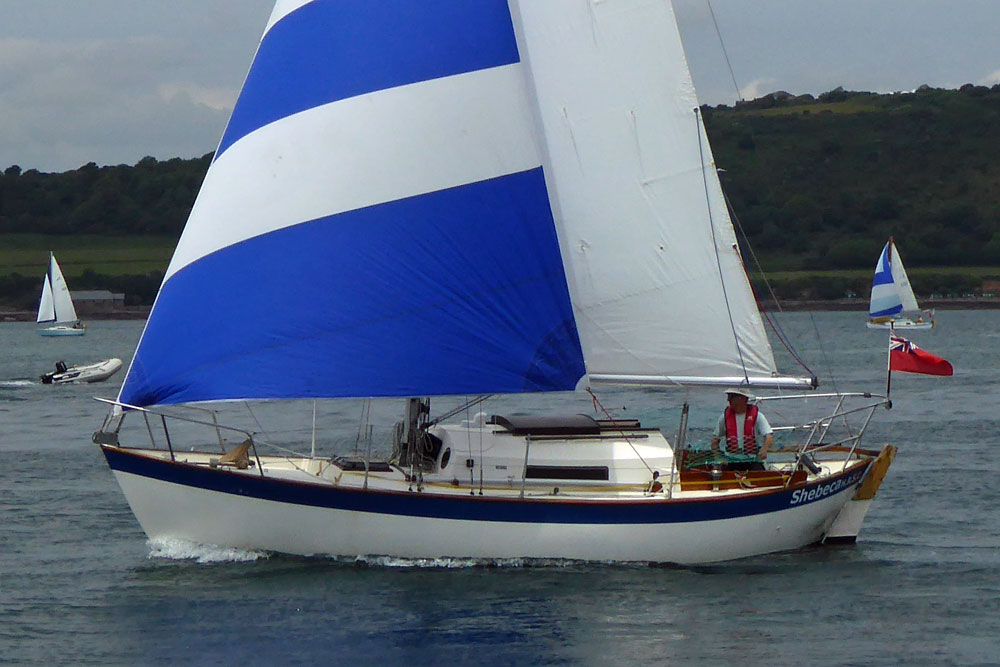
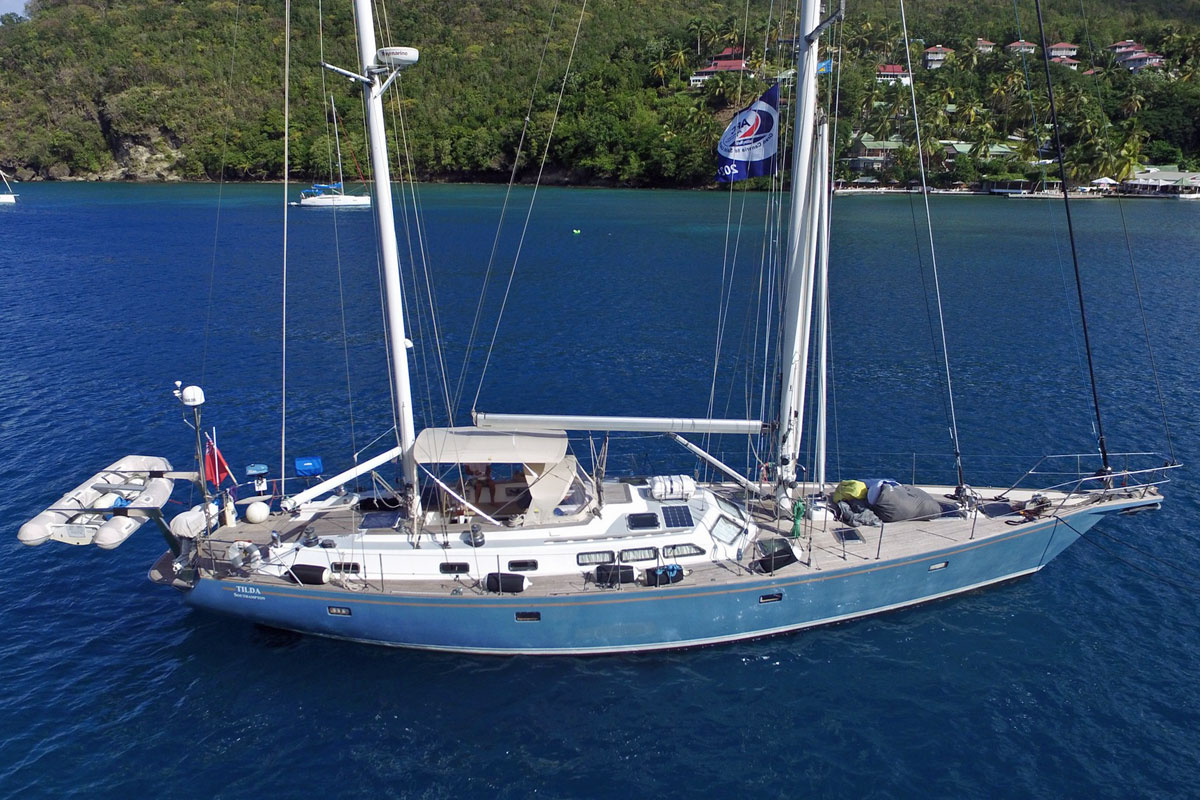 'Tilda', an Ocean 62 staysail ketch
Pic by kind permission of her owner
Table of Contents
- Design & Construction
- Sail Areas & Rig Dimensions
- Configuration, Layout & Cruising Characteristics
- Published Specification: The Ocean 62 Blueprint
- Performance Analysis: Understanding the Design Ratios
- The Buyer’s Checklist: Common Problem Areas
- Comparison: Ocean 62 vs The Competition
- Summing Up
- Frequently Asked Questions (FAQs)
Design & Construction
The Ocean 62 is a product of the renowned Southern Ocean Shipyard in the UK. The builder operated from 1959 to 1987 and established a formidable reputation for constructing vessels to Lloyd's Register standards. Unlike modern Mediterranean-style cruisers, the Ocean 62 was conceived as a "private" and more opulent evolution of the successful Ocean 60 charter hull.
Hull & Engineering
The hull is constructed of hand-laid, heavy-duty glassfibre reinforced polyester (GRP). These boats were built in an era when "over-engineering" was the industry standard, so the laminate thickness is often far beyond what is found in contemporary mass-production yachts. A defining feature of many Ocean 62s is the hydraulic centreboard configuration, which allows for a versatile draft range—typically around 6'7" (2.00m) with the board up and 9'10" (3.00m) with the board down.
Rigging Variants: The Staysail Ketch
While the sloop and standard ketch rigs were available, the staysail ketch (often called a cutter-ketch) is arguably the most desirable for the serious offshore sailor. This version incorporates an inner forestay, allowing the vessel to fly a staysail alongside a high-cut yankee.
This "split" sail plan is a game-changer in heavy weather. It enables the crew to douse the genoa and sail comfortably under a reefed main, staysail, and mizzen. This configuration keeps the centre of effort low and central, significantly reducing helm fatigue and improving balance when the wind climbs above 30 knots.
Sail Areas & Rig Dimensions
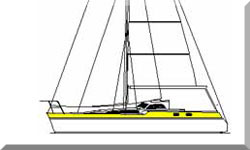
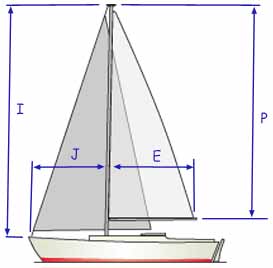 Rig dimensions
The sail plan of the Ocean 62 is designed for manageable power. On the staysail ketch version, the foretriangle is divided to make sail changes less physically demanding for a small crew.
- Mainsail Area: 555 ft² (51.6 m²)
- Genoa Area (150%): 1,166 ft² (108.3 m²)
- Staysail Area: Typically 280–320 ft² (approx. 28 m²)
- Total Upwind Sail Area: Approximately 1,721 ft² (159.9 m²)
Rig Dimensions
I (Forestay Height): 64'0" (19.51m)
J (Foretriangle Base): 23'11" (7.30m)
P (Main Hoist): 58'6" (17.83m)
E (Main Foot): 18'7" (5.66m)
Configuration, Layout & Cruising Characteristics
Stepping aboard an Ocean 62, the immediate impression is one of immense scale and security. The cockpit is deep and well-protected, designed for long watches in heavy weather rather than just sunbathing.
Interior Liveability
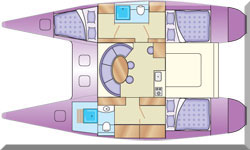
The layout is typically configured with four cabins, accommodating up to eight guests with high levels of privacy. The galley is a highlight for liveaboards, often featuring a longitudinal "U-shape" that provides excellent bracing for the cook while underway. Tankage is massive, with many units carrying over 1,200 litres (264 gallons) of both fuel and fresh water. This provides the self-sufficiency required for transoceanic passages.
Published Specs: The Ocean 62 Blueprint
| Specification Category | Measurement / Detail |
|---|---|
| LOA (Length Overall) | 62'0" (18.90m) |
| LWL (Waterline Length) | 48'0" (14.63m) |
| Beam | 15'3" (4.65m) |
| Draft (Min/Max) | 6'7" / 9'10" (2.00m / 3.00m) |
| Displacement | 57,320 lbs (26,000 kg) |
| Ballast | 19,840 lbs (9,000 kg) |
| Rig Type | Ketch, Staysail Ketch & Sloop |
| Hull Material | GRP (Glass Reinforced Plastic) |
| Production Dates | 1980 – 1987 |
Performance Analysis: Understanding the Design Ratios
To understand how the Ocean 62 behaves at sea, we must look at the mathematical relationships between its dimensions.
| Ratio Metric | Calculated Value | Expert Interpretation |
|---|---|---|
| SA/D (Sail Area/Displacement) | 18.5 | Moderately powered; requires a good breeze to move the heavy hull. |
| D/L (Displacement/Length) | 232 | Heavy cruiser; indicates high load-carrying capacity and a sea-kindly motion. |
| B/D (Ballast/Displacement) | 34.6% | Well-ballasted; provides high initial and ultimate stability. |
| CSF (Capsize Screening Formula) | 1.58 | Excellent; values under 2.0 are considered safe for ocean crossings. |
| Brewer Motion Comfort Ratio | 42.5 | Exceptional; this high score suggests a very stable, "soft" ride in rough seas. |
The Comfort Ratio of 42.5 is particularly telling. While a modern 40-foot racer-cruiser might score in the low 20s, the Ocean 62 will remain steady when the sea state turns ugly. For a deeper look at how these numbers influence your time on the water, see our guide on Understanding Boat Performance & Design Ratios.
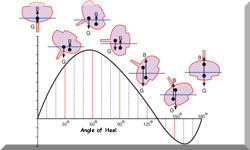
Structural Integrity & Stability Dynamics
TEXT
The Buyer’s Checklist: Common Problem Areas
When inspecting an Ocean 62, keep a keen eye on these specific age-related points:
- Hydraulic Systems: The centreboard and furling systems rely on high-pressure hydraulics. Check for leaks at the rams and ensure the manual backup pump is fun
- Teak Decks: Most original models came with thick teak decks. After 40 years, expect thinning or failing caulking which can lead to deck core saturation.
- Inner Forestay Tension: On staysail ketch models, ensure the mast tangs and deck chainplates for the inner stay show no signs of stress or lifting.
- Engine Access: While the engine rooms are generally large, check the condition of the original fuel tanks for internal corrosion.
Comparison: The Ocean 62 vs The Competition
- Oyster 62: Modern underwater profile but significantly more expensive.
- Bowman 57: High build quality but narrower with less interior volume.
- Swan 65: Faster and more prestigious, but far more demanding to sail and much more cramped below decks compared to the Ocean 62.
If you'd like to compare this boat with others in this size range, take a look at Cruising Boats more than 55' overall....
Could this be your ideal cruising boat?
It may well be, but before going any further, it might be worth taking a look at my eBook 'How to Avoid Buying the Wrong Sailboat'...
Summing Up
The Ocean 62 is a purposeful, immensely strong, and comfortable "home on the water" designed for those who prioritise safety and liveability over podium finishes. Its design ratios reveal a vessel that will look after its crew in a gale, providing a stable platform and a predictable motion. Whether you choose the simpler sloop or the versatile staysail ketch, the sheer quality of the Southern Ocean Shipyard's GRP work ensures these hulls remain viable for decades of adventure.
This article was written by Dick McClary, RYA Yachtmaster and author of the RYA publications 'Offshore Sailing' and 'Fishing Afloat', member of The Yachting Journalists Association (YJA), and erstwhile member of the Ocean Cruising Club (OCC).
Frequently Asked Questions (FAQs)
What are the benefits of the staysail ketch rig?
What are the benefits of the staysail ketch rig?
It allows for a more versatile sail plan in heavy weather by using a smaller staysail on an inner forestay, keeping the boat balanced and easier to handle than a large, partially furled genoa.
Is the Ocean 62 easy to sail single-handed?
Is the Ocean 62 easy to sail single-handed?
Single-handing is challenging due to the displacement and scale. However, the ketch rig helps by splitting the sail area into smaller pieces. With electric winches, a capable couple can handle her.
What is the realistic cruising speed?
What is the realistic cruising speed?
In a 15-knot breeze on a reach, expect 7.5 to 8.5 knots. She is heavy and needs wind to overcome wetted surface area, but she carries her momentum like a freight train.
How does the lifting keel affect performance?
How does the lifting keel affect performance?
With the board down, she points reasonably well. With the board up, windward performance suffers, but it allows for "creeking" and entering shallow harbours other 60-footers cannot reach.
What is the typical refit cost?
What is the typical refit cost?
A major refit—including decks, rigging, and engine work—can easily exceed £100,000. It is vital to find a boat where the "big ticket" items have been recently addressed.
Recent Articles


-
Offshore Internet with Starlink: Hardware, Plans, and Setup Guidance
Oct 01, 26 01:15 PM
A clear, practical guide to choosing the right Starlink hardware and plan for offshore cruising. Learn what to buy, how to install it, and how to manage power afloat. -
Offshore Liferaft Guide: Choosing, Stowing and Servicing One
Oct 01, 26 06:28 AM
Choosing an offshore liferaft? Learn what ISO 9650 Group A means, where to stow it, how often to service it and what to pack in the grab bag. -
Can an Inflatable Tender Replace a Liferaft? Offshore Verdict
Sep 30, 26 03:50 PM
Can an inflatable tender replace a liferaft? Offshore sailors get the honest answer: when a tender helps, where it fails and how to plan abandon ship.