- Home
- Cruising Yachts 35' to 40'
- Oyster 39
The Oyster 39 Sailboat: Specs, Performance Analysis & Cruising Characteristics
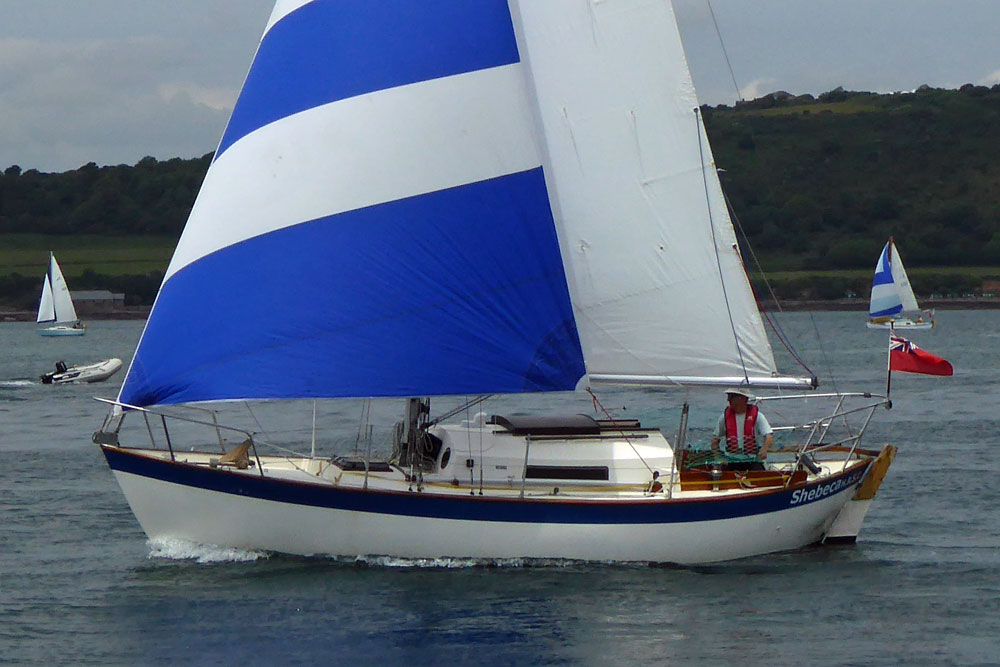
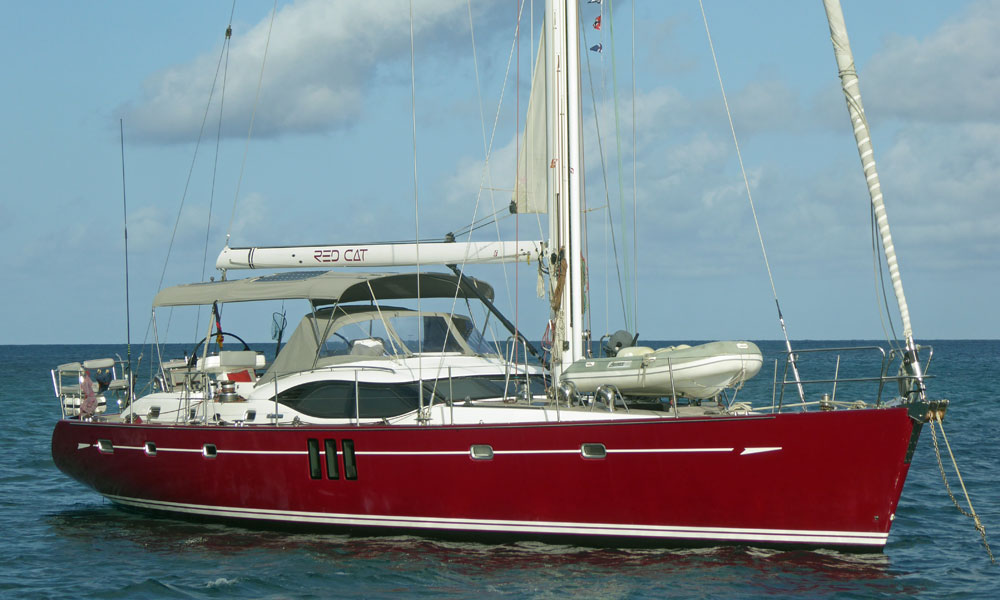
Key Takeaways: The Oyster 39 is a robust, heavy-displacement ketch or sloop designed by Kim Holman and Donald Pye, known for its exceptional sea-kindliness and immense interior volume. Built by Landamores for Oyster Marine between 1978 and 1982, it is a definitive bluewater cruiser that prioritises comfort and safety over outright speed.
While it won’t win many light-wind races, its high ballast ratio and protected centre cockpit make it a formidable choice for long-distance liveaboards seeking a secure, predictable platform for ocean passages.
Table of Contents
- Design & Construction
- Sail Areas & Rig Dimensions
- Configuration, Layout & Cruising Characteristics
- Published Specification: The Oyster 39 Blueprint
- Performance Analysis: Understanding the Design Ratios
- The Buyer’s Checklist: Common Problem Areas
- Comparison: Oyster 39 vs The Competition
- Summing Up
- Frequently Asked Questions (FAQs)
Design & Construction
The Oyster 39 emerged during the late 1970s, when Oyster Marine was establishing its reputation for building "deck saloon" cruisers without compromising hull strength. Designed by the prestigious firm Holman & Pye and built by Landamores in Norfolk, the hull is constructed from heavy-duty glass reinforced plastic (GRP).
Unlike some contemporary lightweight designs, the Oyster 39 was built to a standard that often saw individual yachts receiving Lloyd's Hull Construction Certificates.
A key defining feature of this model is its high-volume hull and the option of a ketch rig, which allows for a versatile sail plan that is easily managed by a small crew or a couple.
The centre cockpit configuration is another hallmark. It provides a deep, safe working area and allows for a magnificent full-width owner’s cabin aft. This layout was revolutionary for a boat under 40' (12.19m) at the time.
In terms of build specifics, the chainplates are robustly integrated into the hull laminate, and the cabin windows are typically through-bolted in heavy frames. This reflects the era's focus on mechanical security over modern bonded aesthetics.
Several versions were produced to suit different cruising grounds, including a standard fin keel for optimum windward performance and a shallower draft version. While most were ketch-rigged to spread the sail area, a few sloop versions exist.
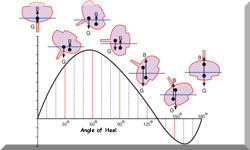
Regarding stability, the Oyster 39 predates the formal STIX (Stability Index) and the EU Recreational Craft Directive (RCD) classifications. However, if assessed by modern standards, the design possesses the core characteristics typically required for Category A (Ocean) status. This is not merely a result of its heavy displacement and high ballast ratio—which provide a strong righting moment—but also its hull geometry.
The design features a relatively narrow beam and a significant Angle of Vanishing Stability (AVS), meaning the boat is physically inclined to right itself even after a severe knockdown. Crucially, for a centre-cockpit yacht of this era, the companionway sills are high and the cockpit is deep and self-draining, factors that are heavily weighted in a STIX calculation to prevent downflooding. While a formal STIX score of 32 or higher would be required for a modern "Ocean" rating, the Oyster 39's combination of mass and seaworthy proportions makes it a definitive choice for extended offshore passages where such stability is a mechanical necessity.
Sail Areas & Rig Dimensions
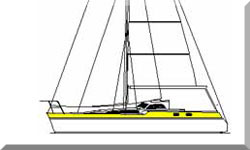
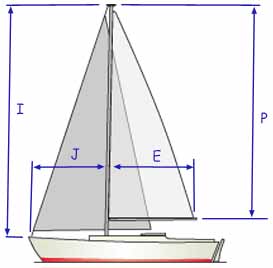 Rig dimensions
The sail plan was designed to be manageable rather than aggressive. The ketch rig, in particular, offers the "mizzen and jib" option for heavy weather, keeping the centre of effort low and the boat balanced.
- Mainsail Area: 286ft² (26.57m²)
- Mizzen Area (Ketch): 105ft² (9.75m²)
- Fore Triangle: 398ft² (36.97m²)
- I (Forestay Height): 47'0" (14.33m)
- J (Fore Triangle Base): 17'0" (5.18m)
- P (Main Hoist): 40'8" (12.40m)
- E (Main Foot): 14'0" (4.27m)
Configuration, Layout & Cruising Characteristics
Stepping below deck, the Oyster 39 feels significantly larger than its 39' (11.89m) length suggests. The layout usually features a large u-shaped galley to port, which remains secure to use even when the boat is heeled. Tankage is generous, with water and fuel capacities designed for weeks away from the dock, often exceeding 100 gallons (454 litres) each.
The walk-through to the aft cabin is a functional corridor that often houses a proper sea-berth and provides excellent access to the engine compartment located under the cockpit sole. Underway, the hull's longish fin keel and skeg-hung rudder provide excellent directional stability. It is not a boat that requires constant attention at the helm, which is a blessing on long night watches. The motion is predictable and soft, avoiding the jerky "shudder" often felt in modern, flat-bottomed designs when meeting a head sea.
Published Specs: The Oyster 39 Blueprint
The following data represents the standard production specifications for the Oyster 39.
| Feature | Specification |
|---|---|
| LOA | 39'0" (11.89m) |
| LWL | 32'6" (9.91m) |
| Beam | 12'9" (3.89m) |
| Draft (Standard) | 6'0" (1.83m) |
| Displacement | 21,500 lbs (9,752kg) |
| Ballast | 8,500 lbs (3,856kg) |
| Rig Type | Ketch or Sloop |
| Hull Material | GRP |
| Production Dates | 1978 – 1982 |
Performance Analysis: Understanding the Design Ratios
To understand how the Oyster 39 behaves at sea, look at the mathematical relationships between its dimensions. For a deeper context, see our guide on Understanding Boat Performance & Design Ratios.
| Ratio | Value | Interpretation |
|---|---|---|
| SA/D | 14.1 | Relatively low. Indicates a boat that needs a breeze to get moving; under-canvassed for light airs. |
| D/L | 280 | Heavy displacement. Offers high load-carrying capacity and a comfortable motion in heavy seas. |
| B/D | 39.5% | Excellent. A very high proportion of weight is in the ballast, promising high stiffness and safety. |
| CSF | 1.84 | Values under 2.0 are considered safe for ocean passages. This boat is well-suited for offshore work. |
| Comfort Ratio | 34.2 | High. Indicates a slow, comfortable motion that reduces crew fatigue during long passages. |
Structural Integrity & Stability Dynamics
The Oyster 39’s GRP hull is notoriously over-built by modern standards. This thickness provides peace of mind when venturing into poorly charted waters or dealing with potential debris at sea. The long fin keel and heavy ballast (8,500 lbs) result in a very high vanishing angle of stability. Even in a knockdown, the boat has a strong physical tendency to right itself quickly.
Compared to modern, beamier boats with shallow underbodies, the Oyster 39 might lack speed downwind, but it excels in maintaining a steady course without the "squirrelly" behavior associated with modern wide-stern cruisers.
The Buyer’s Checklist: Common Problem Areas
When inspecting an Oyster 39, keep in mind that these boats are now over forty years old.
- Osmosis: While the hulls are thick, earlier GRP resins can be prone to blistering. A moisture meter check is essential.
- Teak Decks: Many were fitted with laid teak decks. If original, they are likely at the end of their life. Replacing or removing teak is a significant expense (often £15,000–£25,000).
- Engine Access & Age: The original Perkins or Volvo Penta engines are workhorses but check for mounting bolt corrosion and exhaust elbow health.
- Chainplates: Inspect where the chainplates meet the deck for signs of water ingress, which can lead to crevice corrosion.
- Spars: On ketch versions, check the mizzen mast step for compression or corrosion, as this is often overlooked compared to the main mast.
Comparison: The Oyster 39 vs The Competition
- Westerly Oceanlord 41: Offers a more modern hull shape and slightly better light-wind performance, but arguably lacks the "bulletproof" feel of the Oyster's layup.
- Hallberg-Rassy 38: A very close rival in build quality. The HR38 is slightly more refined in woodwork but often carries a higher price tag for similar vintage.
- Moody 422: Offers a great centre-cockpit layout but feels more "production-line" compared to the semi-custom feel of the Landamores-built Oyster.
If you'd like to compare this boat with others in this size range, take a look at Cruising Boats from 35' to 40' overall....
Could this be your ideal cruising boat?
It may well be, but before going any further, it might be worth taking a look at my eBook 'How to Avoid Buying the Wrong Sailboat'...
Summing Up
The Oyster 39 is a traditionalist’s dream. It is a sailboat that trades performance for security and interior volume for structural mass. Its design ratios confirm what the eye suspects: this is a heavy, stiff, and exceptionally comfortable offshore cruiser.
While it may require more engine hours in light winds and a bit of "muscle" to handle its displacement in close quarters, the trade-off is a vessel that will look after its crew when the weather turns foul. For those planning a life aboard or a blue-horizon voyage, few boats of this era offer such a reassuring foundation.
This article was written by Dick McClary, RYA Yachtmaster and author of the RYA publications 'Offshore Sailing' and 'Fishing Afloat', member of The Yachting Journalists Association (YJA), and erstwhile member of the Ocean Cruising Club (OCC).
Frequently Asked Questions (FAQs)
Is the Oyster 39 suitable for single-handed sailing?
Is the Oyster 39 suitable for single-handed sailing?
While heavy, its directional stability makes it manageable. However, most owners prefer a ketch rig for single-handing as the smaller individual sails are easier to handle without electric winches.
How does the Oyster 39 perform in light airs?
How does the Oyster 39 perform in light airs?
With a Sail Area/Displacement ratio of 14.1, it is quite sluggish in under 10 knots of breeze. Most owners carry a large cruising chute or a Parasailor to compensate.
Are parts still available for these older models?
Are parts still available for these older models?
While Oyster Yachts still provides excellent support, many components like ports, hatches, and engine parts are third-party. The Oyster Owners' Association is an invaluable resource for sourcing specific replacement items.
What is the typical cruising speed under power?
What is the typical cruising speed under power?
With a clean hull and a well-maintained 50hp engine, you can expect a comfortable cruising speed of 6.5 knots, with a maximum near 7.5 knots.
Does it suffer from 'bridge deck' slamming?
Does it suffer from 'bridge deck' slamming?
No. The hull shape has a relatively deep V-section forward and a traditional displacement curve, which allows it to part the waves rather than slap over them.
Recent Articles


-
Should I Buy a Boat? Four Questions to Answer Before You Commit
Oct 02, 26 04:40 AM
Thinking "Should I buy a boat?" This guide helps you decide, with key considerations from cost & maintenance to your personal sailing aspirations. -
Offshore Internet with Starlink: Hardware, Plans, and Setup Guidance
Oct 01, 26 01:15 PM
A clear, practical guide to choosing the right Starlink hardware and plan for offshore cruising. Learn what to buy, how to install it, and how to manage power afloat. -
Offshore Liferaft Guide: Choosing, Stowing and Servicing One
Oct 01, 26 06:28 AM
Choosing an offshore liferaft? Learn what ISO 9650 Group A means, where to stow it, how often to service it and what to pack in the grab bag.