- Home
- Cruising Yachts 40' to 45'
- Passport 42 Sailboat Specs
The Passport 42 Sailboat
Specs & Key Performance Indicators
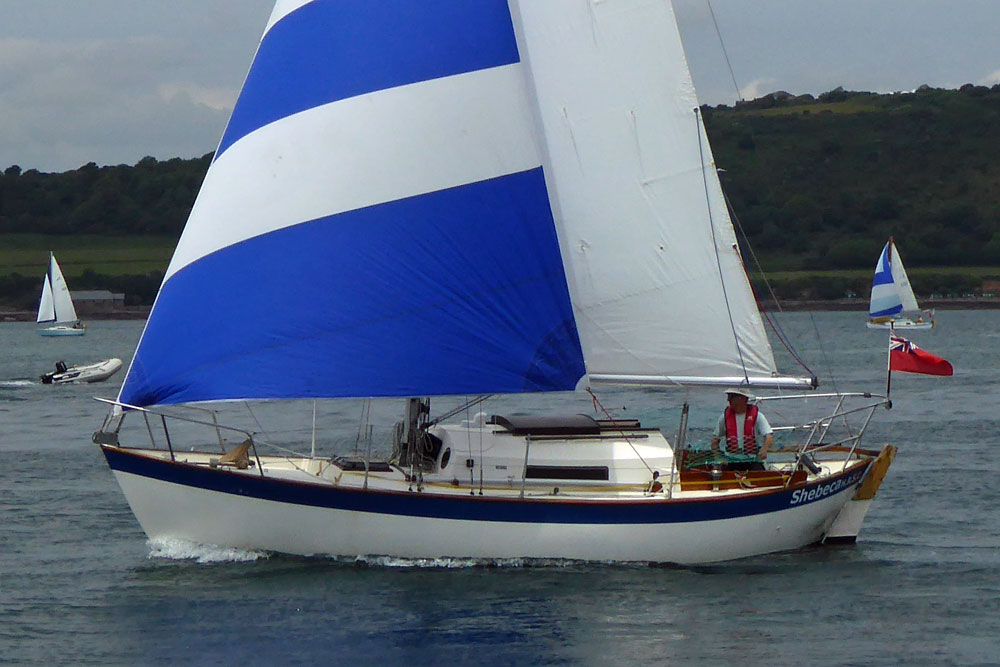
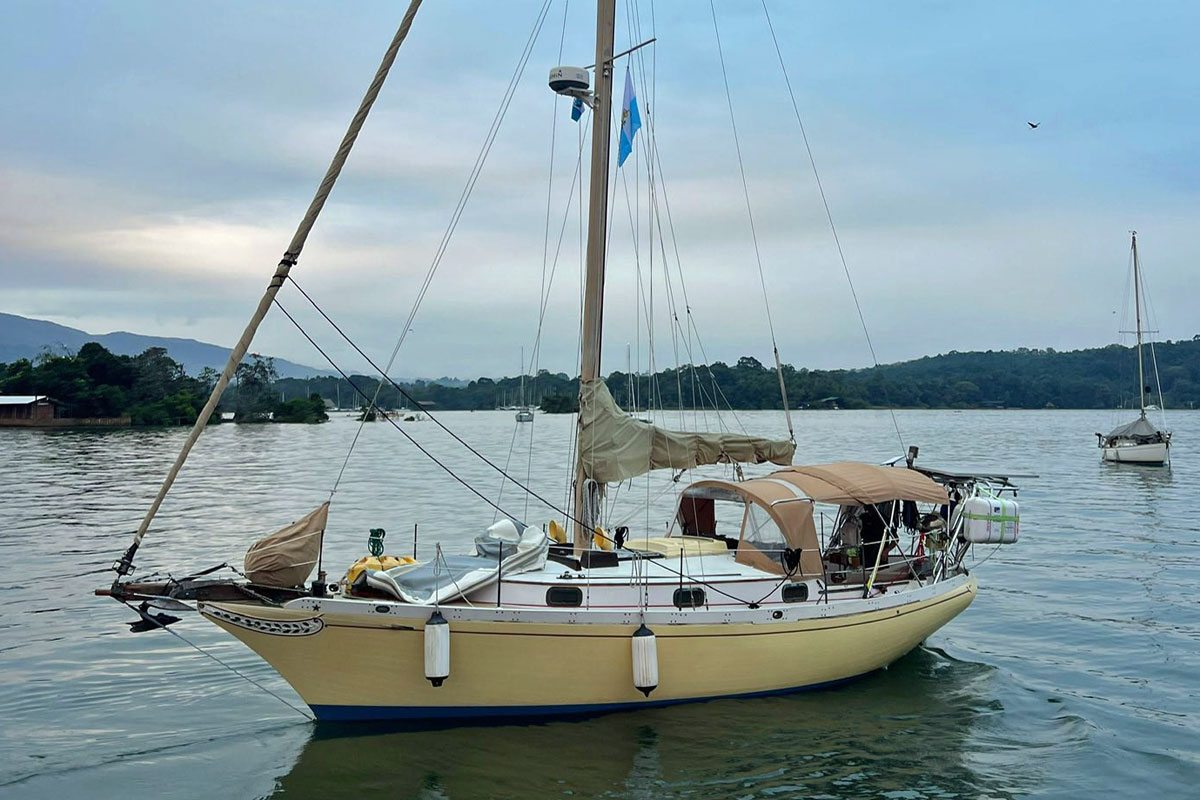
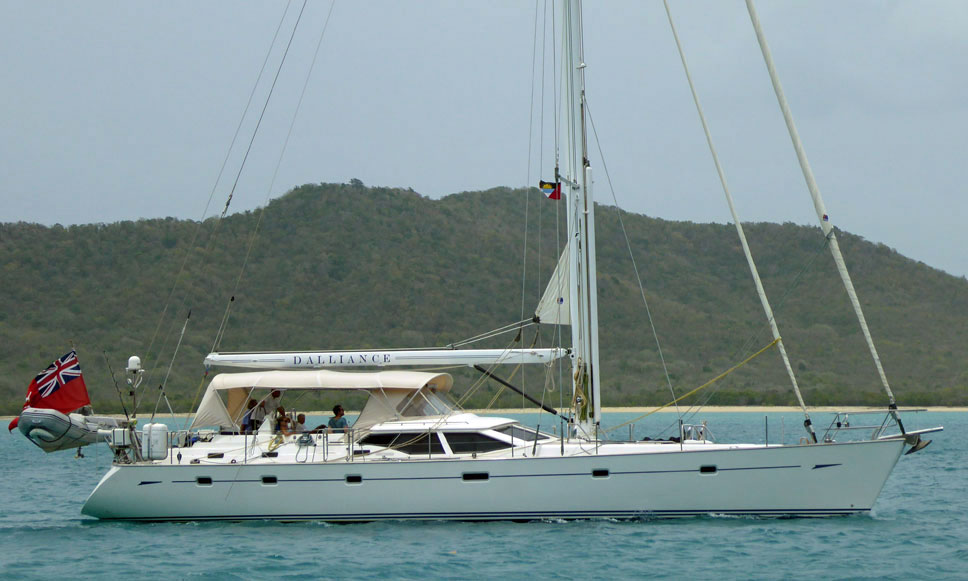
The Passport 42, a heavy displacement cruiser, was designed by Canadian naval architect Stan Huntingford and built by Passport Yachts in Taiwan.
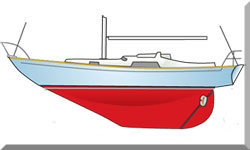
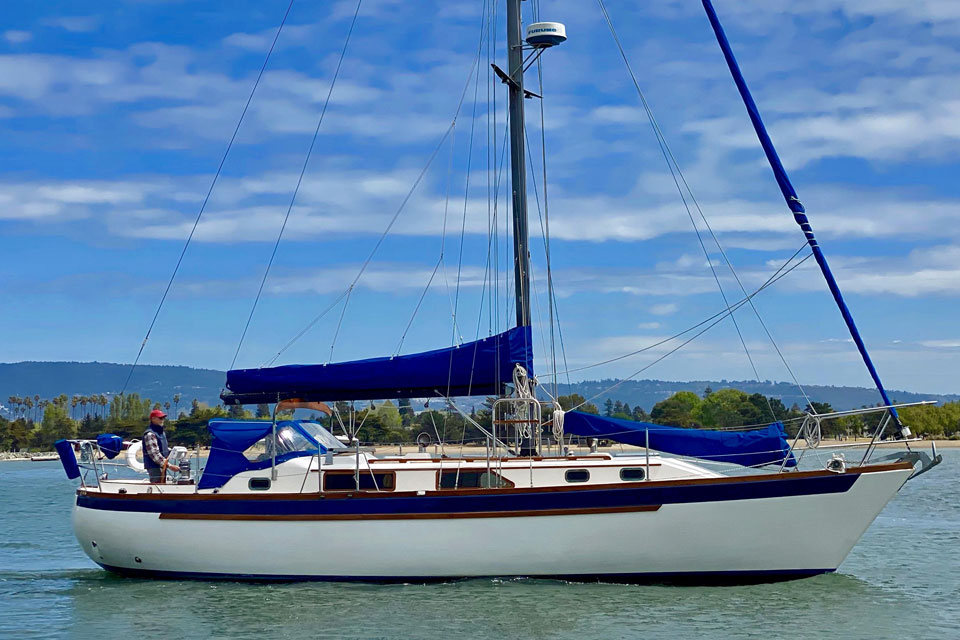 The Passport 42 - note the canoe stern
Published Specification for the Passport 42
Keel & Rudder Configuration: Fin keel with skeg-hung rudder
Hull Material: Fiberglass
Length Overall: 42'0" (12.8 m)
Waterline Length: 34'10" (10.6 m)
Beam: 12'10" (3.9 m)
Draft: 6'4" (1.9 m)
Rig Type: Cutter
Displacement: 25,500 lbs (11,567 kg)
Ballast: 9,000 lbs (4,082 kg)
Water Tank Capacity: 150 gallons (568 liters)
Fuel Tank Capacity: 130 gallons (492 liters)
Hull Speed: 8.6 knots
Designer: Stan Huntingford
Builder: Passport Yachts
Year First Built: 1981
Year Last Built: 1988
Sail Areas & Rig Dimensions
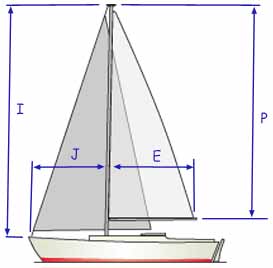
Sail Areas
- Mainsail Area: 310ft2 (29m2)
- Foretriangle Area: 454ft2 (42m2)
- Total Sail Area (100%): 764ft2 (71m2)
Rig Dimensions
- I: 53'5" (16.28 m)
- J: 17'0" (5.18 m)
- P: 46'0" (14.02 m)
- E: 13'6" (4.11 m)
Published Design Ratios
The Key Performance Indicators (KPIs)
- Sail Area/Displacement Ratio (S/D): 14.17
- Ballast/Displacement Ratio (B/D): 35.29
- Displacement/Length Ratio (D/L): 269
- Comfort Ratio (CR): 35.4
- Capsize Screening Formula (CSF): 1.74
The following analysis of the primary design ratios gives an indication of the boat's likely sailing characteristics, but see the 'Notes of Caution' that follow below:
- Sail Area/Displacement Ratio (S/D: 14.17): This ratio indicates that the Passport 42 is a tad underpowered, suggesting it may not have the performance of a more sporty machine but is adequate for cruising purposes. It falls below the 'reasonably good performance' associated with the 16-20 range.
- Ballast/Displacement Ratio (B/D: 35.29): With a ballast ratio of 35.29, the Passport 42 has moderate stiffness and stability. While it is not as stiff as boats with a ratio of 40 or more, it still provides a good balance between stability and performance, making it suitable for cruising.
- Displacement/Length Ratio (D/L: 269): This ratio places the Passport 42 in the heavy displacement category (275-350). This means it is designed to be a stable and comfortable cruiser, capable of handling rough seas with ease, but it will not be as fast or agile as lighter displacement boats.
- Comfort Ratio (CR: 35.4): A comfort ratio of 35.4 indicates a reasonably sedate motion, typical of a moderate bluewater cruising boat. This suggests that the Passport 42 will provide a comfortable ride in a variety of sea conditions, making it suitable for long-distance cruising.
- Capsize Screening Formula (CSF: 1.74): With a CSF of 1.74, the Passport 42 is well-suited for ocean passages. A CSF below 2.0 indicates good stability and a lower risk of capsizing, which is essential for bluewater sailing.
These ratios collectively suggest that the Passport 42 is a stable, comfortable cruiser designed for long-distance and bluewater sailing, with adequate performance for cruising but would not be a good choice for club racing.
Design Ratios: Notes of Caution...
- The Sail Area/Displacement Ratio (SA/D): This ratio provides an estimate of the sail power relative to the boat's weight, which can indicate potential speed in various wind conditions. But it doesn't account for the efficiency of the sail plan, the rigging, or the skill of the crew. Real-world performance can vary significantly based on these factors.
- The Ballast/Displacement Ratio (B/D): This ratio gives an idea of the boat's stability and stiffness, which is crucial for handling and safety. But it doesn't consider the distribution of the ballast or the hull shape, both of which can greatly affect stability. A high B/D ratio alone doesn't guarantee a stable boat if the ballast is poorly distributed.
- The Displacement/Length Ratio (D/L): This ratio helps predict the boat's speed potential and its behaviour in different sea conditions. But it doesn't account for the hull design or the boat's overall weight distribution. Two boats with the same D/L ratio can perform very differently if their hull shapes are different.
- The Comfort Ratio (CR): This ratio estimates the boat's motion comfort in a seaway, which is important for long passages. But it doesn't consider the boat's interior layout, which can also affect comfort. Additionally, personal tolerance to motion varies, so a boat that is comfortable for one person might not be for another.
- The Capsize Screening Formula (CSF): This formula assesses the likelihood of a boat capsizing in heavy seas, which is critical for offshore safety. But it doesn't take into account the boat's handling characteristics or the skill of the crew. A boat with a low CSF can still capsize if poorly handled in severe conditions.
General Limitations
- Static Nature: These ratios are static measurements and don't account for dynamic factors like wave action, wind gusts, or crew actions.
- Simplification: They simplify complex interactions into single numbers, which can be misleading. Real-world performance is influenced by a multitude of factors that these ratios can't fully capture.
- Context: The context in which the boat is used (e.g., coastal cruising vs. offshore racing) can greatly affect how these ratios should be interpreted.
In summary, while these ratios provide valuable insights into the theoretical performance characteristics of a sailboat, they should be used as part of a broader assessment that includes practical experience, sea trials, and expert advice.
More Specs & Key Performance Indicators for Popular Cruising Boats
This article was written with the assistance of Gemini, a large language model developed by Google. Gemini was used to gather information, summarize research findings, and provide suggestions for the content and structure of the article.
Recent Articles


-
Best Sailing Lifejackets: Budget to Offshore Picks
Sep 27, 26 11:52 AM
Compare three lifejackets — a budget foam vest, a coastal automatic, and a full offshore-spec Spinlock — with honest pros, cons and pricing -
Offshore Lifejackets: The Complete Buyer's Guide
Sep 27, 26 09:57 AM
A practical guide to offshore lifejackets: buoyancy levels, inflation types, must-have features and servicing advice -
Best PLBs for Sailors in 2026 — Top Personal Locator Beacons Reviewed
Sep 26, 26 05:54 PM
Discover the best PLBs for sailors in 2026. Compact, reliable personal locator beacons ideal for man‑overboard emergencies and offshore cruising.