- Home
- Cruising Yachts 45' to 50'
- Beneteau 46.1 Review
Beneteau 46.1 Sailboat
Specs, Performance Analysis & Cruising Characteristics
Key Takeaways: The Beneteau Oceanis 46.1 is a modern 47‑foot cruising yacht designed for sailors who want space, comfort and respectable passage speeds without moving into performance‑boat territory. It is light to moderate in displacement, carries a generous sailplan and uses twin rudders for grip when heeled. The trade-offs are typical of this generation: a livelier motion than older heavy cruisers, reliance on bonded windows and a need for active reefing. For coastal cruising, seasonal liveaboard life and well-planned offshore passages, it offers a strong blend of comfort and capability.
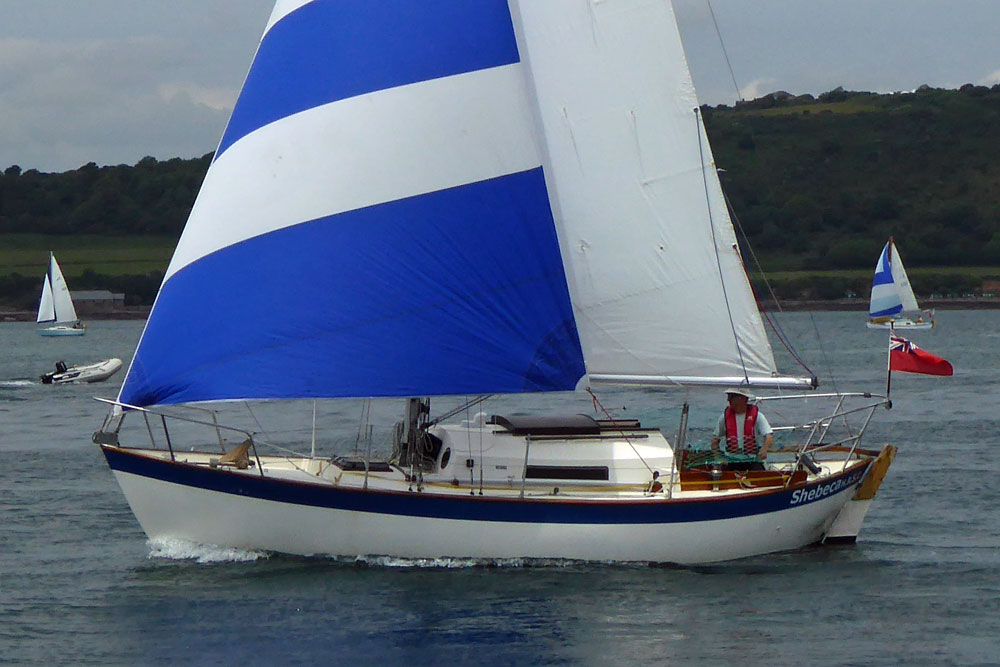
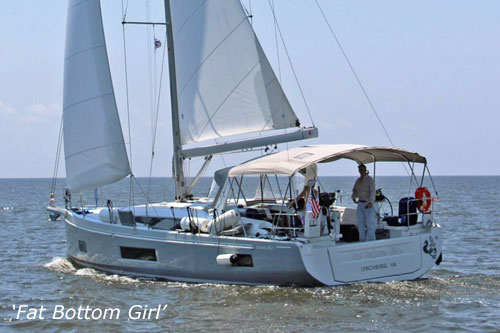
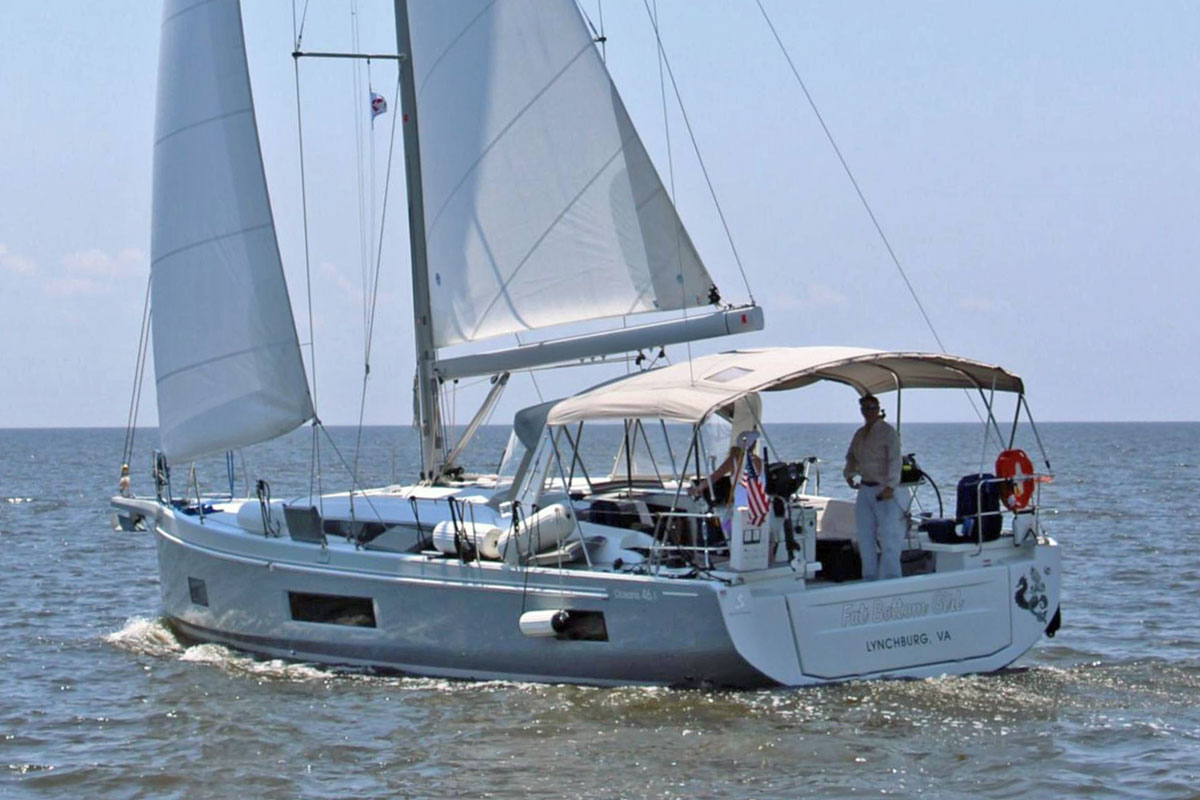 A Beneteau Oceanis 46.1
This one's for sale—see below...
Table of Contents
- The Beneteau 46.1 at a Glance
- Design & Construction
- Published Specification: The Beneteau 46.1 Blueprint
- Sail Areas & Rig Dimensions
- Performance Analysis: Understanding the Design Ratios
- How the Beneteau 46.1 Sails
- Bluewater Capability: Strengths & Trade-Offs
- Configuration, Layout & Cruising Characteristics
- Who This Boat Is Best For
- Used Examples for Sale
- The Buyer’s Checklist: Common Problem Areas
- Summing Up
- Frequently Asked Questions (FAQs)
The Beneteau 46.1 at a Glance
- Type: Modern GRP cruising monohull
- Designer: Pascal Conq (Groupe Finot-Conq)
- Builder: Beneteau, France
- Production Years: From 2017/2018 onwards
- Rig: Fractional sloop, deck-stepped mast, twin rudders
- Best for: Coastal cruising, offshore passages in season, family sailing, liveaboard comfort
- Strengths: Big interior volume, twin rudders, good SA/D, modern deck layout, strong dealer network
- Trade-offs: Light–moderate displacement, higher CSF than older bluewater designs, bonded windows, active sail management required
Note that although the names are similar, the Oceanis 46 (launched around 2006–2010) and the Oceanis 46.1 (launched 2017/2018 onwards) are two very different generations of Beneteau design. The 46.1 is not a facelift — it is a complete redesign with a new hull, new keel and rudder design and a different approach to interior volume.
Design & Construction
The Oceanis 46.1 is built on a modern Finot‑Conq hull that carries its beam well aft, giving the boat a long waterline, plenty of form stability and a noticeably spacious interior. The hull itself is a solid GRP laminate with an internal structural grid bonded in to distribute keel and rig loads. This grid is a key part of the boat’s strength, so any used example should be checked carefully around the keel attachment area for signs of grounding or movement. The deck is a GRP sandwich with core material in non‑compressed zones to keep weight down while maintaining stiffness.
Large hull and coachroof windows are a defining feature of the 46.1’s look. These are bonded rather than through‑bolted, which is standard practice on many modern cruisers. It gives a clean aesthetic and plenty of natural light below, but it does mean that older boats should be inspected for any signs of adhesive fatigue or minor leaks. Chainplates are internal and tied into the structural grid and bulkheads, which spreads loads effectively but can make inspection a little more involved than with external strap chainplates.
Under the waterline, the boat is offered with either a deep fin keel at 7'9" (2.35 m) or a shoal version at 5'9" (1.75 m). Both are cast iron with a bulb, though the ballast figures differ slightly. Steering is via twin spade rudders, which give excellent grip when the boat is heeled and make the helm feel predictable under both sail and autopilot. As with any twin‑rudder cruiser, it’s worth checking for play in the bearings and any moisture in the blades during a survey.
The interior layout options range from three to five cabins with two or three heads, depending on whether the forward owner’s cabin is kept as a single suite or divided into two smaller cabins. The three‑cabin owner’s version is the most common and makes the best use of the hull’s generous volume. Throughout the boat, the emphasis is on light, space and ease of movement, which is very much in line with the design philosophy of this generation of Oceanis models.
The Oceanis 46.1 is certified to CE Category A (Ocean) for up to ten persons, reflecting its intended role as a capable offshore cruiser when properly prepared and handled with sensible seamanship.
Published Specification: The Beneteau 46.1 Blueprint
| Specification | Value |
|---|---|
| Length overall (LOA) | 47'9" (14.60 m) |
| Length on waterline (LWL) | 43'5" (13.24 m) |
| Beam | 14'9" (4.50 m) |
| Draft (deep keel) | 7'9" (2.35 m) |
| Draft (shoal keel) | 5'9" (1.75 m) |
| Displacement | 23,362 lb (10,597 kg) |
| Ballast (deep keel) | 6,030 lb (2,735 kg) |
| Ballast (shoal keel) | 6,748 lb (3,061 kg) |
| Hull material | Monolithic polyester (GRP) |
| Rig type | Fractional sloop, deck-stepped |
| Rudder configuration | Twin spade rudders |
| Production dates | 2017/2018 onwards |
Sail Areas & Rig Dimensions
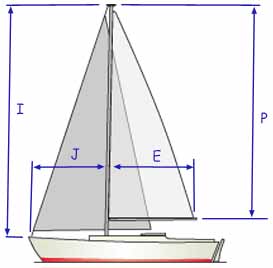 Rig dimensions
Standard rig (non‑performance):
- I: 58.14' (17.72 m)
- J: 18.70' (5.70 m)
- P: 54.36' (16.57 m)
- E: 18.47' (5.63 m)
Sail areas:
- Mainsail: 502 ft² (46.64 m²)
- 100% foretriangle: 544 ft² (50.50 m²)
- Total upwind area: 1,046 ft² (97.14 m²)
Performance Analysis: Understanding the Design Ratios
Using the published values:
- Sail Area to Displacement Ratio (SA/D): 20.55
- Displacement to Length Ratio (D/L): 127
- Ballast to Displacement Ratio (B/D): 25.8%
- Capsize Screening Formula (CSF): 2.07
- Brewer Motion Comfort Ratio: 22.37
| Ratio | Value | What it suggests |
|---|---|---|
| SA/D | 20.55 | Good light-air performance; rewards trimming. |
| D/L | 127 | Light–moderate displacement; quicker than older cruisers. |
| B/D | 25.8% | Relies on form stability and beam as much as ballast. |
| CSF | 2.07 | Typical for modern cruisers; not a heavy-weather specialist. |
| Comfort Ratio | 22.37 | Moderate motion; livelier than older bluewater boats. |
For more on this topic, you might want to take a look at Understanding Boat Performance & Design Ratios...
How the Beneteau 46.1 Sails
Upwind, the 46.1 performs better than its beam suggests, especially with the deep keel. It likes to sail fairly flat; once heel angles exceed about 20 degrees, leeway increases and the helm loads up. Reefing early keeps speed and comfort up.
Downwind, the twin rudders give excellent control, and with an asymmetric the boat will sit comfortably in the high single digits. The wide stern can encourage yaw in a quartering sea if overcanvassed, so trimming and reefing matter.
Short-handed, the boat is manageable for a couple, especially with electric winches and a self-tacking jib. The autopilot performs well thanks to the twin rudders.
Bluewater Capability: Strengths & Trade-Offs
Strengths:
- Long waterline and decent SA/D for good passage speeds
- Twin rudders for control when heeled
- Large cockpit and good shelter with sprayhood and bimini
- Adequate tankage for its class
- Modern systems and good parts availability
Trade-offs:
- Light–moderate displacement means a livelier motion offshore
- Bonded windows require careful inspection
- Stowage is good but not deep-bilged bluewater levels
- Spade rudders and fin keel demand careful navigation
With sensible upgrades and conservative routing, the 46.1 is capable of ocean passages.
Configuration, Layout & Cruising Characteristics
The cockpit is wide, with twin wheels and a drop-down transom. Primary winches are within reach of the helm. Side decks are clear, though adding extra handholds is wise for offshore work.
Below, the interior is bright and spacious. The owner’s cabin in the three‑cabin layout is particularly generous. Ventilation is good, and the galley is workable at sea. Storage is adequate for coastal and seasonal cruising; for long-term liveaboard life, weight management matters.
Who This Boat Is Best For
Good fit for:
- Families and couples wanting comfort and decent passage speeds
- Seasonal liveaboards
- Sailors planning coastal cruising with occasional offshore passages
- Charter operators
Less ideal for:
- High-latitude expeditions
- Sailors wanting a heavy-displacement motion
- Those seeking minimal systems and ultra-simple maintenance
The Buyer’s Checklist: Common Problem Areas
- Bonded windows: inspect for leaks or adhesive fatigue
- Hull–deck joint and toerails: check for movement or cracking
- Keel and structural grid: look for grounding signs
- Rudders: check bearings and moisture
- Standing rigging: budget for replacement after 10 years
- Sails: original sails may be tired
- Deck hardware: winches and clutches wear heavily
- Engine and saildrive: check hours, mounts, seal
- Electronics: older systems may need upgrading
- Interior joinery: look for water staining or veneer issues
Could this be your ideal cruising boat?
It may well be, but before going any further, it might be worth taking a look at my eBook 'How to Avoid Buying the Wrong Sailboat'...
Summing Up
The Beneteau 46.1 is a modern cruising yacht with a strong blend of comfort, speed and ease of handling. Its design ratios place it firmly in the light–moderate displacement cruising category, offering good performance in typical coastal and offshore conditions. It is not a heavy-weather bruiser, but with sensible preparation it is capable of ocean passages. For buyers, the focus should be on structure, windows, rigging, sails and electronics. A well-maintained example can be an excellent platform for comfortable cruising.

This article was written by Dick McClary, RYA Yachtmaster and author of the RYA publications 'Offshore Sailing' and 'Fishing Afloat', member of The Yachting Journalists Association (YJA), erstwhile member of the Ocean Cruising Club (OCC) and owner/administrator of 'Liveaboard Sailboats for Sale'.

Frequently Asked Questions (FAQs)
1. What structural areas on the 46.1 deserve the closest inspection during a pre‑purchase survey?
1. What structural areas on the 46.1 deserve the closest inspection during a pre‑purchase survey?
Prospective buyers should pay particular attention to the keel–grid interface, rudder bearings, bonded hull and coachroof windows, mast step area, and the hull–deck joint around stanchion bases. Any signs of grounding, moisture ingress or movement in the structural grid deserve further investigation. These are the areas where surveyors tend to spend the most time on modern production cruisers of this size.
2. How well does the 46.1 carry cruising loads compared with older 45–47 footers?
2. How well does the 46.1 carry cruising loads compared with older 45–47 footers?
The 46.1 can carry typical coastal and seasonal liveaboard loads comfortably, but like many light–moderate displacement cruisers, it will lose some pointing ability and acceleration if overloaded. Weight needs to be kept low and central. Buyers planning long-term liveaboard life or ocean passages should consider watermaker installation, careful stowage planning and avoiding excessive gear aft.
3. Are there any known long-term maintenance items specific to this model?
3. Are there any known long-term maintenance items specific to this model?
Yes. Bonded windows may require resealing after several years. The saildrive diaphragm has a defined replacement interval. The twin rudders should be checked for play and moisture. Original sails on early boats are often at the end of their useful life. Electronics from the first production years may also be due for replacement. None of these are unusual for a modern cruiser, but they should be budgeted for.
4. How does the 46.1 behave under autopilot on longer passages?
4. How does the 46.1 behave under autopilot on longer passages?
The twin rudders give the autopilot good grip when the boat is heeled, and tracking is generally stable. However, like most wide-stern cruisers, the boat can yaw in a quartering sea if overcanvassed. Reefing early reduces autopilot load and improves course-keeping. Buyers planning offshore passages should ensure the autopilot is sized correctly and in good mechanical condition.
5. What are the real-world running costs and refit expectations for a privately owned 46.1?
5. What are the real-world running costs and refit expectations for a privately owned 46.1?
Annual running costs in the UK or Europe typically fall into the low to mid five figures, depending on marina fees and winter storage. A realistic refit cycle includes standing rigging every 10 years, new sails every 7–10 years depending on use, electronics upgrades every decade, and periodic attention to the saildrive, rudder bearings and deck hardware. Buyers should prioritise boats where these big-ticket items have already been addressed.
Recent Articles


-
Mystery 35 Review: Specs, Performance & Buying Guide
Aug 29, 26 09:42 AM
An in-depth review of the Mystery 35 sailboat. Read technical specs, design ratios, sail performance, and common buyer inspection areas. -
Beneteau First 405 Review: Specs, Performance & Buyer’s Guide
Aug 26, 26 03:58 AM
Detailed Beneteau First 405 review covering specs, performance, bluewater capability, layouts and buyer’s checklist. -
Moody S38 Review: Specs, Ratios & Buyer’s Guide
Aug 12, 26 04:22 AM
In‑depth Moody S38 review covering specs, performance, design ratios, layout, strengths, trade‑offs & buyer inspection points.