- Home
- Sailboats 50'-55'
- GulfStar CSY 50 Review
The GulfStar CSY 50 Sailboat: Specs, Performance Analysis & Cruising Characteristics
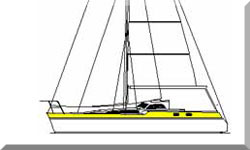
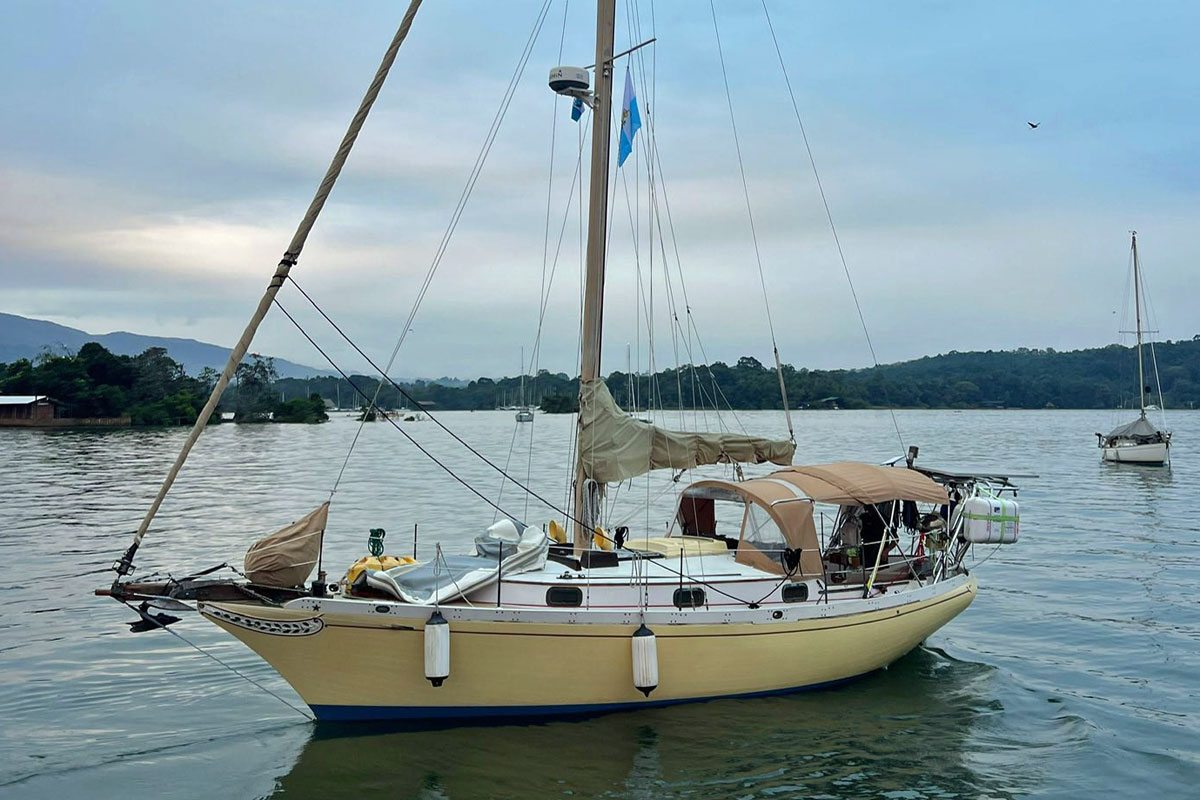
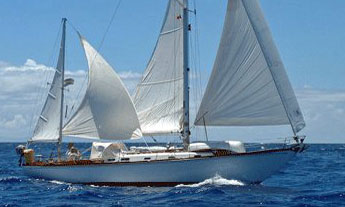
Key Takeaways: The GulfStar CSY 50 is a heavy-displacement, centre-cockpit cruiser designed for maximum interior volume and liveaboard comfort rather than outright performance. Built during a period of collaboration between GulfStar and CSY, these vessels are known for their rugged hull construction and massive tankage, making them ideal for stationary living or trade-wind passagemaking. While the ketch rig is most common, a rare sloop version (as shown below) offers improved upwind performance and a simplified deck layout, though both variants prioritise stability and motion comfort above all else.
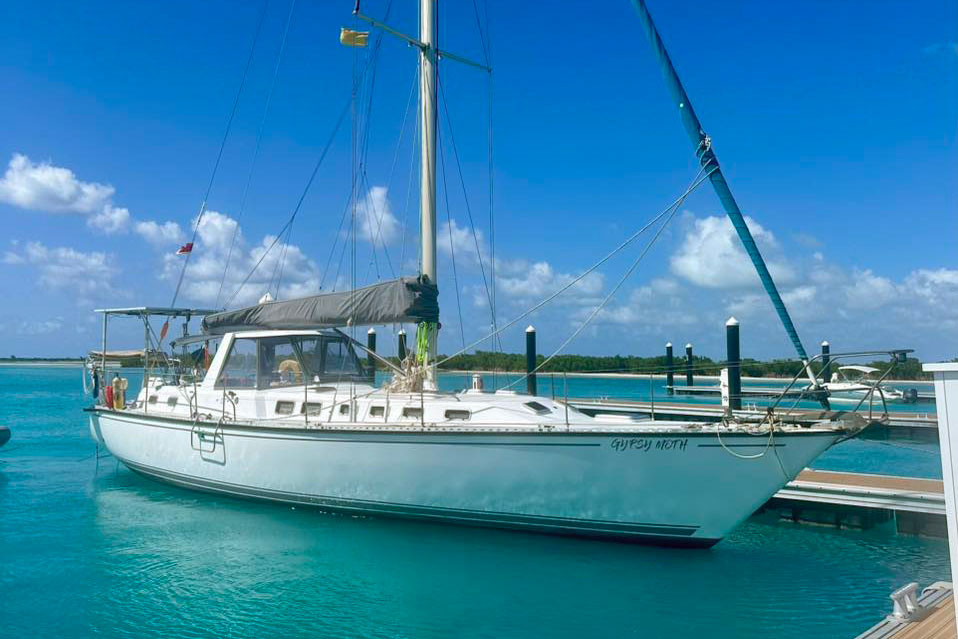 A GulfStar CSY 50 sailboat
Table of Contents
- Design & Construction
- Sail Areas & Rig Dimensions
- Configuration, Layout & Cruising Characteristics
- Published Specification: The GulfStar CSY 50 Blueprint
- Performance Analysis: Understanding the Design Ratios
- The Buyer’s Checklist: Common Problem Areas
- Comparison: GulfStar CSY 50 vs The Competition
- Summing Up
- Frequently Asked Questions (FAQs)
Design & Construction
The GulfStar CSY 50 emerged from a fascinating era of American boat building. While GulfStar, founded by Vince Lazzara, was known for pioneering fiberglass production, the CSY 50 specifically represents a "crossover" design. These boats were heavily influenced by the rugged requirements of the Caribbean charter trade (hence the name Caribbean Sailing Yachts). The hull is solid, hand-laid fiberglass (GRP), built to a scantling standard many modern production boats cannot match.
The defining feature of this vessel is its sheer volume. With a wide beam and high freeboard, the practical implication for cruising is a "great room" feel below deck that rivals much larger yachts. While the vast majority were produced as ketch-rigged cruisers to manage sail area in the 1970s, a limited number of sloop-rigged versions were commissioned. These sloops featured a taller mast and a cleaner aft deck, appealing to those who preferred a more modern sail plan. Unlike modern CE-rated vessels, the CSY 50 predates the modern STIX (Stability Index) system; however, based on its high displacement and ballast ratio, it would comfortably fall into Design Category A (Ocean).
Sail Areas & Rig Dimensions
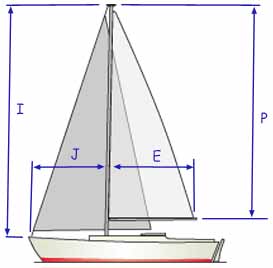 Rig dimensions
The ketch rig allows for a versatile "sail plan for all seasons," enabling the crew to find balance by reefing the main and flying the "jib and jigger" (mizzen) in heavy weather. The sloop version, while rarer, offers a taller mast for better light-air efficiency.
Ketch Rig Dimensions
- Total Sail Area: 1,073 ft² (99.68 m²)
- I (Forestay Height): 52'0" (15.85 m)
- J (Foretriangle Base): 19'6" (5.94 m)
- P (Main Hoist): 45'6" (13.87 m)
- E (Main Foot): 15'0" (4.57 m)
Sloop Rig Dimensions
- Total Sail Area: 1,050 ft² (97.55 m²)
- I (Forestay Height): 56'0" (17.07 m)
- J (Foretriangle Base): 19'6" (5.94 m)
- P (Main Hoist): 49'9" (15.16 m)
- E (Main Foot): 18'4" (5.59 m)
Configuration, Layout & Cruising Characteristics
Living aboard a GulfStar CSY 50 is a lesson in domestic luxury at sea. The centre-cockpit configuration provides a high, dry vantage point for the helmsman and allows for a magnificent master suite aft. In the ketch version, the mizzen mast occupies a portion of the aft deck, whereas the sloop version provides a significantly more open cockpit and lounging area.
Tankage is a standout feature. Most units carry significantly more water and fuel than contemporary 50-footers, allowing for extended periods of self-sufficiency. The cockpit is deep and secure, though the high freeboard can make boarding from a dinghy a bit of a climb. Under power, the heavy hull requires a robust engine to push through a head sea, but once moving, the momentum of the 45,000 lb (20,412 kg) mass provides a very stable ride.
Published Specs: The GulfStar CSY 50 Blueprint
| GulfStar CSY 50 Specifications | |
|---|---|
| LOA | 50'5" (15.37 m) |
| LWL | 39'9" (12.12 m) |
| Beam | 15'2" (4.62 m) |
| Draft | 5'10" (1.78 m) |
| Displacement | 45,000 lbs (20,412 kg) |
| Ballast | 15,000 lbs (6,804 kg) |
| Rig Type | Ketch or Sloop |
| Hull Material | GRP (Solid Fiberglass) |
| Designer | Lazzara & Moore |
| Production Dates | 1977 – 1982 |
Performance Analysis: Understanding the Design Ratios
| Ratio | Value | Interpretation |
|---|---|---|
| SA/D | 13.6 | Low: Underpowered in light airs; requires breeze to wake up. |
| D/L | 320 | Heavy: High load-carrying capacity & comfortable motion. |
| B/D | 33% | Moderate: Decent stiffness, relying on hull form for stability. |
| CSF | 1.71 | Excellent: Well under the 2.0 threshold for ocean safety. |
| Comfort Ratio | 44.2 | High: Exceptional comfort; very slow, predictable motion. |
SA/D (Sail Area/Displacement): At 13.6, the CSY 50 is a "motor-sailer" in light conditions. The sloop rig performs slightly better upwind, but both versions need a stiff breeze to reach hull speed.
D/L (Displacement/Length): A ratio of 320 confirms its status as a heavy cruiser. It will not surf down waves, but it will maintain a steady pace even when loaded with cruising gear.
CSF (Capsize Screening Formula): A value of 1.71 is very reassuring for offshore sailors, indicating a low risk of capsize in breaking seas.
Comfort Ratio: A score of 44.2 is elite. This boat is designed to minimize crew fatigue during long passages.
For more context on these figures, see our guide on Understanding Boat Performance & Design Ratios.
Structural Integrity & Stability Dynamics
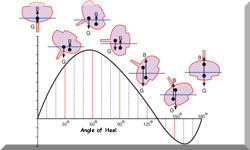
The solid fiberglass hull provides a level of impact resistance that modern cored hulls struggle to match. While heavier, this construction simplifies long-term maintenance because there is no balsa or foam core to delaminate. The wide beam creates massive initial stability, meaning the boat stays relatively flat in moderate winds. The sloop version, with its taller mast, carries a slightly higher center of effort, making the ketch arguably the more "upright" of the two in heavy weather.
The Buyer’s Checklist: Common Problem Areas
- Osmotic Blistering: "GulfStar blisters" are a known phenomenon from this era. While usually cosmetic, they require a thorough survey.
- Fuel Tank Corrosion: Original black iron or aluminium tanks are often glassed into the structure. Check for leaks, as replacement is a major undertaking.
- Chainplates: Given their age, stainless steel chainplates should be pulled and inspected for crevice corrosion.
- Teak Decks: If the boat has original teak-overlay decks, expect significant maintenance or the need for a full removal and glass-in.
Comparison: The GulfStar CSY 50 vs The Competition
- Morgan 462: Similar philosophy but slightly less interior volume than the CSY 50.
- Amel Maramu: More technologically complex and expensive; the CSY 50 is a simpler DIY alternative.
- Whitby 42: Often compared due to the center cockpit, but the CSY 50 feels like a significantly larger ship below deck.
If you'd like to compare this boat with others in this size range, take a look at Cruising Boats from 50' to 55' overall....
Could this be your ideal cruising boat?
It may well be, but before going any further, it might be worth taking a look at my eBook 'How to Avoid Buying the Wrong Sailboat'...
Summing Up
The GulfStar CSY 50 is a formidable choice for the sailor who prioritises living space and sea-kindly motion over outright speed. Whether you find a common ketch or a rare sloop, the design ratios point to a boat built for safety and comfort. While it requires a vigilant eye for age-related issues like tankage and blisters, its robust construction and massive proportions make it one of the best value-for-money liveaboard platforms on the second-hand market today.
This article was written by Dick McClary, RYA Yachtmaster and author of the RYA publications 'Offshore Sailing' and 'Fishing Afloat', member of The Yachting Journalists Association (YJA), and erstwhile member of the Ocean Cruising Club (OCC).
Frequently Asked Questions (FAQs)
Was there a sloop version of the GulfStar CSY 50?
Was there a sloop version of the GulfStar CSY 50?
Yes, though rare. The sloop version features a taller mast and offers slightly better upwind performance, though the ketch remains the more common configuration for this model.
Is the GulfStar CSY 50 easy to sail shorthanded?
Is the GulfStar CSY 50 easy to sail shorthanded?
The ketch rig breaks the sail area into manageable pieces. The sloop is simpler to tack, but the larger mainsail requires more physical effort or upgraded winches.
How does the 5'10" draft affect Caribbean cruising?
How does the 5'10" draft affect Caribbean cruising?
It is a perfect compromise, deep enough for decent tracking while shallow enough for most Bahamas and Caribbean anchorages.
Are these boats prone to deck leaks?
Are these boats prone to deck leaks?
Like any yacht of this vintage, hardware bedded in the 1970s will likely need re-bedding to protect the interior joinery.
What is the typical cruising speed under power?
What is the typical cruising speed under power?
With a clean hull and a healthy engine, you can expect a comfortable cruise at 7.5 to 8 knots.
Recent Articles


-
Mystery 35 Review: Specs, Performance & Buying Guide
Aug 29, 26 09:42 AM
An in-depth review of the Mystery 35 sailboat. Read technical specs, design ratios, sail performance, and common buyer inspection areas. -
Beneteau First 405 Review: Specs, Performance & Buyer’s Guide
Aug 26, 26 03:58 AM
Detailed Beneteau First 405 review covering specs, performance, bluewater capability, layouts and buyer’s checklist. -
Moody S38 Review: Specs, Ratios & Buyer’s Guide
Aug 12, 26 04:22 AM
In‑depth Moody S38 review covering specs, performance, design ratios, layout, strengths, trade‑offs & buyer inspection points.