- Home
- Cruising Yachts 35' to 40'
- Nicholson 38 Sailboat Review
Nicholson 38 Sailboat
Specs, Performance Analysis & Cruising Characteristics
Key Takeaways: The Nicholson 38 is a heavy‑displacement, long‑keel centre‑cockpit ketch built for serious cruising rather than marina showmanship. Produced by Camper & Nicholsons with hulls moulded by Halmatic, it is known for robust GRP construction, a sheltered wheelhouse and a layout that suits extended cruising or liveaboard life. Under sail it is steady, predictable and reassuring in a blow, though not quick in light winds. Buyers should expect age‑related refit work—particularly around windows, chainplates and the rudder—but in return gain a capable, seakindly yacht that rewards thoughtful ownership and excels in rougher conditions.
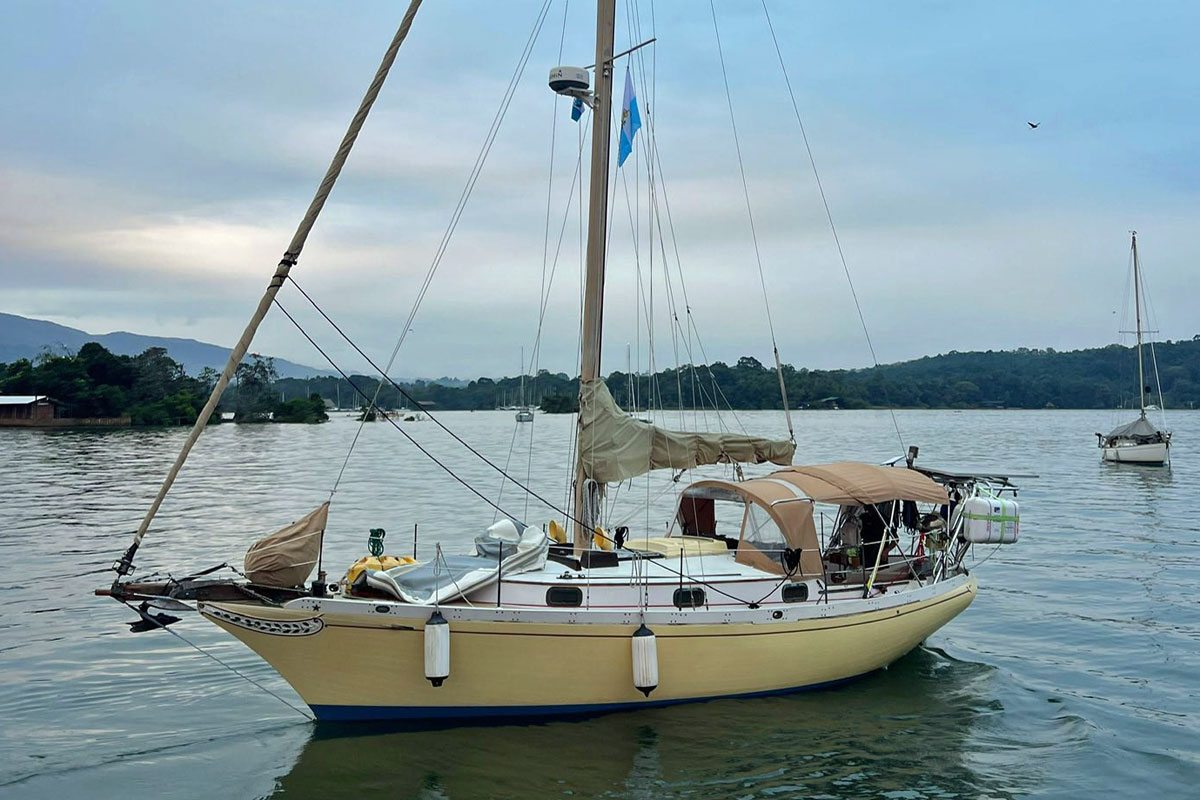
 ‘Czarina Blue’, a Nicholson 38 ketch
Table of Contents
- The Nicholson 38 at a Glance
- Design & Construction
- Published Specification: The Nicholson 38 Blueprint
- Sail Areas & Rig Dimensions
- Performance Analysis: Understanding the Design Ratios
- How the Nicholson 38 Sails
- Bluewater Capability: Strengths & Trade-Offs
- Configuration, Layout & Cruising Characteristics
- Who This Boat Is Best For
- The Buyer’s Checklist: Common Problem Areas
- Summing Up
- Frequently Asked Questions (FAQs)
The Nicholson 38 at a Glance
- Type: Long‑keel GRP centre‑cockpit ketch motorsailer
- Designer: John Alden & Associates (Alden Mistral lineage), with Camper & Nicholsons development
- Builder: Camper & Nicholsons Ltd (UK), hulls by Halmatic
- Production Years: 1966–1975 (approx. 134 hulls)
- Rig: Masthead ketch
- Best for: Offshore cruising, high‑latitude sailing, liveaboard use
- Strengths: Strong construction, protected wheelhouse, good motion comfort, reliable tracking
- Trade‑offs: Modest light‑air performance, awkward astern handling, age‑related maintenance
Design & Construction
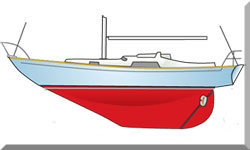
The Nicholson 38 reflects a design era when offshore yachts were built with longevity and structural integrity as the priority. The hulls were moulded in heavy GRP by Halmatic and finished by Camper & Nicholsons, with many examples built under Lloyd’s survey. This heritage is evident in the substantial laminates, strong floors and conservative structural engineering. The long‑keel hull, with its cutaway forefoot and attached rudder, was chosen for directional stability and predictable behaviour at sea rather than agility in tight harbours.
The deck is GRP with reinforced zones beneath hardware. Although the design does not suffer from widespread core issues, any yacht of this age deserves a moisture survey around stanchions, winches and deck fittings. Ballast is lead, encapsulated within the long keel and bolted securely to the hull, giving the boat a reassuring stiffness and the ability to carry cruising loads without complaint.
Portlights are aluminium‑framed units mechanically fastened through the GRP rather than bonded. Owners often report corrosion in the frames and fasteners, along with the usual leaks expected of older metal‑framed windows, but refurbishment or replacement is straightforward. Chainplates are stainless steel components bolted to substantial GRP knees. This is structurally sound, though several owners have discovered crevice corrosion or cracked nuts hidden behind interior mouldings, making chainplate inspection a high‑priority survey item.
The rudder is attached to the trailing edge of the keel. Some owners have reported age‑related issues with the rudder stock and internal structure, so a thorough inspection is essential. Manoeuvring astern can be challenging due to the long keel and prop walk, but once underway the boat tracks with the steady, predictable feel long‑keel enthusiasts appreciate.
The Nicholson 38 was produced in a single main configuration: a masthead ketch with a centre cockpit, semi‑enclosed wheelhouse and an aft cabin accessed from the cockpit. There were no mainstream shoal‑draft, centreboard or bilge‑keel variants, and no major structural “Mk I / Mk II” evolutions that materially affect buying advice. Individual boats vary in interior joinery, wheelhouse glazing, engine installations and later modifications such as in‑mast reefing, but the underlying structure remained consistent.
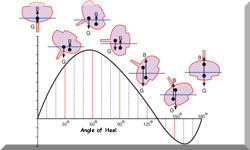
There is no widely published STIX stability index for the Nicholson 38, so its offshore credentials are best understood through traditional design ratios and the extensive real‑world experience of owners who have taken these boats across oceans and into high‑latitude waters.
Published Specification: The Nicholson 38 Blueprint
| Specification | Value |
|---|---|
| LOA | 37'10" (11.53 m) |
| LWL | 27'0" (8.23 m) |
| Beam | 10'6" (3.20 m) |
| Draft (max) | 5'2" (1.58 m) |
| Displacement | 15,904 lb (7,214 kg) |
| Ballast | 7,000 lb (3,175 kg) lead |
| Rig Type | Masthead ketch |
| Hull Material | GRP |
| Production Dates | 1966–1975 |
Sail Areas & Rig Dimensions
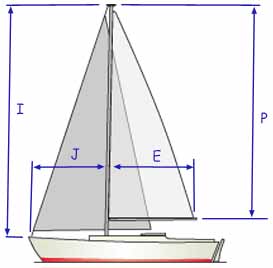 Rig dimensions
- I: 37.33' (11.38 m)
- J: 13.33' (4.06 m)
- P: 33.33' (10.16 m)
- E: 13.33' (4.06 m)
- Mainsail: ~221.9 ft² (20.6 m²)
- Working jib: ~243.1 ft² (22.6 m²)
- 150% genoa: ~376.6 ft² (35.0 m²)
- Spinnaker: ~767.9 ft² (71.4 m²)
Performance Analysis: Understanding the Design Ratios
| Ratio | Value | Practical Meaning |
|---|---|---|
| SA/D | ≈16.8 | Moderate sail power; steady in moderate winds, unhurried in light airs. |
| D/L | ≈361 | Heavy displacement; prioritises comfort and load‑carrying. |
| B/D | ≈0.44 | Strong stiffness and good knockdown resistance. |
| CSF | ≈1.67 | Below 2.0; favourable for offshore work. |
| Motion Comfort | ≈35.5 | Gentle, predictable motion on passage. |
For more on this topic, you might want to take a look at Understanding Boat Performance & Design Ratios...
How the Nicholson 38 Sails
Upwind, the Nicholson 38 prefers a steady breeze. It will not point as high as a modern fin‑keel cruiser, but once settled it holds a comfortable 6–7 knots in moderate winds. In stronger conditions it often outperforms lighter boats that begin to slam or reef early.
On a reach or broad reach, the ketch rig shines. The boat carries a balanced sailplan that can be shortened progressively without fuss. Downwind, many crews favour “jib and jigger” for control and comfort.
The helm is light once underway, and the boat tracks beautifully. In tight marinas, however, the long keel and prop walk demand forethought and confident bursts of power rather than gentle coaxing.
The ketch rig makes reefing straightforward, and the boat’s forgiving nature suits couples and older sailors who value manageable sail handling.
Bluewater Capability: Strengths & Trade-Offs
The Nicholson 38’s long keel, heavy displacement and high comfort ratio make it a natural offshore cruiser. Owners report that the boat feels more secure as conditions worsen, and the semi‑enclosed wheelhouse is a major advantage in cold or wet climates.
Tankage is respectable for a 38‑footer of the era, and the hull tolerates cruising loads well. Deck safety is good thanks to high coamings, solid guardrails and predictable heel angles.
The main trade‑offs are age‑related rather than conceptual: chainplates hidden behind mouldings, older rudder construction and original deck hardware that may be past its prime.
Configuration, Layout & Cruising Characteristics
The centre cockpit and wheelhouse create a sheltered working environment, ideal for northern waters. Visibility is good, and the wheelhouse becomes a valuable living space in poor weather.
Inside, the layout is traditional: a forward cabin, compact saloon, amidships galley and heads, and a separate aft cabin accessed from the cockpit. Storage is adequate, and the boat works well as a liveaboard for a couple or small family, though the saloon is smaller than on many modern designs.
Who This Boat Is Best For
Good fit for:
- Couples planning extended cruising in northern Europe or across oceans
- Families who value a protected cockpit and separate aft cabin
- Retiring sailors seeking comfort and seakindliness
- Owners willing to invest in structural and systems upgrades
Less ideal for:
- Sailors who prioritise speed or light‑air performance
- Warm‑climate day‑sailors who prefer open cockpits
- Buyers unwilling to tackle chainplates, windows or rudder work
The Buyer’s Checklist: Common Problem Areas
- Chainplates & knees – inspect for corrosion and cracking; access can be awkward.
- Windows & portlights – aluminium frames often corrode; leaks are common.
- Rudder & steering gear – check stock, blade and bearings for age‑related issues.
- Keel bolts & hull structure – verify condition and look for weeping or movement.
- Engine & propulsion – many still carry Perkins 4.107/4.108 engines; assess carefully.
- Tankage & plumbing – inspect main and wing tanks for corrosion or contamination.
- Rigging & spars – replace standing rigging if age is unknown.
- Electrical systems – expect rewiring or significant tidying.
- Interior cosmetics – headlining, varnish and mouldings often need attention.
A realistic buyer should expect to invest a five‑figure sum (in pounds) over the first few years if bringing a tired example up to modern cruising standards.
Could this be your ideal cruising boat?
It may well be, but before going any further, it might be worth taking a look at my eBook 'How to Avoid Buying the Wrong Sailboat'...
Summing Up
The Nicholson 38 is a steady, honest cruising yacht that rewards owners who value seakindliness and structural integrity over speed. Its design ratios paint a clear picture: heavy displacement, generous ballast and a high comfort score. On the water, that translates into a boat that looks after its crew and feels composed when conditions deteriorate.
It is not a light‑air performer, and manoeuvring astern requires confidence. Age‑related maintenance is unavoidable. But for sailors who appreciate a traditional long‑keel cruiser with a protected wheelhouse and proven offshore capability, the Nicholson 38 remains a compelling choice.
 DMcC
DMcCThis article was written by Dick McClary, RYA Yachtmaster and author of the RYA publications 'Offshore Sailing' and 'Fishing Afloat', member of The Yachting Journalists Association (YJA), and erstwhile member of the Ocean Cruising Club (OCC).

Frequently Asked Questions (FAQs)
1. Is the Nicholson 38 suitable for ocean crossings?
1. Is the Nicholson 38 suitable for ocean crossings?
Yes, provided the individual boat is structurally sound and properly prepared. Many owners have completed long‑distance and high‑latitude voyages.
2. How does it compare to a Fisher 37 or Nauticat 33?
2. How does it compare to a Fisher 37 or Nauticat 33?
It sits between them: more sailing‑oriented than a Fisher, more traditional and heavier than many Nauticats.
3. What are the main refit priorities?
3. What are the main refit priorities?
Chainplates, windows, rudder, engine systems, wiring and rigging.
4. How does it behave in heavy weather?
4. How does it behave in heavy weather?
Predictably and comfortably. The long keel and ketch rig help maintain control and reduce fatigue.
5. Is it a good liveaboard?
5. Is it a good liveaboard?
Yes for a couple or small family, especially in cooler climates thanks to the wheelhouse and separate aft cabin.
6. Are there structural weak points?
6. Are there structural weak points?
No systemic failures, but age‑related issues—deck moisture, keel bolts, rudder construction—must be checked.
Recent Articles


-
Offshore Internet with Starlink: Hardware, Plans, and Setup Guidance
Oct 01, 26 01:15 PM
A clear, practical guide to choosing the right Starlink hardware and plan for offshore cruising. Learn what to buy, how to install it, and how to manage power afloat. -
Offshore Liferaft Guide: Choosing, Stowing and Servicing One
Oct 01, 26 06:28 AM
Choosing an offshore liferaft? Learn what ISO 9650 Group A means, where to stow it, how often to service it and what to pack in the grab bag. -
Can an Inflatable Tender Replace a Liferaft? Offshore Verdict
Sep 30, 26 03:50 PM
Can an inflatable tender replace a liferaft? Offshore sailors get the honest answer: when a tender helps, where it fails and how to plan abandon ship.